wayground logo

Free Printable Worksheets

Font size

S
M
L
XL
Worksheets

Anatomy and Physiology

Total questions: 164

Worksheet time: 1hrs 29mins
Name
Class
Date
1.
a)

smooth muscle

b)

bone

c)

nerve

d)

blood

2.
a)
nerve
b)
elastic cartilage
c)
fibrocartilage
d)
cardiac muscle
3.
What is the function of epithelial cells?
a)
Act as barriers between the external environment, or between organs and fluidfilled cavities
b)
Provide movement by pulling on bones
c)
Provide secretions which help to digest food
d)
Act as the messaging pathway between different areas of the body
4.
Define tissue with regards to anatomy
a)
A group of structurally and functionally related cells that come together to perform common functions
b)
Multiple sheets of thin paper used to clean your nose
c)
A series of different cells in the same area
d)
The smallest structural and functional unit of an organism
5.
Which type of muscle tissue would line the intestines?
a)
Smooth
b)
Cardiac
c)
Skeletal
d)
Transitional
6.
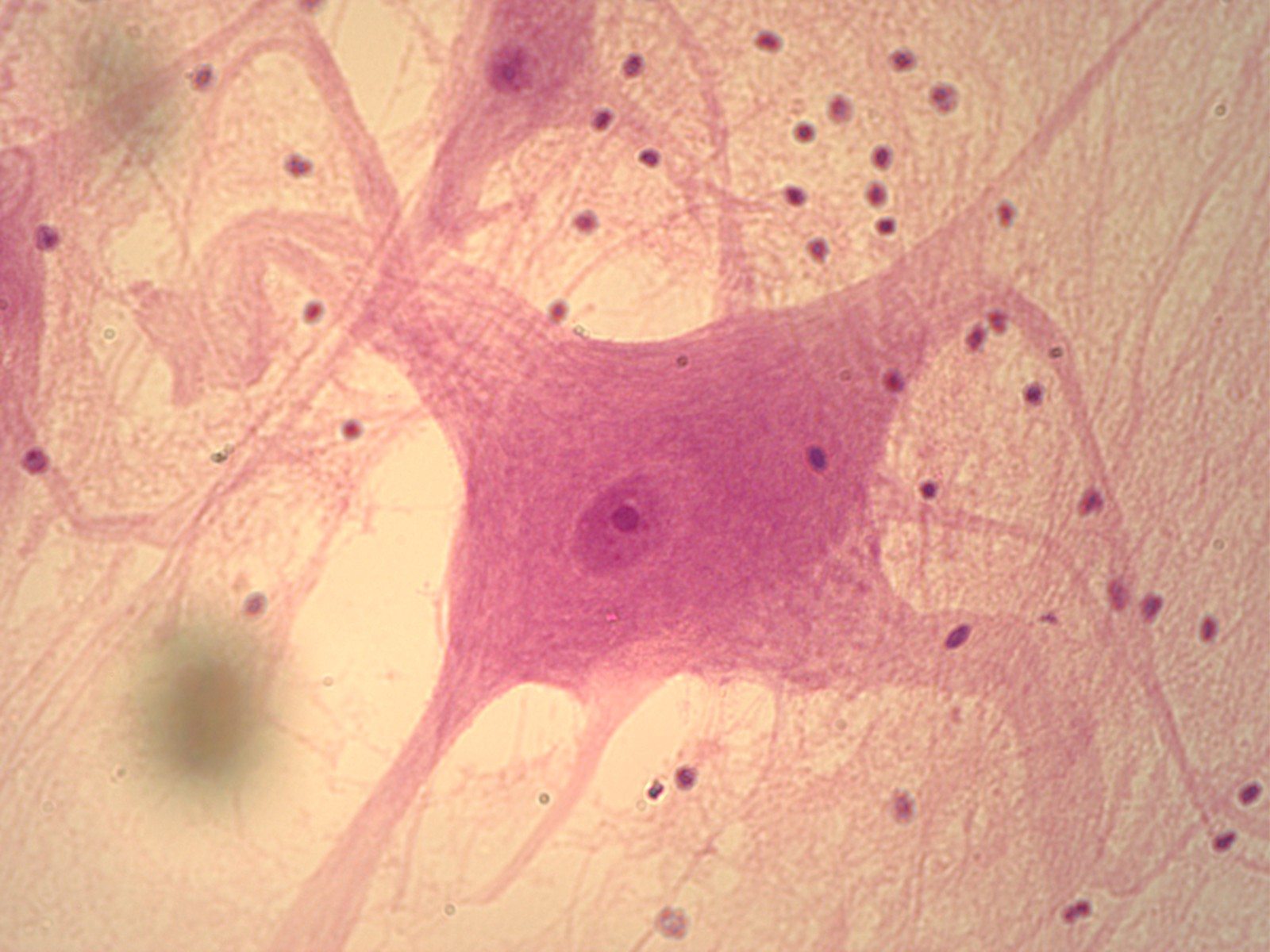
What tissue type is this?
a)
Adipose tissue
b)
Cardiac muscle
c)
Nervous tissue
d)
Skeletal muscle
7.
What tissue type is this?
a)
Nervous tissue
b)
Cardiac muscle
c)
Smooth muscle
d)
Connective tissue proper
8.
What tissue type is this?
a)
Skeletal muscle
b)
Nervous tissue
c)
Adipose tissue
d)
'Specialised' connective tissue
9.
Cells make up.....
a)
Tissues
b)
Organs
c)
Organ systems
d)
more cells
10.
Organs  make up.....
a)
Tissues
b)
Organs
c)
Organ systems
d)
more cells
11.
Which of the following tissues binds everything together?
a)
Epithelial
b)
Connective
c)
Muscle 
d)
Nervous
12.
Which of the following tissues lines the interior and exterior of organs?
a)
Epithelial
b)
Connective
c)
Muscle 
d)
Nervous
13.
Which of the following tissues is made up of cells that contract when stimulated?
a)
Epithelial
b)
Connective
c)
Muscle 
d)
Nervous
14.
Which of the following tissues is made up of cells that conduct impulses?
a)
Epithelial
b)
Connective
c)
Muscle 
d)
Nervous
15.

What tissue is this?

a)

Muscle

b)

Epithelial

c)

Nervous

d)

Connective

16.
The muscle tissue shown is called ______.
a)
Skeletal
b)
Cardiac
c)
Smooth
17.

What tissue is this?

a)

Epithelial

b)

Nervous

c)

Connective

d)

Muscular

18.

What tissue is this?

a)

Epithelial

b)

Connective

c)

Muscular

d)

Nervous

19.
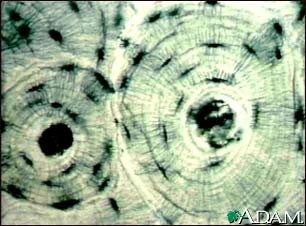
Name this tissue
a)
Bone
b)
Cartilage
c)
Blood
d)
Adipose
20.
The top surface of an epithelial tissue
a)
Apical Suface
b)
Basement membrane
21.
Which tissue is this?
a)
Simple Squamous
b)
Stratified Squamous
c)
Simple cuboidal
d)
Pseudostratified columnar
22.
Which tissue is this?
a)
Simple squamous
b)
simple columnar
c)
transitional
d)
simple cuboidal
23.
which tissue is this?
a)
Pseudostratified columnar
b)
Stratified Squamous
c)
Simple Columnar
d)
Transitional
24.
Which type of epithelial tissue would allow oxygen to quickly pass through it?
a)
Simple Squamous
b)
Simple Cuboidal
c)
Simple Columnar
d)
Transitional
25.
Which type of muscle tissue would line the intestines?
a)
Smooth
b)
Cardiac
c)
Skeletal
d)
Transitional
26.
What type of Connective Tissue are TENDONS and LIGAMENTS
a)
Dense Connective Tissue
b)
Osseous Tissue
c)
Loose connective Tissue
d)
Cartilage
27.
What type of Connective tissue is found at the ends of bones to reduce friction?
a)
Cartilage
b)
Dense connective tissue
c)
Adipose Tissue
d)
Loose connective tissue
28.
What type of tissue SIGNALS the intestines to move food along?
a)
Nervous Tissue
b)
Blood Tissue
c)
Smooth muscle tissue
d)
Skeletal Muscle Tissue
29.
Salivary glands are 
a)
Endocrine Glands
b)
Exocrine Glands
30.
The pituitary gland puts growth hormone into the blood. What type of gland is it?
a)
Endocrine Gland
b)
Exocrine Gland
31.
What is the MATRIX of Blood tissue?
a)
Collagen
b)
Calcium and Salts
c)
Plasma
d)
Fat
32.
What type of muscle tissue is VOLUNTARILY controlled
a)
Skeletal Only
b)
Skeletal and Cardiac
c)
Smooth and Cardiac
d)
Cardiac Only
33.
What are the smooth wave-like motions of Smooth muscle tissue?
a)
Peristalsis
b)
Pseudostratified movement
c)
Plasmadosis
d)
Plutoniosis
34.
Which type of epithelial tissue stretches and is found in the bladder and other urinary organs?
a)
Transitional
b)
Simple Cuboidal
c)
Stratified Squamous
d)
Stratified Columnar
35.
What  type of connective tissue has a hard matrix of calcium and salts?
a)
Osseous
b)
Adipose
c)
Blood
d)
Dense Connective
36.
What type of epithelial tissue would make up salivary, sweat, oil, and mammary glands?
a)
Simple cuboidal
b)
Simple columnar
c)
Simple squamous
d)
Transitional
37.
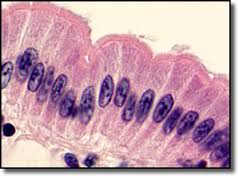
Identify:
a)
Columnar
b)
Cuboidal
c)
Pseudostratified
d)
Transitional
38.
Identify:
a)
Pseudostratified
b)
Smooth Muscle
c)
Transitional
d)
Stratified Squamous
39.
Identify:
a)
Smooth Muscle
b)
Columnar
c)
Transitional
d)
Pseudostratified
40.
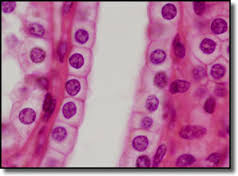
Identify:
a)
Columnar
b)
Cuboidal
c)
Transitional
d)
Simple Squamous
41.
Identify:
a)
Areolar
b)
Smooth Muscle
c)
Transitional
d)
Simple Squamous
42.
Identify:
a)
Pseudostratified
b)
Simple cuboidal
c)
Transitional
d)
Simple Squamous
43.
Identify:
a)
Pseudostratified
b)
Smooth Muscle
c)
Transitional
d)
Stratified Squamous
44.
Identify:
a)
Smooth Muscle
b)
Columnar
c)
Transitional
d)
Pseudostratified
45.
Identify:
a)
Smooth Muscle
b)
Columnar
c)
Transitional
d)
Pseudostratified
46.
Identify:
a)
Simple squamous
b)
Cuboidal
c)
Transitional
d)
Pseudostratified
47.
Identify:
a)
Pseudostratified
b)
Smooth Muscle
c)
Transitional
d)
Stratified Squamous
48.
Identify:
a)
Simple squamous
b)
Stratified squamous
c)
Transitional
d)
Pseudostratified
49.
Lines ducts and glands
a)
Columnar
b)
Cuboidal
c)
Simple Squamous
d)
Transitional
50.
Absorbs nutrients in the digestive tract
a)
Columnar
b)
Cuboidal
c)
Simple Squamous
d)
Pseudostratified
51.
Found in organs like the bladder that need to stretch
a)
Areolar
b)
Stratified squamous
c)
Pseudostratified
d)
Transitional
52.
Used in places where diffusion needs to occur, such as blood vessels and air sacs in the lungs
a)
Cuboidal
b)
Columnar
c)
Simple Squamous
d)
Stratified Squamous
53.
Used in places needing protection from scrapes and abrasions such as the skin and esophagus
a)
Cuboidal
b)
Pseudostratified
c)
Simple Squamous
d)
Stratified Squamous
54.
Secretes mucus in the respiratory tract, specifically the trachea
a)
Transitional
b)
Pseudostratified
c)
Simple Squamous
d)
Stratified Squamous
55.
Histology refers to the
a)
Study of tissues
b)
Study of the body
c)
Removal of tissues
d)
Study of the brain
56.
Define tissue with regards to anatomy
a)
A group of structurally and functionally related cells that come together to perform common functions
b)
Multiple sheets of thin paper used to clean your nose
c)
A series of different cells in the same area
d)
The smallest structural and functional unit of an organism
57.
Which of the following is NOT one of the four primary tissue types?
a)
Gastric
b)
Connective
c)
Muscle
d)
Epithelial
58.
What is the function of epithelial cells?
a)
Act as barriers between the external environment, or between organs and fluidfilled cavities
b)
Provide movement by pulling on bones
c)
Provide secretions which help to digest food
d)
Act as the messaging pathway between different areas of the body
59.
Which of the following cell types is correctly matched with it's cell shape?
a)
Squamous - flattened, pancake
b)
Cuboidal - rectangular
c)
Columnar - flattened, pancake
d)
Columnar - cubed/square
60.
Squamous cells are found where?
a)
Blood vessels and air sacs of lungs
b)
Respiratory passages
c)
Ducts of glands
d)
Uterine tube
61.
What is the general structure of cuboidal cells?
a)
Square with large central nucleus
b)
Flat, 'fried egg' appearance
c)
Rectangular with nucleus towards basal end
d)
Dead apical cells filled with keratin
62.
Which of the four SIMPLE epithelial types has a protective function?
a)
Pseudostratified
b)
Columnar
c)
Squamous
d)
Cuboidal
63.
The uterine tube consists of which cell type?
a)
Simple columnar
b)
Pseudostratified
c)
Simple squamous
d)
Stratified cuboidal
64.
Which cell type is "found in areas where organs need protection from mechanical abrasion but need to remain moist"?
a)
Non-keratinised stratified squamous
b)
Keratinised stratified squamous
c)
Stratified cuboidal
d)
Simple columnar
65.
What is the difference between exocrine and endocrine functions?
a)
Exocrine cells secrete fluids into ducts; endocrine cells secrete fluids into the blood stream
b)
They are synonymous
c)
Exocrine cells secrete fluids to the outside of the body; endocrine cells secrete fluids into the inside of the body
d)
Exocrine cells secrete clear fluids; endocrine cells secrete opaque fluids
66.
Which of the following is NOT a type of connective tissue 'proper'?
a)
Blood
b)
Loose
c)
Reticular
d)
Adipose
67.
The common term for adipose tissue is
a)
Fat
b)
Blood
c)
Bone
d)
Cartilage
68.
Cardiac muscle is specific to which organ?
a)
Heart
b)
Brain
c)
Pancreas
d)
Lungs
69.
The stomach consists of what type of muscle?
a)
Smooth muscle
b)
Skeletal muscle
c)
Cardiac muscle
d)
Deoxygenated muscle
70.
What is the cell type in nervous tissue responsible for sending and receiving messages?
a)
Neurons
b)
Neuroglial cells
c)
Dendrites
d)
Axons
71.
What tissue type is this?
a)
Adipose tissue
b)
Cardiac muscle
c)
Nervous tissue
d)
Skeletal muscle
72.
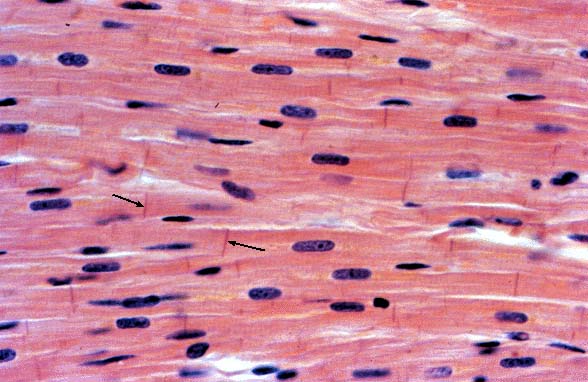
What tissue type is this? (The arrows are a clue)
a)
Cardiac muscle
b)
Skeletal muscle
c)
Smooth muscle
d)
Nervous tissue
73.
What tissue type is this?
a)
Nervous tissue
b)
Cardiac muscle
c)
Smooth muscle
d)
Connective tissue proper
74.
What tissue type is this?
a)
Skeletal muscle
b)
Nervous tissue
c)
Adipose tissue
d)
'Specialised' connective tissue
75.
What are the four main tissues found in the body?
a)
Epithelial, Connective, Bone, Blood
b)
Muscle, Connective, Blood, Epithelial
c)
Nervous, Muscle, Connective, Epithelial
d)
Nervous, Muscle, Connective, Bone
76.
What is a tissue?
a)
group of cells working together to create different organs
b)
mass of cells working together to perform common functions
c)
group of cells spread throughout the body
d)
mass of tissues performing a common function
77.
Which of the following is NOT considered a function of epithelial tissue?
a)
protection
b)
secretion
c)
absorption
d)
communication
78.
Which of the following is a distinguishing characteristic of epithelial tissue?
a)
vascular
b)
slow regeneration
c)
cells tightly packed
d)
attached to nervous tissue by a basement membrane
79.
The free surface of epithelial tissue is called the ________ side. 
a)
adipose 
b)
apical
c)
basal
d)
top
80.
Which of the following tissues allows materials to pass through diffusion and filtration? 
a)
stratified squamous
b)
simple cubiodal
c)
simple columnar
d)
simple squamous
81.
Which of the following structures increases surfaces area for absorption?
a)
cilia
b)
microcilia
c)
microvilli
d)
goblet cells
82.
Which of the following tissues would be found in the central canal of the spinal cord?
a)
simple cuboidal
b)
elastic cartilage
c)
simple squamous
d)
simple columnar
83.
Which of the following tissues would be found in lining the esophagus? 
a)
simple columnar
b)
fibrocartilage
c)
dense irregular 
d)
stratified squamous
84.
What type of glands are salivary and sweat glands?
a)
endocrine
b)
holocrine
c)
exocrine
d)
appocrine
85.
What type of fiber is flexible and easily stretched? 
a)
elastic fiber
b)
collagen fiber
c)
reticular fiber 
d)
ground fiber
86.
What type of tissue binds underlying organs to skin?
a)
elastic connective tissue
b)
fibrocartilage
c)
areolar tissue
d)
dense regular connective tissue
87.
What type of tissue is found in large arteries, heart, and airways?
a)
elastic connective tissue
b)
dense regular connective tissue
c)
hyaline cartilage 
d)
dense irregular connective tissue
88.
What type of  tissue has a fluid-like matrix?
a)
bone tissue
b)
cartilage
c)
blood
d)
epithelial tissue
89.
What type of cartilage can be found in the larynx?
a)
fibrocartilage
b)
hyaline cartilage
c)
elastic cartilage
d)
basal cartilage
90.
Which of the following muscle tissues allows you to walk, talk, and write?
a)
skeletal muscle
b)
cardiac muscle
c)
smooth muscle
91.
Which of the following tissues is striated and branched?
a)
skeletal muscle
b)
fibrocartilage
c)
cardiac muscle
d)
skeletal muscle 
92.
What type of tissue contains WBC, RBC, and platelets?
a)
epithelial 
b)
bone
c)
blood
d)
cartilage 
93.
Which type of muscle is not controlled by conscious effort?
a)
skeletal muscle
b)
smooth muscle
c)
cardiac muscle 
d)
both smooth and cardiac 
94.
Where is epithelial tissue found?
a)
glands
b)
covering body surfaces
c)
lines organs
d)
all of the above
95.

What plane divides the body into a front and a back?

a)

medial

b)

sagittal

c)

transverse

d)

coronal

96.

Which term means toward the head?

a)

caudal

b)

inferior

c)

cephalic

d)

posterior

97.

Ventral means:

a)

The chest cavity

b)

The bellyside

c)

The back side

d)

The head

98.

Which plane divides the body into an equal left and right side?

a)

Mid-sagittal

b)

Transverse

c)

Axial

d)

Transverse

99.

The opposite of posterior is?

a)

inferior

b)

anterior

c)

superior

d)

dorsal

100.

A synonym for dorsal is:

a)

transverse

b)

anterior

c)

ventral

d)

posterior

101.

The nose is ________ to the chin.

a)

posterior

b)

medial

c)

superior

d)

inferior

102.

The transverse plane divides the body into _______.

a)

a front and back

b)

a top and bottom

c)

a left and right

d)

an equal left and right

103.

Caudal means ____________.

a)

to the side

b)

toward the head

c)

toward the tail

d)

toward the midline

104.

Superficial means something is more ______.

a)

external

b)

deep

c)

internal

d)

lateral

105.

If a structure is closer to the point of attachment to the trunk of the body, we consider it to be:

a)

distal

b)

medial

c)

proximal

d)

lateral

106.

When a structure is closer to the midline of the body we say it is:

a)

medial

b)

lateral

c)

inferior

d)

superior

107.

The back side of the body is

a)

ventral

b)

medial

c)

lateral

d)

dorsal

108.

What word part means green?

a)

chloro

b)

cyano

c)

rhodo

d)

xantho

109.

What is another name for the frontal plane?

a)

sagittal

b)

coronal

c)

transverse

d)

axial

110.

This image is an example of:

a)

Body quadrants

b)

Body regions

c)

Body planes

d)

Body cavities

111.

Your wrist is ___________ to your elbow.

a)

posterior

b)

anterior

c)

distal

d)

proximal

112.
The heart is contained within this cavity (most specific)
a)
mediastinum
b)
pericardial
c)
pleural
d)
thoracic
113.
The liver is mostly located within the 
a)
RUQ
b)
RLQ
c)
LLQ
d)
LUQ
114.
The ___ separates the two sections of the ventral cavity
a)
heart
b)
lungs
c)
spleen
d)
diaphragm
115.
The uterus can be found in this cavity
a)
thoracic
b)
pleural
c)
pelvic
d)
mediastinum
116.
The lungs are located within this cavity
a)
pleural
b)
mediastinum
c)
brachial
d)
pelvic
117.
The brain is located in the 
a)
vertebral canal
b)
cranial cavity
c)
mediastinum
d)
umbilical region
118.
Most of the digestive system is contained within the __ cavity
a)
thoracic 
b)
dorsal 
c)
vertebral
d)
ventral
119.
The __ contains the trachea, esophagus, and large blood vessels such as the aorta
a)
cranial
b)
abdominopelvic
c)
dorsal
d)
thoracic
120.
The appendix can be found in the 
a)
RUQ
b)
RLQ
c)
LUQ
d)
LLQ
121.
a)

Abdominal Cavity

b)

Pericardial Cavity

c)

Pelvic Cavity

d)

Pleural Cavity

122.

The cavity surrounded by a box is?

a)

Abdominal Cavity

b)

Pelvic Cavity

c)

Pleural Cavity

d)

Cranial Cavity

123.

The cavity surrounded by a box is?

a)

Cranial Cavity

b)

Abdominal Cavity

c)

Pelvic Cavity

d)

Abdominopelvic Cavity

124.

The cavity surrounded by a box is?

a)

Pleural Cavity

b)

Pericardial Cavity

c)

Pelvic Cavity

d)

Mediastynum

125.
a)

Cranial Cavity

b)

Pleural Cavity

c)

Pericardial Cavity

d)

Vertebral Canal

126.

The cavity surrounded by a box is?

a)

Thoracic Cavity

b)

Abdominal Cavity

c)

Pelvic Cavity

d)

Vertebral Canal

127.

The cavity surrounded by a box is?

a)

Pericardial Cavity

b)

Pleural Cavity

c)

Abdominal Cavity

d)

Pelvic Cavity

128.

The cavity surrounded by a box is?

a)

Pleural Cavity

b)

Pericardial Cavity

c)

Abdominal Cavity

d)

Mediastynum

129.

What quadrant does number 1 Represent?

a)

Right Upper

b)

Right Lower

c)

Left Upper

d)

Left Lower

130.

What quadrant does number 2 Represent?

a)

Right Upper

b)

Right Lower

c)

Left Upper

d)

Left Lower

131.

What quadrant does number 3 Represent?

a)

Right Upper

b)

Left Upper

c)

Right Lower

d)

Left Lower

132.

What is section 1?

a)

Epigastric

b)

Left Hypochondriac

c)

Right Hypochondriac

d)

Right iliac

133.

What is section 2?

a)

Epigastric

b)

Left Hypochondriac

c)

Right Hypochondriac

d)

Right iliac

134.

What is section 3?

a)

Epigastric

b)

Left Hypochondriac

c)

Right Hypochondriac

d)

Right iliac

135.

Identify 1

a)

Ventral cavity

b)

Dorsal cavity

c)

Cranial cavity

d)

Abdominopelvic cavity

136.

Identify 2

a)

Spinal cavity

b)

Dorsal cavity

c)

Orbital cavity

d)

Cranial cavity

137.

Identify 3

a)

Spinal cavity

b)

Abdominal cavity

c)

Cranial cavity

d)

Thoracic cavity

138.

Identify 7

a)

Ventral cavity

b)

Abdominal cavity

c)

Thoracic cavity

d)

Pelvic cavity

139.

Identify 9

a)

Abdominal cavity

b)

Pelvic cavity

c)

Abdominopelvic cavity

d)

Thoracic cavity

140.

Identify 10

a)

Pelvic cavity

b)

Abdominal cavity

c)

Ventral cavity

d)

Abdominopelvic cavity

141.

Identify 11

a)

Dorsal cavity

b)

Ventral cavity

c)

Abdominopelvic cavity

d)

Thoracic cavity

142.

The midsagittal plane separates the body into...

a)

top and bottom

b)

left and right

c)

front and back

143.

The frontal plane separates the body into...

a)

anterior and posterior

b)

medial and lateral

c)

proximal and distal

d)

cranial and caudal

144.

Other words used for anterior/posterior are...

a)

medial/lateral

b)

superior/inferior

c)

ventral/dorsal

d)

proximal/distal

145.

The transverse plane separates the body into...

a)

anterior/posterior

b)

superior/inferior

c)

medial/lateral

d)

proximal/distal

146.

The thoracic cavity contains....

a)

the esophagus, lungs, heart and major blood vessels

b)

the large and small intestines

c)

bladder and kidneys

d)

reproductive organs

147.

The pelvic cavity contains...

a)

the heart and major blood vessels

b)

the reproductive organs

c)

large and small intestines

148.

The thumb is proximal to the elbow.

a)

True

b)

False

149.

The thumb is proximal to the elbow.

a)

True

b)

False

150.

Body cavity that contains the heart

a)

abdominal

b)

pericardial

c)

pelvic

d)

pleural

151.

Number 1

a)

thoracic cavity

b)

pleural cavity

c)

cranial cavity

d)

pelvic cavity

152.

Letter C

a)

pleural cavity

b)

pericardial cavity

c)

abdominal cavity

d)

pelvic cavity

153.

Number 3

a)

pericardial cavity

b)

pleural cavity

c)

pelvic cavity

d)

abdominal cavity

154.

Number 4

a)

abdominal cavity

b)

pelvic cavity

c)

spinal cavity

d)

cranial cavity

155.

The pancreas is located in the ______ cavity

a)

abdominal

b)

pleural

c)

pelvic

d)

thoracic

156.

Which of the following cavities holds the heart AND lungs?

a)

pleural

b)

pericardial

c)

thoracic

d)

abdominal

157.

The pleural cavity encloses the

a)

heart only

b)

lungs only

c)

heart and lungs

d)

bladder and reproductive organs

158.

what is the name of the cavity that holds your stomach, intestines, pancreas, and liver?

a)

thoracic

b)

abdominal

c)

cranial

d)

spinal

159.

the body erect, with feet together and hands to the side is known as...

a)

body regions

b)

anatomical position

c)

body quadrants

d)

body planes

160.
The study of structure is called ___________.
a)
homeostasis
b)
anatomy
c)
physiology
d)
interrelation
161.

The study of function of the human body is called....

a)

Anatomy

b)

Biology

c)

Histology

d)

Physiology

162.

What terms means maintaining a stable internal environment?

a)

Balance

b)

Homeostasis

c)

Stability

d)

Equilibrium

163.

Which feedback loop shuts off the original process?

a)

Negative feedback loop

b)

Positive feedback loop

164.

Which feedback look increases the original stimulus?

a)

Negative feedback loop

b)

Positive feedback loop