
 Worksheets
Unit 8 - AP BIO Ecology Review
Total questions: 116
Worksheet time: 2hrs 1mins


Which curve best describes an organism that invests a lot of energy in parenting?

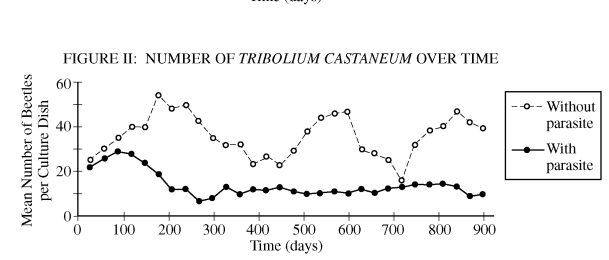

What is the rate of change for the population grown without a parasite from day 200 to day 400?
200 days
a loss of approximately 15 beetles/200 days
a loss of approximately 30 beetles/200 days
30 beetles

Species richness is measure of the number of different species living in an ecosystem. Which of the following would be indicated by species richness?
dispersal patterns
amount of biodiversity
density of a population
level of productivity exhibited within the ecosystem
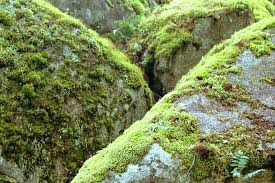

What is the most important function of pioneer species?
To function as decomposers
To create soil and add nutrients
Facilitation of the water cycle
Food for animals


Based on the figure you can conclude that interspecific competition
allows for both rock barnacles and stellate barnacles to inhabit the same area.
causes the stellate barnacles to grow more slowly than they would normally grow.
restricts stellate barnacles to a smaller portion of the intertidal zone.
causes the rock barnacles to grow more slowly than they would normally grow.
causes the stellate barnacles to grow more quickly than they would normally grow.
A plant species produces a chemical that is toxic to herbivores. Over time, herbivores that can detoxify the chemical increase in frequency. A mutation in the plant produces a new, different toxic chemical that the herbivores cannot detoxify. This is an example of
a mutualism
resource partitioning
coevolution
commensalism


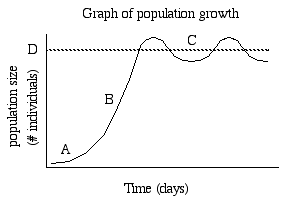
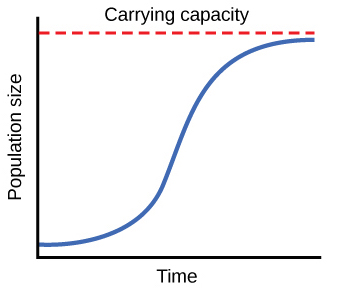
What is the carrying capacity of the following population?
1000
8000
800
600
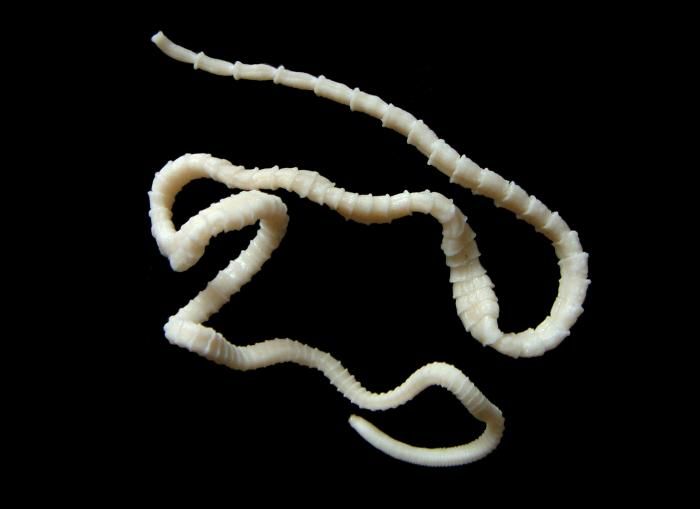
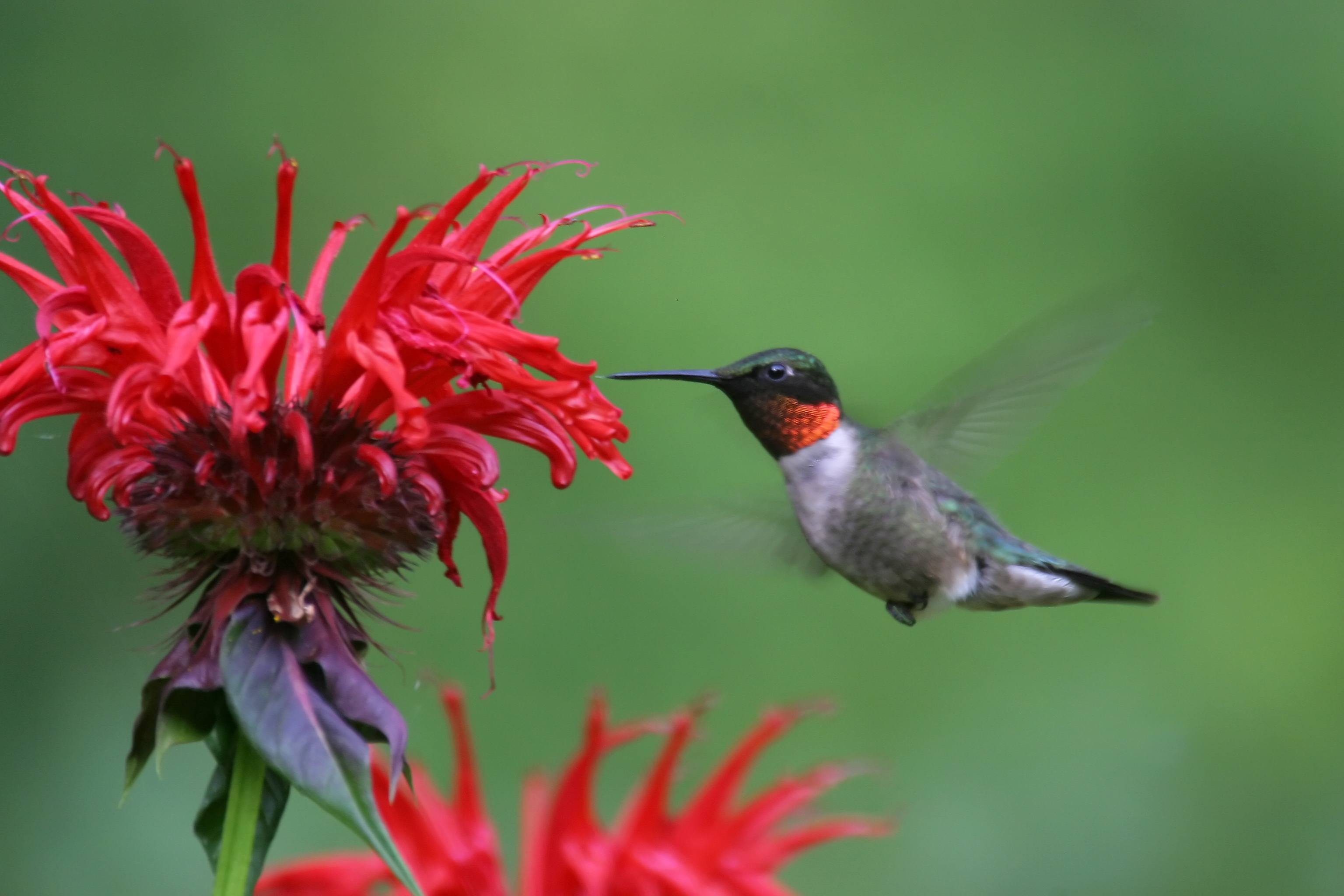
Type of symbiosis: Hummingbirds feed on nectar from flowers. The flowers are pollinated by hummingbirds as they move from flower to flower.
commensalism
mutualism
parasitism
predation
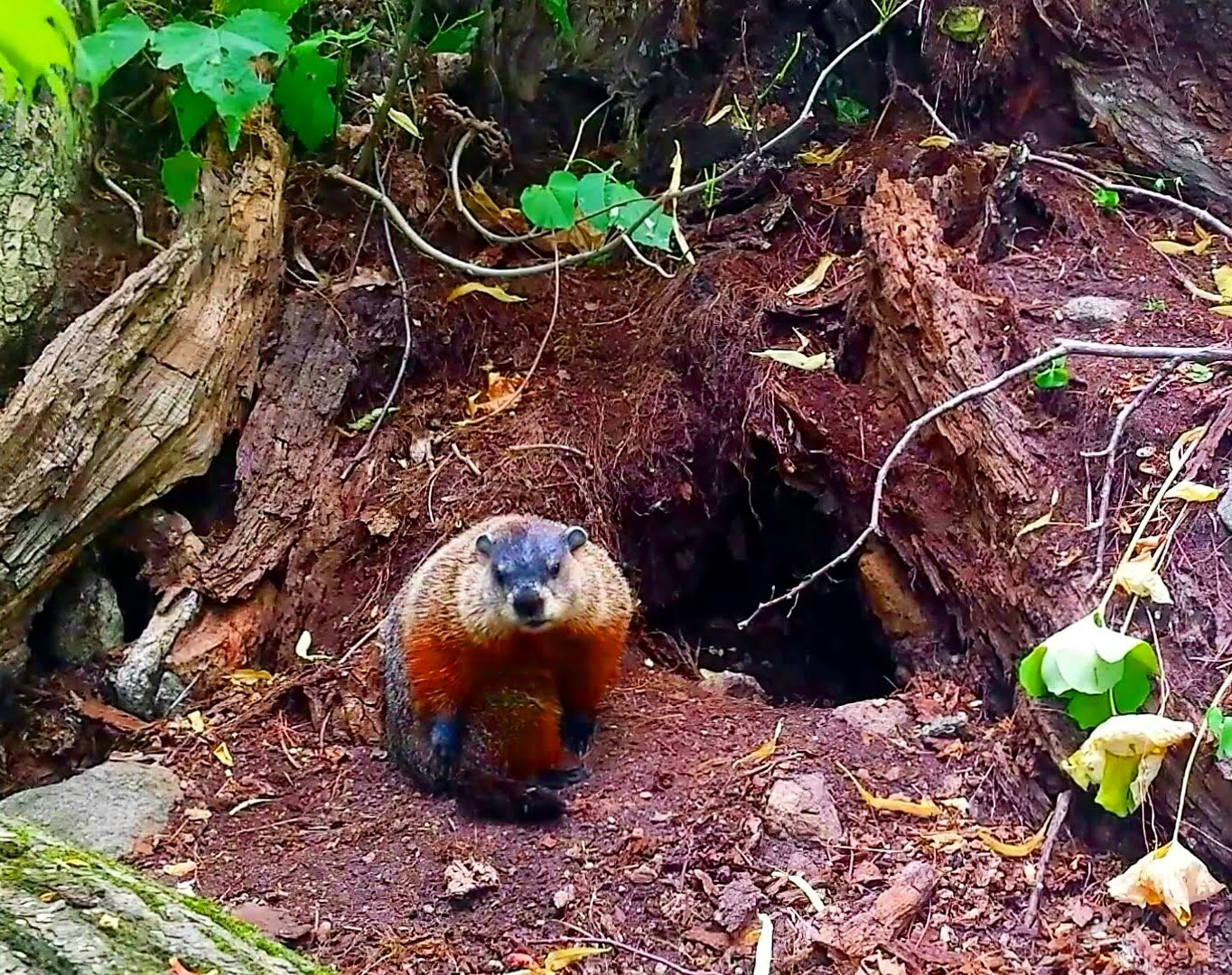
Type of symbiosis: Skunks often live in burrows that have been dug and abandoned by woodchucks.
commensalism
mutualism
parasitism
predation
Bird & Tree: A bird builds a nest in a hole in the trunk of the tree. It is protected from the rain and predators. The tree is not harmed or helped by the bird.
Mutualism
Commensalism
Parasitism
Competition
What level of ecological organization would include all squirrels that live in the same area?
biome
community
ecosystem
population
A symbiotic relationship in which one organism is harmed and another benefits is
mutualism
parasitism.
commensalism.
predation.


The nitrogen cycle is a biogeochemical cycle because it moves ?
only between living things (biosphere)
only in the soil (geosphere)
between living things, the soil, and air
only in the air (atmosphere)


In country 1, approximately what percentage of the individuals were younger than fifteen years of age?
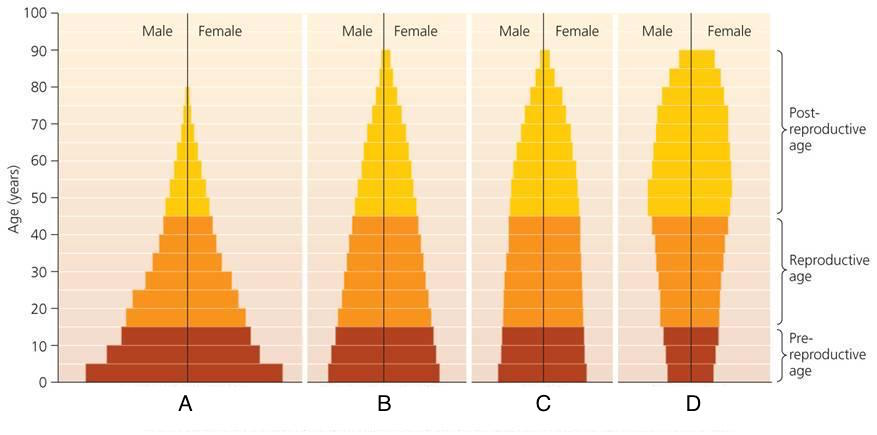
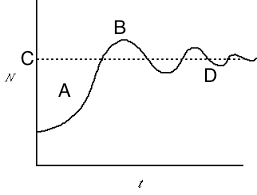
Which of the following graphs illustrates the REALISTIC growth curve of a small population of rodents that has grown to reach a static carrying capacity?


Approximately how many kg of carnivore (secondary consumer) biomass can be supported by a field plot containing 25,000 kg of plant material?
250,000
2500
250
25
Why is net primary production (NPP) a more useful measurement to an ecosystem ecologist than gross primary production (GPP)?
NPP can be expressed in energy/unit of area/unit of time
NPP can be expressed in terms of carbon fixed by photosynthesis for an entire ecosystem
NPP represents the stored chemical energy that is available to consumers in the ecosystem
NPP is the same as the standing crop
NPP shows the rate at which the standing crop is utilized by consumers
Elephants are not the most dominant species in African grasslands, yet they influence community structure. The grasslands contain scattered woody plants, but they are kept in check by the uprooting activities of the elephants. Take away the elephants, and the grasslands convert to forests or to shrublands. The newly growing forests support fewer species than the previous grasslands. Which of the following describes why elephants are the keystone species in this scenario?
Essentially all of the other species depend on the presence of the elephants to maintain the community
Grazing animals depend upon the elephants to convert forests to grassland
Elephants prevent drought in African grasslands
Elephants are the biggest herbivore in this community
Elephants help other populations survive by keeping out many of the large African predators

Which of the following is a conclusion that can be drawn from this graph?
Female survivability is more negatively affected by larger brood size than is male survivability
Male survivability decreased by 50% between reduced and enlarged brood treatments
Both males and females had increases in daily hunting with the enlarged brood size
Chicks in reduced brood treatment received more food, weight gain, and reduced mortality

What is a logical conclusion that can be drawn from the graphs above?
Developed countries have lower infant mortality rates and lower life expectancy than developing countries
Developed countries have higher infant mortality rates and lower life expectancy than developing countries
Developed countries have lower infant mortality rates and higher life expectancy than developing countries
Developed countries have higher infant mortality rates and higher life expectancy than developing countries
a. Developed countries have a life expectancy that is about 42 years more than life expectancy in developing countries.
Food chains are sometimes short because
only a single species of herbivore feeds on each plant species
local extinction of a species causes extinction of the other species in its food chain
most of the energy in a trophic level is lost as it passes to the next higher level
predator species tend to be less diverse and less abundant than prey species
most producers are inedible
9. Consider the food chain grass → grasshopper → mouse → snake → hawk. How much of the chemical energy fixed by photosynthesis of the grass (100%) is available to the hawk?
0.01%
0.1%
1%
10%
60%

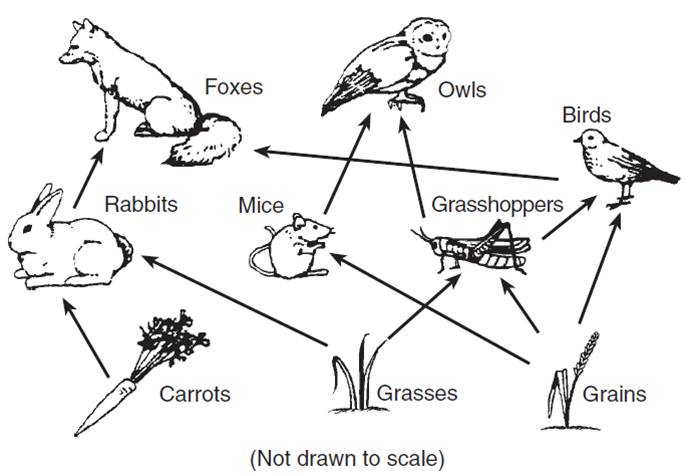
If the figure to the right represents a terrestrial food web, the combined biomass of C + D would probably be:
greater than the biomass of A
less than the biomass of H
greater than the biomass of B
less than the biomass of A + B
less than the biomass of E
The high level of pesticides in birds of prey is an example of:
the principle of competitive exclusion
cycling of nutrients by decomposers
exponential growth
biological magnification

Which country is likely experiencing population growth?
Country I
Country II
Neither country I or country II
Both country I and country II
Which of the following lists the biomes as they appear as you move from the equator to the North Pole in the northern hemisphere
tropical rainforest → desert → temperate deciduous forest → taiga → tundra
desert → tundra → taiga → temperate deciduous forest → tropical rainforest
taiga → temperate deciduous forest → tundra → desert → tropical rain forest
tundra → taiga → temperate deciduous forest → desert → tropical rainforest

This curve best describes a K-strategist
Type I
Type II
Type III
Type I and II
none of the above

A growth curve for a population of rabbits that were accidentally introduced into a region of New Zealand is shown to the right. Calculate the mean growth rate of the population of rabbits from day 30 to day 40. Give your answer to the nearest whole number. (dN/dt)
5
50
100

