wayground logo

Free Printable Worksheets

NEW

Font size

S
M
L
XL
Worksheets

Ecology - ch 3, 4, 5, 6

Total questions: 70

Worksheet time: 1hrs 11mins

Name
Class
Date
1.

The increase in population size by movement is called

a)

emigration

b)

growth rate

c)

immigration

d)

demography

2.

Populations of species are described by

a)

density

b)

spatial distribution

c)

growth rate

d)

all of the above

3.

What is the dispersion pattern of herding animals, birds that flock together, and fish that form schools?

a)

clumped

b)

random

c)

uniform

d)

unpredictable

4.

The maximum number of organisms that an environment can support over along period of time is referred to the

a)

dispersion

b)

age structure

c)

demographics

d)

carrying capacity

5.

Which factor would be considered density independent?

a)

an intestinal parasite

b)

a fatal virus

c)

a severe drought

d)

severe overcrowding

6.

Which factor would be considered density dependent?

a)

competition

b)

drought

c)

water quality

d)

pH of the soil

7.

Which population growth model does this graph illustrate?

a)

exponential growth

b)

lag phase

c)

logistic growth

d)

straight-line growth

8.

What is the horizontal line (K) at the top of the graph called?

a)

exponential growth

b)

geometric growth

c)

carrying capacity

d)

straight-line growth

9.
Plants are an example of: 
a)
Producers
b)
Decomposers
c)
Heterotrophs
d)
Consumers
10.
The food chain always moves in one direction and begins with: 
a)
Autotrophs
b)
Heterotrophs
c)
Primary Consumer
d)
Secondary Consumer
11.
The main ENERGY source for all things on Earth:
a)
Water
b)
Chemicals 
c)
Oxygen
d)
Sun
12.
Which one of these is considered biotic in the environment? 
a)
Rocks
b)
Water
c)
Plants
d)
Soil
13.
What word means the same as consumer?
a)
Producer
b)
Autotroph
c)
Heterotroph
d)
Carbon
14.
Consumers that eat animals after they have died are called:
a)
Scavengers
b)
Decomposers
c)
Carnivores 
d)
Detrivores
15.
Which of the following are considered decomposers in a food web?
a)
Plants and animals
b)
Bacteria and Fungi
c)
Soil and plants
d)
Soil and animals
16.

Only 10% of energy is passed from one level to the next---what happens to the other 90%?

a)

Stored as fat

b)

Given off as heat

c)

Makes carbohydrates

d)

Eliminated as wastes

17.
All living things are made out of this and is found in the air, in the ground, and when things die: 
a)
Oxygen
b)
Nitrogen
c)
Calcium
d)
Carbon
18.
Nitrogen fixation & denitrification are carried out mainly by: 
a)
Bacteria
b)
Humans
c)
Plants
d)
Animals
19.
An individual belonging to a specific species
a)
Biotic
b)
Community
c)
Organism
d)
Reptile
20.
All of the living and nonliving things in an area that interact with each other are called a/an ______.
a)
community
b)
habitat
c)
population
d)
ecosystem
21.
An area where an organism finds food, shelter and water in a specific arrangement
a)
niche
b)
biosphere
c)
biome
d)
habitat
22.
Organisms that look similar and can produce fertile offspring
a)
Species
b)
Fish
c)
Community
d)
Trees
23.
Two or more members of a particular species living and interacting in the same area
a)
Community
b)
Population
c)
Organisms
d)
Biosphere
24.
Different populations living and interacting with each other in the same area
a)
Biome
b)
Ecosystem
c)
Community
d)
Niche
25.
The area between the highest mountain and the deepest ocean where life can be found
a)
Biosphere
b)
Biome
c)
Farm
d)
Ecosystem
26.
What may happen if the snowshoe hare was removed from the food web pictured?
a)
The insects in the habitat would increase.
b)
The shrew population would decrease due to being only hawk food source.
c)
The willow tree population would decrease.
d)
Foxes would dies due to no food source. 
27.
Which of the following leads to a decrease in biodiversity?
a)
protection of ecosystems
b)
pollution control
c)
selective cutting
d)
introduction of exotic or invasive species
28.
Nitrogen fixation processes nitrogen from which of the following sources?
a)
lightning
b)
fertilizers
c)
dead plants
d)
atmosphere
29.
Which biome, because of its climate and amount of rainfall, has the largest number of species of plants and animals?
a)
Tundra
b)
Rainforest
c)
Desert
d)
Pineforest
30.

A food chain is illustrated below:

The squiggly side arrows represented most likely indicate

a)

A. Energy released from metabolism into the environment as heat.

b)

B. Oxygen released from metabolism produced by cellular respiration.

c)

C. The absorption of energy from the environment that has been created.

d)

D. The transport of glucose away from the organism through photosynthesis.

31.
A pond ecosystem is shown in the diagram below. Which statement describes an interaction that helps maintain the dynamic equilibrium of this ecosystem?
Which statement describes an interaction that helps maintain the dynamic equilibrium of this ecosystem?
a)
The frogs make energy available to this ecosystem through the process of photosynthesis.
b)
The algae directly provide food for both the rotifers and the catfish.
c)
The green-backed heron provides energy for the mosquito larvae.
d)
The catfish population helps control the populations of water boatman and waterfleas.
32.
In this Food Web Pyramid Which type of consumer gets only 10% of the energy stored in plants?
a)
Herbivore
b)
Carnivore
c)
Omnivore
d)
Secondary Consumer
33.
As you move upward, from level to level, in an energy pyramid, energy _____.
a)
increases
b)
decreases
c)
stays the same
d)
increases exponentially
34.
What is a similarity between photosynthesis and chemosynthesis?
a)
Both are metabolic processes which produce energy for living things
b)
Both use sunlight
c)
Both are performed by bumblebees
d)
Both produce Carbon Dioxide
35.
Where does chemosynthesis occur?
a)
In plants
b)
In animals
c)
At the bottom of the ocean
d)
In the sky
36.

What are the reactants of photosynthesis?

a)

glucose and oxygen

b)

sunlight and carbohydrates

c)

oxygen, carbon dioxide, and water

d)

carbon dioxide, water, and sunlight

37.

Which is a product of photosynthesis?

a)

water

b)

Sunlight

c)

oxygen

d)

carbon dioxide

38.

The decrease in population size by movement is called

a)

emigration

b)

growth rate

c)

immigration

d)

demography

39.

The burning of fossil fuels releases large amounts of ______ into the atmosphere, which contributes to global warming.

a)

carbon monoxide

b)

calcium carbonate

c)

carbon dioxide

d)

sulfur dioxide

40.

The climatic zone that receives the least solar radiation and has the coldest climate is the _______.

a)

polar zone

b)

tropical zone

c)

equatorial zone

d)

temperate zone

41.

Which biome is the driest? It receives less than 10 inches of rain a year.

a)

desert

b)

grassland

c)

deciduous forest

d)

tropical rain forest

42.

What type of growth is shown by the J shaped curve, representing unlimited resources?

a)

logistic

b)

exponential

43.

How would you describe the precipitation patterns for this area based on the climate diagram?

a)

distinct wet and dry seasons

b)

wet season only

c)

dry season only

d)

varying precipitation

44.

Which element does not cycle through the atmosphere like the others?

a)

phosphorus

b)

carbon

c)

nitrogen

d)

oxygen

45.

All organisms require nitrogen to build amino acids which make

a)

proteins

b)

carbohydrates

c)

lipids

d)

nucleic acids

46.

A flood is an example of

a)

weather

b)

climate

47.
The idea that no two species within an ecosystem can occupy the exact same niche
a)
niche overlap
b)
niche differentiation
c)
competitive exclusion
d)
niche decay
48.

What point on the graph represents the carrying capacity?

a)

A

b)

B

c)

C

d)

D

49.
What would the carrying capacity of this graph be
a)
530
b)
400
c)
500
d)
480
50.

According to the graph, what is causing the deer population to decrease

a)

They got sick

b)

The wolf population is decreasing

c)

The wolf population increased

d)

They ran out of food

51.

Predator population lags behind prey population because......

a)

Increase in predators leads to decrease in prey

b)

Increase in predators leads to increase in prey

c)

Increase in predators leads to decrease in producers

d)

Increase in producers leads to increase in prey

52.
What effect will an invasive species have on the carrying capacity of an ecosystem?
a)
The carrying capacity will increase
b)
The carrying capacity for everyone will decrease
c)
The carrying capacity will only decrease for those in competition for same resource
d)
The carrying capacity for all animals will stay the same
53.

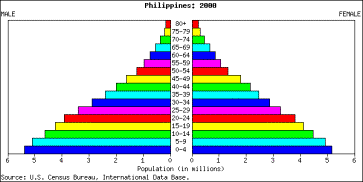
According to the age structure diagram of this country, its population is most likely...

a)
growing slowly.
b)
growing rapidly.
c)
decreasing.
d)
not changing.
54.

According to the age structure diagram shown in the picture, describe this population:

a)

slow growth

b)

rapid growth

c)

zero growth

d)

negative growth

55.

A species that plays a critical role in the health, maintenance, growth, or definition of an ecosystem.

a)

keystone

b)

invasive

c)

engineer

d)

predator

56.
Cattle egrets are birds that forage in fields among cattle. The egrets get easy access to food and the cattle don't care if they are there or not.
a)
mutualism
b)
commensalism
c)
competition
d)
parasitism
57.
Red-billed oxpeckers are birds that feed on parasites found on an impala. The impala gets rid of parasites and the red-billed oxpeckers get a yummy dinner. This is an example of _______.
a)
commensalism
b)
mutualism
c)
neutralism
d)
competition
58.

Barnacles are sea creatures that create a home by attaching themselves to whales. The whales are unaffected by the barnacles. Which term best describes this symbiotic relationship?

a)

Commensalism

b)

Parasitism

c)

Predation

d)

Mutualism

59.

Ostriches and gazelles are two animals that live in Africa. They graze for food near each other because they help each other spot predators. The gazelle has excellent eyesight, but poor hearing, and the ostrich has excellent hearing, but poor eyesight. These two animals will alert one another when danger is near. Which term best describes this relationship?

a)

Predation

b)

Commensalism

c)

Mutualism

d)

Parasitism

60.
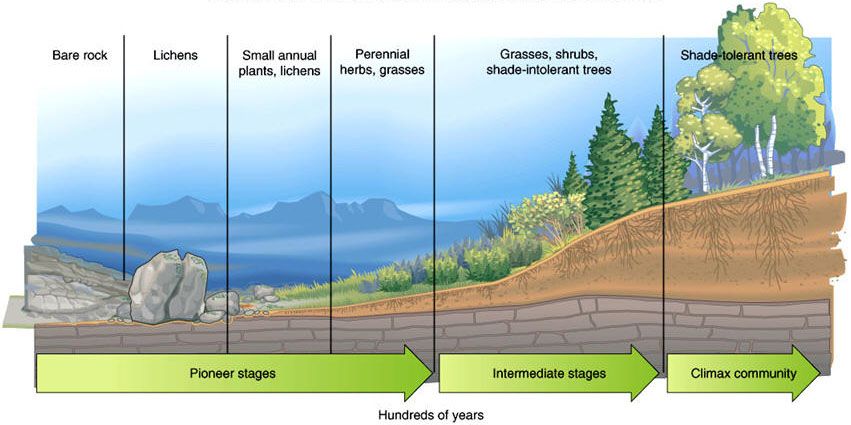
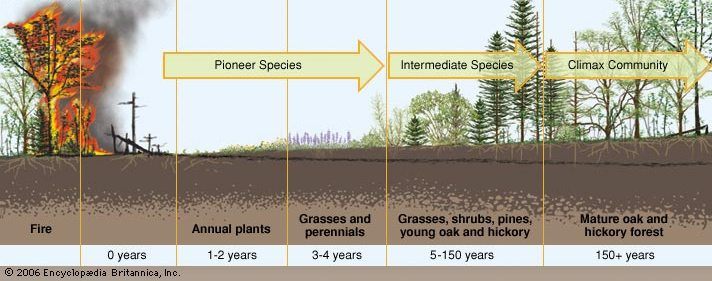
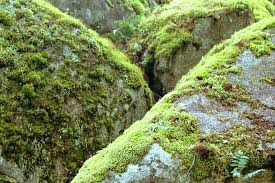
The picture shows what type of succession?
a)
primary
b)
secondary
c)
tertiary
d)
quadanary
61.
The picture shows what type of succession?
a)
primary
b)
secondary
c)
tertiary
d)
quadanary
62.
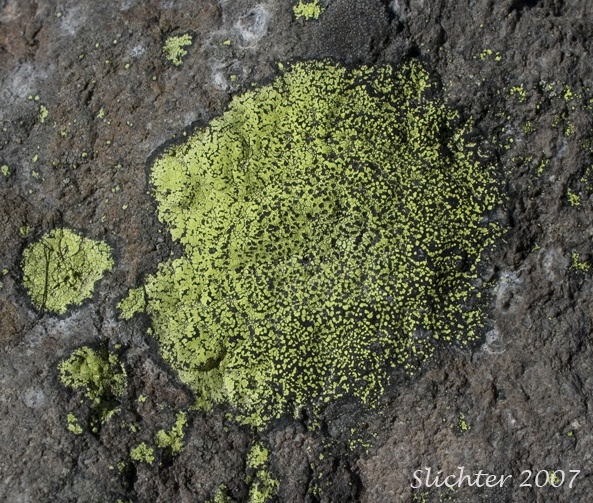
What is the name given to lichen or algae after a primary succession?
a)
pioneer species
b)
volunteer species
c)
founder species
d)
conqueror species
63.
What are examples of pioneer species in a primary succession?
a)
Bushes and Shrubs
b)
Oak trees
c)
Mossess and Lichens 
d)
A rose Bush
64.
After a volcanic eruption, lava covers the land. What is the order that plants grow to repopulate the area?
a)
Lichens → Shrubs → Grasses → Trees
b)
Lichens → tree → shrubs→Grasses
c)
Grasses → Lichens → Shrubs → Trees
d)
Lichens → Grasses → Shrubs → Trees
65.
the process by which a new community forms where no community lived before 
a)
resource
b)
invasive (non- native) species
c)
primary succession
d)
competition
66.
Reaches a climax community quicker because soil is already present
a)
primary succession 
b)
secondary succession
c)
both types of succession
67.
What is the most important function of pioneer species?
a)
To create rocks
b)
To create soil and add nutrients to the environment 
c)
To look nice
d)
Food for animals 
68.
Succession that occurs in an area with NO SOIL
a)
ecological succession 
b)
primary succession 
c)
secondary succession
d)
pioneer speciles
69.

The ability of an ecosystem to recover quickly and resist damage after disasters

a)

Ecology

b)

Environmental Science

c)

Biodiversity

d)

Ecosystem Resilience

70.

Which of these most accurately shows the relationship between photosynthesis and cellular respiration?

a)
b)
c)
d)