wayground logo

Free Printable Worksheets

Font size

S
M
L
XL
Worksheets

Hon Bio-Ch 2- Exam Review

Total questions: 99

Worksheet time: 2hrs 36mins

Name
Class
Date
1.

7 yards = _______ feet.

a)
21 feet
b)
4 feet
c)
28 feet
d)
700 feet
2.
5 km = ______ m
a)
25 m
b)
5000 m
c)
500 m
d)
50 m
3.
11,000 mL = _____ L
a)
11L
b)
12 L
c)
1,100 L
d)
110,000 L
4.
convert 0.7 cm to m
a)
70
b)
0.07
c)
0.007
d)
7
5.
Which is larger 27 feet or 7 yards?
a)
27 feet
b)
7 yards
6.
You know 16 cups = 1 gallon. Convert 3.5 gallons into cups.
a)
56 cups
b)
0.21875 cups
c)
19.5 cups
d)
48 cups
7.
You know 1000 mg = 1 g.  Convert 2.5 grams into milligrams.
a)
25 mg
b)
25,000 mg
c)
250 mg
d)
2500 mg
8.
How many inches are in 1 mile?
a)
66330in
b)
63360in
c)
63660in
d)
63066in
9.
How many yards are in 1 mile?
a)
1670yds
b)
5280yd
c)
1760yds
d)
5820yds
10.

1 mile = 1760 feet

a)

True

b)

False

11.

The space surrounding the nucleus of an atom contains

a)

protons

b)

neutrons

c)

electrons

d)

ions

12.

If an atom contains 3 protons, 4 neutrons, and 3 electrons, its mass number would be

a)

3

b)

4

c)

7

d)

11

13.

Isotopes are atoms of the same element with the same number of protons and

a)

a different number of electrons

b)

a different number of molecules

c)

a different number of neutrons

d)

the same number of neutrons

14.

If an atom contains 11 protons and 12 neutrons, its atomic number is

a)

1

b)

11

c)

12

d)

23

15.

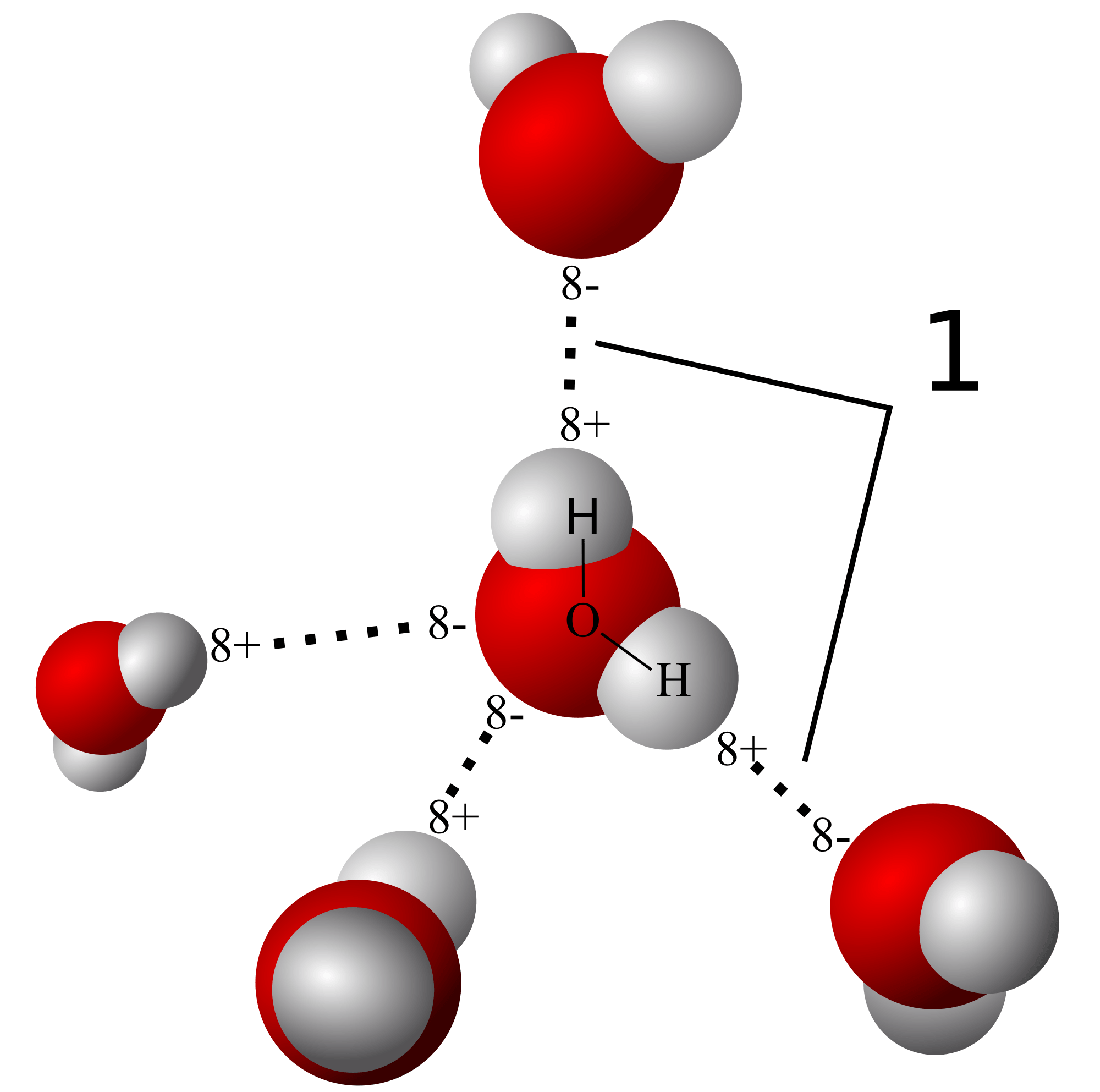
Which of the following makes up a molecule of water?

a)

one atom of hydrogen and one atom of oxygen

b)

one atom of sodium and one atom of chlorine

c)

one atom of hydrogen and two atoms of oxygen

d)

two atoms of hydrogen and one atom of oxygen

16.

A covalent bond is formed as a result of

a)

transferring electrons

b)

sharing an electron pair

c)

transferring protons

d)

sharing a proton pair

17.

What type of ion forms when an atom loses electrons?

a)

neutral

b)

positive

c)

negative

d)

possible positive or negative

18.
Which of the following is true about matter and energy?
a)
It can be created
b)
It can be destroyed
c)
It can be transferred
d)
It can be lost
19.
Why is carbon unique to organic molecules?
a)
It can make four bonds
b)
It can form rings
c)
It can form chains
d)
It can bond to itself
20.
How many molecules in  .....5 H2O ?
a)
10
b)
5
c)
2
d)
1
21.
How many total atoms in  ..... H2SO?
a)
7
b)
3
c)
4
d)
10
22.
What is the maximum number of electrons in the first shell?
a)
8
b)
3
c)
10
d)
2
23.
What is the maximum number of electrons in the second shell?
a)
2
b)
10
c)
8
d)
6
24.
What is the product ?
N2 + 3 H2 ------>   2 NH3
a)
N2
b)
3 H2
c)
N2 + 3 H2
d)
2 NH3
25.

The atomic number tells you

a)

number of neutrons in the nucleus

b)

number of protons in the atom

c)

atomic mass of the atom

d)

number of electrons if the atom is neutral

e)

both b and d are correct

26.

When an atom gains electrons, it

a)

forms a negatively charged ion

b)

forms a positively charged ion

c)

forms covalent bonds

d)

all of these are correct

27.

Which of these properties of water can be attributed to hydrogen bonding between water molecules?

a)

water stabilizes temperature inside and outside the cell

b)

water molecules are cohesive

c)

water is a solvent for many molecules

d)

ice floats on water

e)

all of these are correct

28.
DIFFERENT kinds of atoms chemically combined to form a substance are
a)
Mixture
b)
Element
c)
Compound
d)
Substance
29.
Water is an element
a)
true
b)
false
30.
A heterogeneous mixture would be:
a)
gold
b)
chex mix
c)
chocolate milk
d)
water
31.
How many protons, neutrons, and electrons does Zinc have?
a)
30 protons
35 neutrons
30 electrons
b)
30 protons
95 neutrons
30 electrons
c)
35 protons
30 neutrons
35 electrons
d)
30 protons
65 neutrons
30 electrons
32.
Which of the following is a chemical change?
a)
Water evaporates from the ocean.
b)
An egg is cooked.
c)
Food coloring dissolves in water. (Solubility)
d)
You get a hair cut.
33.
The pH of an acidic substance is:
a)
Between 1 and 6.9
b)
7
c)
Between 7.1 and 14
34.
If you taste something that is sour, it is most likely a/an:
a)
Base
b)
Acid
c)
Neutral
35.
If we add water to a substance, it will bring the pH of that substance closer to: 
a)
1
b)
7
c)
14
36.
The pH scale is a range from:
a)
1-7
b)
0-14
c)
1-14
d)
1-20
37.
A(n) ______ is a substance with a pH less than 7
a)
Acid
b)
Alkaline
c)
Base
d)
Buffer
38.
What is the only substance with a neutral pH of 7?
a)
Milk
b)
Orange Juice
c)
Water
d)
Blood
39.
Which solution releases H+ in solution?
a)
Base
b)
Acid
c)
Buffer
d)
Water
40.
This substance releases OH- into solution
a)
Acid
b)
Base
c)
Neutral
41.
A solution with a pH of 3.6 would be...
a)
Acid
b)
Base
c)
Neutral
d)
Acid and Base
42.
A solution with a pH of 8.6 would be...
a)
Acid
b)
Base
c)
Neutral
d)
Acid and Base
43.
Which is most acidic?
a)
Baking Soda
b)
Lemon Juice
c)
Black Coffee
d)
Milk
44.
According to the pH range which substance is more acidic than lemon juice
a)
Hydrochloric acid
b)
cabbage
c)
milk
45.
Bleach is a strong base, what is the pH level of bleach?
a)
13
b)
14
c)
1
d)
2
46.
An ionic bond forms when atoms ___________ electrons.
a)
gain
b)
share
c)
increase
d)
transfer
47.
Which type of bond has an equal sharing of electrons?
a)
Polar Covalent 
b)
Non Polar Covalent
c)
Ionic
d)
Metallic
48.
Which type of bond has an unequal sharing of electrons?
a)
Polar Covalent 
b)
Non Polar Covalent
c)
Ionic
d)
Metallic
49.
An ionic bond forms when atoms ___________ electrons.
a)
gain
b)
share
c)
increase
d)
transfer
50.
If an atom loses two electrons what charge will it have?
a)
+ 2
b)
 - 2
c)
+1
d)
-1
51.
If an atom gains one electron what charge will it have?
a)
-2
b)
-1
c)
+1
52.
What is the number of valence electrons for Oxygen?
a)
8
b)
6
c)
2
d)
1
53.
Isotopes of the same element differ in which of the following?
a)
Their number of neutrons.
b)
Their number of protons.
c)
Their number of electrons.
54.
Which two subatomic particles are located in the nucleus?
a)
Protons and Electrons
b)
Protons and Neutrons
c)
Electrons and Protons
55.
To what does the term valance refer?
a)
Electrons in the innermost energy level.
b)
Protons in the innermost energy level.
c)
Electrons in the outermost energy level.
d)
Protons in the outermost energy level.
56.

In this chemical equation, the elements in red are the_______.

a)

Products

b)

Reactants

c)

Subscripts

d)

Coefficients

57.
Changing this changes the element name
a)
protons
b)
neutrons
c)
electrons
58.
Changing this changes the weight of an atom
a)
protons
b)
neutrons
c)
electrons
d)
protons and neutrons
59.
Sharing electrons in a chemical bond
a)
ionic bond
b)
covalent bond
60.
What type of substance regulates the pH of the body by releasing and capturing Hions?
a)
Alkalines
b)
Buffers
c)
Neutralizers
d)
Hydrogenators
61.
What type of bond holds together the individual hydrogen and oxygen atoms of a single water molecule?
a)
Covalent
b)
Hydrogen
c)
Ionic
62.
What type of bond holds together two or more molecules of water?
a)
Covalent
b)
Hydrogen
c)
Ionic
63.
Which property of water allows it to stick to other water molecules and create surface tension?
a)
Cohesion
b)
Adhesion
c)
Heat Capacity
d)
Universal Solvency
64.
What property of water allows it to be such a versatile solvent that it is often called the "universal solvent?"
a)
Purity
b)
Polarity and cohesion
c)
High heat capacity
d)
Expansion upon freezing
65.
Large bodies of water do not quickly fluctuate in temperature. Why?
a)
Water is a solvent.
b)
Water has a high heat capacity.
c)
Water acts as a buffer.
d)
Water is non-polar.
66.
Water striders can walk across the surface of calm water. Their feet push the surface of the water down slightly, but they do not break the surface. Why?
a)
The insects are light enough so they do not break the hydrogen bonds holding the water molecules together
b)
The insects actually use their wings to hover slightly above the water’s surface and they only skim it with their feet.
c)
The insect’s feet are non-polar, so they are repelled by the polar water molecules and are pushed away from the water’s surface.
d)
The insects are small enough to see the individual water molecules, so they are able to step carefully from one molecule to the next
67.
What word describes when water is attracted to other substances?
a)
cohesion
b)
adhesion
c)
capillary action
d)
surface tension
68.
Why does water move from the roots to the leaves of plants?
a)
Water is pushed by solutes
b)
Capillary action pulls the water molecules like a chain
c)
Water is pulled by gravity
d)
Water’s cohesion causes it to “pull” towards the leaves
69.
Attractions between water molecules are called
a)
Covalent bonds
b)
Ionic bonds
c)
Polar bonds
d)
Hydrogen bonds
70.
Which is NOT a unique property of water?
a)
Frozen water floats on liquid water.
b)
Water covers most of the Earth’s surface and retains a large amount of heat.
c)
Water molecules stick to each other through hydrogen bonds.
d)
Water cools very rapidly.
71.
What property of water helps to moderate earth's temperature?
a)
adhesion
b)
chohesion
c)
Specific heat capacity
d)
Latent heat of vaporization
72.
Why does ice float?
a)
As water freezes, it expands and its density decreases.
b)
As water freezes, it takes up more hydrogen from the atmosphere, causing it to have a greater buoyancy.
c)
As water freezes, air becomes trapped between the hydrogen bonds of water molecules.
d)
As water freezes, it takes up more oxygen from the atmosphere, causing it to have a greater buoyancy.
73.
Water is polar because...
a)
The unequal sharing of electrons gives the water molecule a slight negative charge near its oxygen atom and a slight positive charge near its hydrogen atoms.
b)
The molecule has two poles, at which the it is colder than other regions of the molecule.
c)
The unequal sharing of electrons gives the water molecule a slight negative charge near its hydrogen atoms and a slight positive charge near its oxygen atom.
d)
The water molecule is neutral.
74.

How many hydrogen atoms are in a water molecule?

a)

5

b)

1

c)

2

d)

0

75.
Which types of compounds dissolve easily in water?
a)
Polar and Nonpolar
b)
Polar and Ionic
c)
Nonpolar and Ionic
d)
Covalent and Nonpolar
76.
Water is a universal solvent because it...
a)
It can be found anywhere
b)
It freezes when it gets cold
c)
floats when frozen
d)
Dissolves most substances
77.
Which of the following is LEAST likely to dissolve in water?
a)
nonpolar fats and oils
b)
polar sugar molecules
c)
salt made of a positive sodium ion and a negative chloride ion
d)
all of the substances will dissolve easily in water
78.
When water molecules stick easily to other water molecules, this is called what?
a)
cohesion
b)
adhesion
c)
solution
d)
polar molecule
79.
Saltwater will freeze __________ as freshwater.
a)
faster
b)
slower 
c)
about the same speed
80.
Water beads up on the surface of a penny because of what property?
a)
Adhesion
b)
High Surface Tension
c)
Universal Solvent
d)
Changes in Density
81.
Which of the following shows the correct way to balance the chemical equation?
Fe + O2 -> Fe2O3
a)
4Fe + 3O2 -> 2Fe2O3
b)
2 Fe + 3O2 -> Fe2O6
c)
4 Fe + O6 -> 2Fe2O3
d)
None of the options are correctly balanced.
82.
Balance this equation-
__P+ __O--> __P2O3
a)
it is already balanced
b)
2, 1, 3
c)
1, 2, 3
d)
1, 3, 2
83.
Balance this equation
_Al +_HCl --> _H+_AlCl3
a)
2, 6, 3, 2
b)
it is already balanced
c)
4, 12, 3, 4
d)
2, 1, 4, 5
84.
Balance this equation.
_CF+ _Br-- _CBr+ _F2
a)
2,1,2,1
b)
1,2,2,1
c)
1,2,1,2
d)
2,2,2,2
85.
Balance this equation.
_CH4 + _O--> _CO+ _H2O
a)
1,2,1,1
b)
2,1,2,1
c)
1,2,1,2
d)
0,2,0,2
86.

Balance this equation, AlCl3 + NaOH → Al(OH)3 + NaCl

a)

3,1,3,1

b)

1,3,3,1

c)

1,1,1,3

d)

1,3,1,3

87.

PCl5 + ___ H2O → ___ HCl + H3PO4

a)

4, 5

b)

1, 6

c)

3, 8

d)

2,2

88.
Balance this equation.
_SnO+_H2-->_Sn +_H2O
a)
1,1,2,1
b)
1,2,1,1
c)
1,2,1,2
d)
1,2,2,1
89.
Balance this equation
_Al +_HCl --> _H+_AlCl3
a)
2, 6, 3, 2
b)
it is already balanced
c)
4, 12, 3, 4
d)
2, 1, 4, 5
90.

Electronegativity is the amount of attraction (or pull) of an atom for electrons in a covalent bond.

a)

True

b)

False

91.
What is a coefficient?
a)
The small number on the right of the chemical symbol.
b)
The large number in front of a chemical formula.
c)
The number in between the chemical symbols.
d)
The number behind a chemical formula.
92.
How many atoms of carbon (C) are in C6H12O6?
a)
3
b)
6
c)
12
d)
24
93.

The neutrons are the only subatomic particles with no mass.

a)

True

b)

False

94.

A _____________ has two or more atoms bonded together.

a)

compound

b)

molecule

c)

element

d)

ion

95.

A ________________ has two or more elements bonded together.

a)

compound

b)

molecule

c)

element

d)

ion

96.

Which 3 of the following are trace elements?

a)

Fluorine

b)

Hydrogen

c)

Oxygen

d)

Chromium

e)

Selenium

97.

Which 4 of the following make up 96% of elements in living things?

a)

Carbon

b)

Sodium

c)

Hydrogen

d)

Nitrogen

e)

Oxygen

98.

How many essential elements are there in living organisms?

a)

92

b)

14

c)

25

d)

64

99.

Fossil fuels release pollutants and CO2 into the atmosphere which returns to earth as acid precipitation.

a)

True

b)

False