
 Worksheets
CHEM2.00 Analyzing Data Review
Total questions: 43
Worksheet time: 37mins
What SI unit is used to measure length?
meters
liters
centimeters
kilograms

Convert 99.6°F to Celsius (°C=5/9 x (°F - 32))
37.6°C
37.5°C
73.1°C
375°C
Convert 30°C to Fahrenheit (1.8 x °C) + 32
860°F
86°F
63.8°F
56°F
If a glass of water warms to 78°C, what is it's temperature in Kelvin?
-195
78
350
351
True or False: A 5.0g sample of aluminum and a 500.0g sample of aluminum will have the same density.
True
False
What units are used to measure density? (Note: 1 cm3 = 1 mL, they are the same.)
cm3/g
g
g/cm3
cm3
Frank has a paper clip. It has a mass of 9.0 g and a volume of 3.0 cm3. What is its density?
3.0 g/cm3
3 g/cm3
27 g/cm3
0.33 g/cm3
An empty beaker has a mass of 60.0 grams. When mercury is added to the beaker, the mass increases to 200.0 grams. What is the mass of the mercury?
140.0 grams
200 grams
140 mL
260 g
Lead if it has a density of 11.3 g/cm3. How much space would 150.0g of lead occupy?
13.27 g
13.3 cm3
.0753 g
1695 cm3

Which metal has the greatest density?
Metal A
Metal B
Metal C
There is no way to tell from the graph


If this substance takes up 6 ml of space, what is its mass?
6 mL
6 g
Impossible to tell
6 g/mL
If a number written in scientific notation has a positive exponent, what does this tell you about the number?
It is greater than 1
It is less than 1
If the exponent is positive, the number must be negative
When writing a very small number (less than 1) in scientific notation, what will always be true of the exponent?
It will be very small
It will be negative
It will be very large
It will be positive
Write 8 x 10⁴ in standard form.
8,000
80,000
.00008
Write 0.00003780 in scientific notation.
3.780 x 10⁻⁵
3.78 x 10⁻⁶
0.378 x 10⁻⁴
3.78 x 10⁻⁵
(2.1×102) × (3.0×104)
(6 x 10⁶) / (2 x 10³)
Solve and write the answer in scientific notation.
(4.10 x 10⁵) + (5.50 x 10⁶) =
5.91 x 10⁶
9.60 x 10⁶
4.64 x 10⁶
2.25x10¹²
Solve and write the answer in scientific notation:
(2.00 x 10³) - (1.90 x 10²)
1.0x101
1.81 x 10³
-1.70 x 10³
18.1 x 10²
The length of a desk is 3.50 feet. Convert this to centimeters. There are 2.54 cm in an inch.
60.0 cm
120. cm
107 cm
117 cm
How many years are in a 3 months?
0.2 yrs
0.75 yrs
0.50 yrs
0.25 yrs
How many kilograms of calcium are there in 173 pounds of calcium? (1 pound = 454 grams; 1 kg = 1000 g)
1.10 kg
78.5 kg
110 kg
78500 kg
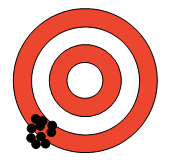
Which is the more precise measurement?
They are all the same
4.3 mL
4.30 mL
4.300 mL
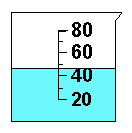
What is the correct volume of water in the beaker?
48 mL
48.2 mL
48.25 mL
40 mL
50 mL
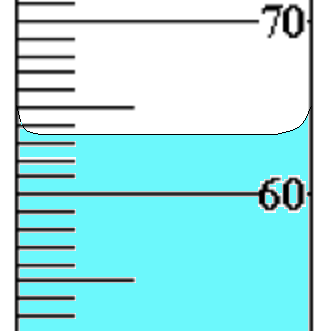
What is the correct volume of water in the graduated cylinder?
63.5 mL
63 mL
63.55 mL
64 mL
How many significant figures in 4,500?
3
4
2
1
How many significant figures in 4,500.0?
3
4
2
5
0.00400
Round the following to 1 sig fig: 72156
70000.
7.0 x 10⁴
70000.0
70000
What is the measurement 1042 Liters rounded to 2 significant figures?
1040 L
1.1 x 10³ L
1.0 x 10³ L
1000 L
1100 L
Solve & round to the correct sig figs: 4.5 + 4.32 =
8.8
8.9
8.82
9.0
Solve & round to the correct sig figs: 4.5 x 2.34 =
11
10.53
10.5
10
A student measured the length of a pencil during a science experiment as 12.00 cm. The actual length was 14.25 cm. What was the percent error?
15.79%
18.75%
2.25%
18%

