
Font size
 Worksheets
Anatomy Test 10 (Senses) Review
Total questions: 83
Worksheet time: 37mins
Structures that detect environmental changes that trigger nerve impulses
Sensory Receptors
Sensory Effectors
Motor Transmitters
Nephrons
Which of the following is NOT a General Sense?
pain
touch
balance
temperature
Which of the following are Special Senses?
Vision
Smell
Taste
Pain
Which senses use Chemorecptors
touch
smell
hearing
taste
Which senses use Mechanoreceptors
Vision
Touch
Balance
Hearing
Which of the following in not the name of a sensory receptor?
Pain receptors
Thermoreceptors
Sound receptors
Photoreceptors
What term refers to how your brain interprets sensory information?
Sensation
Perception
Adaption
Projection
How the brain causes the feeling to seem to come from the sensory receptors even though the "feeling" is happening in your brain.
adaption
projection
transduction
gaslighting
When your body tunes out smells that were originally overpowering.
emancipation
perception
adaption
declination

This touch receptor found in your upper dermis allow you to sense light touch.
Tactile corpuscle
Lamellated corpuscle
Free nerve ending
Nociceptor
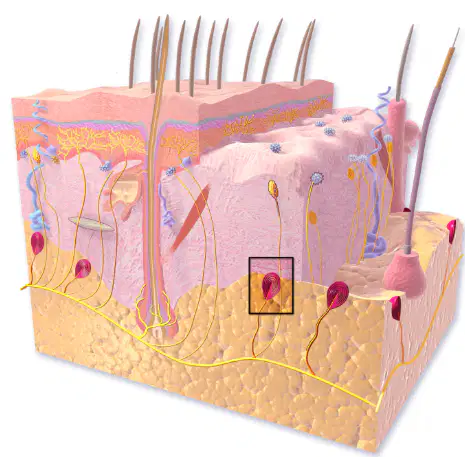
This touch receptor found in your deep dermis allow you to sense heavy pressure.
Tactile corpuscle
Lamellated corpuscle
Free nerve ending
Nociceptor
What do Nociceptors detect?
temperature changes
tissue damage
heavy pressure
light touch
When a person has a heart attack but they also feel pain in their left arm.
mixed perception
referred pain
reflex arc
transduction
Which type of pain is dull and long lasting?
acute
chronic
visceral
neuropathic
Which neurotransmitter has no direct link to pain relief?
Endorphins
Enkephalins
Serotonin
Acetylcholine
Which sense does olfactory refer to?
smell
taste
temperature
touch
What sense does gustatory refer to?
smell
taste
temperature
touch
What do we call the chemicals we can smell?
flocculants
irritants
odorants
volants
What do we call the chemicals we can taste?
contaminants
irritants
tastants
volants
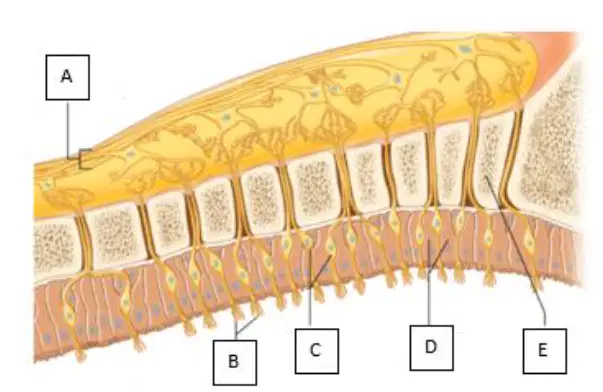
What is E?
Palate
Cribriform plate
Frontal bone
Growth plate
What does this structure sense?
Touch
Smell
Taste
Temperature
What is C?
Columnar Epithelial cells
Basal cells
Olfactory receptor cells
Gustatory receptor cells
Which cranial nerve sends smell sensations to the brain?
Olfactory
Vagus
Glossopharyngeal
Accessroy
Which part of the brain perceives smell?
Occipital lobe
Frontal lobe
Medulla Oblongata
Midbrain
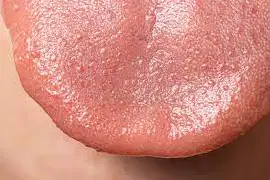
What are the bump on your tongue?
Taste buds
Salivary Glands
Papillae
Pustules
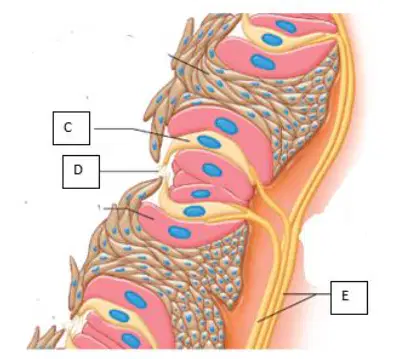
What is C?
Gustatory cell
Olfactory cell
Basal cell
Nociceptor
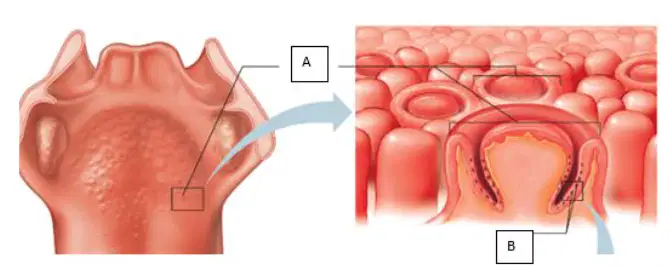
What are B?
Taste buds
Papillae
Salivary glands
Tongue seeds
Which of the following is not technically sensed by taste buds?
savory
sweet
bitter
spicy
Which Cranial nerves send tastes sensations to the brain?
Vagus
Acessory
Facial
Trochlear
Glossopharyngeal
Which part of your brain perceives taste?
Frontal lobe
Parietal lobe
Hypothalamus
Midbrain
What property of a sound wave affects the pitch?
Amplitude
Speed
Voltage
Frequency
What property of a sound wave affects the loudness?
Amplitude
Speed
Voltage
Frequency

Ampulla
Pinna
Cochlea
Ossicle

Eustachian tube
Auditory foramen
Vestibulocochlear canal
Auditory Acoustic Meatus

Tympanic membrane
Oval window
Round window
Utricle

Ampulla
Ossicle
Utricle
Macula

Cochlear sinus
Auditory acoustic meatus
Eustachian tube
lacrimal duct

Vestibule
Cochlea
Semicircular canal
Macula

Eustachian tube
Semicircular canal
cochlea
Utricle

Facial nerve
Vestibulocochlear nerve
Glossopharyngeal nerve
Olfactory nerve

Perilymph
Endolymph
Osseous labyrinth
Membranous labyrinth

Perilymph
Endolymph
Osseous labyrinth
Membranous labyrinth

Perilymph
Endolymph
Osseous labyrinth
Membranous labyrinth

Perilymph
Endolymph
Osseous labyrinth
Membranous labyrinth

Oval window
Round window
Acoustic meatus
Utricle

Oval window
Round window
Acoustic meatus
Utricle

Ampulla and Utricle
Utricle and Saccula
Saccule and Organ of corti
Organ of corti and Ampulla

semicircular canal
cochlea
utricle
organ of corit

semicircular canals
Eustachian tubes
cochlea
auditory loops

What structure is found at the end of each tube?


ampulla
Organ of corti
utricle
saccule
Where is this structure found
middle ear
vestibule
cochlea
semicircular canals
What does this structure help sense?
sound
dynamic equilibrium
static equilibrium
visual movement

Ampulla
jelly rock
head slug
Macula

What does this structure help you sense?
sound
dynamic equilibrium
static equalibrium
smell
Where is this structure found?
cochlea
base of semicircular canals
utricle and saccule
roof of nasal cavity

ampulla
macula
saccule
ear jelly
Where is this structure found?
cochlea
base of semicircular canals
utricle and saccule
nose
What does this structure help you sense?
sound
dynamic equilibrium
static equilibrium
vision

Which is the proper order of ossicles from eardrum to inner ear?
hammer, stirrup, anvil
hammer, anvil, stirrup
anvil, hammer, stirrup
anvil, stirrup, hammer
Which is the proper order of ossicles from eardrum to inner ear?
malleus, stapes, incus
malleus, incus, stapes
incus, malleus, stapes
incus, stapes, malleus
What structure does the Tympanic membrane pass the vibration to?
Oval window
Hammer
Stapes
Cochlea
What structure does the Stapes pass the vibration to?
Oval window
Hammer
Round window
Tympanic membrane
Which part of your Cerebrum perceives sound?
Frontal lobe
Temporal lobe
Parietal lobe
Occipital lobe
Rods are light sensitive cells in the retina that
give you color vision in dim light
respond in dim light
give you color vision in bright light
respond in bright light
Cones are light sensitive cells in the retina that
give you color vision in bright light
respond in dim light
give you color vision in dim light
respond in bright light
The optic nerve transmits signals to the
temporal lobe
parietal lobe
occipital lobe
frontal lobe
The cornea
helps protect the eye
begins bending light to make an image
both of the above
none of the above
True/False: The vitreous humor helps give the cornea its rounded shape.
True
False
True/False: The tapetum helps with night vision.
True
False
The pupil is located at the center of the
sclera
iris
retina
nothing
The vitreous humor is
gel like and gives the eyeball its shape
watery and gives the eyeball its shape
The blind spot is created by the
retina
optic nerve leaving the eye through the retina
nothing; we don't have one
The sclera is designed for
strength
clarity
What are the functions of eyelids and eyelashes
to protect and rehydrate the eyes
keep dirt out of the eyes
keep debris out of the eys
all of the above
The human eye is surrounded by how many muscles?
4
2
6
5
The optic nerve has a covering that helps protect and insulate it called the
muscle fiber
fat layer
myelin sheath
trash bag


What part of the eye is this?
iris
lens
cornea
retina



