Wayground logo

Free Printable Worksheets

Font size

S
M
L
XL
Worksheets

Waves and the Electromagnetic Spectrum

Total questions: 72

Worksheet time: 44mins

Name
Class
Date
1.
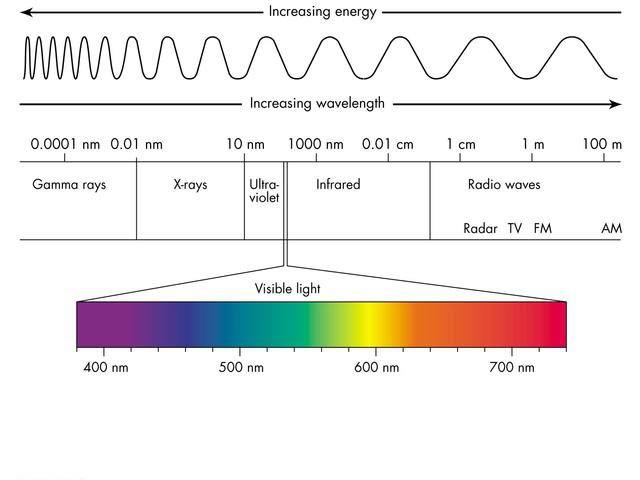
Which electromagnetic waves are used in ovens and cell phone communications?
a)
Infrared rays
b)
ultraviolet rays
c)
microwaves
2.
Which type of waves are used in broadcasting?
a)
radio waves
b)
infrared rays
c)
x-rays
3.
A wave with a large wavelength will have a ______ frequency and _____ energy
a)
high, low
b)
high, high
c)
low, high
d)
low, low
5.
Select the correct order of waves on the EMS from the longest wavelength to the shortest wavelength
a)
Radio, Micro, Infra, Visible, Ultra, X-ray, Gamma
b)
Gamma, X-ray, Ultra, Vis, Infra, Micro, Radio
c)
Vis, Micro, Infra, Ultra, X-ray, Gamma, Radio
d)
Micro, Radio, Vis, Infra, Ultra, X-ray, Gamma
5.
Select the correct order of waves on the EMS from the longest wavelength to the shortest wavelength
a)
Radio, Micro, Infra, Visible, Ultra, X-ray, Gamma
b)
Gamma, X-ray, Ultra, Vis, Infra, Micro, Radio
c)
Vis, Micro, Infra, Ultra, X-ray, Gamma, Radio
d)
Micro, Radio, Vis, Infra, Ultra, X-ray, Gamma
7.
Which has the SHORTEST wavelength and, therefore, the highest frequency/most energy
a)
Radio waves
b)
Ultraviolet Rays
c)
Gamma Rays
d)
X-rays
7.
Which has the SHORTEST wavelength and, therefore, the highest frequency/most energy
a)
Radio waves
b)
Ultraviolet Rays
c)
Gamma Rays
d)
X-rays
8.
Which section of the spectrum is the ONLY one we can see?
a)
X-rays
b)
Visible Light
c)
Gamma Rays
d)
Ultraviolet Rays
9.
How are electromagnetic waves different from other waves? 
a)
They have very short wavelengths 
b)
They transmit energy instead of matter 
c)
They can travel through empty space
d)
They can change direction by reflection 
10.
Which of the following electromagnetic waves has the lowest energy?
a)
gamma ray
b)
infrared wave
c)
visible light wave
d)
microwave
11.
As the frequency of an electromagnetic wave increases, the amount of energy in that wave...
a)
increases.
b)
decreases.
c)
stays the same.
12.
The distance between two crests or two troughs of a wave is called:
a)
frequency
b)
amplitud
c)
wavelength
d)
hertz
13.
The height of the wave from the rest position is known as the _____________.
a)
amplitude
b)
crest
c)
trough
d)
wavelength
14.
The height of the wave from the rest position is known as the _____________.
a)
amplitude
b)
crest
c)
trough
d)
wavelength
15.
Which type of light has the smallest frequency of this group?
a)
red
b)
yellow
c)
green
d)
blue
16.
EM waves used to broadcast television signals
a)
radio waves
b)
infrared
c)
gamma rays
d)
x rays
17.
EM waves used to treat some forms of cancer
a)
microwaves
b)
gamma waves
c)
ultraviolet
d)
infrared
18.
White light is the entire range of
a)
colors of visible light combined.
b)
ultraviolet light.
c)
gamma rays and X rays.
d)
EM waves.
19.
EM waves used in security scanning devices in airports
a)
ultraviolet
b)
x rays
c)
radio waves
d)
infrared
20.
EM waves that make an object feel warmer
a)
visible light
b)
red light
c)
infrared waves
d)
ultraviolet
22.
Ultraviolet light is associated with
a)
human vision
b)
communication
c)
lung cancer
d)
producing vitamin D
22.
Ultraviolet light is associated with
a)
human vision
b)
communication
c)
lung cancer
d)
producing vitamin D
24.

Light acts like

a)

a wave.

b)

a particle.

c)

Both a wave and a particle

d)

neither a wave nor a particle.

24.

Light acts like

a)

a wave.

b)

a particle.

c)

Both a wave and a particle

d)

neither a wave nor a particle.

25.

The full range of frequencies of electromagnetic radiation is called

a)

visible light.

b)

radio waves.

c)

the electromagnetic spectrum.

d)

invisible radiation.

26.

Which of the following occurs as a light wave bends when it passes from one medium into another?

a)

constructive interference

b)

refraction

c)

destructive interference

d)

reflection

27.

Cellular telephones utilize

a)

radar waves.

b)

very high frequency waves.

c)

very low frequency waves.

d)

microwaves.

28.

Which is an example of a radio wave

a)

television

b)

heat lamp

c)

vision

d)

sun light

29.
Which portion of the electromagnetic spectrum includes the entire range of light that can be detected by the human eye? 
a)
ultraviolet light
b)
visible light
c)
infrared light
d)
x-rays
30.
Cell phones use_____________waves.
a)
Microwaves
b)
Gamma
c)
XRays
d)
Radio 
31.
EM waves ________ a medium.
a)
require
b)
don't require
c)
can have
d)
sometimes have
32.

What is the correct order of the visible light spectrum starting with the longer wavelength?

a)

Red, yellow, orange, blue, violet, indigo

b)

Violet, indigo, blue, green, yellow, orange, red

c)

Green, yellow, blue, indigo, red, orange

d)

Red, orange, yellow, green, blue, indigo, violet

33.

What is the correct order of the visible light spectrum starting with the longer wavelength?

a)

Red, yellow, orange, blue, violet, indigo

b)

Violet, indigo, blue, green, yellow, orange, red

c)

Green, yellow, blue, indigo, red, orange

d)

Red, orange, yellow, green, blue, indigo, violet

34.
An example of a wave with a short wavelength, high frequency, and high energy is a 
a)
X-ray
b)
Microwave
c)
Visible light wave
d)
Infrared wave
36.

Which color has the longest wavelength?

a)

Yellow

b)

Red

c)

Green

d)

Purple

36.

Which color has the longest wavelength?

a)

Yellow

b)

Red

c)

Green

d)

Purple

37.
________________ are waves used by cops to test the speed of your car with RADAR.
a)
Ultraviolet
b)
Infrared
c)
Radio
d)
Microwaves
38.
The blue section of the wave is measuring _________________.
a)
wavelength
b)
crest
c)
trough
d)
amplitude 
40.
The orange line is measuring the _________________________.
a)
wavelength
b)
amplitude
c)
crest
d)
trough
40.
The orange line is measuring the _________________________.
a)
wavelength
b)
amplitude
c)
crest
d)
trough
41.
The orange line is measuring the _________________________.
a)
wavelength
b)
amplitude
c)
crest
d)
trough
42.
EM waves ________ a medium.
a)
require
b)
don't require
c)
can have
d)
sometimes have
44.
Waves that move the medium parallel to the direction energy travels are 
a)
Transverse
b)
Longitudinal
c)
Surface
d)
Water
44.
Waves that move the medium parallel to the direction energy travels are 
a)
Transverse
b)
Longitudinal
c)
Surface
d)
Water
45.
What occurs when vibrations traveling through an object match the object’s natural frequency? 
a)
Standing Waves
b)
Refraction
c)
Diffraction
d)
Resonance
46.
What causes refraction?
a)
change in speed
b)
change in amplitude
c)
change in frequency
d)
change in wavelength
48.
Waves transfer
a)
the medium
b)
Water
c)
Particles
d)
Energy
48.
Waves transfer
a)
the medium
b)
Water
c)
Particles
d)
Energy
49.
Which of the following is NOT a mechanical wave?
a)
transverse wave
b)
longitudinal wave
c)
electromagnetic wave
d)
surface wave
51.
Which type of interference increases amplitude of a wave?
a)
Constructive 
b)
Destructive
51.
Which type of interference increases amplitude of a wave?
a)
Constructive 
b)
Destructive
53.
Which type of interference decreases amplitude of a wave?
a)
Constructive
b)
Destructive
53.
Which type of interference decreases amplitude of a wave?
a)
Constructive
b)
Destructive
55.
The maximum distance a medium vibrates from rest position is 
a)
Amplitude
b)
Frequency
c)
Wavelength
d)
Speed
55.
The maximum distance a medium vibrates from rest position is 
a)
Amplitude
b)
Frequency
c)
Wavelength
d)
Speed
57.
The high point of a wave.
a)
crest
b)
trough
c)
amplitude
d)
wavelength
57.
The high point of a wave.
a)
crest
b)
trough
c)
amplitude
d)
wavelength
59.
The low point of a wave.
a)
crest
b)
trough
c)
amplitude
d)
wavelength
59.
The low point of a wave.
a)
crest
b)
trough
c)
amplitude
d)
wavelength
60.
The distance from one point to the same point on the next wave.
a)
crest
b)
trough
c)
amplitude
d)
wavelength
61.
The SI unit for frequency is ________.
a)
m
b)
m/s
c)
hertz
d)
s
62.
Which is an example of a longitudinal wave?
a)
light wave
b)
sound wave
c)
visible wave
d)
radio wave
63.
What do waves transfer?
a)
energy
b)
matter
c)
work
d)
power
64.
Which type of wave can travel through matter or empty space?
a)
electromagnetic
b)
mechanical
c)
work 
d)
power
66.
The number of times a waves passes a given point in one sec
a)
frequency
b)
amplitude
c)
energy
d)
trough
66.
The number of times a waves passes a given point in one sec
a)
frequency
b)
amplitude
c)
energy
d)
trough
67.
material in which a mechanical wave travels
a)
medium 
b)
vacuum 
c)
black holes
d)
chocolate
68.

Example of concave.

a)

hour glass

b)

balloon

69.

Example of convex.

a)

hour glass

b)

blown up balloon

70.

Can be seen through it clearly.

a)

opaque

b)

translucent

c)

transparent

71.

Cannot see through it.

a)

opaque

b)

translucent

c)

transparent

72.

Can see through it but image is distorted.

a)

opaque

b)

tranparent

c)

translucent