
 Worksheets
AP Enzymes Review 2023
Total questions: 100
Worksheet time: 2hrs 33mins
Enzymes are an example of
Lipids
Carbohydrate
Protein
Nucleic Acid
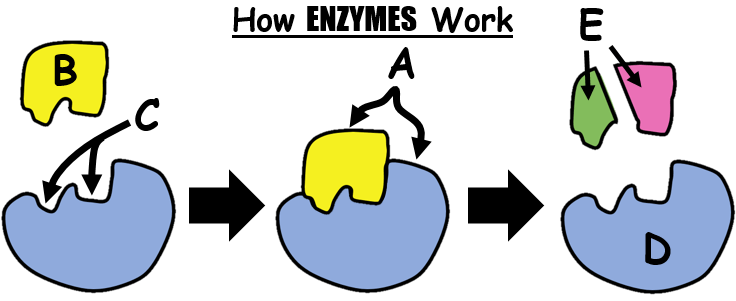
In a chemical reaction, ________ are what you have at the end
Products
Molecules
Reactants
Substances


If enzyme 4 is denatured (stops working), the levels of which substance will increase?
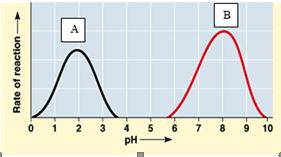
What is the optimal pH of enzyme A?
8
2
5.7-10
10

Which of the following best explains why enzymes are necessary for reactions in our cells?
The reactions are too slow to meet the needs of the cell if enzymes are missing.
Enzymes supply the oxygen necessary for the reactions.
Enzymes change reactants from solid to liquid during the reactions.
The reactions take up too much space in the cell if enzymes are missing.
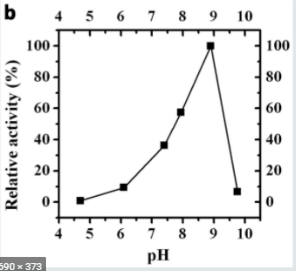
What is the optimal pH for this enzyme?
6
10
9
7
A baby is locked in the car on a hot day. What is most likely to happen to the child?
The child's body will adjust and cause it to maintain homeostasis
The child's enzymes will denature causing chemical reactions to speed up in the body, which will lead to death.
The child's enzymes will denature causing chemical reactions to slow down in the body, which will lead to death.
The activation energy for chemical reactions will remain unchanged and therefore the child will live.
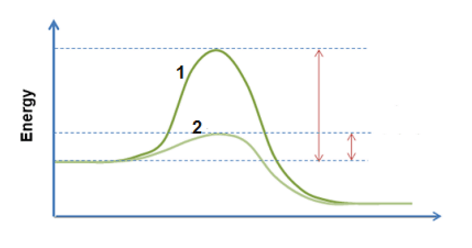
Enzymes are _______________ that _____________________ chemical reactions by ____________ the amount of activation energy required to start the reaction.
carbohydrates, slow down, lowering
proteins, speed up, increasing
lipids, speed up, lowering
proteins, speed up, lowering

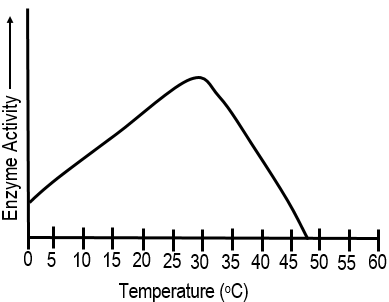
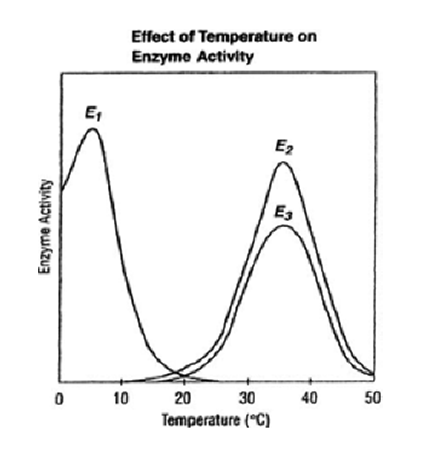
What is the optimal temperature of this enzyme?
60
40
70
30
How does an enzymes shape relate to its function?
the shape of the enzyme has no relation to its function
the enzyme is shaped specially for certain substrates to perform a specific reaction
the enzyme shape acts as a receptor to certain products
the enzyme shape can fit into specific substrates to cease a reaction
What ph do enzymes work best at?
1-3
4-5
6-8
9-14
What temperature do human enzymes work best?
39 degrees Celsius
12 degrees Celsius
20 degrees Celsius
37 degrees Celsius
what is the enzyme that breaks down milk sugar?
lactase
diastase
protease
lipase
Fireflies emit light. The production of light by an organism is called bioluminescence. To generate visible light, cells in a firefly’s tail produce thousands of luciferase enzymes. Luciferase binds to a chemical called luciferin. Once bound, the luciferase enzyme speeds up a chemical reaction that combines an oxygen molecule and luciferin to produce oxyluciferin. This reaction requires energy and releases light. Which of the following best describes how the luciferase enzyme speeds up the chemical reaction?
Luciferase increases the amount of time the light is visible.
Luciferase decreases the amount of energy required for the reaction to start.
Luciferase increases the number of sites on luciferin that must bind to oxygen.
Luciferase decreases the temperature of the environment inside the body of the firefly.
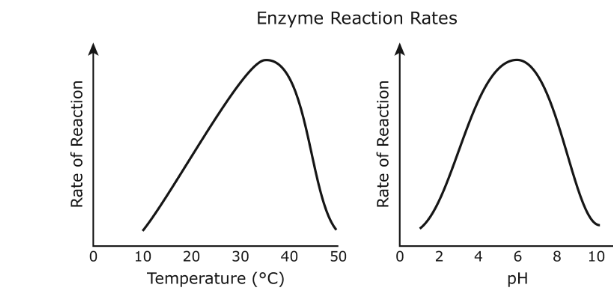
The graphs show the reaction rate for an enzyme across a range of temperatures and pH.
Based on these data, this enzyme functions best as what temperature and pH?
Temperature of 27oC and a pH of 4
Temperature of 37oC and a pH of 6
Temperature of 40oC and a pH of 8
Temperature of 50oC and a pH of 10

The diagram represents one way an enzyme can be inhibited.
Which statement explains the effect of an inhibitor on an enzyme?
A substrate will be able to bond with the enzyme.
The enzyme will likely be attacked by immune cells.
The enzyme will be unable to produce more enzymes.
A substrate will be unable to attach to the enzyme.
If nerve gasses are inhaled, they will temporarily bind to an area on many enzymes that will change the shape of the enzyme. This prevents the enzymes from interacting with other substances and interferes in proper nervous system functioning resulting in death. The nerve gas is an example of a(n):
Substrate
Activation Inhibitor
Production Inhibitor
Competitive Inhibitor
Non-competitive Inhibitor


If a mutation occurs in a DNA sequence that codes for an enzyme, what is the most likely result?
There will likely be no change in the shape and function of the enzyme.
The enzyme will most likely fold in a way that makes its shape incompatible with the substrate and the enzyme will not function correctly.
The enzyme will not be produced at all.
The enzyme will have an enhanced ability to bind with the substrate.
Describes the process by which an enzyme's function at the active site may be either activated or inhibited by the binding of a regulatory molecule at a separate site.
Allosteric Interactions
Feedback Inhibition
Competitive Inhibition
Noncompetitive Inhibition
A molecule that is so similar to the normal substrate that it competes for the active site of the enzyme
Allosteric Inhibition
Competitive Inhibition
Noncompetitive Inhibition
Feedback Inhibition
The process by which a metabolic pathway is shut off by the product it produces
Allosteric Inhibition
Feedback Inhibition
Competitive Inhibition
Noncompetitive Inhibition
A molecule that binds to the enzyme at a site other than the active site, causing the enzyme to change shape and be unable to bind substrate
Allosteric Inhibition
Feedback Inhibition
Competitive Inhibition
Noncompetitive Inhibition
The best way to speed up an enzymatic reaction would be
Add more substrate
Add more enzyme
Increase the temperature
Increase the salinity

The optimum temperature for the action of this enzyme is approximately


How many types of reactions can a specific enzyme direct?
a wide variety of reactions
only one specific reaction
exactly 5 different reactions
every reaction in the cell

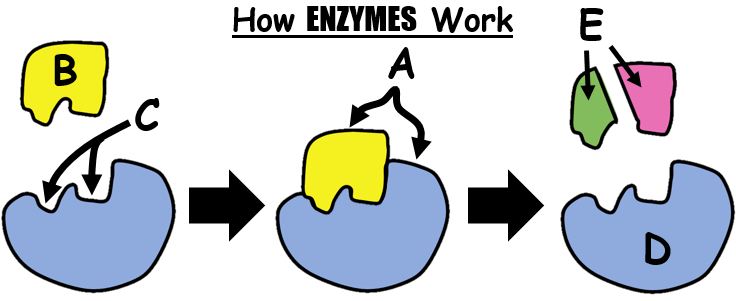
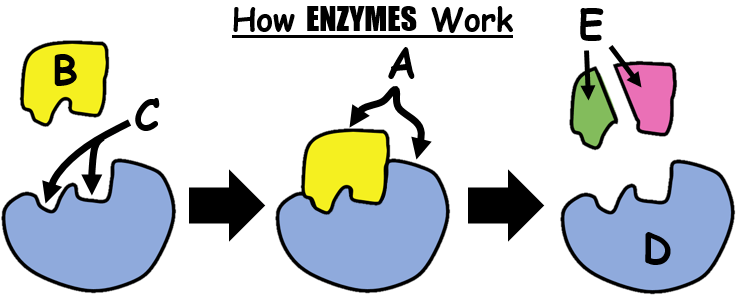
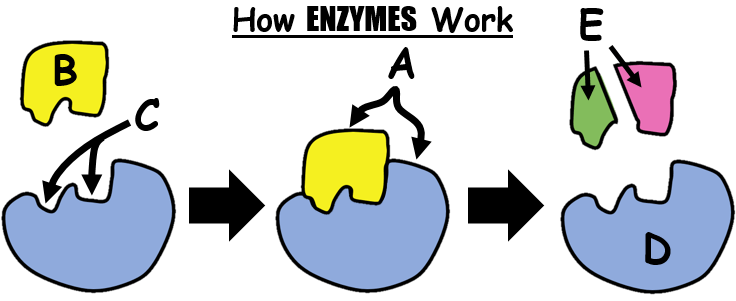
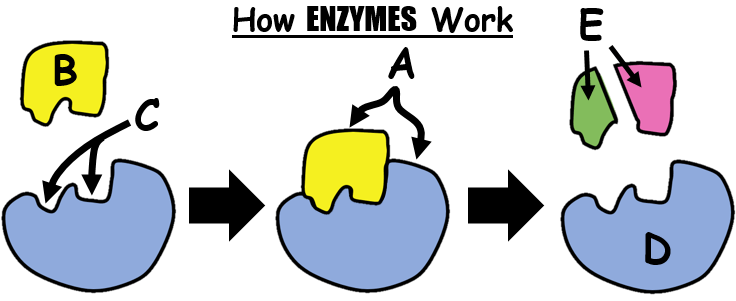
What does letter "C" represent in this diagram?
Enzyme
Substrate
Active Site
Products
What does letter "D" represent in this diagram?
Enzyme
Enzyme-Substrate Complex
Active Site-Enzyme Complex
Products
What does letter "E" represent in this diagram?
Enzyme
Enzyme-Substrate Complex
Active Site
Products

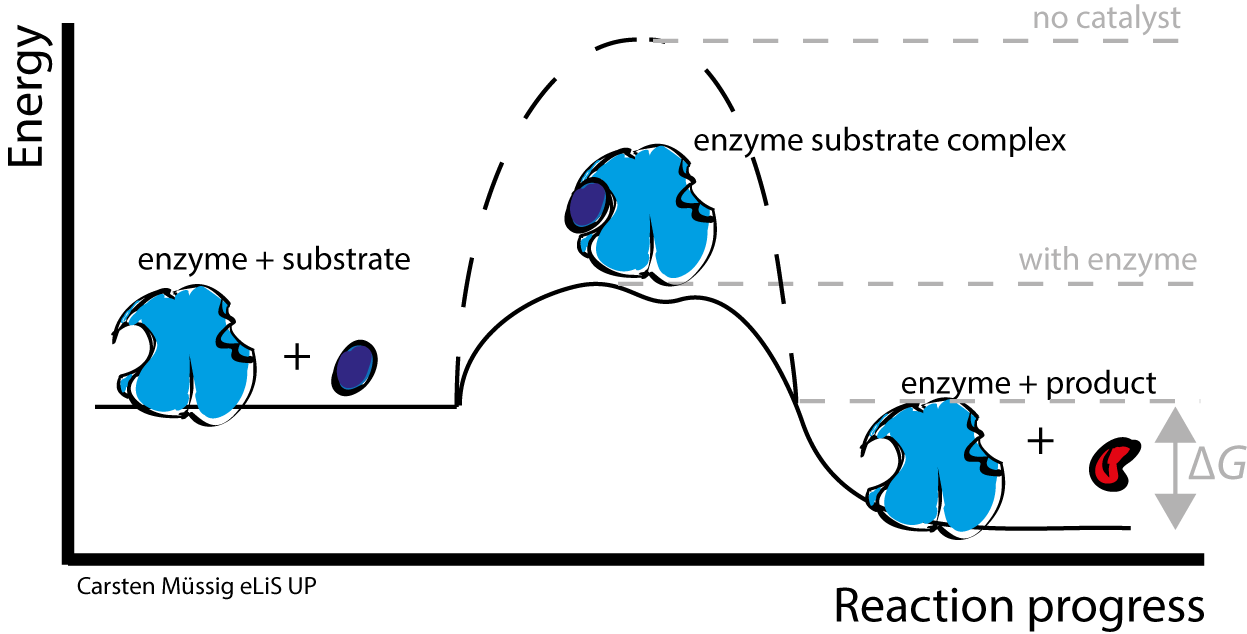
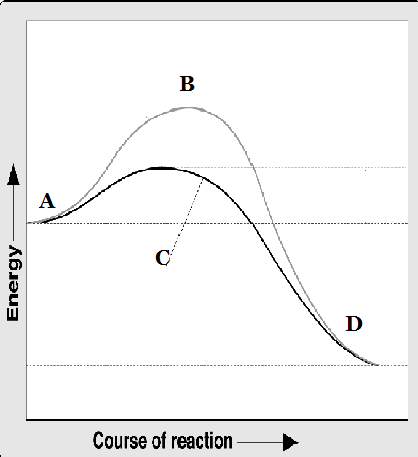
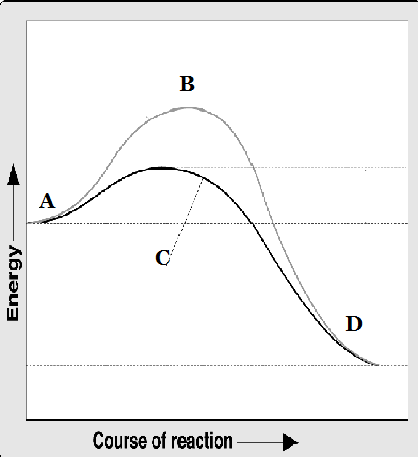
What do we call the amount of energy required to
start a chemical reaction?
Beginning energy
Activation Energy
Connecting energy
Required Energy
How does the presence of an enzyme affect the amount
of energy needed to start the reaction?
Raises the amount of energy needed
Lowers the amount of Energy needed
Doubles the amount of energy needed
The enzyme does not affect the energy level
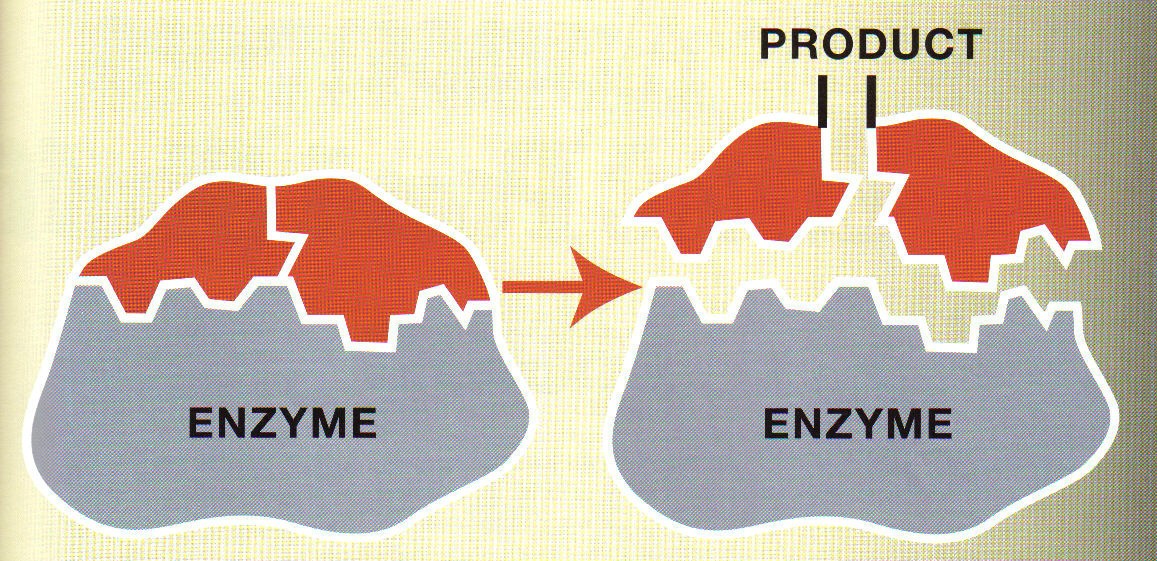
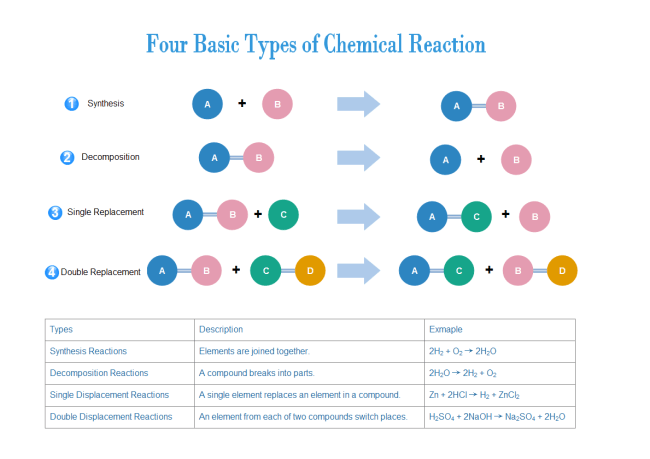
What is another name for an enzyme (What something similar is called in chemistry)?
(a)

F
G
H
J

F
G
H
J

F
G
H
J

A
B
C
D
A small amount of enzymes can act on a large amount of substrate because
enzymes do not change after a reaction and can be used again.
a little enzyme can supply enough energy to carry out a reaction.
as the reaction is going on, more enzymes are produced.
enzymes act in a all or none situation.
Organic compounds are chemical compounds that contain the element
hydrogen.
carbon.
oxygen.
nitrogen.

The new substances formed by an enzyme are called its ______________________.
Substrate
Active site
Products
Complex
Which will affect the rate of a reaction that requires enzymes?
Temperature
pH
Amount of enzyme
All of the above
Which is NOT a characteristic of enzymes?
Reusable
Can be denatured
Specific
Code for proteins

When the substrate and enzyme are bonded together it is called...
Catalyst
Enzyme-substrate complex
Products
Reactants
In noncompetitive inhibition the inhibitor binds to the active site.
True
False

Why does the line on the graph go down after 40 celsius?
The enzyme is denatured.
The enzyme runs out.
There is no substrate.
The enzyme is inhibited.
When an enzyme loses its shape and cannot do its job.
Denature
Hydrolysis
Dehydration synthesis
Translation

Primary Structure
Secondary Structure
Tertiary structure
Quaternary Structure
Three-dimensional shape stabilized by interactions between side chains
Primary Structure
Secondary Structure
Tertiary structure
Quaternary Structure
Association of two or more polypeptides
Primary Structure
Secondary Structure
Tertiary structure
Quaternary Structure
These are the bonds responsible for secondary structure of proteins.
covalent
hydrogen
ionic

