Wayground logo

Free Printable Worksheets

Font size

S
M
L
XL
Worksheets

Periodic Table and Properties Quiz Review

Total questions: 100

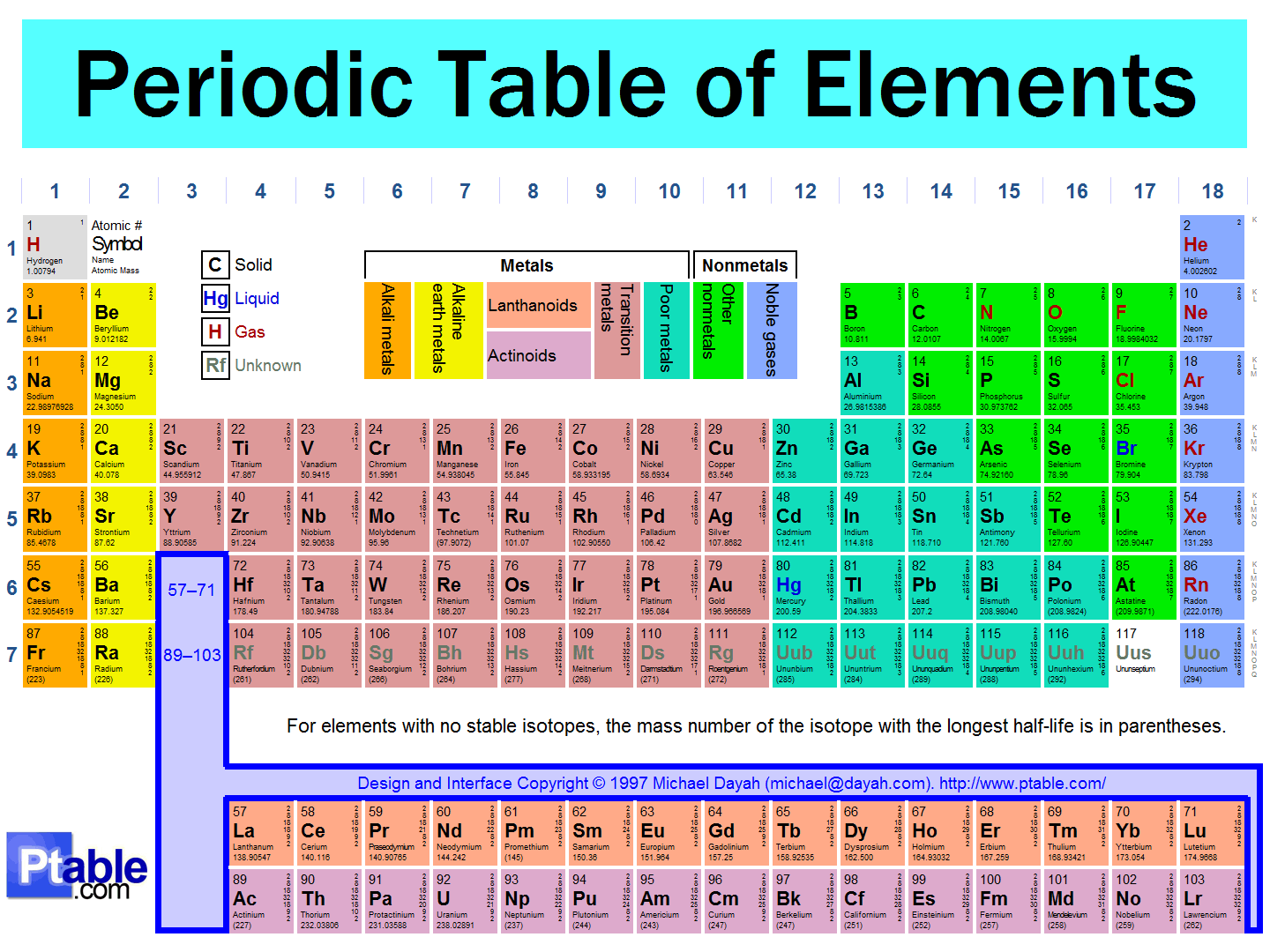
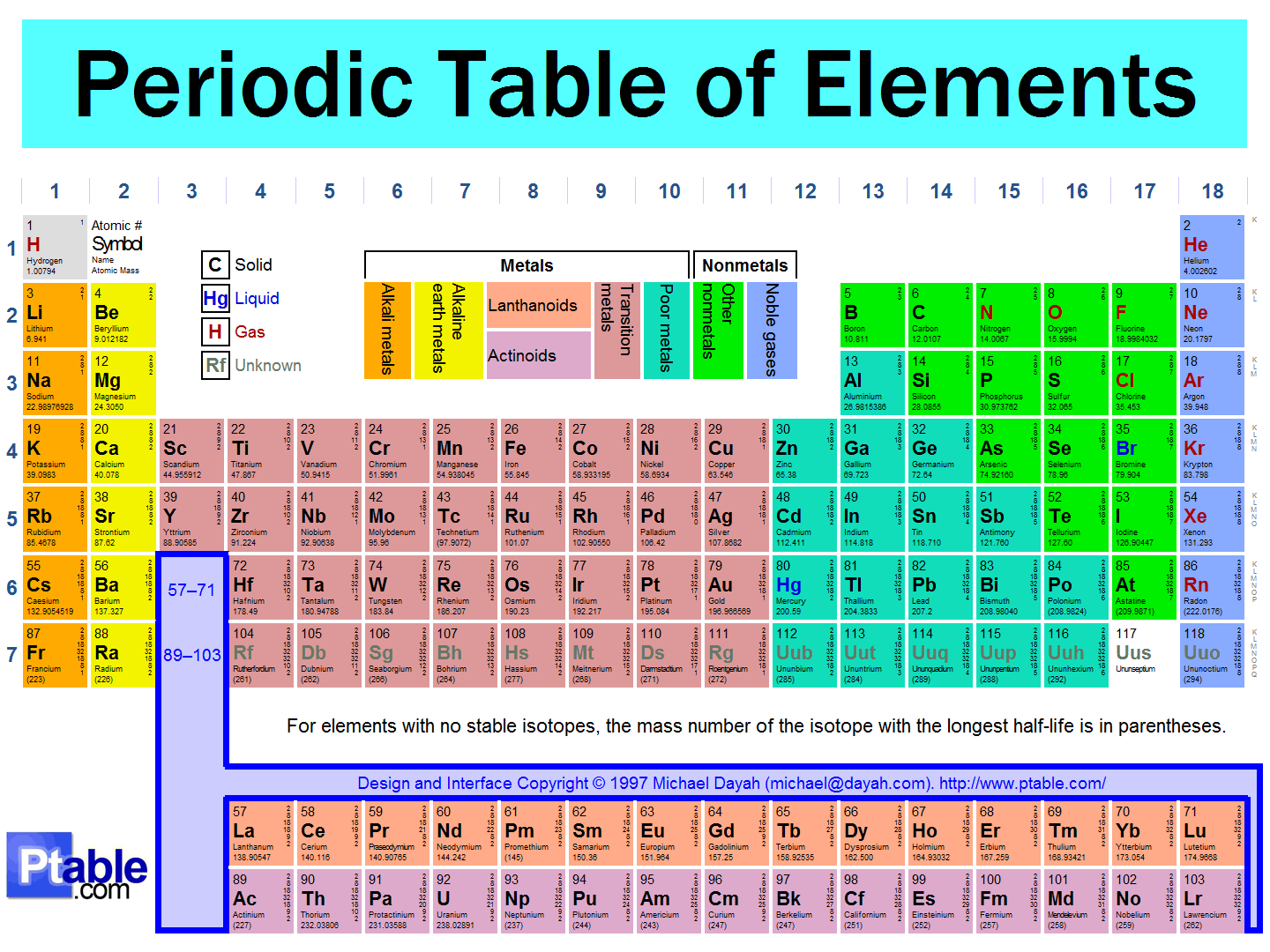
Worksheet time: 1hrs 17mins

Name
Class
Date
1.

Who created the first periodic table?

a)

Mendel

b)

Mendeleev

c)

Moseley

d)

None of these men did!

2.

On the periodic table, rows are known as __________ and columns are known as __________.

a)

groups, periods

b)

periods, groups

3.
Which of the following is a good conductor of heat?
a)
Metal
b)
Nonmetal
c)
Metalloid
4.
Which of these is a property of metals?
a)
It's malleable
b)
It can't conduct electricity
c)
They are used in food
d)
It's very brittle
5.

One property of nonmetals is that it they are good conductors of electricity.

a)

true

b)

false

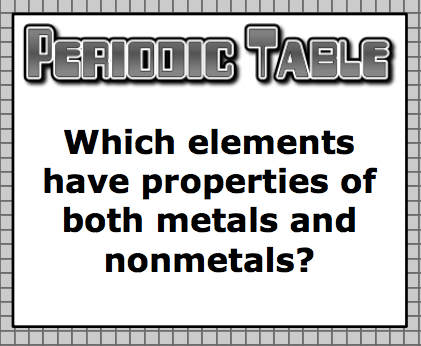
6.
a)
Metals
b)
Nonmetals
c)
Metalloids
7.

What is the symbol for Mercury?

a)

Ag

b)

Au

c)

Me

d)

Hg

8.

What is the symbol for Potassium?

a)

Na

b)

K

c)

Hg

d)

P

9.

What element has the symbol Na?

a)

Potassium

b)

Sodium

c)

Mercury

d)

Nitrogen

10.
The metals are located where?
a)
a) to the right of the zigzag line (in blue)
b)
b) To the left of the zigzag line (in red)
c)
c) Along the zigzag line (in yellow)
d)
d) There are no metals on the periodic table
11.
The nonmetals are located where?
a)
a) to the right of the zigzag line (in blue)
b)
b) o the left of the zigzag line (in red)
c)
c) along the zigzag line (in yellow)
d)
d) there are no nonmetals on the periodic table
12.
The metalloids are located where?
a)
a) to the right of the zigzag line (in blue)
b)
b) to the left of the zigzag line (in red)
c)
c) along the zigzag line (in yellow)
d)
d) there are no metalloids on the periodic table
13.
The word "periodic" describes
a)
a) something that never occurs
b)
b) something that occurs 3-4 times per year 
c)
c) something that occurs frequently 
d)
d) something that occurs at regular intervals 
14.
How did Mendeleev arrange the elements?
a)
a) by appearance
b)
b) by density 
c)
c) by increasing atomic mass
d)
d) by increasing atomic number
15.
A horizontal row going across on the Periodic Table is called a(n)?
a)
a) Group 
b)
b) Period
c)
c) Atomic Number 
d)
d) Family 
16.
Which of the following are all nonmetals?
a)
a) Se, Br, Kr
b)
b) K, Ca, Br
c)
c) As, Se, Br
d)
d) V, Cr, M
17.
Elements laying along the zigzag line are called?
a)
a) proteins
b)
b) metals 
c)
c) nonmetals 
d)
d) metalloids 
18.
The vertical column of elements on the periodic table are called a(n)
a)
a) atomic number 
b)
b) period 
c)
c) semiconductor 
d)
d) group 
19.
The letter C is carbon's 
a)
a) common name 
b)
b) chemical symbol 
c)
c) atomic mass
d)
d) famous name 
20.
What are most of the elements in the periodic table?
a)
a) made of carbon 
b)
b) metals 
c)
c) nonmetals 
d)
d) metalloids
21.
Elements in the same group have similar properties because they have the same...
a)
a) number of total electrons
b)
b) atomic number 
c)
c) atomic mass
d)
d) number of valence electrons 
22.
Elements on the periodic table are arranged in order of
a)
a) increasing atomic number
b)
b) decreasing atomic number 
c)
c) how many neutrons they have 
d)
d) increasing mass number 
23.
Sodium and potassium are both _______ metals
a)
a) alkaline-earth 
b)
b) halogen 
c)
c) alkali 
d)
d) transition 
24.
Chlorine and bromine are examples of ______. 
a)
a) alkali metals 
b)
b) noble gases
c)
c) halogens 
d)
d) earth metals
25.
Elements that are unreactive and have a full level of valence electrons are commonly called...
a)
a) Noble gases
b)
b) Alkali metals 
c)
c) 8th grade students 
d)
d) transition metals 
26.
Magnesium, calcium, and barium are all examples of...
a)
a) alkaline-earth metals 
b)
b) alkali metals
c)
c) very pretty metals 
d)
d) halogen metals 
27.
Where are the noble gases found on the periodic table?
a)
a) group 1
b)
b) in the middle 
c)
c) group 18 
d)
d) on the zigzag line 
28.

How many Periods are on the periodic table?

a)

4

b)

7

c)

9

29.

How many Groups are on the Periodic Table?

a)

4

b)

18

c)

116

30.

How many elements are found in period 2?

a)

2

b)

6

c)

8

d)

10

31.

Which of the following are there the MOST of?

a)

metals

b)

metalloids

c)

nonmetals

32.

Which of the following includes Ne?

a)

metals

b)

metalloids

c)

nonmetals

33.

Which of the following includes U?

a)

metals

b)

metalloids

c)

nonmetals

34.

What is the atomic number of Ra?

a)

37

b)

86

c)

88

d)

75

35.

Which element has atomic number 11?

a)

Cu

b)

Na

c)

Ce

36.

Who is considered the "father of the Periodic table"?

a)

Dobereiner

b)

Newlands

c)

Mendeleev

37.

All elements in the same ___________ tend to have similar chemical properties.

a)

group

b)

period

c)

table

38.
a)
Periods
b)
Groups
39.
a)
Periods
b)
Groups
40.
a)
energy levels
b)
valence electrons
c)
protons
d)
neutrons
41.
a)
energy levels
b)
valence electrons
c)
protons
d)
neutrons
42.
a)
Same group
b)
Same period
43.
A vertical column is called...
a)
group
b)
tower
c)
period
d)
crew
44.
The horizontal row on the periodic table is called a
a)
group
b)
family
c)
period
d)
atomic number
45.
Which is a metalloid?
a)
Boron
b)
Aluminum
c)
Lead
d)
Bismuth (Bi)
46.
Which is a halogen?
a)
Fluorine
b)
Carbon
c)
Helium
d)
Lithium
47.

Which element is not a metal?

a)

Li

b)

Re

c)

Al

d)

B

48.
Which is an alkali metal?
a)
Magnesium
b)
Iron
c)
Sodium
d)
Europium
49.

Element X belongs to group 2? What is the family name of this element

a)

Alkali metal

b)

Alkaline earth metal

c)

Halogens

d)

Noble gases

50.

Family name for elements that belong to group 18

a)

Noble gases

b)

alkali metals

c)

alkaline earth metals

d)

halogens

51.
Which one of these is not in the same family?
a)
Li
b)
Na
c)
Fr
d)
Ca
52.

How many electron energy levels does Radon have?

a)

18

b)

8

c)

7

d)

6

53.

How many electron energy levels does Carbon have?

a)

1

b)

2

c)

3

d)

4

54.
The number at the bottom of each square on the periodic table is the ...
a)
atomic number
b)
atomic mass
c)
chemical symbol
d)
element name
55.
The number at the top of each square on the periodic table is the ...
a)
atomic number
b)
atomic mass
c)
Chemical Symbol
d)
Element Name
56.
The months of the year are __________ because they repeat in the same order every 12 months.
a)
periodic
b)
group
c)
period
d)
halogens
57.
A rule that states that repeating chemical and physical properties of elements change periodically with the atomic number of the elements is the _________.
a)
periodic law
b)
alkaline-earth metals
c)
actinide
d)
group rule
58.
Iron is a good conductor, malleable and magnetic. What type of element is Iron? 
a)
Metal
b)
Nonmetal
c)
Metalloid
d)
Pretty
59.
Silicon is a semiconductor and has properties of both metals and nonmetals. What type of element is Silicon? 
a)
Metal
b)
Nonmetal
c)
Metalloid
d)
Pretty
60.
Which elements are found on the left to middle of The Periodic Table? 
a)
Metals
b)
Nonmetals
c)
Metalloids
d)
Candles
61.
Which elements are found on the right side of The Periodic Table?
a)
Metals
b)
Nonmetals
c)
Metalloids
d)
Water
62.
All of these properties describe metals except...
a)
malleable
b)
conductors
c)
brittle 
d)
shiny
63.
Which element is least likely to conduct heat and electricity? 
a)
O
b)
Si
c)
Po
d)
Ca
64.
How is Selenium classified?
a)
Metal
b)
Nonmetal
c)
Metalloid
d)
Sedimentary
65.
Which of the given choices correctly shows the three main groups of elements listed from least conductivity to greatest conductivity?
a)
Metals, Nonmetals, Metalloids
b)
Nonmetals, Metalloids, Metals
c)
Metalloids, Metals, Nonmetals
d)
Nonmetals, Metals, Metalloids 
66.
How would this element be classified?
a)
Metal
b)
Nonmetal
c)
Metalloid
d)
Metamorphic
67.
Some characteristics of a metal are that it is malleable and ductile.
a)
TRUE
b)
FALSE
68.
Which of the following COULD be a symbol on the periodic table of elements? (think about the rules of chemical symbols...)
a)
JZ
b)
jz
c)
Jz
d)
JZa
69.
Which of these grouping of elements could have the characteristic of brittle?
a)
Metal
b)
Nonmetal
70.
If a material can easily be drawn into the shape of a wire, it is
a)
Ductile
b)
Magnetic
c)
Malleable
d)
Reactive
71.
All of the following would classify an element as a metal except?
a)
Dull
b)
Luster
c)
Malleable
d)
Hard
72.

Substance that is shiny, malleable, and a good conductor of electricity

a)

Nonmetal

b)

Ductile

c)

Metalloid

d)

Metal

73.

Substance that is dull, brittle, and does not conduct electricity

a)

Metal

b)

Streak

c)

Nonmetal

d)

Metalloid

74.

Apple wants to build a new phone. They need a solid material that conducts electricity and can be made into a thin wire. What substance should they use?

a)

Nonmetal

b)

Semiconductor

c)

Metal

d)

Metalloid

75.

Which elements are shiny?

a)

metals only

b)

nonmetals only

c)

metals and nonmetals

d)

metals and MAYBE metalloids

76.

Substances that can be hammered into thin sheets are:

a)

metals

b)

nonmetals

c)

both metals and nonmetals

77.

Which elements are colored red?

a)

nonmetals

b)

metals

c)

metalloids

78.
Malleability is ___________
a)
the way light is reflected off a surface.
b)
how well a piece of matter conducts electricity
c)
A.  the capability of being drawn out into thin wires or threads.
d)
the capability of being hammered out thin.
79.
Luster is ___________
a)
A.  the way light is reflected off a surface.
b)
A.  how well a piece of matter conducts electricity. 
c)
A.  the capability of being drawn out into thin wires or threads.
d)
A.  the capability of being hammered out thin.
80.
Conductivity is ___________
a)
the way light is reflected off a surface.
b)
how well a piece of matter conducts electricity. 
c)
the capability of being hammered out thin
d)
A.  the capability of being drawn out into thin wires or threads.
81.
Ductility is ___________
a)
A.  the capability of being hammered out thin.  
b)
A.  the way light is reflected off a surface.
c)
A.  the capability of being drawn out into thin wires or threads.
d)
A.  how well a piece of matter conducts electricity. 
82.
Density is 
a)
weight/volume
b)
mass/volume
c)
weight/mass
d)
volume/mass
83.
Brittleness is _________
a)
the capability of being broken.
b)
the capability of being bent.
c)
the capability of being stretched.
d)
the capability of being molded.
84.
Nonmetals are ________ compared to metals.
a)
highly conductive
b)
brittle
c)
ductile
d)
non-conductive
85.
Metalloids _____________
a)
have no properties of metals.
b)
have no properties of nonmetals.
c)
have some properties of both metals and nonmetals.
d)
none of the above
86.

Which two elements have properties in common?

a)

Nitrogen and Phosphorous

b)

Oxygen and Nitrogen

c)

Sulfur and Nitrogen

87.

These elements are in a:

a)

group

b)

period

88.

Do these elements have properties in common?

a)

yes

b)

no

89.

These elements are in a:

a)

group

b)

period

90.

Do these elements have properties in common?

a)

yes

b)

no

91.
Group 2, Period 3
a)
Sodium
b)
Beryllium
c)
Magnesium
d)
Calcium
92.
Period 4, Group 16
a)
Germanium
b)
Selenium
c)
Arsenic
d)
Hafnium
93.
Group 18, Period 4
a)
Krypton
b)
Argon
c)
Radon
d)
Xenon
94.
Group 16, Period 3
a)
Phosphorus
b)
Sulfur
c)
Aluminum
d)
Oxygen
95.

Group 1, Period 4

a)

Calcium

b)

Magnesium

c)

Scandium

d)

Potassium

96.
Period 1, Group 18
a)
Hydrodgen
b)
Sodium
c)
Flourine
d)
Helium
97.
Period 3, Group 13
a)
Silicon
b)
Gallum
c)
Aluminum
d)
Chlorine
98.
Group 14, Period 4
a)
Arsenic
b)
Germanium
c)
Gallum
d)
Tin
99.
Group 18, Period 3
a)
Krypton
b)
Helium
c)
Neon
d)
Argon
100.
Period 3, Group 17
a)
Chlorine
b)
Bromine
c)
Argon
d)
Flourine