wayground logo

Free Printable Worksheets

Font size

S
M
L
XL
Worksheets

The Chemistry of Materials Part 1

Total questions: 90

Worksheet time: 56mins

Name
Class
Date
1.

Which of the following is a chemical property of a substance? The substance______________.

a)

conducts electricity

b)

reacts with hydrochloric acid

c)

scratches glass

d)

is more dense than water

2.

Which of the following is a list of physical properties?

a)

density, conductivity, reaction with acid

b)

flexibility, reaction with hydrochloric acid, color

c)

temperature change when a chemical is added, texture, density

d)

electrical conductivity, hardness, ability to transmit light

3.

The compound sucrose has a chemical formula of C12H22O11. How many elements are in one molecule of sucrose?

a)

3

b)

12

c)

22

d)

45

4.

An element contains

a)

one kind of atom

b)

two or more kinds of atoms

c)

one kind of molecule

d)

two or more kinds of molecules

5.

Which of the following is a compound?

a)

N

b)

Na

c)

CO

d)

Ca

6.

A student pours two different solutions into a glass beaker. Which of the following would indicate that a chemical reaction took place between two solutions?

a)

A change in color of a solution

b)

The formation of a precipitate

c)

A change in temperature

d)

All of the above

7.

While working on an activity to investigate chemical reactions, a student mixes two clear liquids in a beaker. When the two liquids mix, the result is a clear liquid and an orange solid precipitate. Which best describes the reactants that the student worked with?

a)

The initial two clear liquids

b)

The resulting clear liquid and the beaker

c)

The orange solid precipitate

d)

All of the above

8.
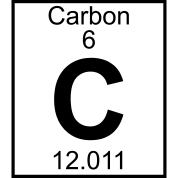
What does the 6 represent above the C
a)
Symbol 
b)
Name 
c)
Mass Number 
d)
Atomic Number 
9.
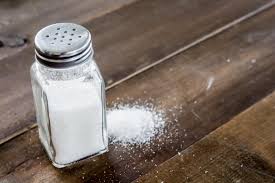
Salt dissolves in water
a)
physical Change
b)
chemical change
10.
hydrochloric acid reacts with magnesium to produce hydrogen gass
a)
physical change
b)
chemical change
11.
a piece of copper is cut in half
a)
physical change
b)
chemical change
12.
a sugar cube is ground up
a)
physical change
b)
chemical change
13.
iron pipe rusts
a)
physical change
b)
chemical change
14.
water is heated and changed to steam
a)
physical change
b)
chemical change
15.
rubbing alcohol evaporates
a)
physical change
b)
chemical change
16.
ice cube melts
a)
physical change
b)
chemical change
17.
milk sours (goes bad)
a)
physical change
b)
chemical change
18.
pancakes cook on a griddle
a)
physical change
b)
chemical change
19.
food digested in the stomach
a)
physical change
b)
chemical change
20.

Which of the following would be considered a physical change?

a)

Cutting paper

b)

pH test

c)

Burning marshmellow

d)

Roasting a Turkey

21.

Which of the following would be considered a physical property?

a)

Colour

b)

Flammability

c)

pH

d)

Reactivity

22.
Which of the following would be considered a homogeneous mixture
a)
Sweet Tea
b)
Vegetable soup
c)
24 Karat Gold
d)
Distilled water
23.
Can neutralize a base
a)
Physical property
b)
Chemical property
24.
Hardness
a)
Physical property
b)
Chemical property
25.
Flammability
a)
Physical property
b)
Chemical property
26.
Density
a)
Physical property
b)
Chemical property
27.
What type of matter occurs from 2 or more substances chemically combining?
a)
Whatsa
b)
compound
c)
mixture
d)
property
28.
Hydrogen and sulfur are combined in a chemical reaction.  The product is 
a)
without any properties
b)
a substance that looks different but has the same properties
c)
a new substance with different properties
d)
sold by the Property Brothers
29.
Which type of reaction absorbs energy in the reaction and feels cold?
a)
exothermic
b)
endothermic
c)
physical
d)
over reaction
30.
Which of the above  is a product?
a)
Fe
b)
O2
c)
Fe2O3
d)
the arrow
31.
Elements are
a)
composed of molecules
b)
pure substances that cannot be broken down into other substances
c)
mixtures of compounds
d)
composed of different types of atoms
32.
The Modern Periodic Table of Elements is arranged by
a)
atomic mass
b)
atomic number
c)
valence electrons
d)
number of isotopes
33.
What does 12.011 represent?
a)
atomic mass
b)
atomic number
c)
element name
d)
chemical symbol 
34.
What does the C represent?
a)
atomic mass
b)
atomic number
c)
element name
d)
chemical symbol 
35.

what is the biggest group on the table

a)

metals

b)

nonmetals

c)

metaloids

d)

halogens

36.
Which is the name of the kind of solid substance formed in this figure?  
a)
aqueous 
b)
precipitate
c)
acid
d)
synthesis 
37.
An element plus additional element reacts to form one product is an example of which type of chemical reaction? 
a)
combustion
b)
decomposition 
c)
synthesis 
d)
single replacement
38.
Which type of reaction takes place in the presence of oxygen and produces carbon dioxide and water?
a)
double replacement 
b)
decomposition 
c)
combustion 
d)
single replacement
39.
Provides evidence that a chemical reaction has occurred. 
a)
dissolving 
b)
melting
c)
formation of a gas
d)
bending
40.
A compound is reacted and forms two new substances. What type of reaction is this? 
a)
combustion 
b)
synthesis 
c)
decomposition 
d)
single replacement 
41.
Describes the number of atoms in a compound of each element. 
a)
coefficient 
b)
superscript 
c)
subscript 
d)
SI unit 
42.
How many Al atoms are in this compound?         4Al2O3
a)
2
b)
8
c)
6
d)
4
43.
How many F atoms are in this compound?
6MgF2 
a)
2
b)
6
c)
8
d)
12
44.
the starting materials in a chemical reaction
a)
Products
b)
Reactants
c)
Starters
d)
Enders
45.
a substance that is formed as the result of a chemical reaction
a)
Product 
b)
Reactant
c)
Starters
d)
Enders
46.
the symbolic representation of a chemical reaction
a)
Long Hand
b)
Short Hand
c)
Electron Configuration
d)
Chemical Equation
47.
a process or reaction in which the system absorbs energy from its surroundings; usually, but not always, in the form of heat
a)
Endothermic Reaction
b)
Exothermic Reaction
c)
Diffusion
d)
Fission
48.
a chemical reaction that releases energy by light or heat
a)
Endothermic Reaction
b)
Exothermic Reaction
c)
Diffusion
d)
Fission
49.
type of chemical reaction where an element reacts with a compound and takes the place of another element in that compound
a)
Double Displacement
b)
Single Displacement
c)
Synthesis
d)
Decomposition
50.
type of chemical reaction where two compounds react, and the positive ions (cation) and the negative ions (anion) of the two reactants switch places, forming two new compounds or products
a)
Double Displacement
b)
Single Displacement
c)
Synthesis
d)
Decomposition
51.
type of reaction in which two or more elements combine to form a more complex compound
a)
Double Displacement
b)
Single Displacement
c)
Synthesis
d)
Decomposition
52.
type of reaction in which a compound is broken down into its simple elements
a)
Double Displacement
b)
Single Displacement
c)
Synthesis
d)
Decomposition
53.

Pure substances include:

a)

Elements

b)

Homogeneous Mixtures

c)

Compounds

d)

Heterogeneous Mixtures

54.

The properties of a compound are different from the elements that make them up.

a)

True

b)

False

55.

Salt

a)

Mixture

b)

Compound

56.

Saltwater

a)

Mixture

b)

Compound

57.

Sand

a)

Mixture

b)

Compound

58.

Heterogeneous mixture

a)

A mixture with a composition that varies from point to point

b)

A mixture with a uniform composition and appears visually the same throughout

59.

Homogeneous mixture

a)

A mixture with a composition that varies from point to point

b)

A mixture with a uniform composition and appears visually the same throughout

60.

What is this?

a)

element

b)

compound

c)

mixture

61.

What is this?

a)

element

b)

compound

c)

mixture

62.

What is this?

a)

element

b)

compound

c)

mixture

63.

What is this?

a)

element

b)

compound

c)

mixture

64.

What is this?

methane (CH4)

a)

element

b)

compound

c)

mixture

65.

What is this?

aluminum (Al)

a)

element

b)

compound

c)

mixture

66.

What type of substance is pictured?

a)

element

b)

compound

c)

mixture

d)

solution

67.
Which has a pH below 7?
a)
Acid
b)
Base
68.
Which has a bitter taste?
a)
Base
b)
Acid
c)
flagella
d)
cila
69.
Which has a slippery texture?
a)
Acid
b)
Base
70.

What pH is the strongest base?

a)

1

b)

7

c)

4

d)

14

71.
Which of the following is most likely to be basic:
a)
Lemon juice
b)
Vinegar
c)
Laundry detergent
d)
Coke
72.
Tastes Sour
a)
Acids
b)
Bases
c)
Salts
d)
All
73.
When dissolved in water, acids produce:
a)
bases
b)
salts
c)
hydrogen ions
d)
hydroxide ions
74.
Which type of ion does a base produce when it is dissolved in water?
a)
oxide
b)
oxygen
c)
hydrogen
d)
hydroxide
75.
Acids react with
a)
water to produce bases and salts
b)
salts to produce bases and water
c)
neither bases, salts nor water
d)
bases to produce salts and water
76.

Phenolophalein turns from clear to pink when the pH turns

a)

acidic

b)

basic

c)

saline

d)

ionic

77.

What completely ionizes in solution?

a)

Weak acids

b)

Strong acids

c)

Strong Salts

d)

Neutral salts

78.

Which of these pH values represent an acid?

a)

4

b)

8

c)

10

d)

12

79.

Milk is a very weak acid. What might its pH value be?

a)

6.5

b)

7.8

c)

4.2

d)

12.2

80.

Solutions that have more OH– ions than H+ ions are

a)

acids

b)

bases

c)

enzymes

d)

neutral

81.

Solutions that have more H+ ions than OH- ions are

a)

acids

b)

bases

c)

enzymes

d)

neutral

82.
If an acid is combined with a base of equal strength, the result will most likely be
a)
a neutral solution.
b)
a stronger acid.
c)
impossible to tell without testing the pH.
d)
a stronger base
83.
Which of the following is a base?
a)
orange juice
b)
water
c)
vinegar
d)
dishwashing detergent
84.

List four factors that affects the rate of a reaction

a)

temperature

b)

concentration

c)

surface area

d)

volume

e)

catalysts

85.

A temperature increase causes the particles ......

a)

to slow down

b)

move faster

c)

collide higher

d)

in the right order

86.

Why does a higher concentration increase the rate of reaction?

a)

it increases the amount of reactants

b)

it lowers the activation energy

c)

it increases the energy of particle collisions

d)

it increases the frequency of particle collisions

87.

Why does a higher temperature increase the rate of a reaction?

a)

it increases both the frequency and energy of particle collisions

b)

it only increases the frequency of particle collisions

c)

it only increases the energy of particle collisions

d)

it reduces the activation energy of the reaction

88.
What is the rate of reaction?
a)
How fast a reaction is 
b)
How big a reaction is
c)
How loud a reaction is
d)
How much gas a reaction produces
89.
Grinding a seltzer tablet into powder increases the rate of reaction due to increased
a)
concentration
b)
surface area
c)
temperature
d)
reactants
90.
all matter is made of what 
a)
energy 
b)
atoms 
c)
electrons 
d)
compounds