wayground logo

Free Printable Worksheets

Font size

S
M
L
XL
Worksheets

Early American History

Total questions: 133

Worksheet time: 2hrs 23mins

Name
Class
Date
1.

Was settled by the Puritans

a)

Roanoke Island

b)

Plymouth Colony

c)

Pennsylvania

d)

Massachusetts Bay

2.

First permanent English settlement in North America

a)

Georgia

b)

Massachusetts Bay Colony

c)

Pennsylvania

d)

Jamestown

3.

Known as the "Lost Colony" which was also an economic venture

a)

Pennsylvania

b)

Roanoke Island

c)

Georgia

d)

Massachusetts Bay Colony

4.

When was Jamestown established?

a)

1607

b)

1585

c)

1590

d)

1620

5.

What famous leader took charge of Jamestown?

a)

John Rolfe

b)

John White

c)

John Smith

d)

Virginia Dare

6.

Why did Pilgrims migrate to the Americas?

a)

To explore new land for the king

b)

Religious freedom

c)

To find gold

d)

To try to convert Native Americans

7.

What was the Mayflower Compact?

a)

A document that set up an organized government for the Pilgrims

b)

A list of religious rules the Pilgrims had to follow

c)

A map that later showed the hidden fort at Jamestown

d)

A document that kept the colonies from trading with other countries

8.
Which country colonized the most of the Thirteen Colonies?
a)
Spain
b)
France
c)
England
d)
Netherlands/ Holland
9.
What is John Rolfe known for?
a)
A succesful Native American rebellion
b)
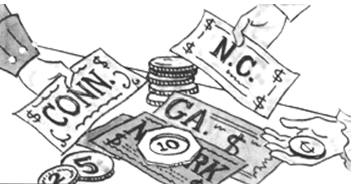
The first governor of Virginia
c)
Got the Jamestown people to work for their food
d)
Creating a new blend of tobacco
10.

Who was the French and Indian War fought between?

a)

French vs. British

b)

French vs. Native Americans

c)

British vs. Native Americans

d)

British vs. Dutch

11.

Why was the French and Indian War fought?

a)

The French, Native Americans, and British did not like each other

b)

The French and British were both trying to claim the disputed land west of the Appalachian Mountains

c)

The French and the British wanted to have more power back in Europe

d)

The Native Americans wanted to fight both the British and the French

12.

Who won the French and Indian War

a)

French

b)

Native Americans

c)

British

d)

Dutch

13.

What Treaty ended the French and Indian War?

a)

Treaty of British

b)

Treaty of French and Indian War

c)

Treaty of Native Americans

d)

Treaty of Paris

14.

What did the British get for winning the French and Indian War?

a)

All the French governments money

b)

For the French to have to come work for the British

c)

All land East of the Mississippi River in North America

d)

All of the French Armies weapons

15.
Why were many Native American tribes interested in aligning with the French during the French and Indian War to overthrow the British?
a)
The British were more aggressive in their land grabs than the French.
b)
The French promised to return stolen land to Native Americans.
c)
The French had more money and goods to share with NativeAmericans.
d)
The Native Americans shared cultural and religious ties with the French.
16.
When and where did the French and Indian War begin?
a)
The war started in 1776 in New England.
b)
The war started in 1754 in New England.
c)
The war started in 1754 in the Ohio River Valley.
d)
The war started in 1776 in the Ohio River Valley.
17.
Who was the young military leader from Virginia who fought in the French and Indian war?
a)
William Pitt
b)
Edward Braddock
c)
King George II
d)
George Washington 
18.
What did the Proclamation of 1763 say?
a)
France owned the land west of the Appalachian Mountains
b)
Natives owned the land west of the Appalachian Mountains
c)
Colonists could move west of the Appalachian Mountains
d)
Colonists could not move west of the Appalachian Mountains
19.
What was a cause of the Proclamation of 1763?
a)
The Native Americans were asking for more money.
b)
The British did not want to keep on fighting with the Native Americans.
c)
The King was bored and wanted to make a new law.
d)
The King wanted to control his settlers so he made this Proclamation.
20.
Why were many colonists angry about the Proclamation of 1763?
a)
They were unhappy because they could not settle on new lands.
b)
They wanted to travel all the way west to California.
c)
They wanted to share the land with the Native Americans.
d)
They wanted their money back for the land.
21.

Why was the Albany Plan rejected?

a)

It gave too much land to the French.

b)

The colonies did not want to give up their individual power.

c)

It gave the colonist no control over their government.

d)

The colonist did not want to work with the Native Americans.

22.
This was a tax on all printed materials in the 13 Colonies.
a)
Stamp Act
b)
Sugar Act
c)
Tea Act
d)
Townshend Act
23.
Finish this American Colonist Motto, "No Taxation without..."
a)
Transportation
b)
Relaxation
c)
Representation
d)
Sensation
24.
Why were the American Colonist taxed after the French and Indian War?
a)
Britain was in debt and needed money
b)
That was the agreement with the Native Americans
c)
They made too much money
d)
Townshend Acts
25.
What was this poster's meaning?
a)
The Colonies needed to be united
b)
Serpents can grow back together
c)
Colonies need to be independent
d)
Ben Franklin didn't know why he made this
26.
This event broke tensions between the colonist and the British troops where shots were fired. Crispus Attucks was the first to be killed.
a)
Lexington and Concord
b)
Boston Tea Party
c)
Boston Massacre
d)
Bloody Valentine
27.
How did the colonist protest against the tea tax?
a)
Dressed up like Native Americans
b)
Boston Massacre
c)
Dumped tea into Boston harbor
d)
Didn't pay the tax on the East India Tea
28.
Which was the punishment for the Boston Tea Party?
a)
Intolerable Acts
b)
Sugar Acts
c)
Quartering Acts
d)
Stamp Acts
29.
This battle where the American Colonist won and was called "The shot heard 'round the world". 
a)
Battle of Saratoga
b)
Battle of Yorktown
c)
Lexington and Concord
d)
Battle of Bunker Hill
30.
Early revolutionary battle where 1,000 British troops died and realized the American Colonists were tougher than they though.
a)
Battle of Bunker Hill
b)
Lexington and Concord
c)
Battle of Saratoga
d)
Battle of Yorktown
31.
This type of American Colonist was in support of the British parliament.
a)
Patriot
b)
Loyalist
c)
Yes man
d)
Neutral
32.
The Second Continental Congress addressed the steps to the colonies governing themselves and the creation of what military group?
a)
Colonial militias
b)
Marines
c)
Continental Army
d)
Navy
33.
Who was the first choice to command the Continental Army?
a)
Thomas Jefferson
b)
Benjamin Franklin
c)
Thomas Paine
d)
George Washington
34.
Pamphlet that sparked the independent spirit within the colonies during the revolution.
a)
Common Sense
b)
Catching Fire
c)
Declaration of Independence
d)
Mayflower Compact
35.
This type of colonist was ready for rebellion and the fight for independence.
a)
Loyalist
b)
Patriot
c)
Neutral
d)
British 
36.
Declaration of Independence was created July 4th of what year?
a)
1607
b)
1773
c)
1781
d)
1776
37.
Colonists were forbidden to settle west of the Appalachian Mountains.
a)
Proclamation line of 1763
b)
Proclamation boundary
c)
Manifest Destiny
d)
Borderlands
38.
Life, Liberty and the pursuit of happiness were...
a)
Unalienable rights
b)
Bill of Rights
c)
Freedom to live
d)
Will Smith movie
39.
What was the immediate effect due to the passing of the Stamp Act in 1765?
a)
Colonists sought military support from France.
b)
Colonists organized boycotts of British goods.
c)
Colonists signed the Declaration of Independence.
d)
Colonists dumped tea into the Boston Harbor
40.
The Sugar Act, Quartering Act, and the Stamp Act all contributed to the start of the Revolutionary War by....
a)
Restricting trade with American Indians
b)
Imposing regulations on colonial agriculture
c)
Angered colonists who believed that civil liberties had been violated
d)
Punishing colonists for resisting the authority of Parliament
41.
The American colonists were dissatisfied with the---
a)
Political debates that took place at the Albany Convention.
b)
Interference of Great Britain in the slave trade
c)
Economic consequences of the Great Awakening
d)
Economic policies imposed by Great Britain following the French and Indian War
42.
British colonists objected to the Proclamation of 1763 because they--
a)
Feared it would provoke attacks from American Indians
b)
Did not want to share control of the fur trade with France
c)
Resented the limits it imposed on westward expansion
d)
Wanted to be able to trade freely with foreign nations
43.
What was one result of the Treaty of Paris in 1783?
a)
Great Britain recognized thee United States as an independent country.
b)
Competing Seminole and Spanish claims in West Florida were resolved.
c)
The British Navy agreed to stop pressing American sailors into service
d)
British territory in eastern Canada was ceded to France.
44.
Which battle brought the French into the Revolutionary War on the side of the Americans?
a)
Saratoga
b)
Concord
c)
Trenton
d)
Yorktown
45.
Which excerpt from the Declaration of Independence best explains why colonists were unhappy about their lack of representation in the British parliament?
a)
"He has refused to pass other laws for the accommodation of large districts of people"
b)
"For imposing Taxes on us without our Consent"
c)
He has refused his Assent to Laws, the most wholesome and necessary for thee public good."
d)
"For transporting us beyond Seas to be tried for pretended offences."
46.
What did John Paul Jones do to receive the Congressional Gold Medal?
a)
 Leading the evacuation of Washington D.C during the British invasion
b)
  Preparing the strategy for the American victory at Yorktown
c)
Persuading France to provide military assistance to the Continental army
d)
Commanding a victory at sea against the British navy
47.
What as the name of the political body that represented Americans and challenged British control?
a)
Coercive Acts
b)
Continental Congress
c)
Sons of Liberty
d)
Suffolk Resolves
48.
Thomas Jefferson drew on the ideas of which English philosopher when writing the Declaration of Independence?
a)
George Mason
b)
George Stout
c)
John Adams
d)
John Locke
49.
Who was the volunteer from France who became Washington’s trusted aide?
a)
Benjamin Franklin
b)
Francis Marion
c)
Marquis de Lafeyette
d)
Thomas Pain
50.
Where was the Loyalist strength the strongest?
a)
In New England
b)
In New York
c)
In the Carolinas and Georgia
d)
In the Ohio River Valley
51.
Who won the French and Indian War?
a)
France
b)
England
52.
The Treaty of Paris 1763 marked the end of the French and Indian War.
a)
True
b)
False
53.
During the French and Indian War, the British and French were fighting over control of which area?
a)
Mississippi River Valley
b)
Ohio River Valley
c)
Connecticut River Valley
d)
Pennsylvania River Valley
54.
What was the main cause of the French and Indian War?
a)
The French and British claimed the same land.
b)
The French and Indians claimed the same land.
c)
The Indians and British claimed the same land.
d)
The Indians wouldn't sell their land.
55.
Which phrase became popular after passage of the Stamp Act?
a)
“The rights of Englishmen”
b)
“Give me liberty or give me death”
c)
“Life, liberty, and the pursuit of happiness”
d)
“No taxation without representation“
56.
What act was the cause of the Boston Tea party?
a)
The Townshend act
b)
Tea Act
c)
Sugar Act
57.
Who was the King during the American Revolution?
a)
King Arthur
b)
Martin Luther King Jr.
c)
King George III
58.
The Sons of Liberty were founded by John Hancock and ___.
a)
George Washington
b)
Paul Revere
c)
Sam Adams
d)
John Adams
59.
What was the law that was passed that required colonists to house British troops in 1765?
a)
House the Troops Act
b)
Quartering Act
c)
The Fair Housing Act (FHA)
d)
British Renters Insurance
60.
This law stated that the colonists must pay a tax for all paper goods- angered colonists because of taxation without representation 
a)
Stamp Act
b)
Proclamation of 1763
c)
French and Indian War
61.
Colonists threw tea in the Boston Harbor 
a)
Intolerable Acts
b)
Boston Tea Party
c)
Stamp Act
62.
The Stamp Act taxed_____________________.
a)
all printed materials except playing cards
b)
all printed materials except newspapers
c)
all printed materials except legral documents
d)
all printed materials.
63.
What was the first Battle of the American Revolution 
a)
Saratoga 
b)
Valley Forge 
c)
Lexington and Concord 
d)
Yorktown
64.
Soldiers froze here because of the harsh winter
a)
Paris
b)
Valley Forge
c)
Rio Grande Valley 
d)
Yorktown 
65.
Who was the opponent at Valley Forge?
a)
Winter, starvation, disease
b)
British
c)
French
d)
Indians
66.
Who wrote Common Sense and The Crisis during the American Revolution?
a)
John Paul Jones
b)
Abigail Adams
c)
Thomas Paine
d)
Benjamin Franklin
67.
After colonist threw rocks, sticks and snowballs at British forces, this event happened leading to tense relations between the British military and colonists.
a)
firing on Lexington and Concord
b)
Boston Tea Party
c)
Boston Massacre
d)
Battle at Bunker Hill
68.
Who were the men that signed the Declaration?
a)
The members of the Second Continental Congress
b)
The Sons of Liberty
c)
The men who wanted to be president
d)
Important men from Boston
69.

The Declaration of Independence _____.

a)

declared that the colonists were free from English rule

b)

stated that all men are created equal, with certain rights

c)

listed grievances that the colonists had against the King of England

d)

all of the above

70.

Why was the Declaration of Independence written?

a)

To stop taxes from the British Empire.

b)

To make a United States army.

c)

To gain independence from the British

d)

To establish a new form of government.

71.

Independence means:

a)

to formally discuss an issue

b)

the freedom to govern on one's own

c)

a course of action taken by a government

d)

rights common to everyone, as opposed to those given by law

72.

Who were the signers of the Declaration of Independence writing to?

a)

The world

b)

King George

c)

George Washington

d)

One Republic & Timabland

73.
The phrase "No Taxation without Representation" was shouted by colonist who felt what?
a)
They needed a tax collector
b)
That they had no voice in Parliment
c)
That they wanted their tax check
d)
That Parliament had heard them
74.
Why is July 4, 1776 an important date in U.S. history?
a)
Common Sense was published.
b)
The Olive Branch Petition sent to King George III.
c)
The American Revolution ends.
d)
The Declaration of Independence is signed.
75.

Thomas Paine published_________________ to encourage more people to join the independence movement.

a)

Common Core

b)

Common Independence

c)

Common Sense

d)

Common Knowledge

76.
In the first part of the Declaration, Jefferson wrote that all men have rights.  These included "Life, Liberty, and the Pursuit of Happiness".  What is the first part of the Declaration called?
a)
The Closing
b)
The Body
c)
The Phone Number
d)
The Preamble
77.

Jefferson also wrote that the colonies were no longer bound to what country?

a)

Canada

b)

Brazil

c)

Great Britain

d)

Australia

78.
In 1776, the Second Continental Congress met at the Pennsylvania State House in __________________.
a)
Philadelphia
b)
Sugar town
c)
Fort Madison
d)
Burlington
79.
Who was the main writer of the Declaration of Independence?
a)
George Washington
b)
Thomas Jefferson
c)
John Adams
d)
Benjamin Franklin
80.
What are the three inalienable rights that all people have?
a)
Food, Shelter, and Clothing
b)
Life, Liberty and Death
c)
Life, Liberty and the Pursuit of Happiness
81.

When deciding whether or not to break away from the British, the colonists split into what 2 groups?

a)

Kings & Queens

b)

Patriots & Loyalists

c)

Redcoats & Patriots

d)

British & Americans

82.

What is the name of the document that was signed to end the American Revolution?

a)

The Constitution

b)

The Treaty of Paris

c)

The British Resolution

d)

The Declaration of Independence

83.
First Battle of the American Revolution 
a)
Saratoga 
b)
Valley Forge 
c)
Lexington and Concord 
d)
Yorktown
84.
In what chronological order did the battles occur?
a)
Valley Forge, French & Indian War, Battle of Saratoga, Battle of York Town
b)
Lexington & Concord, Battle of Saratoga, Valley Forge, Battle of Yorktown
c)
Battle of Saratoga, Valley Forge, French & Indian War, Lexington & Concord
d)
Yorktown, French & Indian War, Saratoga, Valley Forge
85.
Which battle is considered the Turning Point of the American Revolution?
a)
Battle of Trenton
b)
Battle of Saratoga
c)
Lexington & Concord
d)
Battle of Bunker Hill
86.
Who wrote Common Sense and The Crisis during the American Revolution?
a)
John Paul Jones
b)
Abigail Adams
c)
Thomas Paine
d)
Benjamin Franklin
87.
General Cornwallis surrenders to General Washington during this battle 
a)
Yorktown
b)
Lexington and Concord
c)
Saratoga
d)
Bunker Hill
88.
Which battle ended the American revolution?
a)
Battle of Lexington and Concord
b)
Battle of Saratoga
c)
Battle of Yorktown
d)
Battle of Trenton
89.

What was the main weakness of the Articles of Confederation?

a)

the federal government was too weak

b)

It had no legislative branch

c)

The judicial was too powerful

d)

The executive was too powerful

90.
A weakness of the Articles of Confederation is that it had __________ . 
a)
only an executive branch
b)
only a legislative branch
c)
only a judicial branch
d)
an executive and legislative branch
91.
One major problem with the Articles of Confederation is that Congress could not ______ the citizens to raise money.
a)
tax
b)
ask
c)
demand
d)
force
92.
Who had more power under the Articles of Confederation?
a)
Federal Government
b)
State Governments
c)
Individual people
d)
States with larger populations
93.
Americans were afraid that a __?__ would lead to tyranny, or oppressive rule.
a)
strong state government
b)
weak government
c)
strong central government
d)
legslature
94.

For any changes to the Articles or new laws Congress needed ______ 13 states to agree.

a)

9 of the

b)

7 of the

c)

6 of the

d)

10 of the

95.

The Articles of Confederation made our country _________

a)

Strong

b)

Weak

c)

Powerful

d)

normal

96.
Which group created the Articles of Confederation?
a)
First Continental Congress
b)
Confederation Congress
c)
The Annapolis Convention delegates
d)
Second Continental Congress
97.
Because of the Articles, each state got __ vote(s).
a)
1
b)
2
c)
10
d)
more votes if more people live in that state
98.
Which of the following was a weakness of the Articles?
a)
national government taxed the states a lot
b)
created a very strong president
c)
all states used the same money
d)
could not regulate commerce (trade) among the states
99.
This picture shows which weakness of the Articles?
a)
no common currency
b)
no executive branch
c)
no power to tax
d)
one vote for each state
100.
Congress never had any money because under the Articles they did NOT have the power to ____.
a)
print money
b)
sell items to other countries
c)
tax
d)
spend money
101.
The Continental Congress set up the Northwest Ordinance to sell _______ to pay off the debt from the war.
a)
crops
b)
land
c)
slaves
d)
none of these
102.
How many branches of government were there under the Articles of Confederation?
a)
One
b)
Zero
c)
Two
d)
Three
103.
Who led the farmers against the government of Massachusetts?
a)
Daniel Shays
b)
the Government
c)
all of the farmers were leaders
d)
Thomas Hobbes
104.
Shay's Rebellion started as a protest against
a)
unfair taxes and farmer debt
b)
the death penalty
c)
no judicial system
d)
debtors' prisons
105.
Which is a weakness of the Articles of Confederation?
a)
Congress couldn't collect taxes
b)
Weak central government
c)
Provided for no common currency
d)
All of the these
106.
Daniel Shays' rebellion showed that:
a)
the government under the Articles of Confederation could not keep control of its citizens
b)
the government should be able to defend our citizens from Great Britain again
c)
the government needs to protect the citizens from Native American attacks
107.
The unsettled area past the Appalachian Mountains, where Ohio, Indiana, Illinois, Wisconsin are today, was known as the - 
a)
Northwest Territory
b)
Southwest Territory
c)
Western Territory
d)
Indian Territory
108.
The Northwest Ordinance provided a pathway for territories to apply for
a)
statehood
b)
federal funding
c)
infrastructure grants
109.
The Articles of Confederation were...
a)
the King's plan for how to govern the newly freed colonies
b)
the first Constitution
c)
the first government of the U.S.
d)
George Washington's plan for taking power as the new King
110.

The Northwest Ordinance of 1787...

a)

proved the Articles of Confederation were useless

b)

drafted all the Americans in the Northwest to serve for 4 years

c)

determined that slavery would be allowed in the Northwest

d)

established a system for settlement of new land gained after the war

111.
Which of the following is the best summary of Shay's Rebellion?
a)
Armed rebellion by English Loyalists in Rhode Island who wanted to return to British rule
b)
Armed rebellion by Massachusetts farmers against unjust taxes and the economic crisis
c)
Armed rebellion by slaves in Georgia against their master, Mr. Shay
d)
Armed rebellion by Native Americans from the Shay tribe to regain land they'd lost to American settlers
112.
The Northwest Ordinance of 1787 represented...
a)
a success of the Articles of Confederation
b)
a failure of the Articles of Confederation
113.

Shays' Rebellion represented...

a)

a success of the Articles of Confederation

b)

a failure of the Articles of Confederation

114.
When creating the legislative branch there were two proposed plans.  Which plan wanted states to have more votes based on population? 
a)
Connecticut Plan 
b)
New Jersey Plan
c)
Virginia Plan
d)
3/5th's Plan 
115.
The Great Compromise accomplished which of the following? 
a)
Created a one house legislature
b)
Postponed the conversation about slavery
c)
Added the Bill of Rights 
d)
Created a two house legislature
116.
In what house of our national legislature, called Congress, does each state have equal representation? 
a)
Senate 
b)
House of Representatives 
c)
General Assembly 
d)
House of Commons 
117.
What document replaced the Articles of Confederation and established a new national government? 
a)
The Declaration of Independence 
b)
The Constitution 
c)
The Magna Carta 
d)
The English Bill of Rights 
118.
Who was happy with the Virginia plan?
a)
Small States
b)
Large States
119.
How many slaves were counted for representation and taxation?
a)
Every slave was counted.
b)
Out of 4 slaves, only 3 were counted.
c)
Out of 100 slaves, only 3 were counted.
d)
Out of 5 slaves, only 3 were counted.
120.
What was the result of the Great Compromise?
a)
Representation in Congress was based upon population.
b)
Two houses were created, one with equal representation and the other with representation based on population
c)
Representation in Congress was equal.
d)
Two houses were created, both with representation based on population.
121.
The Great Compromise was a compromise between--
a)
Mass. Plan and New Jersey Plan
b)
Virginia Plan and New Jersey Plan
c)
Virginia Plan and New York Plan
d)
Virginia Plan and Delaware Plan
122.
What were the men who represented their states called?
a)
Senators
b)
Congressmen
c)
Delegates
d)
Speakers
123.
Who was the president of the Constitutional Convention?
a)
George Washington
b)
Thomas Jefferson
c)
James Madison
d)
John Adams
124.
The three branches of government are ________________
a)
Executive, Legislative, and Judicial
b)
Legislative, Judicial, and National
c)
Executive, Principle, and Judicial
d)
Judicial, National, and Legislative
125.
Why is the Constitution considered a "living document"?
a)
It has changed with time
b)
It is rewritten by each president
c)
It has remained the same over the years
d)
It is signed each year by members of Congress
126.

What event led to the calling of the Constitutional Convention?

a)

Government can't collect taxes

b)

Shay's Rebellion

c)

Revolutionary War

d)

Boston tea party

127.
Which Plan was favored by small states?
a)
New Jersey Plan
b)
Virginia Plan
128.
The best definition for Federalism is...
a)
power split between states and federal government
b)
all power in one place
c)
a loose alliance of states
d)
Ms. Snyder made this word up...
129.
The North wanted slaves to count for what purpose?
a)
Population
b)
Taxation
c)
No purpose at all
d)
both  population and taxation
130.
Our president is elected by which of the following?
a)
Congress
b)
The People
c)
The Senate
d)
The Electoral College
131.
What state DID NOT come to the Constitutional Convention?
a)
Rhode Island
b)
Massachusetts
c)
Virginia
d)
Connecticut
132.
Where was the Constitutional Convention?
a)
Washington D.C
b)
New York
c)
Philly
d)
Vermont
133.

Where did the convention take place?

a)

Philadelphia. Pennsylvania

b)

Washington D.C.

c)

Richmond, Virginia

d)

New York City