
 Worksheets
Connective Tissues Review
Total questions: 40
Worksheet time: 21mins
Select all below that describe the functions of connective tissues in the body:
bind structures
provide support and protection
store fat
conduct nerve impulses
What is the space between connective tissue cells filled with fibers, molecules, and fluid?
tight cell junction
intracellular matrix
extracurricular space
extraceullular matrix
What type of connective tissue cell is the most common type of fixed cell in connective tissue, large, and star-shaped?
adipose
fibroblast
macrophage
mast cell
What is the function of macrophages?
Specialized to carry on phagocytosis ; They can move about and clear foreign particles from tissues
specialized to form neuron cells
specialized to create red blood cells
specialized to create large bacteriophages
What can mast cells release (select all that apply):
sebaceous fluid
histamine
white blood cells
heparin
Select all that apply - which fibers are the main fibers found in connective tissue?
collagen
elastic
reticular
triglycerides
What are the two types of connective tissue proper? (select all that apply)
blood
adipose
dense connective tissue
loose connective tissue
Which of the following are types of loose connective tissue (select all that appy):
Areolar Tissue
osteoblasts
adipose tissue
Reticular Tissue
Which of the following are functions of adipose tissue? (select all that apply)
muscle movement
structural framework
stores energy
insulate body
Dense connective tissue has a ____________ blood supply.
good
poor
What is the function of cartilage?
muscle movement
provides support, framework, and attachements
neural impulse control
creates blood cells



Hyaline cartilage
Areolar
Dense
Bone

Elastic Cartilage
Blood
Bone
Adipose
Why do certain connective tissue cells wander?
in response to ATP production
in response to nerve impulse conduction
in response to heat
in response to infection or injury


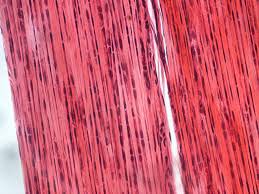
What type of tissue is this?
Dense connective tissue
Elastic connective tissue
Irregular connective tissue
Hyaline connective tissue
Cells that can build bony matrix.
Osteoblasts
Osteoclasts
Canaliculi
Lamellae

The 3 basic components of all types of connective tissue are:
collagen fibers, elastin fibers, and chondrocytes
chondrocytes, osteocytes, and lacunae
hyaline cartilage, elastic cartilage, and fibrocartilage
specialized cells, protein fibers, fluids
areoloar cells, adipose cells, and cartilage cells

Which type of connective tissue is shown?
Adipose
Reticular
Blood
Dense Irregular

What tissue is being shown in the picture?
hyaline cartilage
adipose
fibrocartilage
elastic cartilage

What tissue is being shown in the picture?
bone
adipose
blood
areolar (Loose)
The fiber type that gives connective tissue great tensile strength is ________.
Elastisc
Collagen
Reticular
muscular
What fibers have randomly coiled protein fibers that recoil after being stretched?
reticular fibers
cellular fibers
elastic fibers
reticular fibers

