
 Worksheets
Cumulative Vocab (1-3)
Total questions: 91
Worksheet time: 54mins
Speed
Total distance divided by time
Displacement divided by time
Change in position with direction
Change in velocity divided by time
Velocity
Total distance divided by time
distance divided by time
Change in position with direction
Change in velocity divided by time
Displacement
Total distance divided by time
Displacement divided by time
Change in position with direction
Change in velocity divided by time
What is distance?
how far something travels
how fast something travels
how big something is
seven
What is speed?
How fast the object is moving, usually measured in meters per second (m/s)
How high an object is moving
Where an object is
An object changing direction
Velocity
Total distance divided by time
speed with a direction
Change in position with direction
Change in velocity divided by time
Motion is described by an object's______________
direction and mass
direction and speed
force and mass
speed and force

A position vs. time graph shows an object's
frame of reference
speed
acceleration
favorite food
The ____ of a position vs time graph is speed.
y-intercept
slope
origin
none of the above
What does the word "Constant" mean
does not change
constantly changes
a group of stars in the sky
velocity
The symbol "d" represents what in a physics equation
distance
down
delete
deflection
The symbol "v" represents what physics variable
velocity
vector
very strong
voltage
Vf
Final Velocity
Initial Velocity
Starting Velocity
Velocity forward
Vi
Initial Velocity
Final Velocity
Instantaneous Velocity
Increasing Velocity
The units used to measure distance
meters
miles
feet
yards
"m" would best represents which unit of measure
meters
miles
millimeters
megatons
Choose all of the below units that can be used to measure distance or length in physics
Meters
Centimeters
Millimeters
miles
feet
One Meter
100 centimeters
100 millimeters
3 feet
how tall is Mr. Brooksher
Time
seconds
miles
meters
midnight
"s" stands for what unit of measure
seconds
speed
velocity
spring constant
the letter "t" represents
time
torque
total
Tim
Initial position
Starting point
ending point
shortened point
signiture
Why does a car accelerate as it rounds a corner at a constant speed?
Its direction changes
It doesn't
It slows down
Its speeds up
Metric unit for acceleration
mph
ft/sec2
m/s2
When does a car accelerate?
speeding up
slowing down
making turns
All of the above

Which shows the greatest acceleration?
A
B
C
D

Which formula involves acceleration?
vf = vi + at
d = vit + 1/2at2
vf2 = vi2 + 2ad
all of the above
Constant acceleration
change in velocity by a fixed amount over a fixed amount of time
Only changing speed
Only changing direction
Changing speed AND direction
Freefall
Only vertical force acting on object is gravity
Awesome ride at Six Flags back in the day
Getting knocked to the ground at no charge
Description of your grade if you study your Physics vocabulary
Gravity
Force that pulls all matter toward other matter
A hole in your tooth
Velocity of a falling object
Force that pulls objects downward Earth
Acceleration of gravity
-9.8m/s2
9.8m/s2
Changes based on altitude
Is greater for a bigger object
Air resistance
The force that acts in the OPPOSITE direction of an object's motion through the air
Almost always assumed to be zero for questions for this class
When it gets hard to breathe
When the vent in your car is clogged
Delta (Δ)
"Change in" something
Abbreviation for displacement
Airline based in Houston
My mom's sorority
Change in velocity
Δv
acceleration
changing direction
changing speed
Average velocity
Average distance divide by average time
55 mph
Total distance divided by total time
7
Initial velocity
Beginning velocity
Velocity at a specific point in time
Ending velocity
vf
Final velocity
Ending velocity
Beginning velocity
Initial velocity
Instantaneous velocity
Scalar
Snakes' skin
Only direction, no magnitude
Both direction and magnitude
Only magnitude, not direction
Velocity
Vector
Scalar
Speed
Vector
Scalar
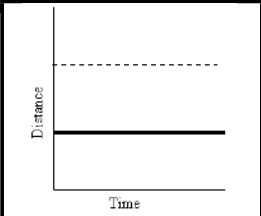


Horizontal
Flat, side-to-side, like the horizon line

Up-and-down

Vertical
Flat, side-to-side, like the horizon line
Up-and-down
Distance units
m
km
m/s
m/s2
Velocity units
m/s
km/h
m
m/s2
Acceleration units
m/s
km/h
m
m/s2
vertical
up and down
side to side
x-axis
y-axis
horizontal
up and down
side to side
x-axis
y-axis
projectile
object flying through air
machine that plays movies on a screen
how fast something is going
trajectory
path followed by a moving object
button to open your Playstation of Xbox
speed of a free falling object
relative velocity
speed and direction of an object's motion in relation to another object's motion
how fast your mom runs
Final velocity minus initial velocity
vf - vi
resultant velocity
combined velocity of two or more vectors
distance/time
vf - vi

component
"piece" or "part"
the horizontal piece of a vector
the vertical piece of a vector
range
horizontal distance traveled by an object
measured in meters (m)
measured in meters per second (m/s)
measured in meters per second squared (m/s2)
Pythagorean Theorem
a2 + b2 = c2
method for finding resultant vector when adding two perpendicular vectors
For every action there is an equal and opposite reaction
Force = mass x acceleration
The outcome when 2 or more vectors are combined
Resultant vector
Component vector
Resultant scalar
Component scalar
speed of an object across flat ground
horizontal velocity
acceleration
vertical velocity
speed going upward or downward
vertical velocity
horizontal velocity
altitude
-9.8 m/s2
when an object is being acted on only by gravity
free fall
flying
floating
air resistance
vacuum
absence of air resistance
physics problems are assumed to take place in this condition
the worst household chore
air resistance
The force of air pushing against a moving object, slowing it down
A new shoe by Nike
assumed to not exist when solving problems for this class

