wayground logo

Free Printable Worksheets

Font size

S
M
L
XL
Worksheets

Atomic Structure and Bonding Review

Total questions: 110

Worksheet time: 2hrs 48mins

Name
Class
Date
1.

A neutral atom of boron has an atomic number of 5. Its atomic mass is 11. How many ELECTRONS does it have?

a)

5

b)

11

c)

10

d)

6

2.

An oxygen atom shares electrons with two hydrogen atoms. This forms a __________ bond.

a)

ionic

b)

covalent

3.

Two atoms of the same element with a different number of neutrons are

a)

different elements

b)

ions

c)

isotopes

4.

__________ are electrons found in the outer shell that are involved in bonding.

a)

valence electrons

b)

outer electrons

c)

ions

d)

bonding electrons

5.

An atoms has 6 protons, 8 neutrons, and 7 electrons. It is a

a)

cation

b)

anion

c)

neutral atom

6.

Sodium gives its electron to chlorine forming salt. This is a/an ________ bond.

a)

ionic

b)

covalent

7.

Subatomic particles with a negative charge

a)

Electrons

b)

Neutrons

c)

Protons

d)

Quarks

8.
subatomic particles found on the outermost shell & responsible for the atom's reactivity
a)
neutrons
b)
valence electrons
c)
isotopes
d)
ions
9.
Subatomic particles with a positive charge
a)
neutrons
b)
atomic mass
c)
protons
d)
isotopes
10.
Value representing the number of protons in an element
a)
Atomic Mass
b)
Mass Number
c)
Valence Electrons
d)
Atomic Number
11.
Subatomic particles that are neutral in charge
a)
Neutrons
b)
Protons
c)
Nucleus 
d)
Electrons
12.
A charged atom
a)
Ion
b)
Isotope
c)
Electron Cloud
d)
Quark
13.
The smallest particle of an element that shows all the properties of that element.
a)
Subatomic Particles
b)
Atom
c)
Quarks
d)
Gluons
14.
Where electrons are likely to be found as they travel around the nucleus
a)
Nucleus
b)
Electron Cloud
c)
Within a Proton
d)
Within a Neutron
15.
A tiny but very dense, positively charged portion of the atom that holds most of the atomic mass
a)
Electron Shells
b)
Orbitals
c)
Electron Cloud
d)
Nucleus
16.

Found in the nucleus of an atom. This particle has a positive charge.

a)

Neutron

b)

Proton

c)

Electron

d)

Decepticon

17.

Found orbiting outside the nucleus, this subatomic particle has a negative charge.

a)

Neutron

b)

Proton

c)

Electron

d)

Idontknowatron

18.

Found in the nucleus of an atom, this subatomic particle has a neutral (or no ) charge

a)

Neutron

b)

Proton

c)

Electron

d)

Whattheheckatron

19.

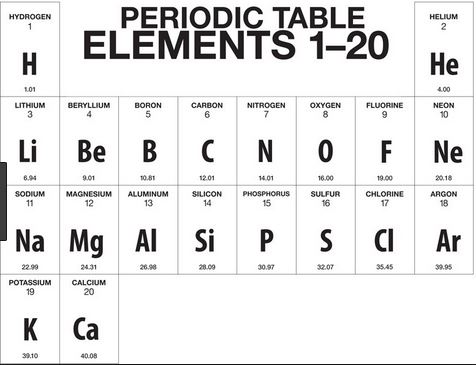
Name the element

a)

Boron

b)

Carbon

c)

Nitrogen

d)

Oxygen

20.

Name the element

a)

Aluminum

b)

Silicon

c)

Phosphorus

d)

Sulfur

21.

How many protons does indium have?

a)

49

b)

66

c)

114

d)

115

22.
What is the charge on a lithium atom that looses 1 electron?
a)
+1
b)
0
c)
-1
d)
-2
23.

What is the mass number of bromine?

a)

35

b)

45

c)

80

d)

79.904

24.

What charge does an atom have when it GAINS electrons?

a)

Positive

b)

Negative

c)

Neutral

25.

What is a representation of an ion?

a)

Li

b)

Na-22

c)

O-2

26.

How many neutrons does this bromine atom have?

a)

35

b)

45

c)

80

27.

What type of atom is this?

a)

Neutral atom

b)

Cation

c)

Anion

d)

Isotope

28.

What two particles determine the mass number?

a)

Protons and electrons

b)

Electrons and neutrons

c)

Protons and neutrons

29.

What type of atom is this?

a)

Normal Atom

b)

Cation

c)

Anion

d)

Isotope

30.

How many electrons does this magnesium ion have?

a)

24

b)

12

c)

10

d)

14

31.

What does it change in an ion?

a)

The number of electrons

b)

The number of protons

c)

The number of neutrons

32.
Negative ions are called
a)
Cations
b)
Electrons
c)
Anions
d)
Neutrons
33.
When an atom loses a valence electron, it becomes a(n) _____________ ion.
a)
positive
b)
negative
c)
neutral
d)
polyatomic
34.
Positive ions form when atoms _________ valence electrons.
a)
lose
b)
gain
c)
share
d)
gain or share
35.
When an atom LOSES an electron it is a
a)
cation
b)
anion
36.

What is the correct Lewis Dot Structure for ammonia NH3

a)
b)
c)
d)
37.

Which is the correct molecular structure for carbon dioxide?

a)
b)
c)
d)
38.
How many electrons should Lithium have around its Lewis dot model?
a)
1
b)
2
c)
3
d)
4
39.
How many electrons should Boron have around its Lewis dot model?
a)
1
b)
3
c)
5
d)
7
40.
How many electrons should Nitrogen have around its Lewis dot model?
a)
1
b)
3
c)
4
d)
5
41.
How many electrons should Magnesium have around its Lewis dot model?
a)
1
b)
2
c)
3
d)
4
42.

How many valence electrons does Hydrogen Have?

a)

1 Valence electron

b)

2 Valence electron

c)

3 Valence electron

d)

4 Valence electron

e)

5 Valence electron

43.

How many valence electrons does Magnesium Have?

a)

1 Valence electron

b)

2 Valence electron

c)

3 Valence electron

d)

4 Valence electron

e)

5 Valence electron

44.

How many valence electrons does Phosphorus Have?

a)

1 Valence electron

b)

2 Valence electron

c)

3 Valence electron

d)

4 Valence electron

e)

5 Valence electron

45.

How many valence electrons does Boron Have?

a)

1 Valence electron

b)

2 Valence electron

c)

3 Valence electron

d)

4 Valence electron

e)

5 Valence electron

46.
How many electrons should Nitrogen have around its Lewis dot model?
a)
1
b)
3
c)
4
d)
5
47.
This is a correct dot diagram for oxygen (O)
a)
true
b)
false
48.
This is a correct dot diagram for fluorine (F)
a)
true
b)
false
49.
This is the correct dot diagram for nitrogen (N)
a)
true
b)
false
50.
This is a correct dot diagram for nitrogen (N)
a)
true
b)
false
51.
This is a correct dot diagram for carbon (C)
a)
true
b)
false
52.
This could be the dot diagram of
a)
Mg
b)
Cl
c)
C
d)
O
53.
This could be the dot diagram of
a)
O
b)
B
c)
Li
d)
Ne
54.
This could be the dot diagram of 
a)
Ne
b)
Si
c)
Al
d)
Be
55.
The period for Bromine is ___________.
a)
3
b)
2
c)
4
56.
How many valence electrons are in an atom of Se?
a)
2
b)
8
c)
6
d)
5
57.
How many electrons can the first energy level hold?
a)
2
b)
4
c)
6
d)
8
58.
Which element has the same number of electrons in the outermost energy level as lithium?
a)
Hydrogen
b)
Beryllium 
c)
Carbon
d)
Magnesium
59.
Which element has the same number of energy levels as nitrogen?
a)
Boron
b)
Chlorine
c)
Phosphorus
d)
Silicon
60.

Which of the following is the correct number of protons, neutrons, and electrons for an atom of phosphorus?

a)

protons = 15

neutrons = 15

electrons = 15

b)

protons = 15

neutrons = 16

electrons = 15

c)

protons = 15

neutrons = 16

electrons = 16

d)

protons = 16

neutrons = 15

electrons = 16

61.
Valence electrons are the...
a)
Innermost electrons
b)
Middle electrons
c)
Outermost electrons
d)
Any electrons
62.

Elements in the same group or column have the same ...

a)

# of valence electrons

b)

# of shells

c)

# of protons

d)

Mass Number

63.

The columns in the periodic table are called ___________.

a)

Towers

b)

Herds

c)

Groups

64.

Rows on the periodic table are called ___________.

a)

Periods

b)

Sentences

c)

Fences

65.
What is the name of this element?
a)
Lithium
b)
Boron
c)
Carbon
d)
Neon
66.
Nitrogen will form which of the following ions?
a)
N
b)
N-3
c)
N-5
d)
N+5
67.
Beryllium will ____ valence electrons when forming an ionic bond.
a)
lose 4
b)
gain 4
c)
lose 2
d)
gain 2
68.
In the compound aluminum oxide, which is the cation?
a)
Al+3
b)
Al
c)
O-2
d)
O
69.
Ionic bonds form between metals and ____.
a)
metalloids
b)
metals
c)
nonmetals
70.
Ionic bonds happen because of the ____ of valence electrons.
a)
sharing
b)
transfer
71.
What determines how ionic bonds will form?
a)
Number of protons
b)
Mass of the atom
c)
Number of total electrons
d)
Number of valence electrons
72.
Nitrogen will ____ valence electrons when forming an ionic bond.
a)
gain 1
b)
lose 1
c)
gain 3
d)
lose 3
73.
What type of bond is this? Lithium with Fluorine?
a)
ionic
b)
covalent
74.
How many electrons are needed in the outer energy levels of an atom to be stable?
a)
2
b)
4
c)
6
d)
8
75.
Magnesium bromide is an ionic compound with the chemical formula MgBr₂.  What does the "2" tell you?
a)
There are 2 bromide ions for every magnesium ion
b)
Bromide has a 2- charge
c)
Bromide has a 2+ charge
d)
There are 2 magnesium ions to every bromide ion
76.
Which is the correct name for CaBr2?
a)
Calcium Bromine
b)
Bromine Calcium
c)
Calcium Bromide
d)
Carbon and Bromine
77.
What is the formula of calcium oxide?
a)
CaO2
b)
CaO
c)
Ca2O
d)
CO
78.
What is the formula for magnesium phosphide?
a)
Mg3P2
b)
Mg2P3
c)
Mg2(PO4)3
d)
Mg3(PO4)2
79.
Write the formula for barium + nitrogen
a)
Ba2N3
b)
Ba3N2
c)
BaN
d)
BaN3
80.
Write the correct chemical formula for Ag  and  Br -
a)
AgBr
b)
silver bromide
c)
Ag2Br2
d)
gold bromide
81.
What is the name for CaS?
a)
calcium sulfate
b)
calcium sulfide
c)
calcium monosulfide
d)
monocalcium monosulfide
82.
A covalent bond is a bond between a _____ and a ______
a)
metal, nonmetal
b)
metal, metal
c)
nonmetal, nonmetal
83.
A covalent bond is formed when two atoms ____ electrons
a)
share
b)
lose
c)
transfer
d)
gain
84.
What is it called when atoms share one pair of electrons?
a)
A double bond
b)
A triple bond
c)
A quadruple bond
d)
A single bond
85.
What is it called when atoms share two pairs of electrons?
a)
A double bond
b)
A single bond
c)
A triple bond
d)
A quadruple bond
86.
What do the prefixes in front of an element name tell us about the compound?
a)
The number of that compound
b)
The number of that element
c)
The atomic number
d)
The atomic mass
87.
Which type of bond transfers electrons?
a)
Covalent bond
b)
Ionic bond
88.
What bond is formed between a nonmetal and a nonmetal?
a)
Covalent bond
b)
Ionic bond
89.
Name CCl4
a)
carbon carbon tetraiodide
b)
carbon tetrachloride
c)
monocarbon tetrachloride
d)
water
90.
Give the formula for oxygen dichloride
a)
OCl2
b)

O2Cl2

c)
OCl
d)
O2Cl
91.
Give the formula for phosphorus trifluoride
a)
P3F
b)
PF
c)
PF3
d)
P3F3
92.
Which type of bond does Nitrogen and Hydrogen make?
a)
covalent
b)
metallic
c)
ionic
d)
James
93.
Which of the following is NOT an ionic compound:
a)
CaO
b)
NaOH
c)
BaCl2
d)
Br2
94.
name the following ionic compound: NaF
a)
nitrogen fluorine
b)
sodium fluoride
c)
nitrogen fluoride
d)
sodium fluorine
95.
Name BCl3
a)
boron chloride
b)
boron (III) chloride
c)
boron trichloride
d)
boron chlorine
96.
Name CO2
a)
carbon dioxide
b)
carbon monoxide
c)
carbon oxide
d)
monocarbon dioxide
97.
What is the prefix for 8?
a)
non
b)
tri
c)
di
d)
oct
98.
What is the correct formula for this molecule?
a)
NH
b)
N3H
c)
NH3
d)
NH4
99.
According to the octet rule most elements need _______ valence electrons.
a)
2
b)
8
c)
6
d)
18
100.

Hydrogen needs _____ electrons in its valence shell to be stable.

a)

4

b)

6

c)

8

d)

2

101.

What is the name of the compound P2O5

a)

Pentaphosphorus dioxide

b)

Phoshphide dioxide

c)

Diphosphorus pentoxide

102.

What is the name for MgF2 ?

a)

magnesium fluoride

b)

manganese Phosphide

c)

magnesium(III) fluoride

d)

magnesium fluoride(II)

103.

Name Al2S3

a)

Aluminum sulfide

b)

Dialuminum trisulfide

c)

ammonium sulfide

d)

aluminum (II) sulfice

104.
Name the compound NO3
a)
nitrogen trioxide
b)
nitrate
c)
nitrite
d)
dinitrogen pentoxide
105.
Name the compound ClO2
a)
chlorite
b)
chlorate
c)
chlorine dioxide
d)
chlorine (II) oxide
106.
What kind of bond forms between two nonmetals?
a)
Chemical bond
b)
Ionic bond
c)
Covalent bond
d)
Electron bond
107.
Name the following ionic compound: Cs2S
a)
cesium sulfide
b)
cesium sulfate
c)
cesium (II) sulfate
d)
cesium (II) sulfide
108.
Disulfur trioxide
a)
S3O2
b)
SO
c)
S2O3
d)
S2O
109.
What is the name of BaO?
a)
barium (II) oxide
b)
barium oxide
c)
barium oxygen
d)
barium (I) oxide
110.

Why do all bonds form?

a)

so the number of protons equals the number of electrons

b)

so an atom can become unstable

c)

to fill the outermost energy level