wayground logo

Free Printable Worksheets

NEW

Font size

S
M
L
XL
Worksheets

HEAT TRANSFER 6th Grade Basic

Total questions: 50

Worksheet time: 38mins

Name
Class
Date
1.
 Why do we wear sweaters in cold weather?
a)
To keep cold out.
b)
To generate heat.
c)
To reduce heat loss.
d)
All of the above.
2.
If you put a metal spoon and a wooden spoon into a pot of boiling water, one will become too hot to touch. Why? 
a)
Metals conduct heat better than wood.
b)
Wood conducts heat better than metals.
c)
Metals pull in heat because heat is attracted to metals.
d)
Wood isn’t as strong as metals.
3.
On a hot day, the upstairs rooms in a house are usually hotter than the downstairs rooms. Why?
a)
Cool air is less dense than hot air.
b)
Warm air rises and cool air sinks.
c)
The roof insulation warms the air.
d)
Heat rises.
4.
1.  You have a can of soda in your lunchbox that you want to keep cold. Which material will work best to keep it cold?
a)
Aluminum foil wrapped around the soda because metals transfer heat energy easily.
b)
A paper towel wrapped around the soda because paper soaks up the moisture.
c)
Wax paper wrapped around the soda because wax paper traps the moisture.
d)
Your wool sweater wrapped around the soda because wool traps air.
5.
When you hold a metal coat hanger in a camp fire to roast a marshmallow, the coat hanger might become too hot to hold. Why might the coat hanger get too hot?
a)
The heat radiates along the coat hanger.
b)
The heat builds up near the flame until it can’t hold it anymore and then moves     along the coat hanger.
c)
Metal atoms vibrate with more energy when they get hot, and they collide with   atoms near them, which causes the neighboring atoms to vibrate.
d)
Since metals melt in fire, they react strongly to fire and get hot easily.
6.
An aluminum plate and a plastic plate have been in the freezer all night long. When you remove them the next morning,
a)
The plates are the same temperature.
b)
The plastic plate has a higher temperature.
c)
The plastic plate has a lower temperature.
d)
The aluminum plate has a lower temperature.
7.

Temperature is a measure of…

a)

Cold

b)

Average Kinetic Energy

c)

Light Energy

d)

very hot objects only

8.

What is the only method of heat transfer that DOESN’T require matter ( for example waves that travel through space) ?

a)

Conduction

b)

Convection

c)

Radiation

9.

What method of heat transfer uses direct contact or touch?

a)

Conduction

b)

Convection

c)

Radiation

10.

What method of heat transfer uses currents of liquids or gases?

a)

Radiation

b)

Conduction

c)

Convection

11.
A group of friends gather around a fire to stay warm.
a)
conduction
b)
convection
c)
radiation
12.
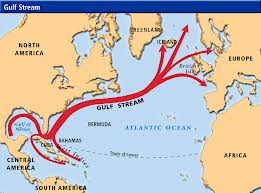
The Gulf Stream is a current that brings warm ocean water from the south to the north.
a)
conduction
b)
convection
c)
radiation
13.
Blow drying your wet hair.
a)
conduction
b)
convection
c)
radiation
14.
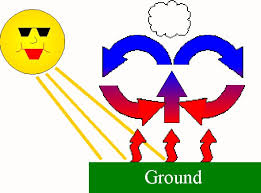
Warm air rises and the cool air sinks.
a)
conduction
b)
convection
c)
radiation
15.
In some cultures, walking on fire is the ultimate sign of strength.
a)
conduction
b)
convection
c)
radiation
16.
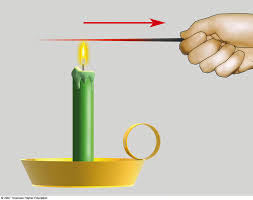
The candle will slowly heat the metal and transfer the heat directly to the mans hand.
a)
conduction
b)
convection
c)
radiation
17.
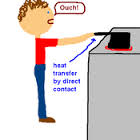
Johnny accidentally grabbed the handle of the hot pot.
a)
conduction
b)
convection
c)
radiation
18.
The warm air from this heater creates a current when the warm air rises and the cold air sinks.
a)
conduction
b)
convection
c)
radiation
19.

In how many ways does heat transfer ?

a)

One

b)

Three

c)

Two

d)

Ten

20.
Hot air moving up is an example of 
a)
Radiation
b)
Conduction
c)
Magic
d)
Convection
21.
Molecules in cold things move more _________
than in hot things.
a)
quickly
b)
slowly
c)
happily
d)
merrily
22.
Warm air is __________ dense than cold air and rises creating convection currents.
a)
more
b)
less
23.
What are waves that can transfer heat through the vacuum of empty space?
a)
Electromagnetic waves
b)
Convection
c)
Conduction
d)
Heat
24.
What is the measurement of the average kinetic energy of a substance?
a)
Kinetic energy
b)
Temperature
c)
Thermal energy
d)
Potential energy
25.
What is a substance that does NOT conduct heat well?
a)
Conductor
b)
Insulator
c)
Convector
d)
Radiator
26.
What is a substance that DOES conduct heat well?
a)
Conductor
b)
Insulator
c)
Convector
d)
Radiator
27.
What is the energy of the movement of particles in a substance?
a)
Potential energy
b)
Kinetic energy
c)
Thermal energy
d)
Temperature
28.
What is energy?
a)
Kinetic
b)
Movement
c)
Ability to do work, son.
d)
Thermal energy
29.

Weather Patterns

a)

Conduction

b)

Convection

c)

Radiation

30.

Sun Bathing

a)

Conduction

b)

Convection

c)

Radiation

31.

Currents in Earths mantle.

a)

Conduction

b)

Convection

c)

Radiation

32.

What is this tool called?

a)

thermometer

b)

test tube rack

c)

triple beam balance

d)

funnel

33.

The graph in this image is showing...

a)

that the heat temperature is falling as time passes.

b)

that the heat temperature is rising as time passes.

c)

that the heat temperature is staying about the same as time passes.

34.
In heat transfer, heat always flows from the _______________ substance to the _______________ substance.
a)
Hotter to colder
b)
Colder to hotter
c)
Hotter to hotter
d)
Colder to colder
35.
Which statement is true?
a)
The quicker a molecule moves, the colder it is.
b)
The slower a molecule moves, the warmer it is.
c)
The quicker a molecule moves, the warmer it is
d)
The movement on molecule don�t affect its temperature
36.
When you use a microwave, what is the main way that heat is transferred?
a)
Convection
b)
Conduction
c)
Radiation
d)
insulation.
37.
The heat from a hot burner to a pot is transferred by ______.
a)
convection
b)
insulation
c)
radiation
d)
conduction
38.
What energy transformations take place when a battery-operated radio is in use?
a)
Electrical to chemical to light
b)
Sound to chemical to mechanical
c)
Chemical to electrical to sound
d)
Light to electrical to thermal
39.
Which of the following devices transforms electrical energy into mechanical energy?
a)
An e-reader
b)
a fan
c)
a manual pencil sharpener
d)
ipod
40.

What energy transformation occurs as bioluminescent algae glow in the ocean?

a)

Radiant --> Chemical

b)

Thermal --> Radiant

c)

Chemical --> Radiant

d)

Thermal --> Chemical

41.

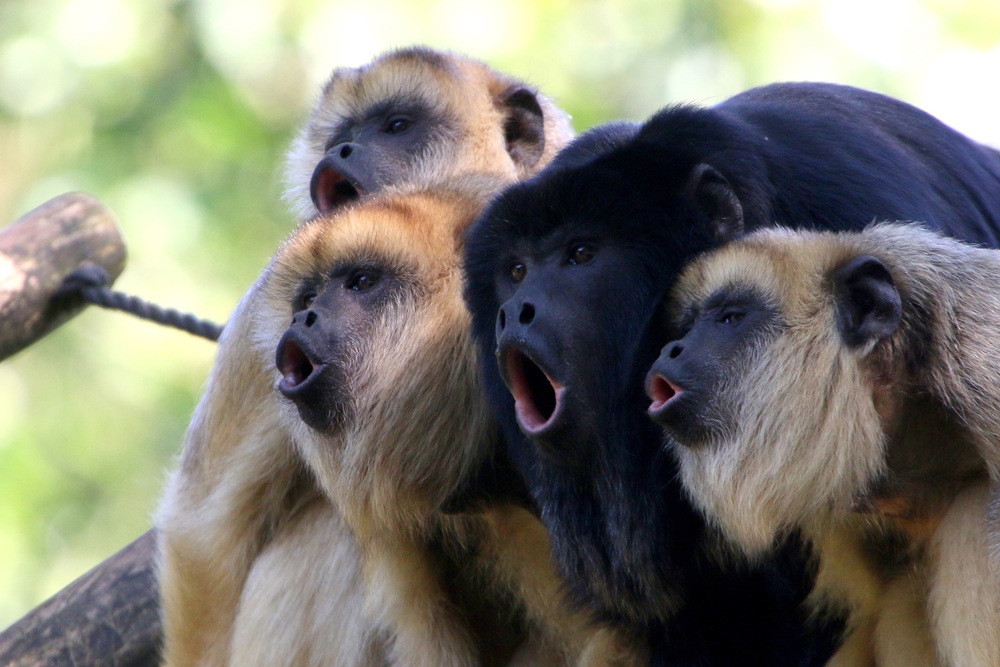
What energy transformation occurs as howler monkeys loudly call to each other in the forest?

a)

Chemical --> Mechanical --> Sound

b)

Chemical --> Sound --> Thermal

c)

Sound --> Chemical --> Radiant

d)

Mechanical --> Chemical --> Sound

42.

What energy transformation occurs during photosynthesis?

a)

Chemical --> Radiant

b)

Thermal --> Chemical

c)

Radiant --> Chemical

d)

Mechanical --> Thermal

43.

What energy transformation occurs as a mouse produces body heat?

a)

Chemical --> Thermal

b)

Thermal --> Chemical

c)

Electrical --> Thermal

d)

Thermal --> Mechanical

44.
Potential energy is energy that is...
a)
stored
b)
already used
c)
being used currently
d)
never going to be used
45.
What is friction?
a)
a force that resists the sliding of two surfaces
b)
a force that lubricates the sliding of two surfaces
c)
a force that allows two surfaces to slide that are not touching each other
d)
a forces that transforms the sliding of two surfaces to make it easier.
46.
"Energy can be transformed from one form into another or transformed from one region or another, but energy cannot be created or destroyed."
Which law is this?
a)
Law of Conservation of Mass
b)
Newton's Second Law
c)
Law of Conservation of Energy
d)
Newton's Third Law
47.
Can energy be created or destroyed?
a)
Yes
b)
No
48.
Mechanical Energy is transferred to _____ Energy.
a)
Solar
b)
Mechanical
c)
Electrical
d)
Potential
49.
Chemical Energy is transferred to _____ Energy.
a)
Thermal
b)
Solar
c)
Mechanical
d)
Chemical
50.

The three ways that heat can be transferred are:

a)

kinetic, potential, mechanical

b)

conduction, convection, transition

c)

chemical, mechanical, nuclear

d)

conduction, convection, radiation