Wayground logo

Free Printable Worksheets

Font size

S
M
L
XL
Worksheets

Energy storing and releasing

Total questions: 75

Worksheet time: 1hrs 3mins

Name
Class
Date
1.
Which bond of the ATP molecule is broken in order to release energy?
a)
A
b)
B
c)
C
d)
D
2.
Which of the following is components can transform ADP to ATP?
a)
Adenosine
b)
Phosphate group
c)
Nitrogenous Base
d)
Ribose
3.
Which of the following can be compared to a battery in need of recharging?
a)
ADP
b)
ATP
c)
Ribose
d)
Adenosine
4.
Which cellular organelle is responsible for manufacturing ATP?
a)
Ribosome
b)
Nucleus
c)
Mitochondria
d)
Chloroplast
5.
Which of the following is NOT a component of ATP?
a)
Glucose
b)
Adenosine
c)
Phosphate 
d)
Ribose
6.
Which of the following results in the release of energy in terms of the ATP/ADP cycle?
a)
The breaking of the bond between the 5-carbon sugar and the 1st phosphate group
b)
The addition of a phosphate group
c)
The removal of a phosphate group
d)
The addition of glucose 
7.
Which of the following results in the storage of energy in terms of the ATP/ADP cycle?
a)
The breaking of the bond between the 5-carbon sugar and the 1st phosphate group
b)
The addition of a phosphate group
c)
The removal of a phosphate group
d)
The addition of glucose 
8.

What is the energy molecule for all living cells?

a)

ADP

b)

ATP

c)

Protein

d)

Sugars

9.

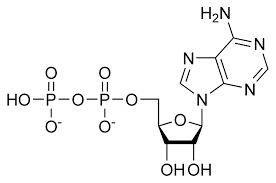
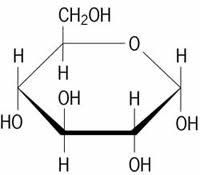
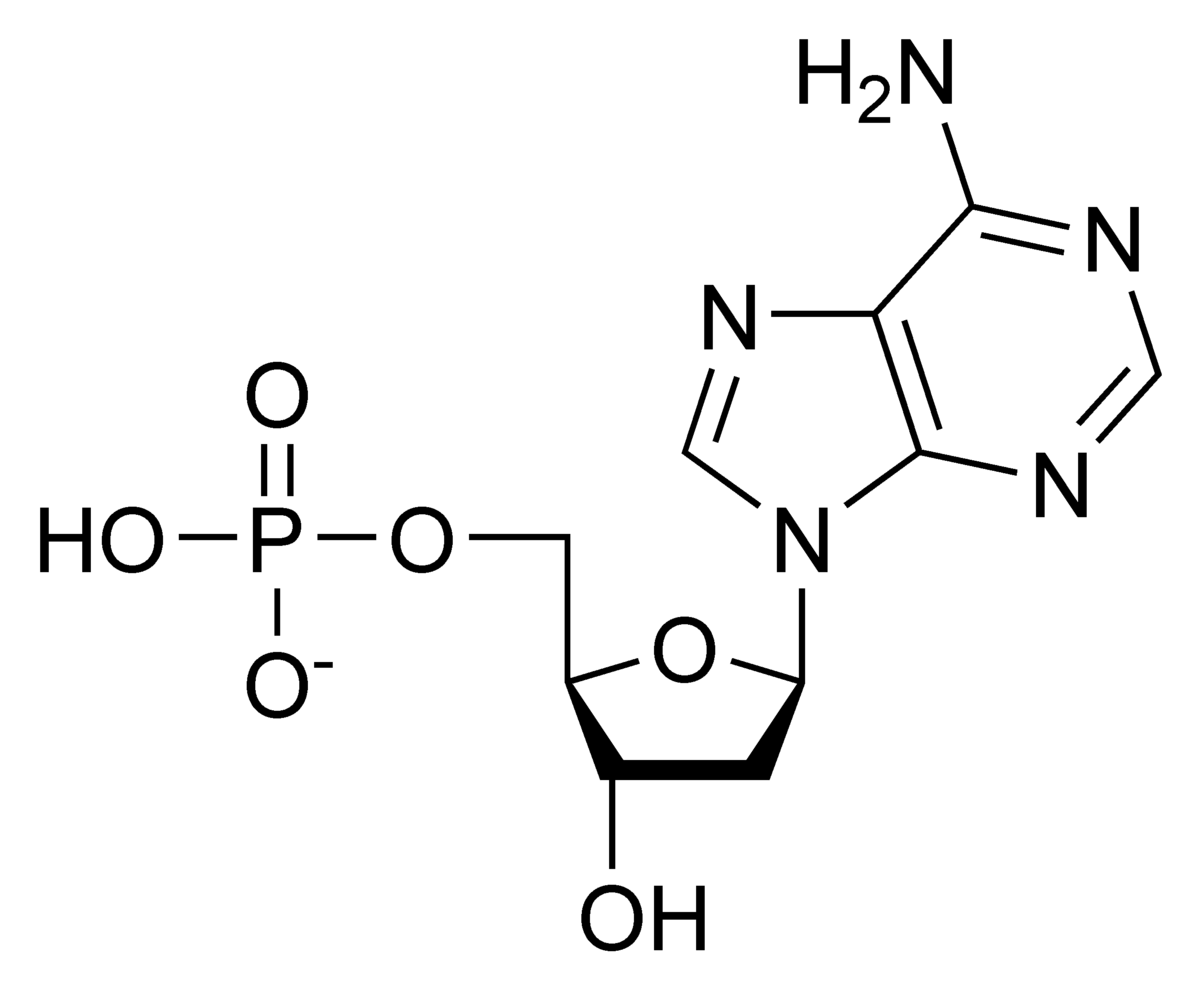
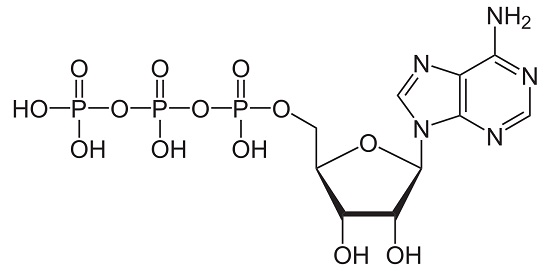
Which of the following is the correct structure of ATP?
a)
b)
c)
d)
10.
Using the figure, which parts of the molecule must the bonds be broken to form an ADP molecule?
a)
A and B
b)
B and C
c)
C and D
d)
all of the above
11.
ADP is an abbreviation for:
a)
aniline diphosphate.
b)
adenine diphosphate.
c)
adenosine diphosphate.
d)
adenosine triphosphate.
12.
Which of the following is the correct equation for PHOTOSYNTHESIS?
a)
CO2 + light + H2O --> O2 + Sugar
b)
CO2 + sugar + H2O --> O2 + light
c)
O2 + light + H2O --> CO2 + Sugar
d)
CO2 + O2 + H2O --> Light+ Sugar
13.
What process occurs when light energy is captured in autotrophs and converted into sugar?
a)
Photosynthesis
b)
Cellular Respiration
14.
What are the products of photosynthesis?
a)
water and carbon dioxide
b)
oxygen and glucose
c)
oxygen and carbon dioxide
d)
oxygen and water
15.
What is the pigment in chloroplasts that performs photosynthesis?
a)
Chlorosynthesis
b)
Chlorophyll
c)
ADP
d)
Electron Transport
16.
Most plants appear green because chlorophyll
a)
absorbs green light.
b)
absorbs violet light.
c)
does not absorb green light.
d)
does not absorb violet light.
17.
Plants need carbon dioxide from their environment to produce glucose during which stage of photosynthesis? 
a)
The light-dependent stage
b)
The light-independent stage (The Calvin Cycle)
c)
The electron transport chain
d)
ATP formation
18.
The light independent reactions of photosynthesis happen where?
a)
stroma of chloroplast
b)
mitochondrial matrix
c)
stem
d)
thylakoid membrane
19.
Does the Calvin Cycle require light?
a)
yes
b)
no
c)
depends on the amount of carbon dioxide
20.
Use the diagram to answer the question. Which molecule is an electron carrier?
a)
H2O
b)
carbon dioxide
c)
NADP+
d)
oxygen
21.
Which product is produced by the splitting of water during the light-dependent reactions of photosynthesis?
a)
NADPH
b)
oxygen
c)
glucose
d)
carbon dioxide
22.
Where do the light-dependent reactions occur? 
a)
thylakoid membrane
b)
stroma
c)
mesophyll
d)
mitochondria
23.
What is the function of NADPH and ATP?
a)
They absorb light
b)
They power the light-dependent reactions
c)
They are light-reflecting pigments
d)
They are short term energy carriers
24.
The calvin cycle takes place in __________.
a)
stroma
b)
thylakoid membrane
c)
chlorophyll
d)
granum
25.
#4 is pointing to an individual "pancake" in this stack.  What is this called?
a)
Stroma
b)
Thylakoid
c)
Granum
d)
Stomata
26.
 #3 is pointing to the space outside the stacks in this chloroplast.  What is this area called?
a)
Thylakoid space
b)
Thylakoid
c)
Stroma
d)
Stomata
27.
Where does cellular respiration occur?
a)
Nucleus
b)
Mitochondria
c)
Vacuole
d)
Chloroplast
28.
This is referred to as the energy currency of the cell
a)
ADP
b)
ATP
c)
Mitochondria
d)
Nucleus
29.
What is the net gain of ATP during glycolysis?
a)
1
b)
2
c)
3
d)
4
30.
Glycolysis takes place in the 
a)
mitochondria
b)
cell membrane
c)
cytoplasm
d)
nucleus
31.
This is the first step of cellular respiration
a)
Glycolysis
b)
Lactic Acid Fermentation
c)
Alcoholic Fermentation
d)
Aerobic Respiration
32.
This means that oxygen is needed
a)
anaerobic 
b)
aerobic
33.
This process does not make ATP alone, but it allows glycolysis to continue making ATP when oxygen is unavailable for cellular respiration.
a)
Fermentation
b)
Electron Transport Chain
c)
Glycolysis
d)
Kreb's cycle
34.
What is the correct equation for cellular respiration?
a)
6O2 + C6H12O6 -> 6CO2 + 6H2O + Energy
b)
6O2 + C6H12O6 + Energy -> 6CO2 + 6H2O
c)
6CO2 + 6H2O -> 6O2 + C6H12O6 + Energy
d)
6CO2 + 6H2O + Energy -> 6O2 + C6H12O6
35.
Anaerobic respiration.....
a)
doesn't require CO2
b)
requires CO2
c)
doesn't require oxygen
d)
requires oxygen
36.
______________ produces the most ATP.
a)
photosnthesis
b)
aerobic respiration
c)
anaerobic respiration
d)
glycolysis
37.
What are the products of aerobic respiration?
a)
Glucose and oxygen
b)
Carbon dioxide and water
c)
Lactic acid
d)
Carbon monoxide
38.
Which molecule isn't an energy carrier?
a)
FADH2
b)
NADH
c)
oxygen
d)
ATP
39.
What is cellular respiration?
a)
the breakdown of glucose  to release ATP
b)
the breakdown of glucose to release NADH
c)
the breakdown of glucose to release FADH
d)
the breakdown of glucose to release carbon
40.
 The expression "feel the burn" means that a person exercising is doing 
a)
lactic acid fermentation
b)
alcoholic fermentation
c)
photosynthesis
d)
aerobic respiration
41.
Where does anaerobic respiration occur?
a)
glucose molecule
b)
mitochondria
c)
cytoplasm
42.
Which of the following best describes photosynthesis?
a)
Photosynthesis converts radiant energy into chemical energy.
b)
Photosynthesis produces carbohydrates.
c)
Plants need sunlight, carbon dioxide, water, nutrients, and chlorophyll to complete photosynthesis.
d)
Plants use chlorophyll, water, and carbon dioxide to make sugar.
43.
How can photosynthesis be related to cellular respiration?
a)
What's produced by one is needed for the other
b)
They both produce the same products
c)
They both have the same reactants (need the same things)
d)
These 2 processes have nothing in common
44.
Why is photosynthesis important?
a)
creates oxygen for animals to breath
b)
creates energy for heterotrophs to use
c)
creates food for plants to use
d)
all of these are correct
45.
What is another name for glucose?
a)
Chlorophyll
b)
Chloroplasts
c)
Stomata
d)
Sugar
46.
Where does carbon dioxide enter plants?
a)
The leaves
b)
Stem
c)
Roots
47.
Why do plants go through photosynthesis?
a)
To make food for us
b)
To make food for themselves
c)
They're bored and have nothing else to do
48.
The main source of energy for all life comes from ____.
a)
the Earth
b)
the moon
c)
the sun
d)
the food we eat/make
49.
What does photo mean?
a)
Print
b)
Picture
c)
Make
d)
Light or Color
50.
What does synthesis mean?
a)
Photo
b)
Process
c)
Light
d)
Color
51.
Where does a plant absorb the water that it uses during photosynthesis?
a)
Leaves
b)
Stem
c)
Roots
d)
Petals
52.

What are the stages of cellular respiration?

a)

Light Dependent Reactions and Light Independent Reactions

b)

Lactic Acid Fermentation and Alcoholic Fermentation

c)

Glycolysis, Krebs Cycle, and Electron Transport Chain

d)

Interphase and Mitosis

53.

What are the reactants of cellular respiration?

a)

6CO2 and C6H12O6

b)

6O2 and 6H2O

c)

6CO2 and 6H2O

d)

6O2 and C6H12O6

54.

What are the products of cellular respiration?

a)

6CO2 and 6H2O

b)

6CO2 and C6H12O6

c)

6O2 and C6H12O6

d)

6O2 and 6H2O

55.
Where does aerobic respiration take place?
a)
Cytoplasm
b)
Mitochondria
c)
Stroma
d)
Thylakoid
56.
Which type of respiration occurs in the presence of oxygen?
a)
Aerobic
b)
Anaerobic
57.
What is the correct equation for cellular respiration?
a)
6O2 + C6H12O6 -> 6CO2 + 6H2O + Energy
b)
6O2 + C6H12O6 + Energy -> 6CO2 + 6H2O
c)
6CO2 + 6H2O -> 6O2 + C6H12O6 + Energy
d)
6CO2 + 6H2O + Energy -> 6O2 + C6H12O6
58.

Which of these is a product of cellular respiration?

a)

ATP

b)

Carbon dioxide

c)

Water

d)

All of these are a product of cellular respiration

59.
ATP is called a cell's "energy currency" because
a)
ATP catalyzes all metabolic reactions
b)
ATP allow one organelle to be exchanged for another between cells
c)
glucose is made of ATP
d)
most of the energy that drives metabolism is supplied by ATP
60.
When a phosphate group is removed from an ATP molecule, 
a)
a substantial amount of energy is released
b)
an enzyme is formed
c)
energy is stored
d)
activation energy is increased
61.
The process of cellular respiration 
a)
is performed only by organisms that are incapable of photosynthesis
b)
is performed by autotrophs and heterotrophs
c)
occurs before plants are able to carry out photosynthesis
d)
occurs only in animals
62.
Cells produce ATP most efficiently in the presence of
a)
water
b)
carbon dioxide
c)
oxygen
d)
radiant energy
63.

Approximately how many ATP's can breaking down one molecule of glucose generate?

a)

2

b)

118

c)

36

d)

15

64.

Which of the following processes generates the MOST ATP

a)

cellular respiration

b)

photosynthesis

c)

fermentation

d)

glycolysis

65.

Which of the following steps generates the MOST ATP?

a)

ETC

b)

Krebs

c)

Fermentation

d)

Glycolysis

66.

Which of the following steps generates the LEAST ATP?

a)

ETC

b)

Krebs

c)

Fermentation

d)

Glycolysis

67.

When oxygen is running low, our bodies resort to __________ for energy.

a)

cellular respiration

b)

lactic acid fermentation

c)

alcoholic fermentation

d)

glycolysis

68.

What important molecule is generated in fermentation?

a)

ATP

b)

ADP

c)

NAD+

d)

NADH

69.

What type of fermentation do our bodies do?

a)

lactic acid

b)

synthetic

c)

natural

d)

alcoholic

70.

Where in the mitchondria does the Krebs Cycle occur?

a)

thylakoid

b)

matrix

c)

stroma

d)

cristae

71.
In which way are photosynthesis and cellular respiration different?
a)
Cellular respiration stores ATP, while photosynthesis releases ATP.
b)
Cellular respiration produces oxygen, while photosynthesis uses oxygen.
c)
Photosynthesis releases energy, while cellular respiration stores energy.
d)
Photosynthesis used carbon dioxide, while cellular respiration produces carbon dioxide.
72.
Cellular Respiration's goal is to
a)
make water
b)
make ATP
c)
make glucose
d)
make  oxygen
73.

Krebs Cycle results in a net gain of how many ATP?

a)

0

b)

2

c)

4

d)

1

74.

A kilocalorie (kcal or Calorie) is the same as:

a)

a gram of fat

b)

kilojoule

c)

a food calorie

d)

the calories found in a head of lettuce

75.

calorie is a measure of

a)

Energy

b)

Weight

c)

Distance

d)

Volume