Wayground logo

Free Printable Worksheets

Font size

S
M
L
XL
Worksheets

Foundation Biology Body Systems Quiz

Total questions: 100

Worksheet time: 48mins

Name
Class
Date
1.

Which of the following is NOT part of the alimentary canal?

a)

small intestine

b)

oesophagus

c)

stomach

d)

pancreas

2.

Which organ releases digestive enzymes into the small intestine?

a)

pancreas

b)

small intestine

c)

oesophagus

d)

salivary glands

3.

What organ is responsible for the majority of the absoption that occurs in the digestive system?

a)

large intestine

b)

small intestine

c)

stomach

d)

pancreas

4.

What accomplishes most of the chemical digestion in the large intestine? As a result of this digestive, gas is produced.

a)

pancreatic enzymes

b)

bile

c)

bacteria

d)

saliva

5.

The involuntary propulsion of foodstuff is accomplished by circular muscle fibers that squeeze along the alimentary canal. That way food is moved involuntarity. What is the name of this process?

a)

swallowing

b)

peristalsis

c)

defecation

d)

absorption

6.

The small intestine is the longest of the digestive organs. What benefit to the body is it that it is so long?

a)

It allows the organ to secrete bile which in turn breaks down food

b)

It allows more time for the food to be in the organ which allows more absoption to take place.

c)

It provides more surface area for mucus which helps digested food move more smoothly.

7.

What organ of the alimentary canal is located between the oesophagus and the small intestine?

a)

stomach

b)

large intestine

c)

pharynx

d)

salivary glands

8.

The teeth and tongue of the oral cavity break foodstuff down physically. This is an example of

a)

mechanical digestion

b)

chemical digestion

c)

absorption

d)

peristalsis

9.

What is the function of the oesophagus?

a)

moves food by using peristalsis

b)

digesting protein

c)

chemically digests fats and absorbs some vitamins

d)

Absorption of proteins and alcohol

10.

Which of the following is an accessory organ of the digestive system?

a)

stomach

b)

small intestine

c)

esophagus

d)

liver

11.

Which of the following answers correctly sequences the pathway food takes from entering to exiting?

a)

mouth, oesophagus, stomach, small intestine, large intestine

b)

mouth, oesophagus, stomach, large intestine, small intestine

c)

mouth, stomach, oesophagus, small intestine, large intestine

d)

mouth, stomach, oesophagus, large intestine, small intestine

12.

Which organ stores bile?

a)

liver

b)

gallbladder

c)

pancreas

d)

stomach

13.

Which organ makes bile?

a)

liver

b)

gallbladder

c)

pancreas

d)

stomach

14.

What macromolecule would be broken down by these structures?

a)

carbohydrates/starches

b)

lipids

c)

proteins

d)

nucleic acids

15.

What substance is produced by this structure?

a)

lipase

b)

protease

c)

amylase

d)

bile

16.
What macromolecule is chemically digested here?
a)
carbs
b)
fats
c)
proteins
d)
all macromolecules
17.

Name this structure.

a)

spleen

b)

gall bladder

c)

pancreas

d)

liver

18.

What process does not occur here?

a)

mechanical digestion

b)

chemical digestion

c)

absorption

d)

all occur here

19.

What best describes what occurs here?

a)

nutrients are absorbed

b)

water and salts are reclaimed

c)

bacteria assist with vitamin absorbtion

d)

most mechanical digestion

20.

Mechanical digestion does not occur in the:

a)

mouth

b)

stomach

c)

small intestine

d)

large intestine

21.

Proteins break down to:

a)

fatty acids

b)

nucleic acids

c)

amino acids

d)

hydrochloric acids

22.

What are these structures that are found lining the small intestine?

a)

Gallbladder

b)

Villi

c)

Sphincter

d)

Alveoli

23.
The penis and scrotum are part of the male's genitals.
a)
True
b)
False
24.
Which is not part of the female's reproductive system?
a)
Labia
b)
Uterus
c)
Cervix
d)
Vas Deferens
25.
An egg cell leaves the _______________ and goes into the fallopian tube.
a)
Testicle
b)
Ovary
c)
Uterus
d)
Scrotum
26.
Females are born with all the egg cells they will ever have.
a)
True
b)
False
27.

The meeting of a sperm and ovum.

a)

Intercourse

b)

Implantation

c)

Conception

d)

Fertilisation

28.

The nesting of a fertilised egg in the wall of the uterus.

a)

Implantation

b)

Fertilisation

c)

Conception

d)

Menstruation

29.

The lining of the uterus that is shed during menstruation.

a)

Fimbriae

b)

Fertilisation

c)

Implantation

d)

Endometrium

30.
Where a baby grows and develops for approximately 9 months.
a)
Stomach
b)
Bladder
c)
Vagina
d)
Uterus
31.

The process when the ovary releases a mature egg cell.

a)

menstruation

b)

ejaculation

c)

ovulation

d)

implantation

32.

Where does fertilisation usually take place?

a)

ovary

b)

fallopian tube

c)

cervix

d)

vagina

33.
What form is DNA is in during Interphase?
a)
Chromatin
b)
Replicated Chromosome
c)
Unreplicated Chromosome
d)
Chromatids
34.
What stage of the cell cycle is the following cell in?
a)
Interphase
b)
Prophase
c)
Anaphase
d)
Telophase
35.
What stage of the cell cycle is the cell in?
a)
Interphase
b)
Prophase
c)
Metaphase
d)
Telophase
36.
What stage of the cell cycle is the cell in?
a)
Prophase
b)
Metaphase
c)
Anaphase
d)
Telophase
37.
What stage of the cell cycle is the cell in?
a)
Prophase
b)
Metaphase
c)
Anaphase
d)
Telophase
38.
What stage of the cell cycle is the cell in?
a)
Prophase
b)
Interphase
c)
Anaphase
d)
Telophase
39.

What do the male reproductive organs do?

a)

Move the sperm

b)

Produce sperm and take care of it

c)

Produce and transport sperm

d)

Stores sperm

40.

All female reproductive organs are external

a)

False

b)

True

41.

Located between the vagina and uterus.

a)

Cerbis

b)

Carlyx

c)

Cervix

d)

Xervis

42.
What is the correct name for the windpipe?
a)
Trachea
b)
Bronchus
c)
Bronchiole
d)
Larynx
43.
What are the names of the air sacs in the lungs where gas exchange takes place?
a)
Alveoli
b)
Bronchi
c)
Bronchioles
d)
Intercostal muscles
44.
Label A is...
a)
Trachea
b)
Diagphragm
c)
Bronchus
d)
Alveolus
45.
Label B is...
a)
Trachea
b)
Diagphragm
c)
Bronchus
d)
Alveolus
46.
Label C is...
a)
Trachea
b)
Diagphragm
c)
Bronchus
d)
Alveolus
47.
Label D is...
a)
Trachea
b)
Diagphragm
c)
Bronchus
d)
Alveolus
48.
When you inspire the diaphragm...
a)
Contracts and flattens
b)
Relaxes and flattens
c)
Contracts and rises
d)
Relaxes and rises
49.

What is the function of the respiratory system?

a)

Take in O2 only

b)

Remove CO2 only

c)

Gas exchange - oxygen and carbon dioxide.

d)

Make sugar

50.
Alveoli increase the surface area in the lungs to allow...
a)
More nutrients to be absorbed
b)
You to breathe faster
c)
You to breathe slower
d)
More O2 and CO2 to exchange
51.
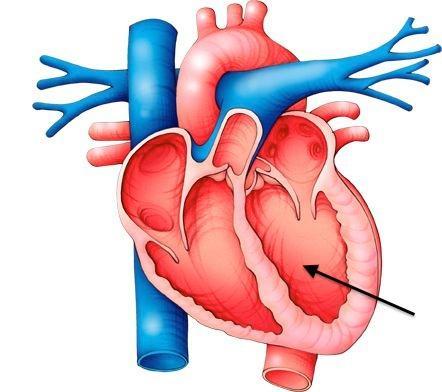
Identify
a)
Left atrium
b)
Right atrium
c)
Left ventricle
d)
Right ventricle
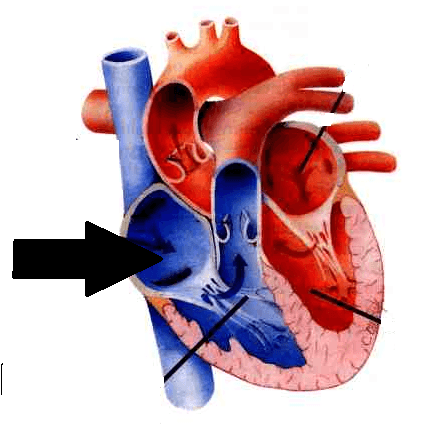
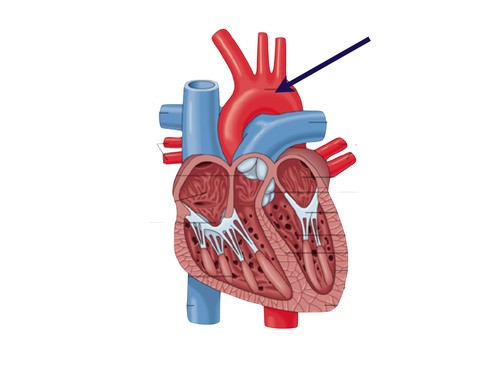
52.
Identify
a)
Pulmonary veins
b)
Pulmonary artery
c)
Aorta
d)
Vena cava
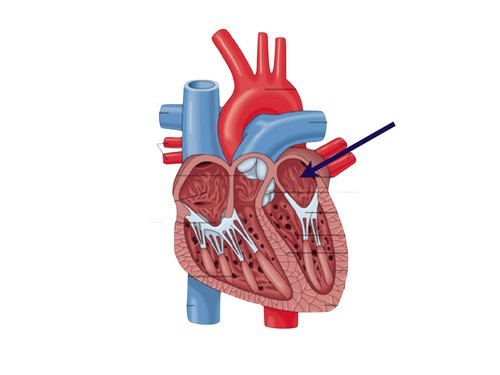
53.
Identify
a)
Left atrium
b)
Right atrium
c)
Left ventricle
d)
Right ventricle
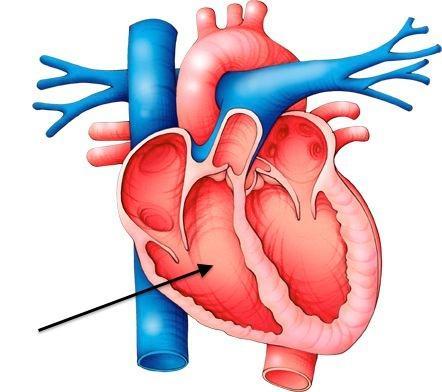
54.
Identify
a)
Left atrium
b)
Right atrium
c)
Left ventricle
d)
Right ventricle
55.
Identify
a)
Left atrium
b)
Right atrium
c)
Left ventricle
d)
Right ventricle
56.

The mammalian heart has ___ chambers.

a)

1

b)

2

c)

3

d)

4

57.
This chamber of the heart RECEIVES blood returning from the body
a)
Right Atrium
b)
Right Ventricle
c)
Left Atrium
d)
Left Ventricle
58.
What is pulmonary circulation?
a)
Blood travelling to and from the lungs
b)
Blood travelling to and from the body
c)
A blood clot in the lungs
d)
The vessel that brings blood to the lungs
59.
Blood circulation from the heart to the rest of the body is called
a)
Full body
b)
Systemic
c)
pulmonary
d)
heart to lung
60.
Which is NOT a function of the circulatory system?
a)
deliver O2 and nutrients to cells
b)
remove CO2 and wastes from cells
c)
break down carbohydrates into glucose
d)
transport other materials through body
61.
Structure(s) that keep the blood flowing in one direction.
a)
Valve(s)
b)
Septum(s)
c)
Neuron(s)
d)
Bronchiole(s)
62.

_______ function in the life-saving process of clotting blood.

a)

Phagocytes

b)

Leucocytes

c)

Erythrocytes

d)

Platelets

63.

True or false:

Arteries always carry blood away from the heart.

a)

True

b)

False

64.

True or false:

Arteries always carry oxygenated blood.

a)

True

b)

False

65.

The blood in the vena cava is...

a)

oxygenated, returning to the heart

b)

deoxygenated, returning to the heart

c)

oxygenated, leaving the heart

d)

deoxygenated, leaving the heart

66.
The circulatory system works with the ___________ system to provide our body with oxygen.
a)
respiratory
b)
digestive
c)
muscular
d)
skeletal
67.
What does Deoxygenated mean?
a)
Oxygen-rich
b)
Blood flow
c)
Oxygen-poor
d)
Water Flow
68.
  Compared to arteries, veins 
a)
have a pleated endothelium.
b)
have thinner walls.
c)
have more smooth muscle in their tunica media. 
d)
hold their shape better when cut. 
69.

Which best describes the relationship between the muscular system and the circulatory system?

a)

The circulatory system captures carbon dioxide from the air for muscle energy.

b)

The circulatory system produces red blood cells to bring oxygen to the muscles

c)

The circulatory system provides a framework for muscle movement

d)

The circulatory system delivers oxygen for muscle energy

70.
The liquid part of blood that makes up 55% of its composition?
a)
Plasma
b)
Platelets
c)
White blood cells
d)
Red blood cells
71.
A general term that describes the force blood exerts against the walls of vessels is called _____________.
a)
ventricular pressure
b)
blood pressure
c)
atriaoventricular pressure
d)
pulse pressure
72.
This component of our blood helps fight infection and disease in our body.
a)
Plasma
b)
White Blood Cells
c)
Platelets
d)
Red Blood Cells
73.
These help transport oxygen and contain hemoglobin.
a)
Plasma
b)
White Blood Cells
c)
Platelets
d)
Red Blood Cells
74.
Which organ of the excretory system stores urine until the body is ready to eliminate it?
a)
ureters
b)
urethra
c)
urinary bladder
d)
urea
75.
What is the main function of the excretory system?
a)
to collect and remove wastes from the body
b)
to strengthen skeletal muscles
c)
to protect the nervous system
d)
to bring oxygen to body cells
76.
Under normal conditions, which of the following substances is found in urine?
a)
blood cells
b)
protein
c)
glucose
d)
urea
77.
Which excretory organ eliminates water and some chemical wastes in perspiration?
a)
lungs
b)
skin
c)
liver
d)
kidneys
78.
What function do the kidneys perform?
a)
eliminate carbon dioxide
b)
supply oxygen to body cells
c)
remove urea and excess water
d)
play a role in gas exchange
79.
These organs are responsible for what?
a)
storing urine
b)
storing water
c)
filtering blood
d)
they don't have a particular job 
80.
What is #2?
a)
Kidney
b)
Ureters
c)
Bladder
d)
Urethra
81.
What is #3?
a)
Kidney
b)
Ureters
c)
Bladder
d)
Urethra
82.

What are the filtering units of the kidneys?

a)

nephrons

b)

ureters

c)

nuerons

d)

alveloi

83.

Which of the following parts is not found in the urinary system?

a)

Ureters

b)

Urethra

c)

Bladder

d)

Rectum

84.
The part of the nephron where fluid is absorbed from the circulatory system is the:
a)
Ascending Loop of Henle
b)
Descending Loop of Henle
c)
Bowman's Capsule
d)
Malphigian Tubule
85.
The high pressure capillary network that pushes fluid out of the bloodstream is the:
a)
Proximal Tubule
b)
Distal Tubule
c)
Loop of Henle
d)
Glomerulus
86.
Water and Salt re-absorption into the circulatory system is mostly done by:
a)
Proximal Tubule
b)
Distal Tubule
c)
Loop of Henle
d)
Glomerulus
87.

Water and CO2 are metabolic wastes removed by which organ?

a)
b)
c)
d)
e)

None of these organs

88.

The figure given above shows the structure of a nephron and its parts. Which number indicates the bowman’s capsule of nephron?

a)

1

b)

2

c)

3

d)

4

e)

5

89.

The figure given above shows the structure of a nephron and its parts. Which number indicates the proximal convoluted

tubule of nephron?

a)

1

b)

2

c)

3

d)

4

e)

5

90.

Three phases of urine formation are:

a)

filtration, formation and secretion

b)

formation, reabsorbtion and secretion

c)

excretion, secretion and reabsorbtion

d)

filtration, reabsorbtion and secretion

91.

The outermost layer of kidney is ……………

a)

pelvis

b)

medulla

c)

cortex

d)

medulla

92.

What hormones are produced by the ovaries?

a)

oestrogen

b)

testosterone

c)

oestrogen and progesterone

d)

adrenaline

93.

Females are born with all of the eggs they will ever have.

a)

True

b)

False

94.

Sperm is the smallest human cell.

a)

True

b)

False

95.

The path that sperm travel is:

a)

testis, urethra, vas deferens, epididymis

b)

testis, epididymis, vas deferens, urethra

c)

testis, urethra, vas deferens

d)

epididymis, testis, urethra, vas deferens

96.

A drop in progesterone causes:

a)

fertilisation

b)

ovulation

c)

menstruation

d)

copulation

97.

The neck or opening of the uterus. It is normally plugged by mucus. It stays tightly closed during pregnancy, but thins and opens for the delivery of the baby.

a)

Fallopian tube

b)

cervix

c)

vagina

d)

fimbriae

98.

The thickest part of the heart.

a)

Aorta

b)

Left ventricle

c)

Right ventricle

d)

Left atrium

99.

Helps carry oxygen in the bloodstream.

a)

White blood cells

b)

Platelets

c)

Plasma

d)

Haemoglobin

100.

What does amylase do?

a)

breaks down fats

b)

breaks down proteins

c)

breaks down carbohydrates

d)

breaks apart fat globules into smaller pieces