Wayground logo

Free Printable Worksheets

Font size

S
M
L
XL
Worksheets

Earth Inside and Out

Total questions: 89

Worksheet time: 1hrs 17mins

Name
Class
Date
1.

The process where small particles orbiting the early Sun gathered together through gravitational or electrostatic attraction, eventually forming larger and larger bodies is called …

a)

rotation

b)

contraction

c)

explosion

d)

accretion

2.

How long ago did Earth form?

a)

6.5 Million Years Ago

b)

4.5 Billion Years Ago

c)

14 Billion years Ago

d)

12 Million Years Ago

3.

How did the molten Earth differentiate into layers?

a)

A. The least dense materials rose to form the crust

b)

B. The most dense materials sank to form the core

c)

C. The most dense materials floated to form the crust

d)

Both a and b

4.

Which is the correct order of Earth's layers starting from the inside and going outwards?

a)

Mantle, crust, outer core, inner core

b)

Continental crust, oceanic crust, mantle, core

c)

Crust, mantle, outer core, inner core

d)

Inner core, outer core, mantle, crust

5.

Which area of the Earth is least dense ?

a)

Outer core

b)

inner core

c)

mantle

d)

crust

6.

The two kinds of crust are…

a)

continental and oceanic

b)

continental and octopanic

c)

Lithosphere and Asthenosphere

d)

pie and pizza

7.

Scientist believe that the inner core is made mostly of…

a)

gold

b)

aluminum

c)

iron

d)

magnesium

8.

Which layer(s) make up the lithosphere?

a)

crust only

b)

upper mantle only

c)

crust and upper mantle

d)

mantle

9.

Which layers make up the asthenosphere?

a)

Crust, mantle, and core

b)

Bottom part of the upper mantle

c)

Crust, and upper part of the mantle

d)

Only the crust

10.

Which layer of Earth is solid and why?

a)

The inner core is solid because of the composition of its rock

b)

The inner core is solid because of extreme temperature

c)

The inner core is solid because of extreme pressure

d)

The outer core is solid because of extreme pressure

11.
What happens to temperature as you travel toward the center of the Earth?
a)
It gets hotter
b)
It gets colder
c)
It stays the same
12.
What happens to pressure as you travel toward the center of the Earth?
a)
It increases
b)
It decreases
c)
It stays the same
13.
The Mantle is a___
a)
Solid
b)
Liquid
14.
How do we know about the layers of the Earth?
a)
We have traveled to all of the layers of the Earth
b)
We have taken samples from all of the layers
c)
From studying earthquake waves
d)
All of the above
15.
What is the thickest layer of Earth?
a)
mantle
b)
outer core
c)
inner core
d)
crust
16.
What is the crust made of?
a)
melted rock
b)
metal
c)
magma
d)
solid rock
17.
In which layer would you expect pressure to be the greatest?
a)
Outer core
b)
Mantle
c)
Crust
d)
Inner core
18.

The layer of Earth made of solid rock (mostly basalt & granite) and is the thinnest?

a)

Crust

b)

Mantle

c)

Core

d)

Lithocore

19.
What is true about oceanic crust?
a)
It is found under the ocean.
b)
It is thinner than continental crust.
c)
It is denser (heavier) than continental crust. 
d)
All of the above
20.
What is true about continental crust?
a)
It is located where there are continents.
b)
It is thicker than oceanic crust.
c)
It is less dense than oceanic crust.
d)
All of the above
21.
What is true about the very top of the the mantle?
a)
It is made of solid rock.
b)
It is made of melted rock.
c)
It is made of solid metal.
d)
It is made of melted metal.
22.
The Mantle is ____ dense than the crust.
a)
More
b)
Less
23.
True or False: The top of the mantle is hotter than the bottom of the mantle.
a)
True
b)
False
24.
Is the outer core solid or liquid?
a)
solid
b)
liquid
25.
The Mantle is ____ dense than the core.
a)
More
b)
Less
26.
What type of indirect evidence helps describe the structure inside the Earth?
a)
Rock samples
b)
Atmospheric data
c)
Seismic waves
d)
Volcanic activity
27.
Using data from seismic waves, geologists have learned that Earth's interior is made up of several
a)
trenches
b)
ridges
c)
continents
d)
layers
28.
What kind of wave travels through the earth?
a)
Seismic Wave
b)
Ocean Wave
c)
Light Wave
29.
Which type of wave arrives first during an earthquake?
a)
Primary (p-wave) waves
b)
Secondary (s-wave) waves
c)
Rayleigh Waves
d)
Love Waves
30.

A primary (p) wave moves

a)

parallel

b)

perpendicular

c)

in circles

31.

A secondary (s) wave moves

a)

parallel

b)

perpendicular

c)

in circles

32.
A p-wave is an example of
a)
Longitudinal
b)
Transverse
c)
Converse
d)
Ocean
33.

An s-wave is an example of what type of wave?

a)

Longitudinal

b)

Converse

c)

Shear/ Transverse

d)

Ocean

34.
Which waves travel fastest, always being the first pulse of waves detected by seismic stations?
a)
P- waves
b)
S- waves
35.
Which type of wave is the most destructive wave?
a)
Primary Wave
b)
Secondary Wave
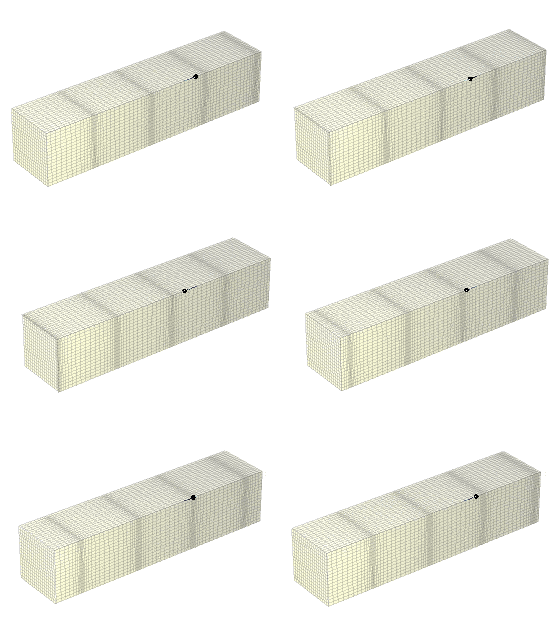
36.

Which type of wave is pictured?

a)

P-Wave

b)

S-Wave

c)

Rayleigh Wave

d)

Love Wave

37.

Which type of seismic wave moves the material in the Earth in the same direction of the wave?

a)

s-waves

b)

tsunamis

c)

p-waves

d)

surface waves

38.

It can travel through solids only

a)

Love waves

b)

Rayleigh waves

c)

Primary waves

d)

Secondary waves

39.
What does letter "a" represent?
a)
amplitude
b)
wavelength
c)
crest
d)
trough
40.
What does letter "b" represent?
a)
amplitude
b)
wavelength
c)
crest
d)
trough
41.
What does letter "c" represent?
a)
amplitude
b)
wavelength
c)
crest
d)
trough
42.
What does letter "d" represent?
a)
amplitude
b)
wavelength
c)
crest
d)
trough
43.

As the frequency of a wave increases, the wavelength…

a)

increases

b)

decreases

c)

stays the same

44.
What is the measure of the amount of energy released in an earthquake?
a)
Intensity
b)
Epicenter
c)
Magnitude
d)
Seismogram
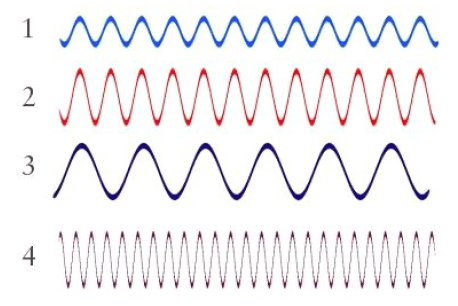
45.
Which wave in the diagram has the greatest frequency?
a)
1
b)
2
c)
3
d)
4
46.
Which wave in the diagram has the greatest wavelength?
a)
1
b)
2
c)
3
d)
4
47.
P Waves travel through...
a)
Solids
b)
Liquids
c)
Both
48.
These are the secondary, or second waves to be released. They cannot travel through the liquid outer core
a)
S waves
b)
Surface Waves
c)
P waves
49.
We know there are two layers to the Earth’s core because...
a)
S Waves stop at the outer core
b)
P Waves bend as they reach inner core
c)
P Waves bend as they outer core
d)
All of the above
50.

The measurement of the average kinetic energy of the particles in a substance is…

a)

convection

b)

temperature

c)

radiation

d)

heat

51.

The transfer of energy through electromagnetic waves across empty space is called...

a)

Convection

b)

Radiation

c)

Subduction

d)

Conduction

52.
What is the transfer of heat by direct contact?
a)
conduction
b)
convection
c)
radiation
53.
What is the transfer of heat by movement of liquids or gases?
a)
conduction
b)
convection
c)
radiation
54.
Energy moving from the pot to you hand represents
a)
subduction
b)
indirect evidence
c)
heat transfer
d)
magnetic energy
55.
Heat transfer within a fluid takes place by 
a)
conduction
b)
density
c)
convection currents
d)
radiation
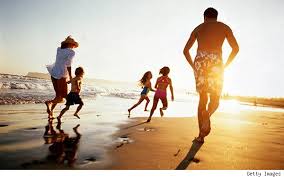
56.
The sun shines down on this family as the play on the beach.
a)
conduction
b)
convection
c)
radiation
57.
A group of friends gather around a fire to stay warm.
a)
conduction
b)
convection
c)
radiation
58.
Heat transfers from an area of ____temperature to an area of ___ temperature.
a)
high to low
b)
low to high
c)
high to high
59.
Blow drying your wet hair.
a)
conduction
b)
convection
c)
radiation
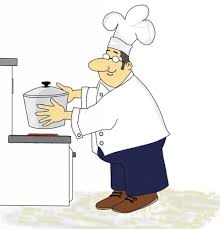
60.
The man goes to take the hot pot off the stove with his bare hands.
a)
conduction
b)
convection
c)
radiation
61.
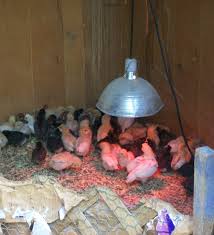
The baby chickens are kept warm from the heat lamps.
a)
conduction
b)
convection
c)
radiation
62.

In this experiment, the WARM red dye and the COLD blue dye was placed in the water at the same time. The warm red dye rose to the top while the cold blue dye sank to the bottom. What is this an example of?

a)

conduction

b)

convection

c)

radiation

63.
Describe how mantle material moves.
a)
In continent currents
b)
In convection currents
c)
In concentration currents
d)
It does not move.
64.

What starts the convection currents in the mantle?

a)

heat transfer from the crust

b)

heat transfer from the outer core through conduction

c)

the spinning of Earth

d)

the spinning of the inner core

65.
What is the best description of convection currents?
a)
Heat causes a liquid to rise and then as it cools off it sinks back down.  Then it repeats.
b)
Heat causes a liquid to sink and then as it cools off it rises.  Then it repeats.
c)
Heat causes a liquid to move to the right and then as it cools it moves to the left.  Then it repeats.
d)
A liquid is frozen and then when you add heat, it melts.
66.
Molecules in cold things move more _________
than in hot things.
a)
quickly
b)
slowly
c)
happily
d)
merrily
67.
Warm air is __________ dense than cold air and rises creating convection currents.
a)
more
b)
less
68.
What happens when ice cubes melt in a glass?
a)
Heat travels from the ice to the warmer water.
b)
No energy is transferred.
c)
Heat is transferred from the warmer water to the ice cubes.
d)
The water warms up due to the humidity
69.

What are the three sources of Earth’s internal heat?

a)

Heat left over from when Earth formed and accreted

b)

Heat from when Earth’s layers formed

c)

Radioactive Decay (breakdown of elements)

d)

All of the above

70.

How are you feeling about the test tomorrow?

a)

Great!

b)

Okay

c)

Poor

d)

Horrible

71.

Which wave in the diagram has the lowest frequency?

a)

1

b)

2

c)

3

d)

4

72.

cold water is __________ dense than warm water and sinks creating convection currents.

a)

more

b)

less

73.

What are the three types of heat transfer?

a)

heat from when the earth first formed, heat when the layers formed, and radioactive decay

b)

convection, conduction, and radiation

c)

friction, heat loss, and insulation

d)

heating, sinking, floating

74.
Identify the letter in the diagram.  Identify letter A
a)
Lithosphere
b)
Asthenosphere
c)
Mantle
d)
Outer Core
75.
Identify the letter in the diagram.  Identify letter E
a)
Lithosphere
b)
Asthenosphere
c)
Mantle
d)
Outer Core
76.
Identify the letter in the diagram.  Identify letter F
a)
Lithosphere
b)
Asthenosphere
c)
Mantle
d)
Outer Core
77.
Identify the letter in the diagram.  Identify letter G
a)
Crust
b)
Convection Current
c)
Inner Core
d)
Outer Core 
78.
Identify the letter in the diagram.  Identify letter B
a)
Crust
b)
Convection Current
c)
Inner Core
d)
Outer Core 
79.
Identify the letter in the diagram.  Identify letter D
a)
Lithosphere
b)
Asthenosphere
c)
Mantle
d)
Outer Core
80.
Identify the letter in the diagram.  Identify letter C
a)
Lithosphere
b)
Asthenosphere
c)
Mantle
d)
Inner Core
81.
What layer is the thinnest?
a)
Crust 
b)
Mantle
c)
Core
d)
They are all the same size
82.
The core is made-up of what two elements?
a)
iron and nickel
b)
iron and oxygen
c)
nickel and silicon
d)
oxygen and silicon
83.
Which layer of Earth is characterized by rock that is plastic, or soft enough to flow?
a)
asthenosphere
b)
crust
c)
lithosphere
d)
inner core
84.

Sally is researching the differences that exist in each layer of the Earth. Which of the following best describes Earth's crust?

a)

Solid, rocky

b)

Liquid, metallic

c)

Semisolid, convecting

d)

Dense, extremely hot

85.

This layer has the highest pressure of all the layers.

a)

inner core

b)

outer core

c)

crust

d)

mantle

86.
Which best explains how roasting marshmallows happens?
a)
Heat from the fire is conducted into the marshmallow.
b)
Heat from the fire is radiated into the marshmallow.
c)
The coolness of the marshmallow is conducted into the fire.
d)
The coolness of the marshmallow is radiated into the fire.
87.
Which best describes heat transfer by radiation?
a)
A slice of bacon frying in a pan.
b)
A pot on a stove boiling water.
c)
Cooking a hotdog in a microwave.
d)
A hot air balloon.
88.

Curling Iron

a)

Conduction

b)

Convection

c)

Radiation

89.

Hand Warmer in a Hand

a)

Heat is being transferred from the hand warmer to the hand.

b)

Heat is being transferred from the hand to the hand warmer.

c)

The hand is getting warmer. The hand warmer is getting cooler.

d)

The hand warmer is getting warmer. The hand is getting cooler.