
 Worksheets
AP Cell Communication and Feedback
Total questions: 79
Worksheet time: 55mins
I. Response
II. Amplification
III. Reception
IV. Transduction
Which of the following represents the sequence of events in a typical signal transduction pathway?


What is being depicted in the image?
Amplification of the signal molecule
Enzymatic proteins inhibiting process of the signal transduction pathway
Kinase groups adding dimer groups to other enzymes
Diffusion of molecules within the cell due to the signaling molecule
Which type of membrane protein would help intake a message from outside of the cell to inside of the cell?
Receptor Protein
Enzymatic Protein
Channel Protein
Junction Protein
ATP Synthase
Ligands are signaling molecules that bind to receptors. Which of the following statements is true of ligands?
All ligands are proteins.
Each ligand is only able to bind to one specific receptor
Ligands can bind to cell-surface receptors, but they cannot enter the cell
Ligands bond to receptor proteins and cause the protein to relay a message to intracellular proteins.

Which letter represents the cell membrane?
A
B
C
D
E
Which letter represents the cell surface receptor protein?
A
B
C
D
E
Which letter represents the secondary proteins?
A
B
C
D
E
Which letter represents the ligand?
A
B
C
D
E
Which letter(s) can be proteins? (multiple answers are correct)
A
B
C
D
E
An example of LOCAL cell communication is:
White blood cells bumping into each other sharing antigen info
Neurons communicating across a synapse
Hormones traveling through the blood stream to target tissues
An example of DIRECT cell communication is:
White blood cells bumping into each other sharing antigen info
Neurons communicating across a synapse
Hormones traveling through the blood stream to target tissues

Name the structure labeled 'B' (see image)
Post synaptic terminal
Receptor
Ligand
Neurotransmitter

The structure labeled 'E' is called _____ and is filled with ______
Vacuole; lipids
Synapse; neurotransmitters
Membrane; lipids
Vesicle; neurotransmitters
In our food lab last Friday, gymnema tea binds to taste receptors and blocks _________ from binding.
water
glucose
protein
cellulose
An example of DISTANCE cell communication is:
White blood cells bumping into each other sharing antigen info
Neurons communicating across a synapse
Hormones traveling through the blood stream to target tissues
What event would activate a G protein?
replacement of GDP with GTP
hydrolysis of GTP to GDP
hydrolysis of GDP to GTP
phosphorylation of GDP to GTP
phosphorylation of GTP to GDP
Ras, a small G protein located at the plasma membrane, is often mutated in different types of cancer. Ras normally signals to a cell that it should divide. Cancer cells divide uncontrollably. Which of the following changes to Ras would you expect to see in a cancer cell that has mutated Ras present?
a mutation that means Ras cannot hydrolyze GTP to GDP
a mutation that leads to Ras being sent to the endomembrane system
a mutation that means Ras cannot bind to GTP
a mutation that means GDP is constantly bound to Ras
a mutation in which Ras cannot bind to its GPCR
Testosterone does not affect all cells of the body because __________.
testosterone cannot cross the plasma membrane
not all cells have cytoplasmic receptors for testosterone
not all cells in the body have membrane receptors for testosterone
it is a local regulator
it affects only cells that have ion-channel receptors
Second messengers tend to be water-soluble and small. This accounts for their ability to __________.
rapidly cross the plasma membrane
pass quickly from cell to cell
move from substrate to substrate during a phosphorylation cascade
rapidly move throughout the cell by diffusion
cross the nuclear membrane and interact with DNA
Phosphorylation __________.
always inactivates a protein
activates G-protein-linked receptors
can either activate or inactivate a protein
is accomplished by protein phosphatases
always activates a protein
A G protein is active when __________.
GDP replaces GTP
it is bound by its ligand and transported to the nucleus
it is phosphorylated by protein kinase
GTP is bound to it
Ca2+ binds to a G-protein-linked receptor
Lipid-soluble signaling molecules, such as testosterone, cross the membranes of all cells but affect only target cells because __________.
only target cells retain the appropriate DNA segments
most cells lack the Y chromosome required
only target cells possess the cytosolic enzymes that transduce the testosterone
only in target cells is testosterone able to initiate the phosphorylation cascade leading to activated transcription factor
intracellular receptors are present only in target cells
The cellular response of a signal pathway that terminates at a transcription factor would be __________.
the synthesis of mRNA
the activation of an inactive enzyme
alteration of the cytoskeleton
a change in the chemical composition of the cytosolic environment
the activation of a metabolic pathway
The source of phosphate for a phosphorylation cascade is __________.
cAMP
protein kinase
GTP
ATP
protein phosphatase
Steroid hormones can enter a cell by simple diffusion. Therefore steroids __________.
move up a concentration gradient and are nonpolar
move up a concentration and are polar
move down a concentration gradient and are polar
None of the listed responses are correct.
move through a channel, down a gradient, and are nonpolar
Receptors for signal molecules __________.
all work via protein kinases
are never found in the nucleus of a cell
may be found embedded in the plasma membrane, or found within the cytoplasm or nucleus
all work by opening ion channels
are only found associated with the plasma membrane
Signaling molecules such as hormones can be lipid soluble or water soluble. What is the difference?
The receptor is on the surface of the cell for the lipid.
The receptor is inside the cell for the water.
The receptor is on the surface of the cell for the water.
There is no difference.

One very common receptor protein in eukaryotes is the __.
G protein-coupled receptor
cAMP receptor
phosphorylation receptor
ATP receptor
The binding of a ligand to a ligand-gated ion channel can cause the channel to ___.
open
close
both answers can be correct
After a ligand binds, the intracellular domain of a receptor protein changes _____, initiating transduction of the signal.
color
size
shape
One cellular response to a signal is apoptosis, otherwise known as programmed cell ____.
division
death
growth
reproduction
We learned in our tea party that gymnema tea binds to taste receptors and blocks sugars from binding. The tea could be known as a(n) ____.
activator
inhibitor
An example of a positive feedback loop is ____________.
Childbirth
Blood Pressure regulation
Body Temperature regulation
All of the above
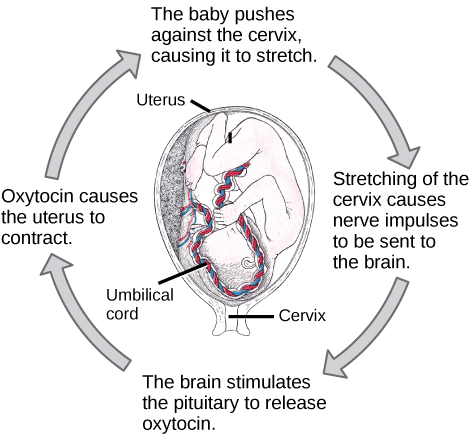
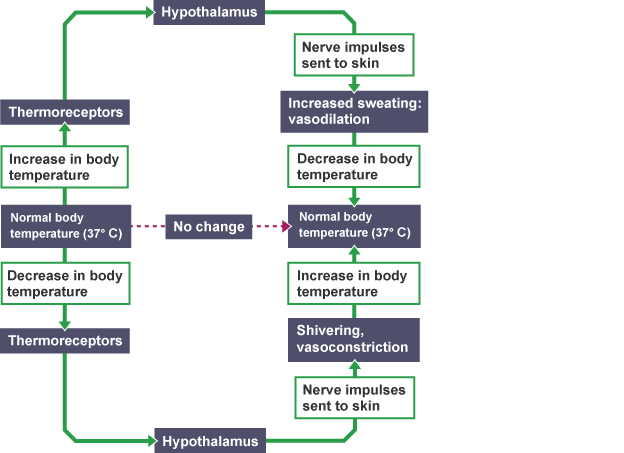
When you get cut, your skin cells release hormones that signal platelets to come and stop the bleeding. Platelets then release more hormones that signal even more platelets to help stop bleeding. The hormone signals continue until the cut is closed. This is an example of what type of feedback?
Positive Feedback Response
Negative Feedback Loop
If the calcium in your blood decreases below homeostasis levels, a gland in the brain will sense the decrease and send a chemical message to your bones. Your bones will release calcium into the blood, bringing blood calcium levels back up. This is an example of what type of feedback?
Positive Feedback Response
Negative Feedback Loop
As you get dehydrated, your blood becomes thicker and harder to pump. Your kidneys will respond by stopping urine production, sending the water from urine into your bloodstream to thin your blood back to normal level. This is an example of what type of feedback?
Positive Feedback Response
Negative Feedback Loop

Which of the following molecules act as a second messenger in the cascade by which epinephrine stimulates the activation of the enzyme glycogen phosphorylase?

Which of the following represents the correct ordering of the molecules that are activated by a single molecule of epinephrine, from highest number of molecules to lowest number of molecules?

Which of the following would likely not be observed in a person injected with epinephrine?

Which of the following best describes a benefit of the many steps involved in a protein kinase cascade?

Which of the following best describes the role in which the G protein is most intimately involved in the process shown above?

Investigations into the causes behind symptoms in Alzheimer’s patients have led to the hypothesis that the disease may be caused by excessive activity of IP3 second messengers in brain cells. When comparing cell samples of Alzheimer’s patients to those taken from the control group, which of the following pieces of evidence would support this hypothesis?
What is the point of a feedback loop?
To provide the body with more energy
To provide the body with more food
To make sure the conditions in the body are always changing
To make sure the conditions in the body remain stable
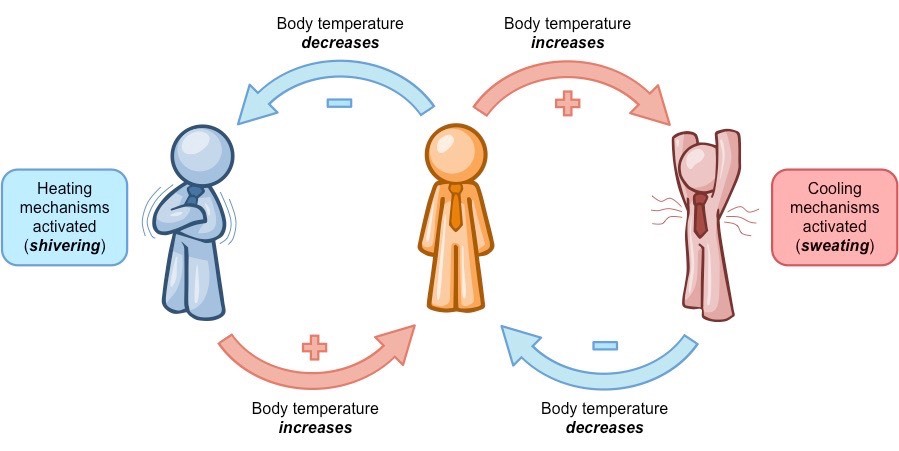
In this body temperature feedback loop, predict what would happen if cooling mechanisms were NOT activated?
The body would not warm up.
The body would not cool down.
Your body would get colder and colder.
Your body would release lots of heat.

According to the feedback loop, what does high blood sugar promote?
Insulin Release
Glucagon Release
Insulin Uptake
Glycogen Uptake

What happens if stretch receptors are activated in the uterus?
Oxytocin will cause uterine muscles to relax
Contractions will get weaker
The baby will be born later than normal
The brain will signal for the release of oxytocin

If the anterior pituitary does not release TSH, what will happen?
Thyroid follicles will not release T3 and T4
The hypothalamus will release TRH

What is the difference between what will happen if their is too much Glucose or too little Glucose? SELECT ALL THAT APPLY
With too much Glucose, Insulin is released. With too little Glucose, Glucagon is released.
With too much Glucose, the pancreas produces insulin. With too little Glucose, the pancreas produces glucagon.
With too much Glucose, Glucagon is released. With too little Glucose, Insulin is released.
There is no difference.

