wayground logo

Free Printable Worksheets

Font size

S
M
L
XL
Worksheets

Changes to The Earth's Surface TEKS 5.7B

Total questions: 100

Worksheet time: 4hrs 52mins

Name
Class
Date
1.
Features of the surface of the Earth such as mountains, hills, dunes, oceans, and rivers are called
a)
delta
b)
erosion
c)
landforms
2.
The movement of weathered material on the Earth's surface by wind, water, and ice is
a)
erosion
b)
deposition
c)
landslides
3.
The breakdown of rock into smaller particles from the effects of wind, water and ice is
a)
deposition
b)
delta
c)
weathering
4.
The buildup of land by depositing sediment and soil in a new location is
a)
earthquake
b)
weather
c)
deposition
5.
A triangle-shaped (deposit) landform at the mouth of a river as it empties into a body of water is
a)
weather
b)
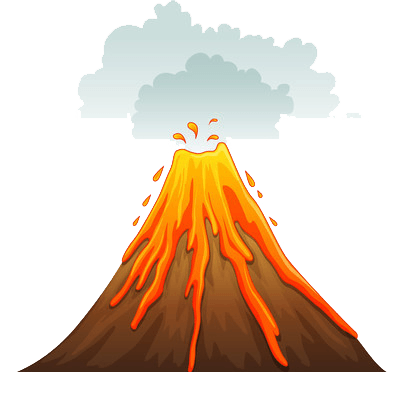
delta
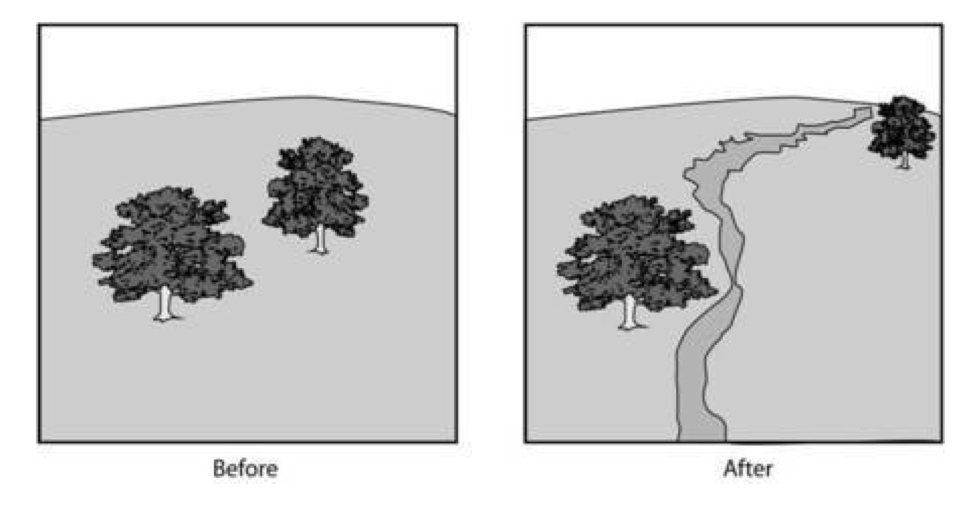
c)
landform
6.
When a river flows over the Earth and carves out a hole in the surface it makes a 
a)
hill
b)
mountain
c)
canyon
7.
A delta forms when the river meets the ocean because 
a)
the river is colder than the ocean
b)
the river slows down and drops sediments
c)
the earth builds up pressure in the river
8.
What natural force formed the Grand Canyon millions of years ago?
a)
a landslide
b)
an earthquake
c)
a river
9.
What is necessary for sand dunes to form?
a)
loose sand and strong wind
b)
pressure in the earth
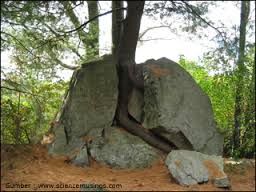
c)
ice glaciers
10.
Deltas form when waterborne sediments are deposited at the base of a mountain.
a)
true
b)
false
11.
Canyons are formed when water deposits sediments at the mouth of a river.
a)
true 
b)
false
12.
I students used a fan to blow sand and the sand piled up, what natural process is being modeled?
a)
the formation of sand dunes
b)
volcanic eruptions
c)
earthquake
13.
Which part of a slow change to Earth's surface "breaks it"
a)
erosion
b)
weathering
c)
deposition
d)
volcanic eruptions
14.
How long does the weathering process take?
a)
exactly one year
b)
a few days
c)
years and years
15.
What is weathering?
a)
seasons changing
b)
breaking down rock into smaller pieces
c)
pressure building up inside the earth
16.
Which process takes the longest to change the Earth's surface?
a)
volcanic eruptions
b)
earthquake shaking the earth
c)
weather of rock by wind
17.
When soil builds up in a river it is caused by
a)
weathering
b)
deposition
c)
volcanoes
18.
Weathering is not caused by 
a)
rivers flowing from the mountains
b)
strong winds blowing
c)
the rotation of the earth
19.
When sediments are moved across the earth it is called
a)
erosion
b)
weathering
c)
inertia
20.
Weathering is
a)
the moving of sediments.
b)
the process of breaking down rocks
c)
large sheets of ice that cover land
d)
how clouds are formed
21.
Which term describes the transport (movement) of weathered rock?
a)
Weathering
b)
Deposition
c)
Erosion
d)
Earthquake
22.
All of the following shape the surface of the earth except
a)
Glaciers
b)
Rivers
c)
Wind
d)
Clouds
23.
A Delta is formed by
a)
buildup of sediment at the end of a river.
b)
wind blowing sediment across a canyon.
c)
water washing away mud on a hillside.
d)
moles burrowing underground.
24.
What is the primary cause of slow change like a canyon forming?
a)
erosion from wind.
b)
erosion from water.
c)
deposition from wind.
d)
deposition from water.
25.
Identify this landform:
a)
Dune
b)
Stream
c)
Volcano
d)
Island
26.
Identify this landform
a)
Dune
b)
Volcano
c)
Island
d)
Canyon
27.
Identify this landform:
a)
Canyon
b)
Dune
c)
Island
d)
Glacier
28.
Identify this landform:
a)
Volcano
b)
Canyon
c)
Stream
d)
Island
29.
What is an event that would cause slow weathering?
a)
hurricane
b)
chemicals dissolve minerals in limestone
c)
earthquakes
d)
floods
30.
A statue is slowing wearing away.  What natural process is causing this wearing away?
a)
earthquakes
b)
water from floods
c)
blowing wind and rain
d)
lava flowing from volcanoes
31.
Flood waters moving soil from one location to another is an example of
a)
weathering
b)
erosion
c)
deposition
d)
all of the above
32.
What type of erosion caused the Grand Canyon to form?
a)
Buffalo wore a path through the land as they traveled the land.
b)
flowing water from the Colorado River eroded the land.
c)
an earthquake cause the ground to break wide open.
d)
a hurricane washed away part of the land.
33.
About how much of the Earth's surface is covered by oceans?
a)
less than 20%
b)
about 50%
c)
about 70%
d)
more than 90%
34.
Water getting into cracks, freezing, and breaking rocks is an example of
a)
weathering
b)
erosion
c)
deposition
d)
all of the above
35.
Why do farmers plant cover crops in empty fields?
a)
They will have more crops to harvest.
b)
The roots will hold the soil in place during storms.
c)
The crops will cause weathering.
d)
The crops will take all the nutrients from the soil.
36.
What slow change would have caused this river to become so shallow over time?
a)
Heavy rainfall flooded the river.
b)
A glacier melted and flooded the river.
c)
A large amount of soil was moved into the river during an earthquake.
d)
A small amount of soil was deposited over time.
37.
How do these plants slow erosion caused by heavy rains?
a)
Plant roots don't absorb water from the wet soil.
b)
Plant roots hold soil particles together.
c)
Plants' leaves release water from the soil into the air.
d)
Plant roots decrease moisture evaporation from the soil.
38.
Huge pieces that make up the earth's crust are called
a)
plates
b)
cracks
c)
mudslide
39.
Identify which way erosion cannot occur.
a)
water 
b)
wind
c)
glaciers
d)
sunlight
40.
Glaciers dropping rock and sand to form moraines is an example of 
a)
weathering
b)
erosion
c)
deposition
d)
all of the above
41.
Rivers move huge amounts of sediments as they flow to the oceans. What two factors can affect how much sediment a river can move?
The _______________________ and _____________________ of a river can affect how much sediment a river can move. 
a)
 volume and steepness
b)
width and volume
c)
speed and width 
d)
steepness and speed
42.
What has caused the formation of most of the valleys that exist on Earth?
a)
rivers and glaciers
b)
wind and rain
c)
lakes and rivers
d)
canyons and plateaus
43.
The illustration shows a river running through a river valley. In which location has a delta formed?
a)
4
b)
1
c)
2
d)
3
44.
A group of students is building a model to show how water from melting glaciers moves toward the ocean.  They put clay, water, and ice cubes into a plastic bin.  They place a heat lamp next to the bin. 
 
  Which of the following would most likely help them show how water from melting glaciers moves in their model?
a)
using colored water to represent the water in the ocean
b)
using colored water to make the ice cubes that represent the glaciers
c)
using different colors of clay to represent dry land and the bottom of the ocean
d)
using different colors of light to represent sunlight shining on the glaciers and dry  land
45.
A large rock breaks into small pieces within 10 years.  Which process is most likely  responsible for breaking the large rock into small pieces within 10 years?
a)
steady winds blowing throughout the years
b)
gentle rain falling during each spring and fall
c)
lack of rain falling during a four-year drought
d)
water repeatedly freezing and thawing in a crack
46.
Moving water is the most important factor in forming which landform?
a)
sand dune
b)
hill
c)
U- shaped valley
d)
canyon
47.
The landform below is a sea arch.
     What is responsible for shaping this arch?
a)
erosion & deposition
b)
weathering & erosion
c)
deposition & glaciers
d)
erosion & sediments
48.
Which list contains only landforms formed by deposition?
a)
sand dune, canyon, hill
b)
delta, sand dunes, valley
c)
barrier island, sand dunes, delta
d)
delta, sea stack, sand dunes
49.
What happens when glaciers slowly move down a mountain?
a)
The glaciers melt and refreeze causing deposition.  
b)
The glaciers melt and form giant lakes in the middle of the mountain.      
c)
The glaciers cause erosion by taking sediment and moving it somewhere else.      
d)
 The glaciers cause deposition in caves.
50.
In 2008, a hurricane came ashore at Galveston, Texas.  A hurricane negatively affects a coastline by...
a)
causing erosion.
b)
depositing sand along a barrier island.
c)
increasing the growth of grasses.
d)
cycling nutrients from the sea floor to the surface. 
51.

Volcanoes create new land on the Earth’s surface when –

a)

lava flows then cools and hardens to form rock.

b)

an eruption destroys the side of a mountain.

c)

magma forms giant underground chambers.

d)

saltwater touches lava and changes into steam.
52.

Which of the following most likely caused the change to the Earth's surface illustrated?

a)

landslide

b)

thunderstorm

c)

sinkhole

d)

earthquake

53.

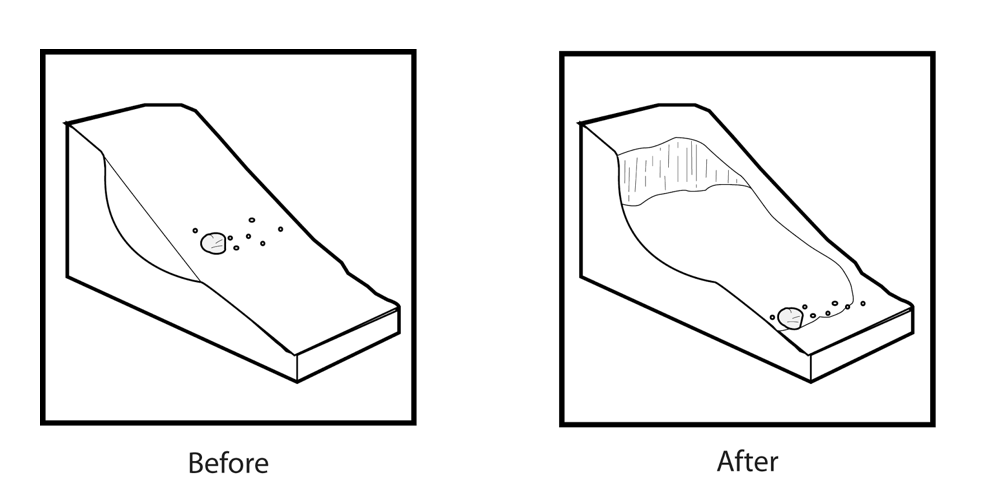
Which of these most likely caused the rapid change to the Earth's surface illustrated here?

a)

landslide

b)

volcanic eruption

c)

mountain building

d)

sandstorm

54.

A landslide is most likely to be caused by –

a)

strong winds

b)

breaking rocks

c)

heavy rains

d)

cold weather

55.

A student gathered some rocks and soil to model the effects of a landslide. What is the best way to model how a landslide changes the Earth’s surface?

a)

Pack the materials into a closed container and shake them rapidly.

b)

Sift the materials through a strainer to separate the rocks and soil.

c)

Place the materials on a sloping surface and pour water on them.

d)

Spread the materials on a flat surface and blow on them with a straw.

56.

Which would be an example of a rapid change to the Earth’s surface?

a)

A mountain's top cracking open due to volcanic eruptions.

b)

A valley getting deeper as a river runs through it.

c)

A plain forming cracks when hot weather makes it dry.

d)

A hill rising as the wind piles up loose sand.

57.

A volcano can directly change Earth’s surface by —

a)

adding heat to the atmosphere.

b)

building up layers of hardened lava.

c)

releasing water vapor into the air.

d)

shooting out clouds of ash and smoke.

58.

Which of the following is one way an earthquake affects the Earth?

a)

Large cracks suddenly form in the ground.

b)

A big rock slowly moves across the land.

c)

Hills of sand form as the wind blows.

d)

A large amount of heat rises into the air.

59.

Which of the following best describes how earthquakes change the Earth’s surface? Earthquakes –

a)

throw rocks and ash into the air.

b)

force lava through holes in the ground.

c)

violently shift the surface of the earth.

d)

cause clouds to form and rain to fall.

60.

Which events force melted rock from deep in the Earth toward the surface and build it up on the earth’s surface?

a)

landslides

b)

volcano eruptions

c)

earthquakes

d)

mountain building

61.

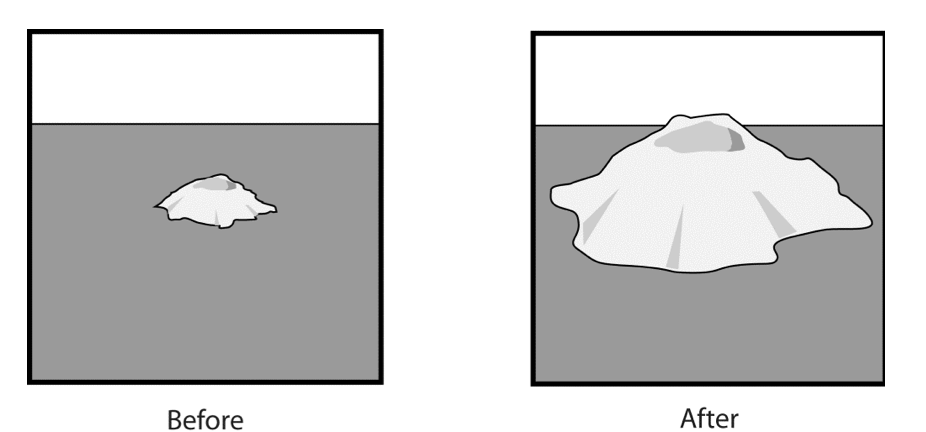
The picture shows an island in the middle of the ocean that increased in size in only a few weeks.

Which of the following most likely caused this rapid change in the island?

a)

Earthquake shaking the water

b)

Movement of waves

c)

Eruptions of a volcano

d)

Piling up of sand

62.

Rocks, loose soil and sand rapidly sliding down a slope are a change to the surface of the earth known as a -

a)

landslide

b)

volcano

c)

earthquake

d)

tsunami

63.

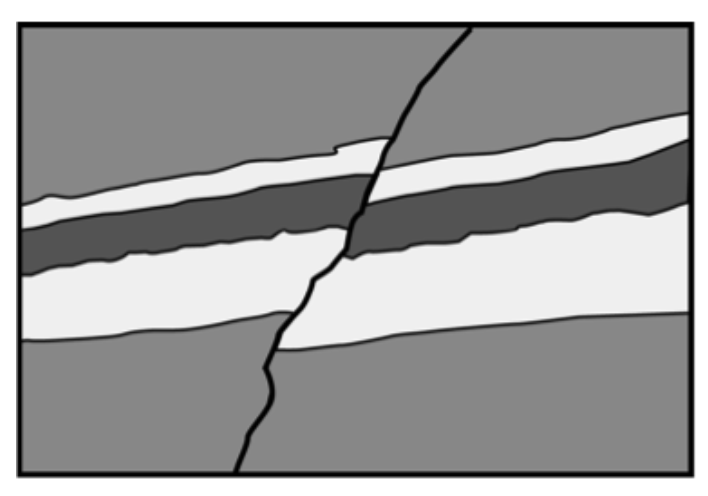
The rock layers pictures here have split and been shifted. What most likely caused this change?

a)

river

b)

landslide

c)

earthquake

d)

volcano

64.
When moving water leaves soil behind, it is called
a)
erosion
b)
weathering
c)
corrosion
d)
deposition
65.
Weathering is the natural process of
a)
breaking down rock.
b)
loosening bits of rock from the soil.
c)
moving soil to a different location.
d)
materials settling out of water.
66.
One example of erosion is when
a)
tree roots split apart rock.
b)
soil builds up at the mouth of a river.
c)
water carries soil from a garden to a sidewalk.
d)
moving water makes river rocks smooth.
67.
Which of the following is an example of how wind changes Earth's surface in a desert?
a)
sand ripples in the desert
b)
desert plants clustered together
c)
a pond forming after a storm
d)
fog forming in the desert
68.
Which of the following is an example of tree roots slowing down weathering, erosion, and deposition?
a)
Tree roots break large rocks near a river.
b)
Tree roots hold soil in place near a river.
c)
Tree roots get worn away by river water.
d)
Tree roots grow very quickly near a river.
69.
Muddy water being carried away by a fast moving river.
a)
weathering
b)
erosion
c)
deposition
70.
Waves dropping sand on the beach.
a)
weathering
b)
erosion
c)
deposition
71.
Rocks being made smooth by tumbling across a stream bed.
a)
weathering
b)
erosion
c)
deposition
72.
A build-up of land called a delta forms at the mouth of a river.
a)
weathering
b)
erosion
c)
deposition
73.

A triangular landform where a river empties into another body of water.

a)

Landform

b)

Canyon

c)

Delta

d)

Valley

74.

A deep gorge in the surface of Earth formed by the erosion of moving water and sediment.

a)

Valley

b)

Delta

c)

Canyon

d)

Landform

75.

Hills formed by wind blowing, moving and depositing sand.

a)

Valley

b)

Dune

c)

Delta

d)

Canyon

76.

The build up of land by the settlement of sediments and soil in a new location.

a)

Weathering

b)

Erosion

c)

Deposition

d)

River

77.
An avalanche is an example of which process?
a)
Weathering
b)
Erosion
c)
Deposition
d)
Volcanic Eruption
78.
How does freezing water cause the weathering of rocks?  The freezing water—
a)
keeps the rocks in place.
b)
makes the rocks last longer.
c)
expands cracks and breaks rocks.
d)
causes rocks to fall in landslides.
79.
Over long periods of time, deposition may change the Earth’s surface by _____.
a)
forming new land features.
b)
breaking down large rocks into smaller ones.
c)
washing away beaches.
d)
moving topsoil.
80.
What is the process that picks up and moves weathered rocks?
a)
Deposition
b)
Landslide
c)
Weathering
d)
Erosion
81.
Deposition changes the Earth’s surface because bits of broken rock and soil _____.
a)
stop rivers from flowing.
b)
make rich farmlands.
c)
are dropped in new places.
d)
move very slowly.
82.
How do plants weather rocks?
a)
During photosynthesis
b)
When roots grow into cracks of rocks and expand the rock breaks.
c)
When the plant moves water from the roots to the leaves, the rock breaks.
d)
Plants don't weather rocks.
83.
What is mechanical weathering?
a)
Process through which rocks are physically broken into smaller pieces.
b)
Rocks are broken down through chemical changes.
c)
Rocks are worn away from acid in plant roots.
d)
Rocks broken down by machinery.
84.
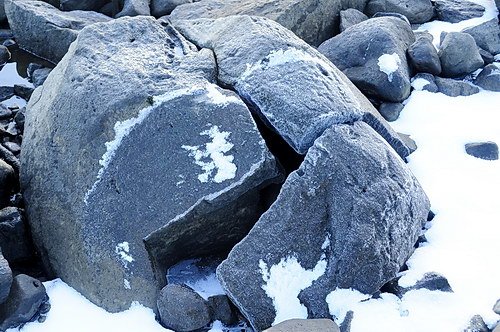
The picture shows a large rock breaking apart.  Which of these is MOST likely making the rock break apart?
a)
hot sunlight
b)
plant roots
c)
falling leaves
d)
running water
85.
What is it called when smaller streams join together to make a larger river?
a)
River Systems
b)
Topography
c)
Watershed
d)
Groundwater
86.

Sediment is _______ _______ from rocks that are moved by water or wind.

a)

small particles

b)

large animals

c)

dirt

d)

big rocks

87.

Deposition happens when sediment _______ from the wind or water that was carrying it.

a)

flies

b)

swims

c)

settles

d)

climbs

88.

Chemical Weathering is the breaking down of rocks due to a _______ _______.

a)

big change

b)

land slide

c)

rock

d)

chemical reaction

89.

_______ Weathering is the process that occurs when rocks are broke down without changing their chemical composition.

a)

Hand

b)

Wind

c)

Physical

d)

Water

90.

_______ Weathering is the process that occurs when rocks are broke down without changing their chemical composition.

a)

Hand

b)

Wind

c)

Physical

d)

Water

91.

Erosion is the removal and _______ of sediment by forces such as wind, water, and ice.

a)

transport

b)

removal

c)

building up

d)

hammering

92.

_______ is a process where rock is dissolved, worn away, or broken down into smaller pieces.

a)

Changing

b)

Weathering

c)

Earthquake

d)

Landslide

93.

Which is an example of a slow process?

a)

Earthquake

b)

Landslide

c)

River slowly smoothing rocks

d)

Volcanic eruption

94.

Which is an example of a rapid process?

a)

River slowly smoothing rocks

b)

Wind blowing on a rock

c)

Ice freezing in a rock

d)

Earthquake

95.

Erosion

a)

the movement of weathered material by wind, water, or ice (e.g. glaciers)

b)

process by which weathered and eroded material is deposited by wind, water, and ice

c)

process by which exposed rock is broken down by rain, frost, wind, or other elements of weather

d)

a physical structure on Earth that occurs naturally

96.

Weathering

a)

process by which weathered and eroded material is deposited by wind, water, and ice

b)

the movement of weathered material by wind, water, or ice (e.g. glaciers)

c)

process by which exposed rock is broken down by rain, frost, wind, or other elements of weather

d)

a physical structure on Earth that occurs naturally

97.

Deposition

a)

the movement of weathered material by wind, water, or ice (e.g. glaciers)

b)

process by which weathered and eroded material is deposited by wind, water, and ice

c)

process by which exposed rock is broken down by rain, frost, wind, or other elements of weather

d)

a physical structure on Earth that occurs naturally

98.

This landform is formed by

a)

water erosion

b)

wind erosion

c)

deposition

d)

glaciers

99.

What is this landform?

a)

delta

b)

canyon

c)

valley

d)

sand dune

100.

This landform is formed by

a)

water erosion

b)

weathering

c)

deposition of sediments

d)

glaciers