wayground logo

Free Printable Worksheets

Font size

S
M
L
XL
Worksheets

Quiz 12/11/19

Total questions: 68

Worksheet time: 55mins

Name
Class
Date
1.

What is energy?

a)

moving energy

b)

stored energy

c)

renewable energy

d)

The ability to do work.

2.

What is potential energy?

a)

moving energy

b)

stored energy

c)

renewable energy

d)

non renewable energy

3.

What is kinetic energy?

a)

moving energy

b)

potential energy

c)

stored energy

d)

renewable energy

4.

Which of these things is an example of potential energy?

a)

a car motor

b)

firewood

c)

battery

d)

a fan

5.

What is given off from energy?

a)

water

b)

heat

c)

smoke

d)

ash

6.

Which of these is an example of kinetic energy?

a)

a bicycle

b)

a battery

c)

a solar panel

d)

firewood

7.
GRAVITATIONAL POTENTIAL ENERGY DEPENDS ON
a)
MASS AND VELOCITY
b)
MASS AND WEIGHT
c)
WEIGHT AND HEIGHT
d)
HEIGHT AND DISTANCE
8.
WHICH OF THE FOLLOWING IS NOT AN EXAMPLE OF POTENTIAL ENERGY?
a)
A BALL TRAVELING AT 10 M/S
b)
A COMPRESSED SPRING
c)
WATER BEING STORED AT A WATER DAM
d)
A STRETCHED RUBBER BAND
9.
YOUR BODY OBTAINS ENERGY FROM THE FOOD YOU EAT. WHAT IS THE FORM OF ENERGY IN FOOD?
a)
KINETIC
b)
ELASTIC
c)
GRAVITATIONAL
d)
CHEMICAL
10.
WHEN AN ARCHER BENDS A BOW, WHAT TYPE OF ENERGY INCREASES IN THE BOW?
a)
GRAVITATIONAL
b)
ELASTIC
c)
KINETIC
d)
THERMAL
11.
WHICH OF THESE DESCRIBES THE LAW OF CONSERVATION OF ENERGY?
a)
NO MACHINE IS 100% EFFICIENT
b)
ENERGY IS NEITHER CREATED OR DESTROYED
c)
THE ENERGY RESOURCES OF EARTH ARE LIMITED
d)
THE ENERGY OF A SYSTEM IS ALWAYS DECREASING
12.
AS A ROLLER COASTER MOVES DOWN A HILL, POTENTIAL ENERGY IS CONVERTED INTO KINETIC ENERGY, THERMAL ENERGY, AND SOUND ENERGY. WHAT IS TRUE ABOUT THE TOTAL ENERGY OF THIS SYSTEM?
a)
ENERGY IS GAINED (CREATED) AS THE ROLLER COASTER MOVES
b)
ENERGY IS LOST (DESTROYED) AS THE ROLLER COASTER MOVES
c)
THE TOTAL ENERGY REMAINS THE SAME AS THE ROLLER COASTER MOVES
d)
THE TOTAL ENERGY CONSTANTLY CHANGES AS THE ROLLER COASTER MOVES
13.
SAM STUDIED KINETIC AND POTENTIAL ENERGY BY OBSERVING APPLES HANGING ON A TREE DURING A FIELD INVESTIGATION. WHAT TYPE OF ENERGY DO THE APPLES HAVE?
a)
KINETIC
b)
MECHANICAL
c)
GRAVITATIONAL
d)
ELASTIC
14.
Energy due to motion is ____________ energy. 
a)
Potential 
b)
Energy
c)
Kinetic
d)
Friction
15.
The faster an object moves, the ________ kinetic energy it has. 
a)
more
b)
less
c)
none of the above
d)
all of the above 
16.
____________ is the ability to cause change. 
a)
Energy 
b)
Force 
c)
Friction
d)
Motion
17.
__________ is stored energy. 
a)
Potential
b)
Kinetic
c)
None of the above 
d)
All of the above 
18.
Gravitational potential energy depends on the ________ and ________ of the object. 
a)
Height and mass
b)
Friction and movement
c)
Mass and Movement
d)
Height and Friction 
19.
Energy of motion is which type of energy?
a)
Potential
b)
Kinetic
c)
Sound
d)
Gravitational
20.
What kind of energy is represented in this picture?
a)
Thermal
b)
Potential
c)
Nuclear
d)
Mechanical
21.
What kind of energy does this device use?
a)
Chemical
b)
Electrical
c)
Thermal
d)
Chemical
22.
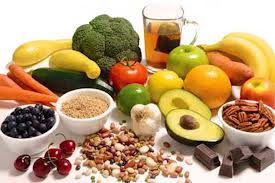
What kind of energy is represented in the picture?
a)
Thermal
b)
Chemical
c)
Sound
d)
Nuclear
23.
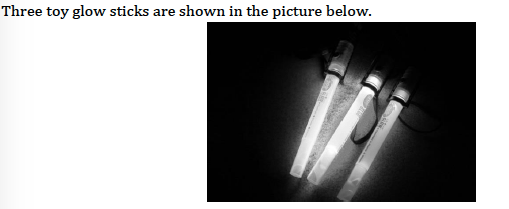
The glow sticks produce light for a short amount of time. The light from the glow stick is a conversion from what to what?
a)
thermal to light
b)
gravitational to potential
c)
radiant to electrical
d)
chemical to light
24.

A cooking smoker, used to cook meats, works by allowing the warm air filled with smoke to rise to the meat, while the cooler air sinks closer to the fire. What type of heat transfer is responsible for smoking the meat?

a)

Electrical

b)

Radiation

c)

Convection

d)

Conduction

25.

A student was conducting an experiment in which a heater was placed on one side of a large box and a thermometer on the other side. The student removed all the air from the box, turned on the heater, and recorded the change in temperature. What was the student's model designed to show?

a)

the transfer of heat through convection

b)

the transfer of heat through electricity

c)

the transfer of heat through radiation

d)

the transfer of heat through conduction

26.

This appliance dries clothes primarily by converting —

a)

electrical energy to heat and mechanical energy

b)

mechanical energy to heat and electrical energy

c)

electrical energy to heat and light

d)

mechanical energy to heat and vaporization
27.

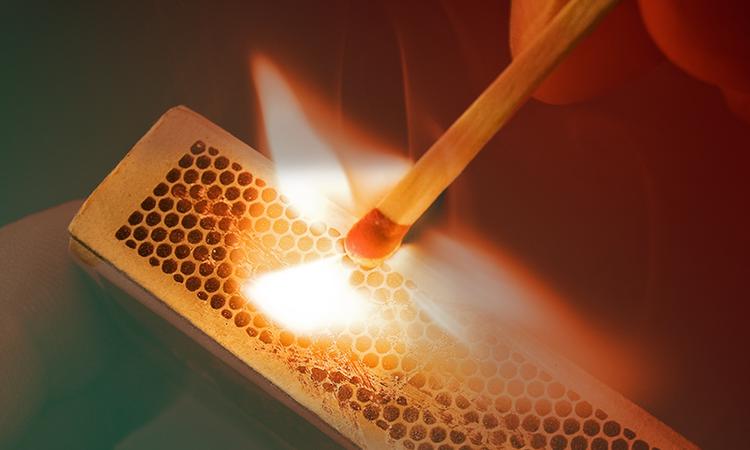
A teacher rubbed a match against a piece of sandpaper. The match started to burn. Which statement best describes the energy changes that occurred?

a)

The chemical energy stored in the match changed to thermal energy and light energy.

b)

The thermal energy stored in the match changed to light energy and chemical energy.

c)

The light energy and thermal energy stored in the match changed to mechanical energy.

d)

The light energy and thermal energy stored in the match changed to chemical energy.

28.

What transfer of heat is responsible for cooking the chicken?

a)

radiation

b)

convection

c)

electrical

d)

conduction

29.

When an egg is boiled in a pot of water on the stove, there is more than one kind of heat transfer. Heat is transferred from the stove to the pot directly since they are physically touching. Heat is also transferred from the pot to the egg, carried through the water. What two kinds of heat transfer are represented?

a)

Stove → Pot = radiation, Pot → Egg = conduction

b)

Stove → Pot = conduction, Pot → Egg = radiation

c)

Stove → Pot = convection, Pot → Egg = conduction

d)

Stove → Pot = conduction, Pot → Egg = convection

30.

Which of these actions, on their own, will cause ice to change to water? Remember, hot --- > cold

a)

removing heat from the ice

b)

adding sand to the ice

c)

crushing the ice

d)

adding heat to the ice

31.
What is an example of Radiant energy?
a)
Electromagnetic waves
b)
Burning Logs
c)
Vibrations
d)
Gravitational potential
32.
Kinetic energy is energy due to...
a)
interactions between objects or particles
b)
motion
c)
elasticity
d)
mass
33.
Potential energy is energy due to..
a)
mass
b)
motion
c)
interactions between objects or particles
d)
work
34.
Potential energy is energy that is...
a)
stored
b)
already used
c)
being used currently
d)
never going to be used
35.

What energy transformation occurs as bioluminescent algae glow in the ocean?

a)

Radiant --> Chemical

b)

Thermal --> Radiant

c)

Chemical --> Radiant

d)

Thermal --> Chemical

36.

What energy transformation occurs in the chameleon as it quickly launches its tongue to catch an insect?

a)

Radiant --> Chemical

b)

Thermal --> Chemical

c)

Chemical --> Mechanical

d)

Mechanical --> Chemical

37.

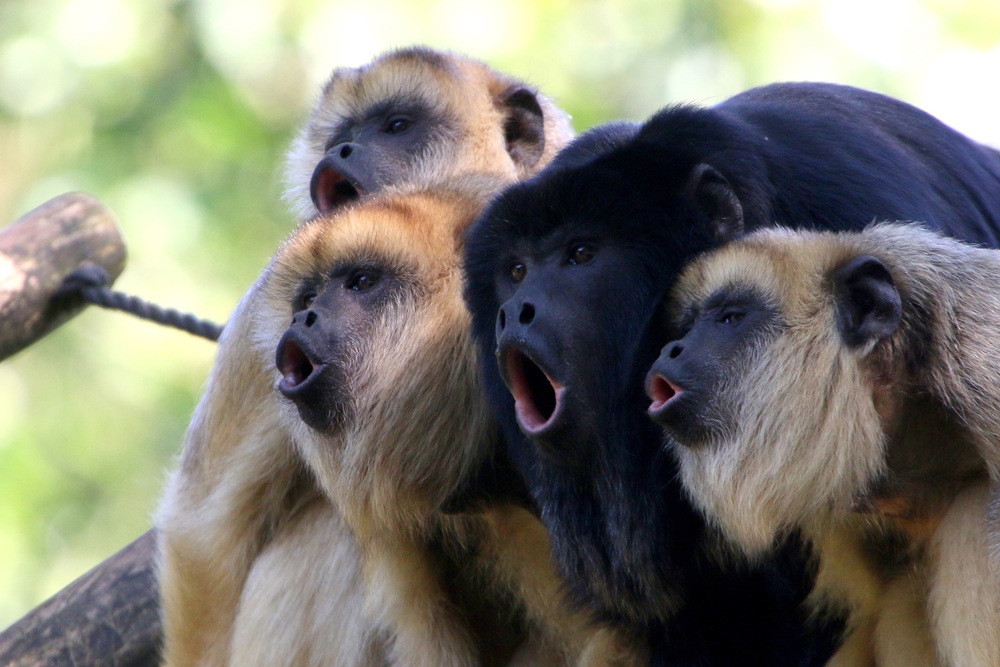
What energy transformation occurs as howler monkeys loudly call to each other in the forest?

a)

Chemical --> Mechanical --> Sound

b)

Chemical --> Sound --> Thermal

c)

Sound --> Chemical --> Radiant

d)

Mechanical --> Chemical --> Sound

38.

What energy transformation occurs as as an elephant walks through the savanna?

a)

Thermal --> Chemical + Mechanical

b)

Mechanical --> Chemical + Thermal

c)

Radiant --> Chemical + Mechanical

d)

Chemical --> Mechanical + Thermal

39.
The amount of energy required to raise the temperature 1ºC for every kilogram is called____?
a)
Thermal Energy
b)
Specific Heat
c)
Temperature
d)
Kinetic Energy
40.
What is the equation to measure change in Thermal Energy?
a)
Q=mc∆t
b)
Q=mc
c)
Q= ∆mct
d)
m=QC
41.
Water has a specific heat of 4184 J/KgºC.  Wood has a specific heat of 1760 J/KgºC.  What material needs more energy to raise the temperature 1ºC
a)
Wood
b)
Water
c)
Both are the same
42.
Copper, Stainless Steel, Carbon Steel, and Zinc were all heated using the same thermal energy.  What material would be the coolest after being heated?
a)
Copper
b)
Carbon Steel
c)
Zinc
d)
Stainless Steel
43.

When is your answer negative?

a)

When the sample is cooled or loses heat energy.

b)

When the sample heats up or gains heat energy.

c)

When the sample absorbs heat energy.

44.
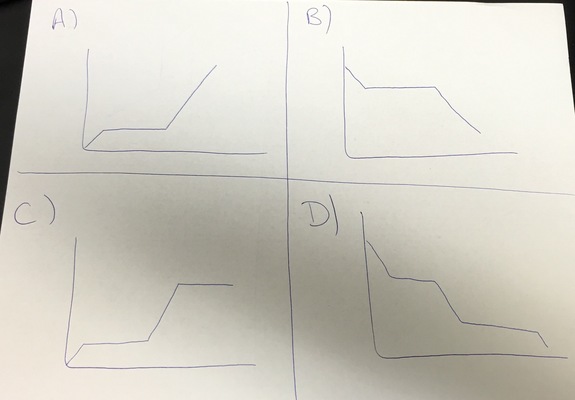
What does picture D show?
a)
Particles being heated and undergoing one phase change.
b)
Particles being cooled and going through one phase change.
c)
Particles being heated and undergoing two phase changes.
d)
Particles being cooled and undergoing two phase changes.
45.
Copper, Stainless Steel, Carbon Steel, and Zinc were all heated using the same thermal energy.  What material would be the coolest after being heated?
a)
Copper
b)
Carbon Steel
c)
Zinc
d)
Stainless Steel
46.
How does heat flow?
a)
Always from cold to warm
b)
Always from warm to cold
c)
Both warm to cold & cold to warm
d)
It depends on the temperature
47.
There are four cups of hot cocoa. The cup sizes are shown. The temperature of the cocoa in each cup is 25 degrees celsius. Which cup has the MOST thermal energy?
a)
Large cup (Trenta)
b)
Small cup (Tall)
c)
Venti
d)
All three are the same temperature so they have same thermal energy
48.

The graph shows the cooling curve of a substance. At which stages the specific latent heat released?

a)

AB and CD

b)

BC and DE

c)

AB and EF

d)

BC and CD

49.
Water bubbles up through a hot spring in Yellowstone National Park. What method of heat transfer is this?
a)
Conduction
b)
Radiation
c)
Convection
d)
Specific Heat
50.
On a sunny day, you return to your car after a ball game. The inside of the car is very hot.  How did the car get so warm?
a)
Conduction
b)
Convection
c)
Radiation
d)
Specific Heat
51.
The inside window pane in your house feels very cold to touch on a winter night. Why does it feel cold?
a)
The cold from the outside is flowing in by convection.
b)
The warm from the inside is flowing out by convection.
c)
The cold from the outside is being conducted to the inside.
d)
The warm from the inside is being conducted to the outside.
52.
Heat s transferred directly from one particle of matter to another by the process of ____________________.
a)
Conduction
b)
Convection
53.
Maria burned herself when she picked up a hot iron skillet from the stove.  What method of heat transfer caused the burn?
a)
Convection
b)
Conduction
c)
Specific Heat
d)
Radiation
54.
What line segment represents only the solid state?
a)
A-B
b)
B-C
c)
C-D
d)
D-E
55.
In which segment is the kinetic energy remaining constant?
a)
A-B
b)
B-C
c)
C-D
d)
E-F
56.
What state(s) of matter are present at D-E?
a)
Solid-liquid
b)
Liquid
c)
Liquid-gas
d)
Gas-Solid
57.
True or false: melting and freezing occur at the same temperature!
a)
True
b)
False
c)
I don't know
58.
Which of the following terms identifies the change from a liquid to gas?
a)
Vaporization
b)
Condensation
c)
Deposition
d)
Sublimation
59.

From point A to point E, the sample is going through an

a)

exothermic process by releasing heat to the surroundings

b)

exothermic process by absorbing heat from the surroundings

c)

endothermic process by releasing heat to the surroundings

d)

endothermic process by absorbing heat from the surroundings

60.
When the temperature of matter increases the particles...
a)
speed up and move closer
b)
speed up and move farther apart
c)
slow down and move closer together
d)
slow down and move farther apart
61.
Which of the following energy transformations occur when a lamp that is plugged into a wall socket is functioning correctly?
a)
Chemical to light
b)
Electrical to chemical
c)
Electrical to light
d)
Chemical to electrical
62.
What energy transformations take place when a battery-operated radio is in use?
a)
Electrical to chemical to light
b)
Sound to chemical to mechanical
c)
Chemical to electrical to sound
d)
Light to electrical to thermal
63.
Which of the following devices transforms electrical energy into mechanical energy?
a)
An e-reader
b)
a fan
c)
a manual pencil sharpener
d)
ipod
64.

Which of the following best describes the energy transformations that occur when a flashlight that runs on batteries is turned on?

a)

chemical to mechanical to electrical to radiant

b)

radiant to electrical to sound

c)

chemical to radiant to mechanical to electrical

d)

electric to radiant to chemical

65.
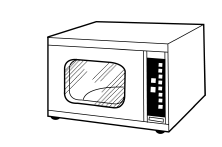
The picture shows a microwave oven. As a microwave oven is operated, electrical energy is transformed into all of the following types of energy EXCEPT —
a)
solar
b)
light
c)
thermal
d)
mechanical
66.
Turning on a lamp is an example of energy transformation from electrical to 3 forms of energy. Which of these is NOT created by the lamp?
a)
radiant
b)
light
c)
heat
d)
chemical
67.
Which of the following energy transfers occurs when food is digested?
a)
chemical to mechanical
b)
radiant to nuclear
c)
mechanical to potential
d)
thermal to chemical
68.
In energy transformations, "wasted energy" usually takes what form?
a)
heat
b)
chemical energy
c)
light
d)
sound waves