wayground logo

Free Printable Worksheets

Font size

S
M
L
XL
Worksheets

Mizzouri Biology A Final Exam Review Quiz

Total questions: 90

Worksheet time: 2hrs 19mins

Name
Class
Date
1.

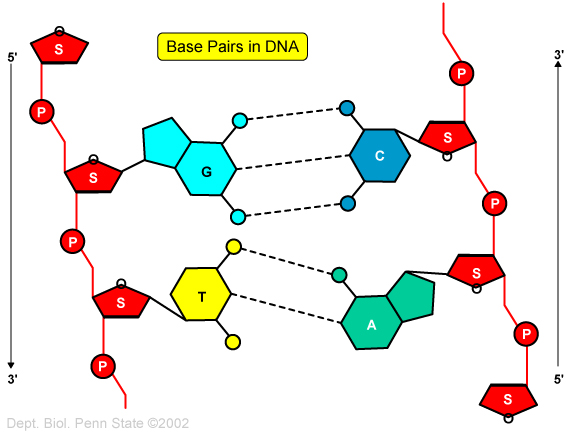
In DNA, cytosine always pairs with

a)

guanine

b)

uracil

c)

thymine

d)

adenine

2.

Vestigial structures show

a)

how an ancestor may have lived

b)

how old a fossil is

c)

what the organism is not related to

d)

usefulness in the organism that has it

3.

DNA is made up of phosphates, sugars, and

a)

proteins

b)

lipids

c)

bases

d)

iodine

4.

Organisms that rely on other organisms for food are called

a)

producers

b)

autotrophs

c)

consumers

d)

saprophytes

5.

All animals

a)

breathe oxygen with lungs

b)

have a 4 chambered heart

c)

are heterotrophic

d)

can reproduce asexually

6.

The amount of energy expected to be transferred from one trophic level to another is ___?

a)

1%

b)

10%

c)

90%

d)

100%

7.

A gene is_______________________.

a)

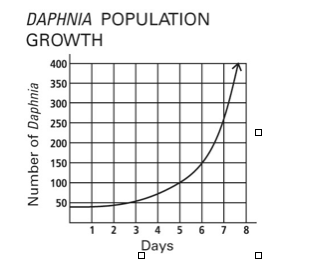
located only in sex cells

b)

a whole chromosome

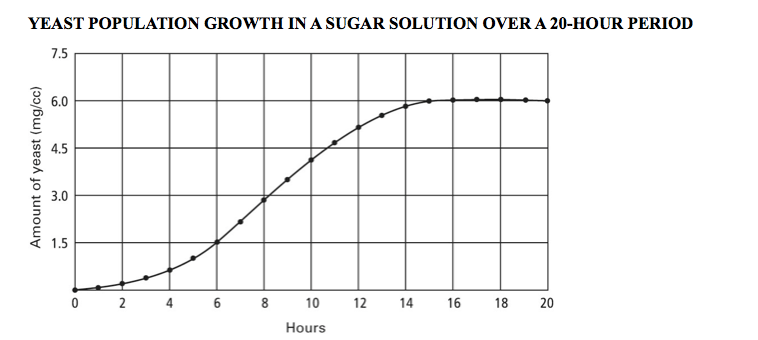
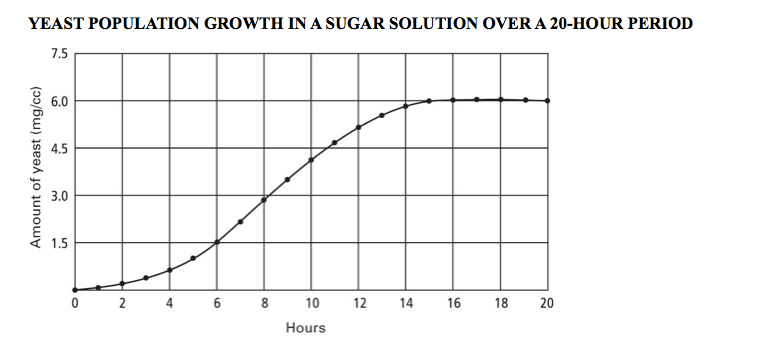
c)

a section of DNA that codes for a trait

d)

not expressed in the dominant form

8.
Animals are prokaryotic.
a)
True
b)
False
9.
Guanine bonds with ______________.
a)
Adenine
b)
Guanine
c)
Cytosine
d)
Thymine
10.
Nitrogenous bases are joined by which type of bond?
a)
polar bonds
b)
ionic bonds
c)
covalent bonds
d)
hydrogen bonds
11.
Which of the following is true of NUCLEIC ACIDS?
a)
Examples include enzymes and hormones
b)
Function is transmitting information
c)
Monomer is amino acid
d)
Used for long-term energy storage
12.
Which process creates an identical copy of DNA?
a)
Mutation
b)
Replication
c)
Transcription
d)
Translation
13.
Transcribe this sequence:  ACTGTTC
a)
UGACAAG
b)
TGACAAG
c)
TGUCUUG
d)
AGUCUUG
14.
SPEED QUESTION!!  Scientists estimate that the earth is how old?
a)
4.6 billion years
b)
3.5 billion years
c)
4.6 million years
d)
3.5 million years
15.
As you go to higher trophic levels....
a)
Amount of energy available decreases
b)
Amount of biomass increases
c)
Number of organisms increases
d)
Size of organisms decreases
16.
Reestablishing a damaged ecosystem where even the soil was destroyed...
a)
Secondary succession
b)
Primary succession
c)
Carrying capacity
d)
Homeostasis
17.
SPEED QUESTION!! Organisms that CANNOT make their own food.
a)
Autotrophs
b)
Heterotrophs
c)
Producers
d)
Prokaryotes
18.
Spiders are predators that trap insects such as mosquitoes.  What is this describing?
a)
Habitat
b)
Niche
c)
Metabolism
d)
Ecosystem
19.
What do you call a change in an organism's DNA?
a)
Replication
b)
Mutation
c)
Codon
d)
Phenotype
20.
Which type of variable is chosen and controlled by the scientists?
a)
dependent
b)
independent
21.
1. ___ combine to form DNA.
2. ___ combine to form proteins.
a)
1. amino acids
2. nucleotides
b)
1. sugars
2. amino acids
c)
1. nucleotides
2. amino acids
d)
1. lipids
2. nucleotides
22.
The diagram below shows the cycling of nutrients in an ecosystem.
The removal of which of the following groups would cause an immediate decrease in the amount of energy flowing through the system?
a)
Producers
b)
Consumers
c)
Decomposers
d)
Inorganic nutrients
23.
Green plants are
a)
producers
b)
consumers
c)
herbivores
d)
omnivores
24.
What is the original source of almost all energy in most ecosystems?
a)
carbohydrates
b)
sunlight
c)
water
d)
carbon
25.
An organism that produces its own food supply from inorganic compounds is called a(an)
a)
heterotroph
b)
consumer
c)
detritivore
d)
autotroph
26.
What is an ecological model of the relationships that form a network of complex interactions among organisms in a community from producers to decomposers?
a)
food web
b)
an ecosystem
c)
food chain
d)
a population
27.
What is the term for each step in the transfer of energy and matter within a biological community?
a)
energy path
b)
food web
c)
trophic level
d)
food pyramid
28.
which symbiosis is this 
a)
parasitism 
b)
mutualism
c)
commensalism
d)
nonalism 
29.
symbiotic relationship in which both organisms benefit
a)
competition
b)
Mutualism
c)
nitrogen fixation
d)
energy pyramid
30.
What does a food web represent?
a)
All connections of energy flow throughout all organisms in a habitat.
b)
The specific ways that mutualism is carried out.
c)
A single pathway or energy flow between organisms. 
d)
How carnivores get their food. 
31.
a relationship between two in which one species, the predator, feeds on the other species, the prey
a)
chemosynthesis
b)
predation
c)
cellular respiration 
d)
commensalism
32.
symbiotic relationship in which one organisms benefits and the other organism is not affected
a)
invasive (non-native) species
b)
mutualism 
c)
nitrogen fixation
d)
commensalism
33.
Study of interactions between organisms and their environment 
a)
niche
b)
community 
c)
ecology
d)
ecosystem
34.
Members of a species in a defined area
a)
Ecosystem
b)
community
c)
biodiversity
d)
population
35.
Where an organism lives
a)
habitat
b)
niche 
c)
heterotrogh
d)
biosphere
36.
Non-living factor that affects an ecosystem
a)
biotic factor
b)
abiotic factor
c)
food chain 
d)
biome
37.
Organisms that breaks down and absorbs nutrients from dead organisms 
a)
consumer
b)
trophic level
c)
decomposer
d)
species
38.
A food chain is illustrated below:
The arrows represented most likely indicate
a)
A. Energy released from metabolism into the environment as heat.
b)
B. Oxygen released from metabolism produced by cellular respiration.
c)
C. The absorption of energy from the environment that has been created.
d)
D. The transport of glucose away from the organism through photosynthesis.
39.
A pond ecosystem is shown in the diagram below. Which statement describes an interaction that helps maintain the dynamic equilibrium of this ecosystem?
Which statement describes an interaction that helps maintain the dynamic equilibrium of this ecosystem?
a)
The frogs make energy available to this ecosystem through the process of photosynthesis.
b)
The algae directly provide food for both the rotifers and the catfish.
c)
The green-backed heron provides energy for the mosquito larvae.
d)
The catfish population helps control the populations of water boatman and waterfleas.
40.
All the organisms in a particular location, including their nonliving environment
a)
ecosystem
b)
carnivore
c)
niche
d)
population
41.
A carbon "sink" is best described as:
a)
a reservoir that readily releases carbon to another reservoir
b)
a carbon reservoir that stores more carbon that it is releasing
c)
something that causes carbon to leak out to the atmosphere
d)
a carbon reservoir that is releasing more carbon than it is taking in
42.
Nitrogen fixation processes nitrogen from which of the following sources?
a)
lightning
b)
fertilizers
c)
dead plants
d)
atmosphere
43.
Nitrogen makes up _____ percent of the atmosphere.
a)
66%
b)
78%
c)
90%
44.
In the food web shown, the snail would be considered...
a)
primary consumer
b)
secondary consumer
c)
tertiary consumer
d)
producer
45.
Which biome, because of its climate and amount of rainfall, has the largest number of species of plants and animals?
a)
Tundra
b)
Rainforest
c)
Desert
d)
Pineforest
46.
The law of superposition states
a)
the oldest rock layer is on the top, the younger rock layer is on the bottom
b)
rock layers are always in sequence from oldest to youngest
c)
the youngest rock layer is on the bottom and the oldest is on the top
d)
the oldest layer is on the bottom and the youngest is on the top when it is undisturbed
47.
What can help a scientist know the approximate age of bones?
a)
the soil it is found in
b)
the index fossils in the area
c)
the type of rock it is formed in
d)
absolute dating
48.
Scientist find dinosaur fossils in the bottom of a cliff and mammals fossils in the middle layer, what can be inferred?
a)
dinosaurs ate plants
b)
dinosaurs were eaten by the mammals
c)
they lived at the same time
d)
dinosaurs lived before the mammals
49.
Ostrich wings are examples of
a)
homologous structures
b)
vestigial structures
c)
adaptations
d)
traits
50.
Dolphins have the same arm structure as wolfs, what type of evidence for evolution does this represent?
a)
DNA
b)
vestigial structures
c)
homologous structures
d)
embryology
51.
Why do embryologist study embryos?
a)
to see if they are related
b)
to understand adaptations
c)
to determine the age
d)
to learn what parents are vestigial
52.
Natural selection is
a)
survival of the fittest
b)
humans change
c)
two species are the same
d)
more animals survive
53.
This makes an organism more suited to its enviornment
a)
species
b)
lifespan
c)
adaptation
d)
mutation
54.
Surviving and reproducing show that an organism
a)
is adapting
b)
is not adapting
c)
is forming fossils
d)
is not reproducing
55.
What is one reason that strawberries are surviving in the winter season?
a)
they have larger leaves
b)
they have genetic variations allowing them to be resistant to cold
c)
they reproduce more
d)
the color is dark
56.
Relative dating
a)
gives the exact age of rocks and fossils
b)
is when you date your cousin
c)
gives the approximate age of rocks
d)
tells us who to trust
57.
Which of the following is not a piece of evidence for evolution?
a)
Homologous structures
b)
embryology
c)
fossil age
d)
vestigial structures
58.
Biotic factors in a biome
a)
sand
b)
water
c)
kinds of birds
d)
air
59.
Most of the nutrients in a tropical rain forest are found in plants so, 
a)
the rain forest soil is very rich.
b)
there are few animals in the rain forest.
c)
the rainforest soil is poor in nutrients
d)
there are few plants in the rainforest.
60.
How can the littoral zone of a lake or pond be described?
a)
an area closest to the edge of the pond
b)
an area with no plant life
c)
an area with no sunlight
d)
an area with no animal life
61.
Has permafrost; in the Arctic or Antarctic
a)
alpine tundra
b)
savanna
c)
desert
d)
polar tundra
62.
Has clumps of trees and seasonal rains
a)
temperate deciduous forest
b)
coniferous forest
c)
savanna
d)
temperate grassland
63.
Has grass, but few trees due to fires, drought, and grazing
a)
temperate grassland
b)
coniferous forest
c)
desert
d)
savanna
64.
Has many trees that do not change much seasonally
a)
desert
b)
coniferous forest
c)
temperate deciduous forest
d)
savanna
65.
Has many trees that lose all their leaves to save water
a)
coniferous forest
b)
tundra
c)
temperate grassland
d)
temperate deciduous forest
66.
Has organisms with special adaptations to a hot, dry climate
a)
desert
b)
savanna
c)
tundra
d)
taiga
67.
Includes mudflats, sandy beaches, and rocky shores
a)
coral reef
b)
intertidal area
c)
Sargasso Sea
d)
polar ice
68.
Has a constantly changing amount of salt in the water
a)
estuary
b)
coral reef
c)
intertidal zone
d)
polar ice
69.
The fish shown in the pictures below is the Anglerfish. The stalk in front of its eyes is a flashing light that it uses to lure prey to its mouth. This structural adaptation enables the Anglerfish to survive in a very dark and deep aquatic habitat.
Where are anglerfish likely to be found? 
a)
A shallow freshwater lake
b)
An estuary or wetland area on the coast
c)
In the shallow water of a creek or stream
d)
The deep abyssal zone of the ocean
70.
Some mammals such as Moose, Deer, and Water Buffalos have defensive adaptations such as horns or antlers to fight predators. Males also use them to fight other males during mating season.
Select the choice that correctly describes the adaptations described in the narrative above. 
a)
The antlers and horns are structural adaptations, and the fighting is a behavioral adaptation.
b)
 These mammals are carnivores that use their antlers to attack and kill their prey.
c)
Antlers are examples of behavioral adaptations used by Moose and Deer
d)
Deer and Moose antlers are structural adaptations, but horns are not. 
71.
Why is biodiversity important in fighting disease in food crops?
a)
It prevents one disease from wiping out an entire food crop.
b)
It prevents habitat loss of native species.
c)
It provides different foods for different populations.
d)
It prevents fungal disease from wiping out corn crops.
72.

Biodiversity, aka biological diversity, usually refers to

a)

the same species in a general location

b)

the number of different species in a given area

c)

the number of animal species in a given area

d)

the number of plant species in a given area
73.
Which of the following will increase the size of a population?
a)
emigration and births
b)
immigration and deaths
c)
immigration and births
d)
emigration and deaths
74.
Which of the following is a density-dependent limiting factor?
a)
human activities 
b)
unusual weather
c)
competition
d)
natural disaster
75.
Which of the following is a density-independent limiting factor?
a)
natural disaster
b)
predation
c)
disease
d)
parasitism
76.
Diseases may spread more rapidly when an area is crowded, so disease is considered to be a
a)
type I survivorship curve
b)
population crasher
c)
density-dependent limiting factor
d)
population enhancer
77.
What type of growth is shown on this graph?
a)
logistic
b)
exponential
c)
average
d)
density-independent
78.
What type of population growth is shown in the graph?  
a)
logistic growth
b)
logical growth
c)
exponential growth
d)
density-dependent growth
79.
What 2 factors decrease population size?
a)
Immigration, Births
b)
Emigration, Births
c)
Emigration, Deaths
d)
Immigration, Deaths
80.
 What is the name for this leveling off shown in the graph?
a)
logistic line
b)
carrying capacity
c)
climax point
d)
mediocre
81.
When a population grows past the ecosystem's carrying capacity, what happens to the population?
a)
Continues to grow
b)
The population starts to die off to return to carrying capcity
c)
The population will go extinct due to lack of resources
d)
The population grows then finds a new carrying capacity
82.

When a population has reached carrying capacity

a)

Births & Immigration are equal to Death & emigration

b)

Births & Immigration are less than Death & emigration

c)

Births & Immigration are greater than Death & emigration

d)

Births are exponential

83.

Estimate the carrying capacity.

a)

100 deer

b)

80 deer

c)

60 deer

d)

40 deer

84.

What does the term carrying capacity describe?

a)

The maximum number of birth rates for a population.

b)

The ability of a population to accept new immigrants.

c)

The ratio of birth rates to death rates in a population.

d)

The population size that the environment can sustain.

85.

Identify which image below is showing a population:

a)
b)
c)
d)
86.

The lionfish is a venomous fish found primarily in the Red Sea and the Indian Ocean. In the 1990s, lionfish were accidentally released into the Atlantic Ocean, where they found abundant resources and favorable environmental conditions. Which of the following scenarios is most likely to result in the lionfish having a major impact on the communities into which they were introduced?

a)

With no natural predators, the lionfish population will become very large.

b)

Some native species of invertebrates will develop a resistance to lionfish venom.

c)

Random mating will allow the lionfish population to reach Hardy-Weinberg equilibrium.

d)

A virus that specifically infects lionfish will become more prevalent.

87.

There is strong evidence that two species of

cliff-dwelling birds have nested in the same

environment and fed in the same water for

thousands of years, with each having stable

population sizes. Based on this information,

which of the following statements is the best

conclusion?

a)

The two birds compete for food.

b)

One species will displace the other.

c)

The two birds have different ecological niches that allow coexistence.

d)

One species eats a more diverse diet than the other does.

88.

An organisms population growth is shaped by its reproductive pattern. Which combination of traits characterizes a rapid life history pattern (r-species)?

a)

short life span, produces many offspring, small body size

b)

short life span, live in more stable environments, small body size

c)

long life span, produces many offspring, grows into adults slowly

d)

long life span, large body size, grows into adults slowly

89.
This population would be characterized as which kind of species?
a)
r-selected
b)
S-selected
c)
K-selected
d)
C-selected
90.

What factor describes when populations decrease because animals are moving out of a population?

a)

Emigration

b)

Limiting Factors

c)

Immigration

d)

Exponential Growth