Wayground logo

Free Printable Worksheets

Font size

S
M
L
XL
Worksheets

Phy Science Semester 1 Exam Review

Total questions: 89

Worksheet time: 3hrs 23mins

Name
Class
Date
1.
This variable in an experiment is the one being deliberately changed by the scientist. 
a)
dependent variable
b)
independent variable
c)
data
d)
control group
2.
A student wants to test the effects of type of exercise on heart rate.  What is the dependent variable?
a)
heart rate
b)
type of exercise
c)
amount of exercise
d)
time of day exercise occurs
3.
The dependent variable in an experiment is what you ________________. 
a)
Change
b)
Measure
4.
Theory or Law???  Explanation of a wide range of observations?
a)
Theory
b)
Law
5.
Theory or Law???  Is a DESCRIPTION of what a scientists expects to happen every time under a certain set of conditions.
a)
Law
b)
Theory
6.
What is the dependent variable in the following experiment? Plants grow more when exposed to classical music
a)
Exposure to classical music
b)
Normal exposure to noises with no music
c)
height of plant
7.
What is the independent variable in the following experiment? Plants grow more when exposed to classical music
a)
Exposure to classical music
b)
height of plant
c)
Normal exposure to noises with no music
8.
What are the states of matter?
a)
solid, liquid, and juice
b)
solid and liquid
c)
solid and gas
d)
solid, liquid, and gas
9.
An example of a physical property is 
a)
flammability
b)
acidic
c)
color
d)
ability to rust
10.
Changing the way matter looks without changing it into NEW matter is a:
a)
Chemical change
b)
Physical change
c)
Energy change
d)
BOTH a chemical and a physical change
11.
Water freezing to ice is an example of a:
a)
Physical change
b)
Chemical change
12.
Burning wood to ash is an example of a:
a)
Physical change
b)
Chemical change
13.
Smashing a piece of candy into smaller pieces is an example of a:
a)
Physical change
b)
Chemical change
14.

A __________________ does not have a definite shape. It sometimes takes the shape of its container and sometimes moves freely wherever it can. These molecules are not connected to each other and take up whatever space is available.

a)

gas

b)

solid

c)

liquid

d)

matter

15.

A _________________ does not have a definite shape. It takes the shape of the container it is in. It does have a definite volume and mass.

a)

gas

b)

solid

c)

ooblek

d)

liquid

16.

240 cm = ___________ m

a)

2400

b)

24

c)

2.4

d)

0.24

17.

2,804 mg = ___________ g

a)

0.2804

b)

2.804

c)

28.04

d)

280.4

18.

3 km = ___________ mm

a)

30

b)

300

c)

3,000

d)

3,000,000

19.

68 cm = ___________ mm

a)

0.68

b)

6.8

c)

68

d)

680

20.

330 cm = ___________ m

a)

3,300

b)

33

c)

3.3

d)

0.33

21.

183 cm = ___________ m

a)

0.183

b)

1.83

c)

18.3

d)

1,830

22.
How many minutes are in a year?
a)
31,536,000 min
b)
525,600min
c)
52,560min
23.
The density of lead is 11.342 g/mL.  What would be the volume of a 200.0 g sample of this metal?
a)
0.05671 g
b)
17.63 g
c)
2268 g
d)
Not enough information
24.
What is the formula for density?
a)
density = mass x volume
b)
density = mass / volume
c)
density = mass + volume
d)
density = mass - volume
25.

Subatomic particles with a negative charge

a)

Electrons

b)

Neutrons

c)

Protons

d)

Quarks

26.
subatomic particles found on the outermost shell & responsible for the atom's reactivity
a)
neutrons
b)
valence electrons
c)
isotopes
d)
ions
27.
Subatomic particles with a positive charge
a)
neutrons
b)
atomic mass
c)
protons
d)
isotopes
28.
Value representing the number of protons in an element
a)
Atomic Mass
b)
Mass Number
c)
Valence Electrons
d)
Atomic Number
29.
Atoms of the same element with a different number of neutrons
a)
Ion
b)
Gluons
c)
Isotope
d)
Quarks
30.
A charged atom
a)
Ion
b)
Isotope
c)
Electron Cloud
d)
Quark
31.
The smallest particle of an element that shows all the properties of that element.
a)
Subatomic Particles
b)
Atom
c)
Quarks
d)
Gluons
32.
A tiny but very dense, positively charged portion of the atom that holds most of the atomic mass
a)
Electron Shells
b)
Orbitals
c)
Electron Cloud
d)
Nucleus
33.
Discovered the electron within the atom
a)
Thomson
b)
Chadwick 
c)
Schrodinger & Heisenberg
d)
Dalton
34.
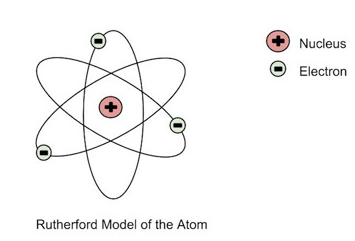
Rutherford's gold foil experiment provided evidence that...
a)
negative and positive charges are spread evenly throughout the atom.
b)
alpha particles have a positive charge.
c)
gold is not a dense as previously thought.
d)
there is a dense positively charged nucleus at the center of an atom.
35.
Who discovered the nucleus using the gold foil experiment?
a)
Democritus
b)
Robert Millikan
c)
James Chadwick
d)
Ernest Rutherford
36.
The first person to propose a theory about an atom called the Atomos Theory was
a)
Democritus
b)
Rutherford
c)
Dalton
d)
Aristotle
37.
What is the atomic number?
a)
the number of protons
b)
the number of protons and neutrons
c)
the number of neutrons
d)
the number of protons and electrons
38.
What is the mass number defined as?
a)
the number of protons
b)
the number of protons and neutrons
c)
the number of neutrons
d)
the number of protons and electrons
39.
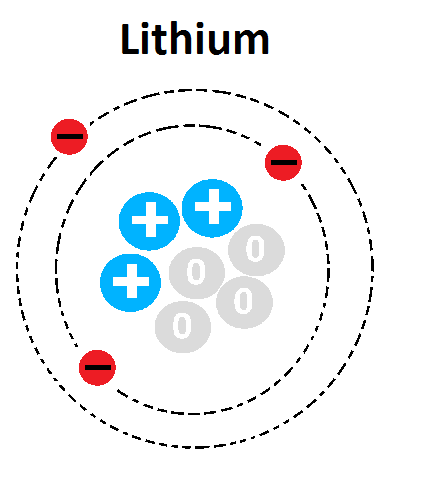
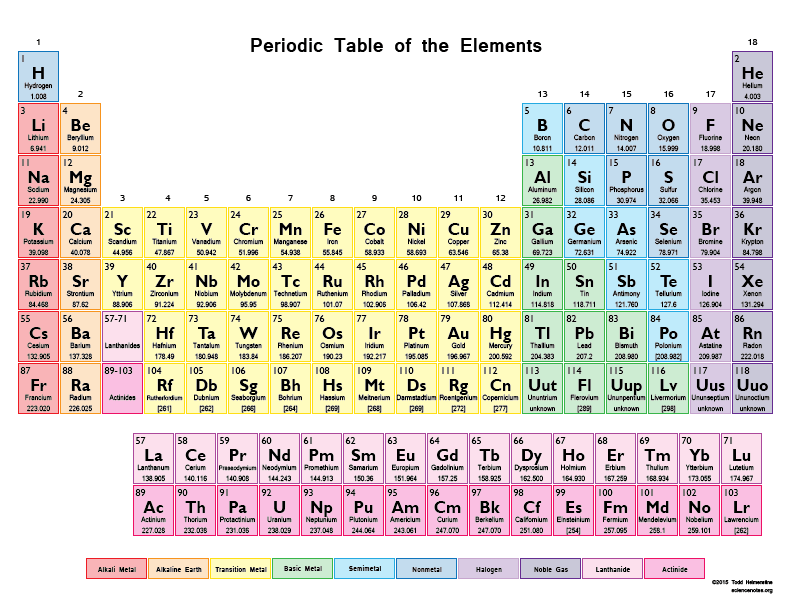
What is the atomic number of this atom?
a)
1
b)
3
c)
4
d)
7
40.

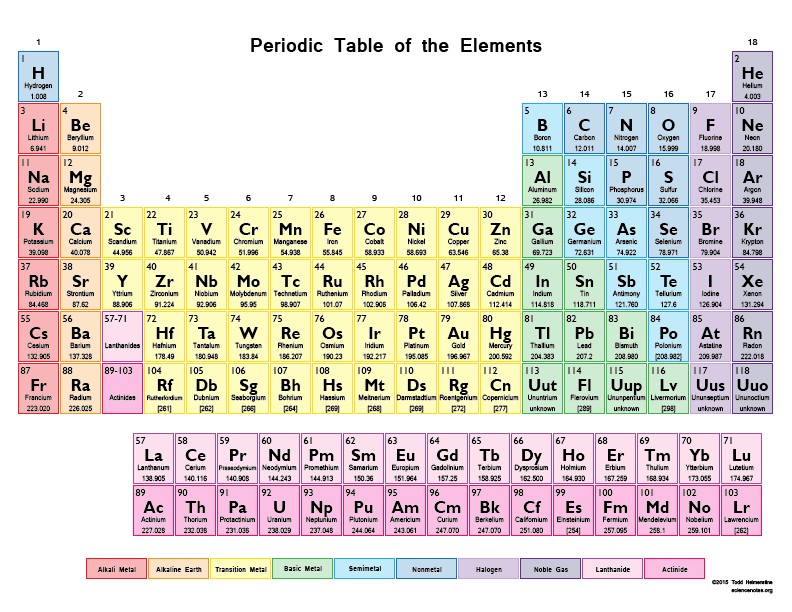
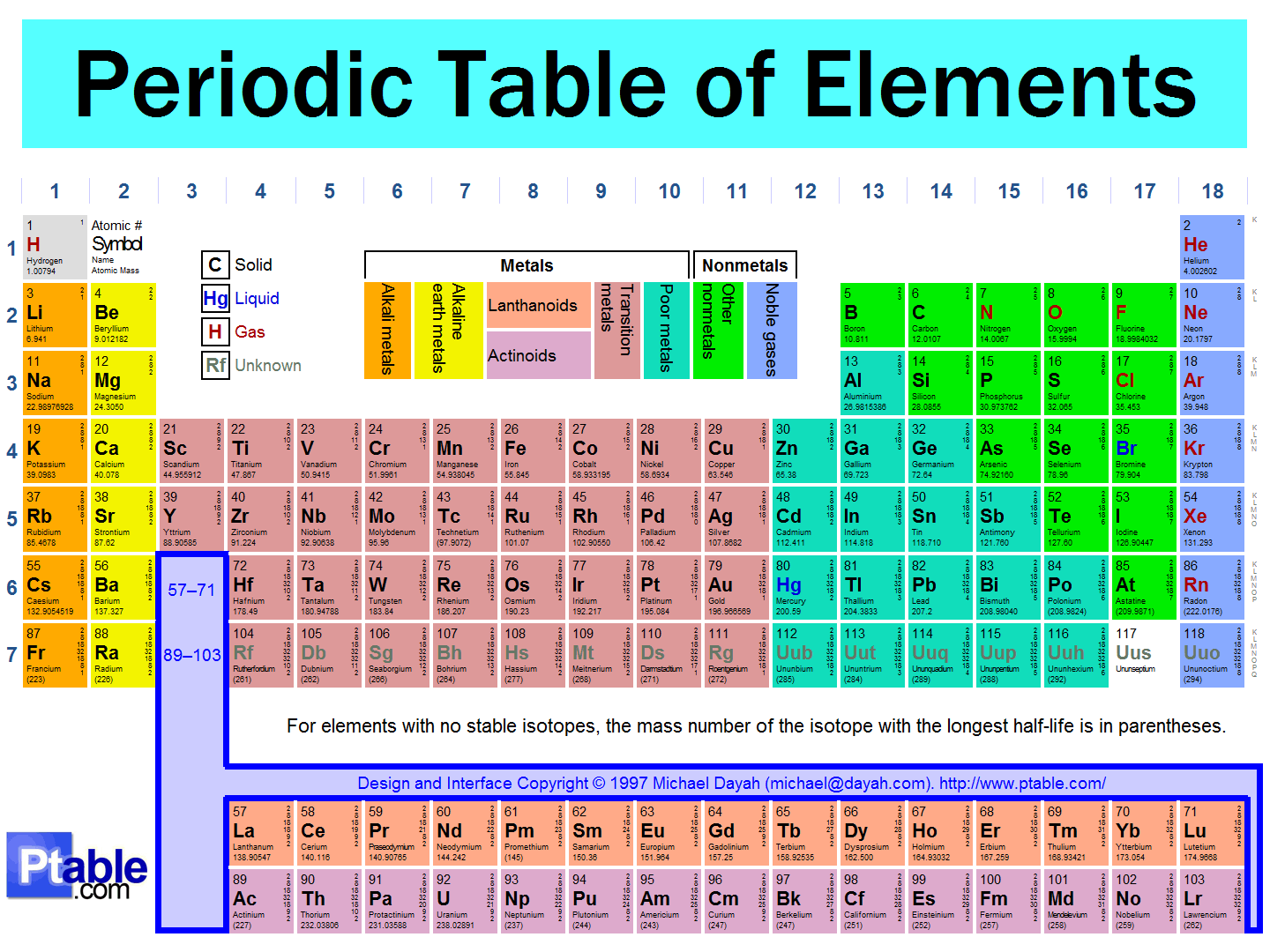
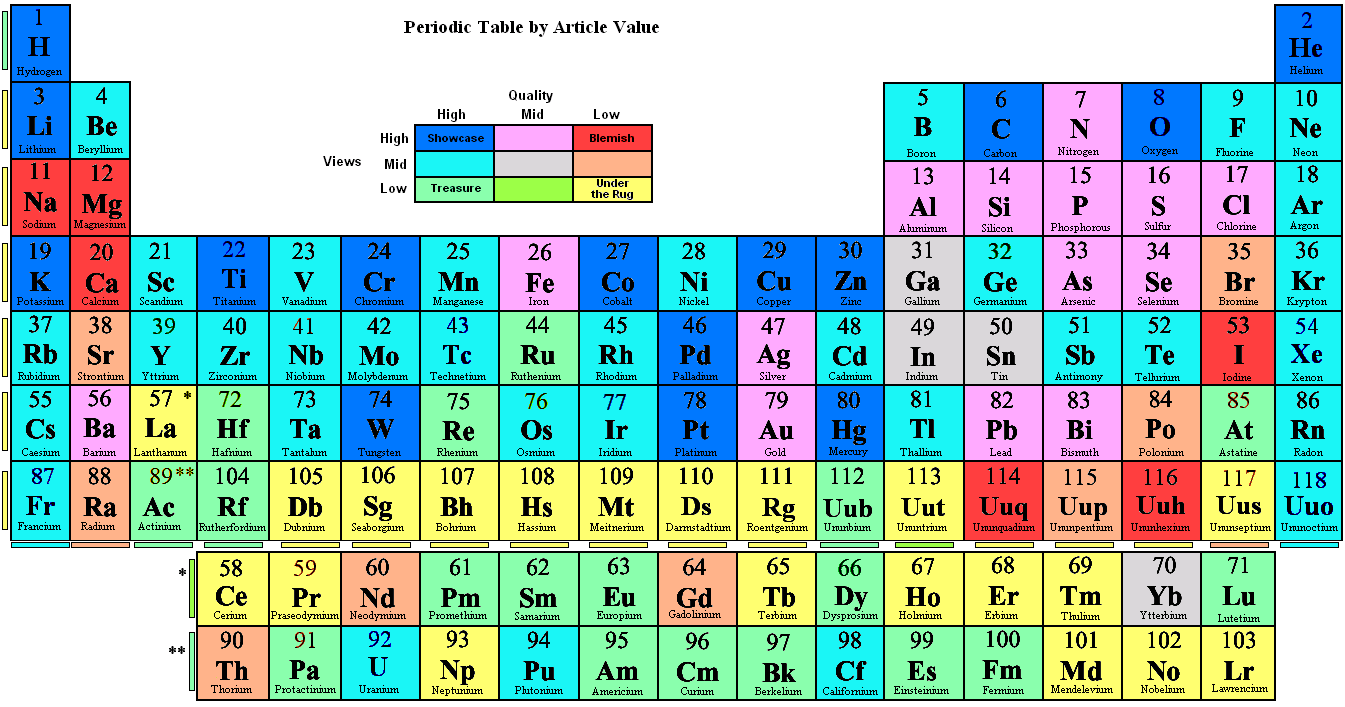
How many protons are in a sodium atom, Na? (tap to enlarge the periodic table)

a)

Sodium has 1 proton.

b)

Sodium has 3 protons.

c)

Sodium has 11 protons

41.

Which subatomic particle has a negative charge in the atom?

a)

proton

b)

neutron

c)

electron

d)

quark

42.

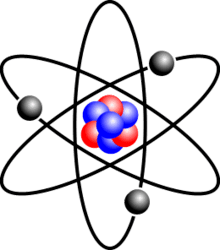
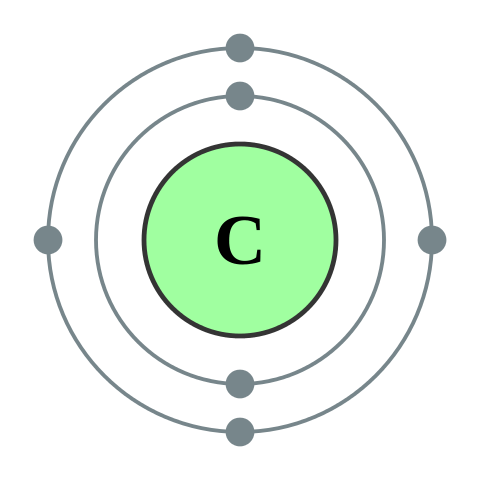
How many neutrons does C-14 [atomic #6] contain? (tap to enlarge the image)

a)

6

b)

7

c)

14

d)

8

43.

If an atom has 10 electrons, how many protons does it have?

a)

0

b)

1

c)

10

d)

5

44.
What does the 1.00794 stand for?
a)
Hydrogen
b)
atomic number
c)
atomic mass
d)
atomic explosion
45.

Calculate the average atomic mass of the element iron (Fe) using the following data:

[Isotope / % abundance]

[Iron 54 / 6% ] [Iron 56 / 92% ] [ Iron 57 / 2% ]

a)

53.7 amu

b)

54.9 amu

c)

5592.0 amu

d)

55.9 amu

46.
How many neutrons does the isotope of lithium have?
a)
8
b)
3
c)
4
d)
5
47.
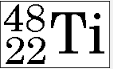
How many protons does this isotope of titanium have?
a)
48
b)
22
c)
26
d)
70
48.

How many electrons can there be in one orbital?

a)

2

b)

4

c)

6

d)

10

49.

Which element has 2 valence electrons?

a)

beryllium

b)

helium

c)

sodium

d)

boron

e)

silicon

50.

Which of the following elements has a full outer energy level of electrons?

a)

krypton

b)

strontium

c)

iodine

d)

sodium

51.

Which of the following elements has 5 valence electrons?

a)

boron

b)

phosphorus

c)

magnesium

d)

chlorine

52.
What is this element?
1s22s22p63s2
a)
Neon
b)
Magnesium
c)
Aluminum
d)
Potassium
53.
Electrons occupy orbitals of lowest energy first is part of what electron configuration rule?
a)
Hund’s Rule
b)
Aufbau Principle
c)
Pauli Exclusion Principle
54.
What is the electron configuration for Bromine (Br)
a)
1s2, 2s2, 2p6, 3s2, 3p6, 4s2, 3d1
b)
1s2, 2s2, 2p4
c)
1s2, 2s2, 2p6, 3s2, 3p6, 4s2, 3d10, 4p5
d)
1s2, 2s2, 2p6
55.
How many electrons can the first energy level hold?
a)
1
b)
2
c)
8
d)
0
56.
What is the noble gas shorthand electron for Sulfur atom?
a)
[Ar] 3p4
b)
[He] 3s23p4
c)
[Ne] 3s23p4
d)
[Na] 3s23p4
57.
Electrons filling orbitals with more than one sublevel will be equally distributed to each sublevel before any of the sublevels receives a 2nd electron is known as what rule?
a)
Aufbau Principle
b)
Pauli Exclusion Principle
c)
Hund's Rule
58.
Orbitals can hold a maximum of two electrons each with opposite spins is which rule?
a)
Aufbau Principle
b)
Pauli Exclusion Principle
c)
Hund's Rule
59.
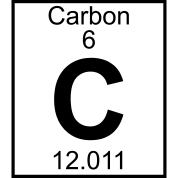
What does the 6 represent?
a)
atomic mass
b)
atomic number
c)
element name
d)
chemical symbol 
60.
Which one of these is not a noble gas?
a)
Helium
b)
Radon
c)
Iodine
d)
Krypton
61.
What is the atomic number of Oxygen?
a)
6
b)
7
c)
8
d)
9
62.

what group number are the halogens

a)

18

b)

1

c)

2

d)

17

63.

what group number are the noble gases

a)

17

b)

18

c)

14

d)

15

64.
An element's identity is determined by the number of
a)
electrons.
b)
protons.
c)
neutrons.
d)
valence.
65.

The vertical (up and down) columns in the Periodic Table are called

a)

groups

b)

towers

c)

periods

d)

atomic numbers

66.
The Modern Periodic Table of Elements is arranged by
a)
atomic mass
b)
atomic number
c)
valence electrons
d)
number of isotopes
67.
Sodium (Na) is found in period 
a)
3
b)
2
c)
4
d)
1
68.
As you move down a group, atomic radius increases because - 
a)
you add more and more neutrons
b)
you add more and more protons
c)
you add more and more shells (energy levels)
d)
you add more atomic mass
69.
Electronegativity is...
a)
the ability of an atom to attract/ accept electrons
b)
the ability of an atom to lose electrons
c)
the energy required to remove an electron from a specific atom
d)
how easy it is to make friends. 
70.
Electronegativity __________ from left to right within a period and __________ from top to bottom within a group.
a)
decreases, increases 
b)
increases, increases
c)
increases, decreases 
d)
stays the same, increases
71.

How many valence electrons does carbon have?

a)

4

b)

5

c)

6

d)

7

72.

USE THE PERIODIC TABLE

How many valence electrons does sodium have?

a)

1

b)

2

c)

3

d)

4

73.

USE THE PERIODIC TABLE

How many valence electrons does Phosphorus have?

a)

31

b)

5

c)

15

d)

4

74.
What is an ion?
a)
A Charged Atom
b)
A Large Atom
c)
A Small Atom
d)
A Cute Atom
75.
An atom becomes _________ when it gains electrons.
a)
Positive
b)
Negative
c)
Neutral
d)
Invinsible
76.
An atom becomes _______ when it loses electrons.
a)
Positive
b)
Negative
c)
Neutral
d)
Invinsible
77.
What is the Law of Conservation of mass?
a)
Mass is created in a chemical reaction
b)
Mass is created in a physical change
c)
New chemicals formed from a chemical reaction have a larger overall mass than the original reactants
d)
Mass is never created or destroyed
78.

How many oxygen atoms are in this chemical formula?

a)

6 oxygen atoms

b)

2 oxygen atoms

c)

3 oxygen atoms

d)

4 oxygen atoms

79.

Which Chemical Equation is Balanced?

a)

Fe4+O2------4FeO2+O2

b)

2H2+O2-----2H2O

c)

3Cr+4O₂-----2Cr₂O₃

80.

Which Chemical Equation is Balanced?

a)

4O2 + 2H2 + S2------ 2H2SO4

b)

4H2+O2-----2H2O2

c)

3Cr+4O₂-----2Cr₂O₃

81.
Matter is anything that
a)
takes up space and has mass.
b)
is in our universe.
c)
is light, sound or ideas.
82.
Which side of a chemical equation is the reactant side?
a)
Left (before the yields sign)
b)
Right (after the yields sign)
83.
Which side of a chemical equation os the product side?
a)
Left (before the yields sign)
b)
Right (after the yields sign)
84.
What is a coefficient?
a)
The small number on the right of the chemical symbol.
b)
The large number to the left of a formula.
85.
Is the equation balanced?: 2H2O + O2 --> 4MgO + 3Fe
a)
Yes
b)
No
86.
Balance this equation:
MgCl2 --> Mg4+ Cl2
a)
It's already balanced.
b)
4MgCl2 --> Mg4+ 4Cl2
c)
4MgCl2 --> Mg4+ 5Cl2
87.
Balance this equation:
 2Li + Cl2 -> LiCl
a)
2Li + Cl2 -> 4LiCl2
b)
2Li + Cl2 -> LiCl2
c)
2Li + Cl2 -> 2LiCl
88.
Balance this equation
_N2 + _H2 --> _NH3
a)
1,2,3
b)
1,3,2
c)
1,1,2
d)
2,1,1
89.
Read the following chemical formula: C6H12O6. How many hydrogen atoms are in the formula?
a)
12
b)
6
c)
4