wayground logo

Free Printable Worksheets

Font size

S
M
L
XL
Worksheets

Fall Semester Test Review Horton

Total questions: 55

Worksheet time: 44mins

Name
Class
Date
1.
Consider the chemical equation CH4 + 2 O2 → CO2 + 2 H2O. In this equation, CH4 is a
a)
product
b)
reactant
c)
displacement
2.

Which compounds are the PRODUCTS of this reaction?

a)

CO2 + H2O

b)

C6H12O6 + O2

c)

C6H12O6 + CO2

d)

H2O + O2

3.

What type of reaction is below?

Pb + FeSO4 ----> PbSO4 + Fe

a)

Synthesis (or combination)

b)

Decomposition

c)

Single displacement

d)

Double displacement

4.
Which chemical reaction takes place when 2 substances react to form a single product?
a)
Decomposition
b)
Double Replacement
c)
Single Replacement
d)
Synthesis
5.
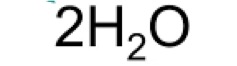
How many hydrogen atoms are in this chemical formula: 
a)
4 hydrogen atoms
b)
1 hydrogen atom
c)
2 hydrogen atoms
d)
3 hydrogen atoms
6.
In a reaction A + B ----> C,  reactant A has 5g and product  C has 9g. How many grams does reactant B should have? 
a)
4g
b)
5g
c)
9g
d)
14g
7.
At the end of chemical reactions, what is the total mass of the reactants compared to the total mass of the products?
a)
the product is doubled
b)
the product is half the mass of the reactants
c)
the mass is the same
d)
the mass changes depending on the reaction
8.
Is this balanced?...
Al + O2 --> 2Al2O3
a)
Yes!
b)
NO!
9.
Is the following equation balanced or unbalanced?
Fe + S --> FeS
a)
balanced
b)
unbalanced
10.

In what organelle of plant cells does photosynthesis occur?

a)

mitochondria

b)

centrioles

c)

chloroplast

d)

ribosomes

11.

In what organelle of cells does cellular respiration occur?

a)

mitochondria

b)

centrioles

c)

chloroplast

d)

ribosomes

12.
Nitrogen that is not combined with other elements and found in the atmosphere as gas is _____.
a)
free nitrogen
b)
nitrogen compounds
c)
ammonia
d)
nitrates
13.
What happens during the process of denitrification?
a)
Nitrogen compounds turn into free nitrogen
b)
Free nitrogen turns into nitrogen compounds
14.
What happens during the process of nitrogen-fixation?
a)
Nitrogen compounds turn into free nitrogen
b)
Free nitrogen turns into nitrogen compounds
15.
Identify the cycle pictured.
a)
The Water cycle
b)
The Carbon cycle
c)
The Nitrogen cycle
d)
The Phosphorus cycle
16.
Identify the cycle pictured.
a)
The Water cycle
b)
The Carbon cycle
c)
The Nitrogen cycle
d)
The Phosphorus cycle
17.
Which of the following is a property of an ionic compound?
a)
high melting point
b)
soft
c)
malleable
d)
liquid at room temperature
18.

Which is a characteristic/property of an ionic compound?

a)

conducts electricity when dissolved in water

b)

can be a solid, liquid, OR gas

c)

low melting point

d)

called a molecule

19.

The following properties are all characteristics of ionic compounds EXCEPT

a)

high melting and boiling points

b)

low melting and boiling points

c)

crystal lattice structure

d)

conduct electricity when dissolved in water

20.

What is a characteristic of an ionic compound?

a)

a crystal lattice

b)

a liquid

c)

never conducts electricity (even in water)

d)

an ionic chalice

21.

Which of the following is a characteristic of a covalent bonding?

a)

Crystalline solids

b)

High melting point

c)

Transfer electrons

d)

Low melting and boiling points

22.

Covalent compounds are called

a)

formula units

b)

molecules

c)

crystal lattices

d)

elements

23.

What element is represented in this Bohr Model?

a)

Carbon

b)

Hydrogen

c)

Aluminum

d)

Lithium

24.
What is the name of this element?
a)
Lithium
b)
Boron
c)
Carbon
d)
Neon
25.
What is the name of this element?
a)
Beryllium
b)
Boron
c)
Barium
d)
Bromine
26.
What's a valence electron?
a)
electrons in the second energy level
b)
electrons in the outermost energy level
c)
the atomic number
d)
electrons in the first level
27.

USE THE PERIODIC TABLE

How many valence electrons does Phosphorus have?

a)

31

b)

5

c)

15

d)

4

28.

USE THE PERIODIC TABLE

How many valence electrons does sodium have?

a)

1

b)

2

c)

3

d)

4

29.

Is this the correct Lewis Dot Structure for Boron?

a)

Yes

b)

No, missing electrons

c)

No, too many electrons

d)

No, dots are in wrong place.

30.

This could be the dot diagram of

a)

Mg

b)

Cl

c)

C

d)

O

31.

Which elements would most likely form the same number of bonds?

a)

boron and carbon

b)

oxygen and sulfur

c)

aluminum and bromine

d)

argon and silicon

32.

What are the elements (Be, Mg, Ca,...) in group 2 called?

a)

Alkali metals

b)

Alkaline earth metals

c)

Halogens

d)

Nobel Gases

33.

How would you draw a Lewis dot diagram for Magnesium?

a)
b)
c)
d)
34.

Which of the following shows a correct Lewis dot structure?

a)
b)
c)
d)
35.
What number on the element key tells you how many protons an element has?
a)
Atomic Mass
b)
Element name
c)
Atomic number
d)
Element Symbol
36.
The atoms along the staircase are called 
a)
metals
b)
nonmetals
c)
metalloids
d)
noble gases
37.

Which elements have the most similar chemical properties?

a)

K and Na

b)

K and Ca

c)

K and Cl

d)

K and S

38.
Name group 2A on the periodic table.
a)
alkali metals
b)
alkaline earth metals
c)
noble gases
d)
transition metals
39.
Name group 8A on the periodic table.
a)
alkali metals
b)
alkaline earth metals
c)
transition metals
d)
noble gases
40.
Name group 7A on the periodic table.
a)
transition metals
b)
metalloids
c)
halogens
d)
alkali metals
41.
Which letter represents an electron?
a)
A
b)
B
c)
C
d)
D
42.
Complete the missing label on the diagram.
a)
Neutron
b)
Centre
c)
Nucleus
d)
Sub atomic particle
43.
Examine the label of the atom. Which is a proton?
a)
A
b)
B
c)
C
44.

Which element on the Periodic Table is on Period 5, group 7A?

a)

Tellurium (Te)

b)

Arsenic (As)

c)

Iodine (I)

d)

Antimony (Sb)

45.

Which element on the Periodic Table is in Period 2, Group 5A?

a)

Nitrogen (N)

b)

Phosphorus (P)

c)

Carbon (C)

d)

Boron (B)

46.

Select all of the following that are included in the water cycle. (Select all that apply)

a)

carbon dioxide

b)

precipitation

c)

condensation

d)

cellular respiration

e)

groundwater

47.

Select all of the following that are included in the nitrogen cycle. (Select all that apply)

a)

free nitrogen

b)

denitrification

c)

nitrogen fixation

d)

cellular respiration

e)

photosynthesis

48.

Select all of the following that are included in the carbon/oxygen cycles. (Select all that apply)

a)

precipitation

b)

carbon dioxide

c)

nitrogen fixation

d)

cellular respiration

e)

photosynthesis

49.

Select all of the following that are associated with photosynthesis (Select all that apply)

a)

produces carbon dioxide

b)

produces oxygen

c)

chloroplast

d)

plants

e)

photosynthesis

50.

Select all of the following that are associated with cellular respiration (Select all that apply)

a)

produces carbon dioxide

b)

produces water

c)

mitochondria

d)

plants

e)

chloroplast

51.

On this equation, what is number 1?

a)

coefficient

b)

subscript

c)

yields

d)

reactants

e)

product

52.

On this equation, what is number 2?

a)

coefficient

b)

subscript

c)

yields

d)

reactants

e)

product

53.

On this equation, what is number 3?

a)

coefficient

b)

subscript

c)

yields

d)

reactants

e)

product

54.

On this equation, what is number 4?

a)

coefficient

b)

subscript

c)

yields

d)

reactants

e)

product

55.

On this equation, what is number 5?

a)

coefficient

b)

subscript

c)

yields

d)

reactants

e)

product