wayground logo

Free Printable Worksheets

Font size

S
M
L
XL
Worksheets

DC Unit 1 Review: Intro to Bio & Biochemistry

Total questions: 114

Worksheet time: 2hrs 24mins

Name
Class
Date
1.
The image below shows a polymer of glucose molecules. What type of macromolecule is this?
a)
carbohydrate
b)
protein
c)
lipid
d)
nucleic acid
2.
What property of water makes it the 'universal solvent'?
a)
it is a polar molecule
b)
it is an ionic compound
c)
it contains hydrogen bonds
d)
it steals electrons from other atoms
3.
The type of polysaccharide which serves as a strengthening tissue in the cell wall of plants is 
a)
cellulose
b)
glucose
c)
lactose
d)
fructose
4.
Glucose is a _____.
a)
carbohydrate
b)
lipid
c)
protein 
d)
nucleic acid
5.
Proteins are composed of what smaller building blocks?
a)
amino acids
b)
nucleic acids
c)
fatty acids
d)
nucleotides
6.
Which group of organic molecules serve as long-term energy storage and make the cell membrane is?
a)
proteins
b)
carbohydrates
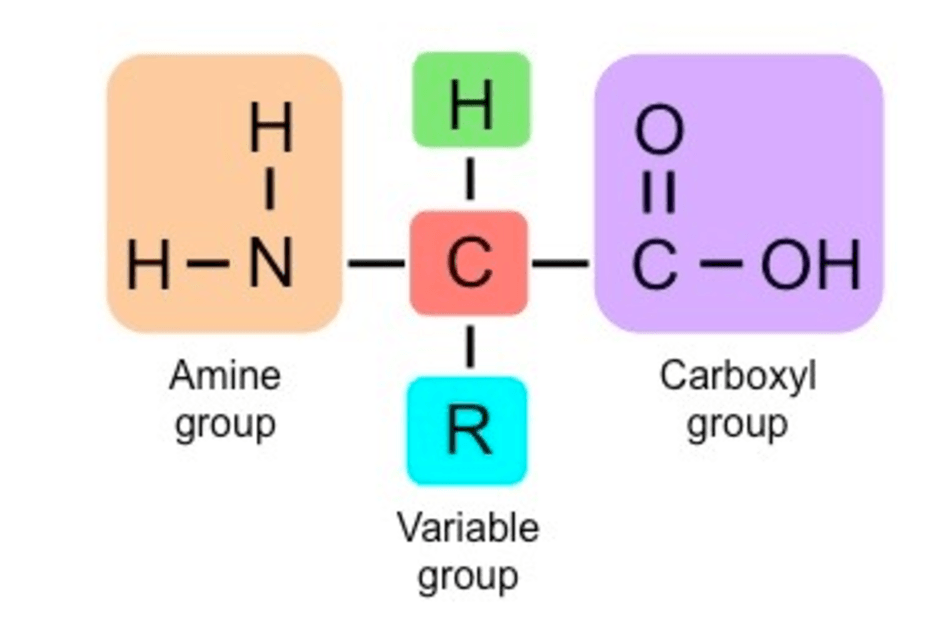
c)
lipids
d)
nucleic acids
7.
The primary purpose the body uses monosaccharides for is?
a)
Building muscles
b)
Helping the Immune System
c)
Immediate Energy
d)
Generating Heat
8.
Which of the following is LEAST likely to dissolve in water?
a)
nonpolar fats and oils
b)
polar sugar molecules
c)
salt made of a positive sodium ion and a negative chloride ion
d)
all of the substances will dissolve easily in water
9.
True of False. Glycogen is a starch that is found in animals. 
a)
True
b)
False
10.
Also known as simple sugars, these are the monomers of carbohydrates.
a)
lipids
b)
nucleotide
c)
monosaccharide
d)
monomer
11.
What do disaccharides, such as sucrose, and polysaccharides, such as starch, have in common?
a)
They are lipids made of fatty acids.
b)
They are proteins made of amino acids.
c)
They are nucleic acids made of nucleotides.
d)
They are carbohydrates made of simple sugars.
12.
Building blocks of polymers.
a)
monomer
b)
polypeptide
c)
monosaccharide
d)
glycerol
13.
Attractions between water molecules are called
a)
Covalent bonds
b)
Ionic bonds
c)
Polar bonds
d)
Hydrogen bonds
14.
Types of disaccharides include following except for?
a)
Maltose
b)
Glucose
c)
Sucrose
d)
Lactose
15.
What type of macromolecule is shown in the image below?
a)
Carbohydrate
b)
Nucleic Acid
c)
Fatty Acid
d)
Protein
16.
An unknown molecule contains a sugar and a phosphate group. It is likely what?
a)
carbohydrate
b)
protein
c)
lipid
d)
nucleic acid
17.
Larger polymers are formed when monomers are joined together by a _______ reaction.
a)
dehydration synthesis
b)
digestion
c)
hydrolysis
d)
redox
18.
What is the monomer of proteins?
a)
monosaccharides
b)
amino acids
c)
phospholipids
d)
nucleotide
19.
What is the ratio carbon:hydrogen:oxygen in carbohydrates?
a)
1:1:1
b)
1:2:1
c)
2:1:1
d)
2:1:2
20.
Which of the macromolecules contain nitrogen?
a)
proteins only
b)
nucleic acids only
c)
proteins and lipids
d)
nucleic acids and proteins
21.
What is the function of fats for living organisms?
a)
short term energy storage
b)
store hereditary information
c)
long term energy storage
d)
catalyze metabolic reactions
22.
Identify the macromolecule in the image below.
a)
carbohydrate
b)
nucleic acid
c)
protein
d)
lipid
23.
How are the subunits of proteins linked together?
a)
ionic bonds
b)
amino acids
c)
monomers
d)
peptide bonds
24.
Which statement about polymers is not true?
a)
polymers consist of more than one type of monomer
b)
polymers are broken down through hydrolysis
c)
polymers are synthesized through dehydration synthesis
d)
All are untrue
25.
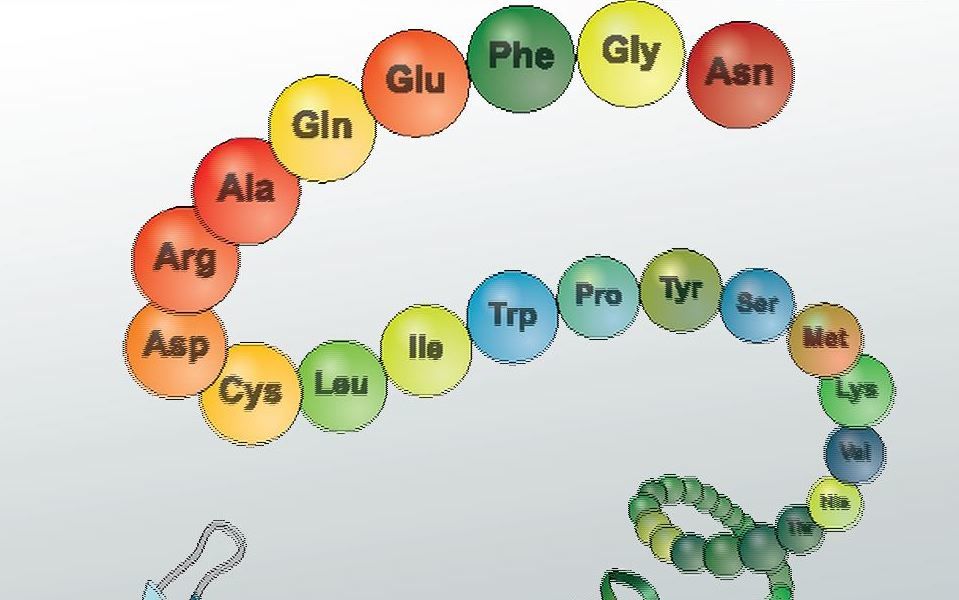
The image depicts which level of structure in proteins?
a)
primary
b)
secondary
c)
tertiary
d)
quaternary
26.
Which 4 elements make up most of all living matter?
a)
Carbon, Hydrogen, Nitrogen, Oxygen
b)
Carbon, Oxygen, Sodium, Potassium
c)
Carbon, Hydrogen, Calcium, Nitrogen
d)
Carbon, Oxygen, Nitrogen, Sulfur
27.
When atoms share electrons unequally...
a)
a nonpolar covalent bond is formed.
b)
an ionic bond is formed.
c)
a polar covalent bond is formed.
d)
a hydrogen bond is formed.
28.
Which type of lipid forms the primary structure of the cell membrane?
a)
triglycerides
b)
wax
c)
cholesterol
d)
phospholipid
29.
When water freezes the molecules form a matrix by forming hydrogen bonds and
a)
sinking in water
b)
becomes more dense than water
c)
becomes less dense than water
d)
becoming more tightly packed
30.
What is the difference between carbon-12 and carbon-14? (Hint: 12 and 14 are mass #)
a)
The number of protons in the nucleus.
b)
The number of protons and neutrons in the nucleus.
c)
The number of neutrons in the nucleus.
d)
The number of electrons in the orbitals.
31.

All major macromolecules are assembled by chains of subunits called monomers. No matter what the polymer, the monomers are linked using the same type of chemical reactions. Which statement best describes the dehydration or condensation reaction?

a)

When monomer A is joined to monomer B, a hydration shell is formed around them.

b)

When monomer A is joined to monomer B, a molecule of water is added between the two monomers

c)

When monomer A is joined to monomer B, a molecule of water is released.

d)

When monomer A is joined to monomer B, a chain of water molecules holds them together.

32.

Each type of macromolecule contains a particular monomer. Which macromolecule below is INCORRECTLY matched with its monomer?

a)

lipids...glycogen

b)

carbohydrate...monosaccharide

c)

nucleic acid...nucleotide

d)

protein...amino acid

33.

Multicellular organisms need to be able to transport sugars throughout the organism. Disaccharides often act as such transport molecules. Suggest a reason why a disaccharide such as sucrose would be used for transport rather than a monossacharide like glucose.

a)

Sucrose is less temperature-sensitive than glucose, which makes it more likely to survive temperature variation in the organism.

b)

Most organisms lack enzymes to digest sucrose

c)

Sucrose is more likely to disintegrate after 24 hours

d)

Enzymes that break down glucose cannot break the bond in sucrose, so glucose can be safely 'hidden' within the disaccharide.

34.

In solution, glucose forms a six sided ring. Depending on how the ring forms, either an alpha or beta glucose results. Polymers of starch are made of alpha glucose, while polymers of cellulose are made of beta glucose. PREDICT a likely consequence of the structural difference between starch and cellulose.

a)

Starch works well as energy storage material because few organisms can break bonds between alpha glucose

b)

Cellulose works well as structural material because few organisms can break bonds between beta glucose polymers

c)

Both cellulose and starch make up tough fibrous material in cells

d)

Both cellulose and starch are excellent energy storage molecules

35.

Which characteristic do all lipids have in common?

a)

contain fatty acids

b)

saturated

c)

contain four carbon rings

d)

are insoluble in water

36.

Estrogen and testosterone are homes which play very different roles in the sexual development of animals. Despite their different functions, they have similar structures. What structural feature do they have in common?

a)

both have long chains of hydrocarbons

b)

both have 4 linked carbon rings

c)

both are denatured at very low temperatures

d)

both are insoluble in water

37.

True or False: During the Condensation Reaction water is released from monomers as they form covalent bonds, making a polymer.

a)

True

b)

False

38.

Water has specific cohesive properties due to

a)

being composed of two hydrogen atoms held to an oxygen atom by ionic bonds.

b)

hydrogen bonding between water molecules.

c)

the attraction between water and other polar substances.

d)

the fact that water is a good solvent.

39.

What reaction is this?

a)

hydrolysis

b)

enzymatic

c)

ionization

d)

condensation or dehydration

40.

Unsaturated fats differ from saturated fats by their fatty acid tails containing which of the following items?

a)

Single bonds

b)

double bonds

c)

cholesterol

d)

phosphate groups

41.

Carbohydrates have a variety of different structures and functions in life. Which of the following carbohydrates is the structure that is stored in muscles for energy storage?

a)

glycogen

b)

starch

c)

ATP

d)

Glucose

42.

All biological systems are based on the same organic molecules. Cells assemble these small organic molecules into complex carbohydrates, proteins, lipids, and nucleic acids. For lipids, which of the following is responsible for serving as energy storage in vertebrate animals?

a)

steroids

b)

cholesterol

c)

phospholipids

d)

triglycerides

43.

What molecule is the most common steroid in animal cell membranes that serves as a precursor for all steroid hormones?

a)

cholesterol

b)

waxes

c)

phospholipids

d)

triglycerides

44.

What is this chemical reaction?

a)

condensation or dehydration

b)

hydrolysis

45.

True or False: Acidic solutions are low in free hydrogen ions.

a)

true

b)

false

46.
For the quickest source of energy if going for a run, you should eat a food that contains a high percentage of 
a)
sodium
b)
protein
c)
fats
d)
carbohydrates
47.
DNA and RNA are two types of
a)
proteins
b)
lipids
c)
carbohydrates
d)
nucleic acids
48.
An altered form of the protein collagen causes a condition where bones break easily. Which of the following are components of collagen?
a)
fatty acids
b)
amino acids
c)
nucleic acids
d)
monosaccharides
49.
Fats, oils, and cholesterol are all types of
a)
fatty acids
b)
lipids
c)
hormones
d)
cell membranes
50.
Which category of carbon-based molecules includes sugars and starches?
a)
proteins
b)
carbohydrates
c)
unsaturated fatty acids
d)
phospholipids
51.
Carbon is unique due to the carbon atom’s
a)
hydrogen bonding strength
b)
ionic compounds
c)
six outer unpaired electrons
d)
bonding properties
52.
Identify the products in this reaction: 6H2O + 6CO2  C6H12O6+ 6O2.
a)
6H2O and 6CO2
b)
6CO2 and C6H12O6
c)
6H2O, C6H12O6, and 6O2
d)
C6H12O6 and 6O2
53.

A carbon compound extracted from living tissue was found to contain exactly twice as many hydrogen atoms as oxygen atoms.

To which of the following classes of biological molecule is it likely to belong?

a)

carbohydrate

b)

lipid

c)

nucleic acid

d)

protein

54.

Substances which can act as both acid and base are used in experiments to maintain a constant pH. What are the substances known as?

a)

polar molecules

b)

buffers

c)

cofactors

d)

reducing agents

55.

A solution with a pH of 2 is __________ times more acidic than one with a pH of 5.

a)

3

b)

10

c)

100

d)

1000

e)

100000

56.

Which of the following is correctly matched?

a)

Proteins-nucleotides

b)

Lipids-glycerol

c)

Carbohydrates-amino acids

d)

DNA-glucose

e)

None of the above

57.

Isotopes differ from each other only in

a)

the number of electrons

b)

the number of protons

c)

the number of neutrons

d)

how they react chemically

e)

the size of the atom

58.

A polysaccharide found in plants whose function is storage is

a)

starch

b)

glycogen

c)

chitin

d)

glucagon

e)

cellulose

59.

Water moves up tall trees because this is true

a)

Water exhibits strong tension and cohesion

b)

Water has a high heat of vaporization

c)

Water has a high specific heat

d)

Ice is less dense than water

e)

Water is a universal solvent

60.

which of the following terms refers to the order in which amino acids are linked together in a protein.

a)

Primary

b)

Secondary

c)

Tertiary

d)

Quaternary

61.

The chain of amino acids folds and coils on itself

a)

Primary

b)

Secondary

c)

Tertiary

d)

Quaternary

62.

The entire polypeptide forms a three-dimensional structure

a)

Primary

b)

Secondary

c)

Tertiary

d)

Quaternary

63.

Two or more polypeptides attached together and work as one unit

a)

Primary

b)

Secondary

c)

Tertiary

d)

Quaternary

64.
What is a peptide bond?
a)
Bond that holds two amino acids together.
b)
A bond that holds hydrogen and oxygen molecules together.
c)
A bond that holds the phosphate group of one nucleotide and a sugar of a neighboring nucleotide.
d)
A bond that is formed by the sharing of electrons.
65.
What is the monomer of proteins?
a)
amino acids
b)
polypeptides
c)
nucleotides
d)
monosaccharides
66.

The diagram shows a bond forming between two amino acids. What is the name of this reaction?

a)

Condensation

b)

Hydrolysis

c)

Pepysis

d)

Oxidation

67.
What is the monomer of a protein?
a)
amino acid
b)
monosaccharide
c)
fatty acid
d)
nucleic acid
68.
The name of the initial chain of monomers in a protein is called.....
a)
polypeptide
b)
polysaccharide
c)
polyester
d)
polynucleotide
69.
The two types of folding in the secondary structure are.....
a)
alpha-helix & beta-pleated sheets
b)
polypeptide & nucleotide
c)
globular & fibrous
70.
What is the name of this molecule?
a)
amino acid
b)
nucleotide
c)
monosaccharide
d)
triglyceride
71.
Water-repelling
a)
hydrophobic
b)
myoglobin
c)
coagulation
d)
gluten
72.

Green plants produce their own food through the process of photosynthesis.

a)

All living things grow

b)

All living things contain cells

c)

All living things maintain homeostasis

d)

All living things use energy

73.
A tulip opens in the morning at sunrise and closes in the evening at sunset.
a)
All living things have cells
b)
All living things use energy
c)
All living things respond to their environment
d)
All living things grow
74.
An adult hydra is producing its offspring through budding.
a)
All living things use energy
b)
All living things reproduce
c)
All living things contain cells
d)
All living things grow
75.

Select true statement regarding themes in biology.

a)

Information must be transmitted within and among organisms

b)

Life depends on a continuous input of energy

c)

Biological systems interact among each other

d)

All of the above

76.

"Group of organism of one type that live in the same area" is referring to

a)

Organism

b)

Ecosystem

c)

Community

d)

Population

77.

Define Organ level in biological organization.

a)

Individual living thing.

b)

Group of organelles working together to perform as a whole.

c)

Group of tissues working together to perform a particular function.

d)

Group of body part to perform regular works.

78.

All ecosystems combined...

a)

biosphere

b)

community

c)

habitat

d)

population

79.

Consists of different organs that work together for a specific function...

a)

organelle

b)

organ systems

c)

organism

d)

the brain

80.

Subatomic particle with a positive charge...

a)

electron

b)

proton

c)

neutron

d)

nucleus

81.

Consists of all the biotic and abiotic factors of the environment...

a)

population

b)

community

c)

ecosystem

d)

all of the above

82.

Subatomic particle that determines the type of element being observed...

a)

neutron

b)

electron

c)

nucleus

d)

proton

83.

DNA is an example of a(n)...

a)

atom

b)

element

c)

molecule

d)

ion

84.

The smallest unit of life that is able to carry out all the functions of living things...

a)

subatomic particle

b)

organelle

c)

atom

d)

cell

85.

Subatomic particle is used in bonding...

a)

electron

b)

proton

c)

neutron

d)

all of the above

86.

Consists of different tissues that function together to do a certain job...

a)

organelle

b)

organ

c)

cell

d)

organ system

87.

Determines the mass of an atom...

a)

proton

b)

electron cloud

c)

electron

d)

nucleus

88.

Trees, shrubs, grasses, air temperature, soil pH, water quality, etc. found in a given area are known as a(n)...

a)

population

b)

ecologist

c)

community

d)

ecosystem

89.

A group of organisms of the same species in any given area...

a)

population

b)

community

c)

individuals

d)

community

90.

Subatomic particle with no charge (neutral)...

a)

electron

b)

proton

c)

nucleus

d)

neutron

91.

Subatomic particle with a negative charge...

a)

electron

b)

nucleus

c)

neutron

d)

proton

92.

One lion within a pride of lions is known as a(n)...

a)

population

b)

organ system

c)

organism

d)

community

93.
Which has a pH below 7?
a)
Acid
b)
Base
94.

What pH is the strongest base?

a)

1

b)

7

c)

4

d)

14

95.
Human blood has a pH between 7.35 and 7.45. Which of the following best describes human blood?
a)
strongly acidic
b)
slightly acidic
c)
strongly basic
d)
slightly basic
96.
When dissolved in water, acids produce:
a)
bases
b)
salts
c)
hydrogen ions
d)
hydroxide ions
97.
Which type of ion does a base produce when it is dissolved in water?
a)
oxide
b)
oxygen
c)
hydrogen
d)
hydroxide
98.

Neutral solutions have a pH of:

a)

0

b)

1

c)

7

d)

14

99.

True or false: a neutral solution has equal amounts of H+ and OH-.

a)

True

b)

False

100.

Which is true?

a)

pH of less than 7 is basic; pH of more than 7 is acidic

b)

pH of less than 7 is acidic; pH of more than 7 is basic

101.

Is pure water acidic, basic, or neutral?

a)

Acidic

b)

Basic

c)

Neutral

102.
The pH scale ranges from ____________.
a)
0-7
b)
1-100
c)
1-20
d)
0-14
103.
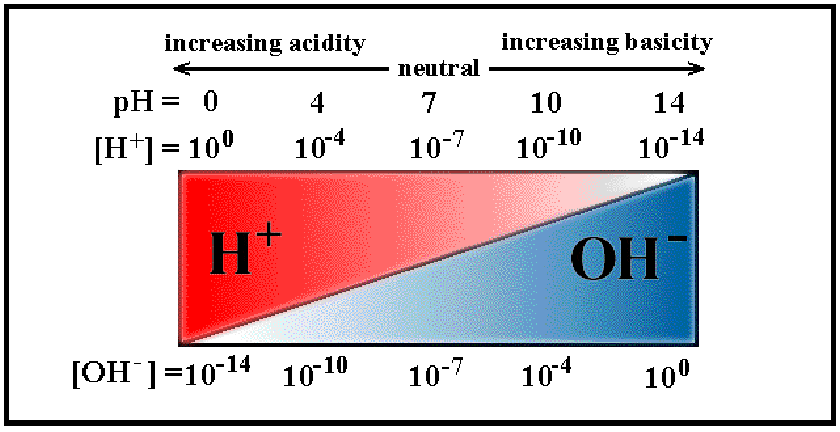
According to the pH range which substance is more acidic than lemon juice
a)
Hydrochloric acid
b)
cabbage
c)
milk
104.
Which of the following substances would have the greatest concentration of H+ ions?
a)
Ammonia with
pH 13
b)
Water with 
pH 7
c)
Milk with 
pH 5
d)
Lemon juice with 
pH 2
105.

which of the following is not a domain

a)

Bacteria or Eubacteria

b)

Archaea- bacteria

c)

Protista

d)

Eukarya

106.

which Domain has members with a nucleus

a)

Bacteria-Eubacteria

b)

Archaea-Bacteria

c)

Eukarya

107.
How are Bacteria and Archaea similar?
a)
They are both multicellular
b)
They are both Prokaryotes
c)
They both have peptioglycan
108.
How are Eukaryotes different from other domains?
a)
They are always single celled
b)
They have no peptioglycan
c)
They are sometimes resistant to antibiotics
d)
They can be multicellular
109.
Which domain do humans belong to ?
a)
Homo
b)
Animalia
c)
Archaea
d)
Eukarya
110.

Compounds that are composed of the same number and type of atoms but have them arranged in different ways are ___________.

a)

isomers

b)

isotopes

c)

polymers

d)

alkanes

111.
Are the compounds shown isomers
a)
Yes
b)
No
112.
Are the following molecules isomers?
a)
Yes
b)
No
113.
Are the following molecules isomers?
a)
Yes
b)
No
114.
Are the following molecules isomers?
a)
Yes
b)
No