wayground logo

Free Printable Worksheets

Font size

S
M
L
XL
Worksheets

AP Bio Sem1 Final Exam REVIEW

Total questions: 140

Worksheet time: 2hrs 41mins

Name
Class
Date
1.

This image is of what type of macromolecule?

a)

lipid

b)

carbohydrate

c)

protein

d)

nucleic acid

2.

Which type of macromolecule is used for long term energy storage?

a)
b)
c)
d)
3.

Which of the following is considered fully saturated?

a)
b)
c)
d)
4.

Which of the following is considered MOSTLY NONPOLAR?

a)
b)
c)
d)
5.

How many amino acids are featured here?

a)

1

b)

2

c)

3

d)

4

6.

Meat is considered to contain the highest of which macromolecule?

a)

protein

b)

carbohydrate

c)

nucleic acid

d)

lipid

7.

Lugol's reagent tests for the presence of starches. Which type of macromolecule does it test for?

a)

lipid

b)

protein

c)

nucleic acid

d)

carbohydrate

8.

Which monomer is correctly matched with the type of bond that holds them together?

a)

lipid: carbohydrate covalent bonds

b)

nucleotide: ester linkages

c)

monosaccharide: hydrogen and phosphodiester bonds

d)

amino acids: peptide bonds

9.

Which functional group is NOT pictured in the image?

a)

phosphate

b)

hydroxyl

c)

amine

d)

carboxylic acid

10.

Which of the following statements is true?

a)

In order to create a polymer, a water is removed.

b)

In order to create a polymer, a water is added.

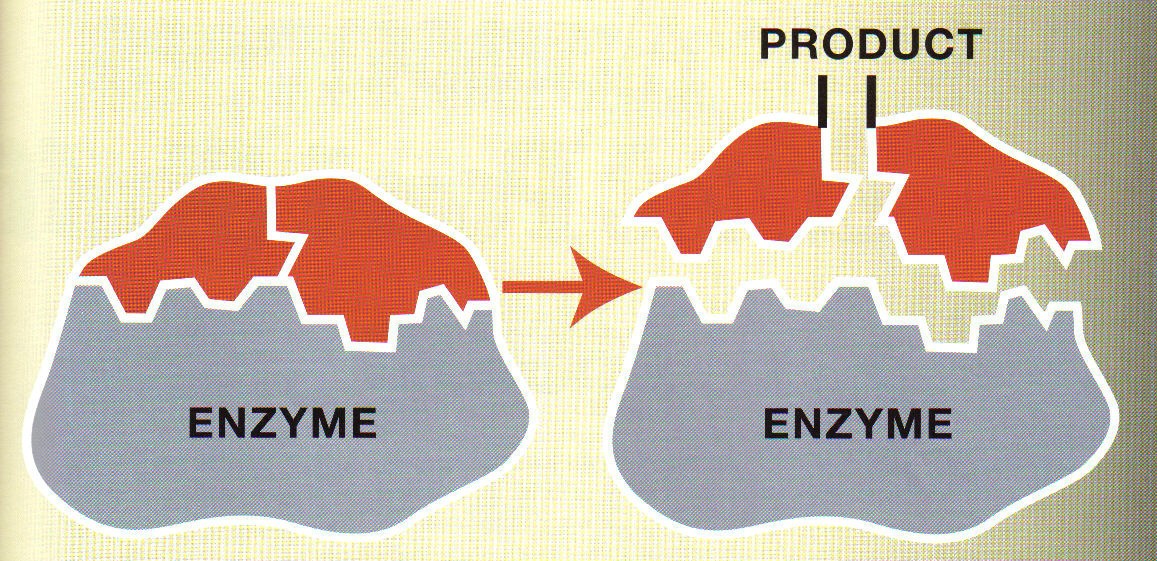
c)

In order to create a polymer, hydrolysis must occur.

d)

In order to create a polymer, oxygen must be present.

11.

Which macromolecule(s) have the elements Carbon, Hydrogen, and Oxygen?

a)

Proteins & Nucleic Acids

b)

Carbohydrates

c)

Proteins

d)

Carbohydrates & Nucleic Acids

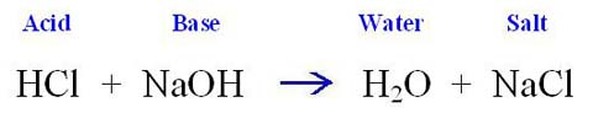
12.

The picture indicates which Macromolecule?

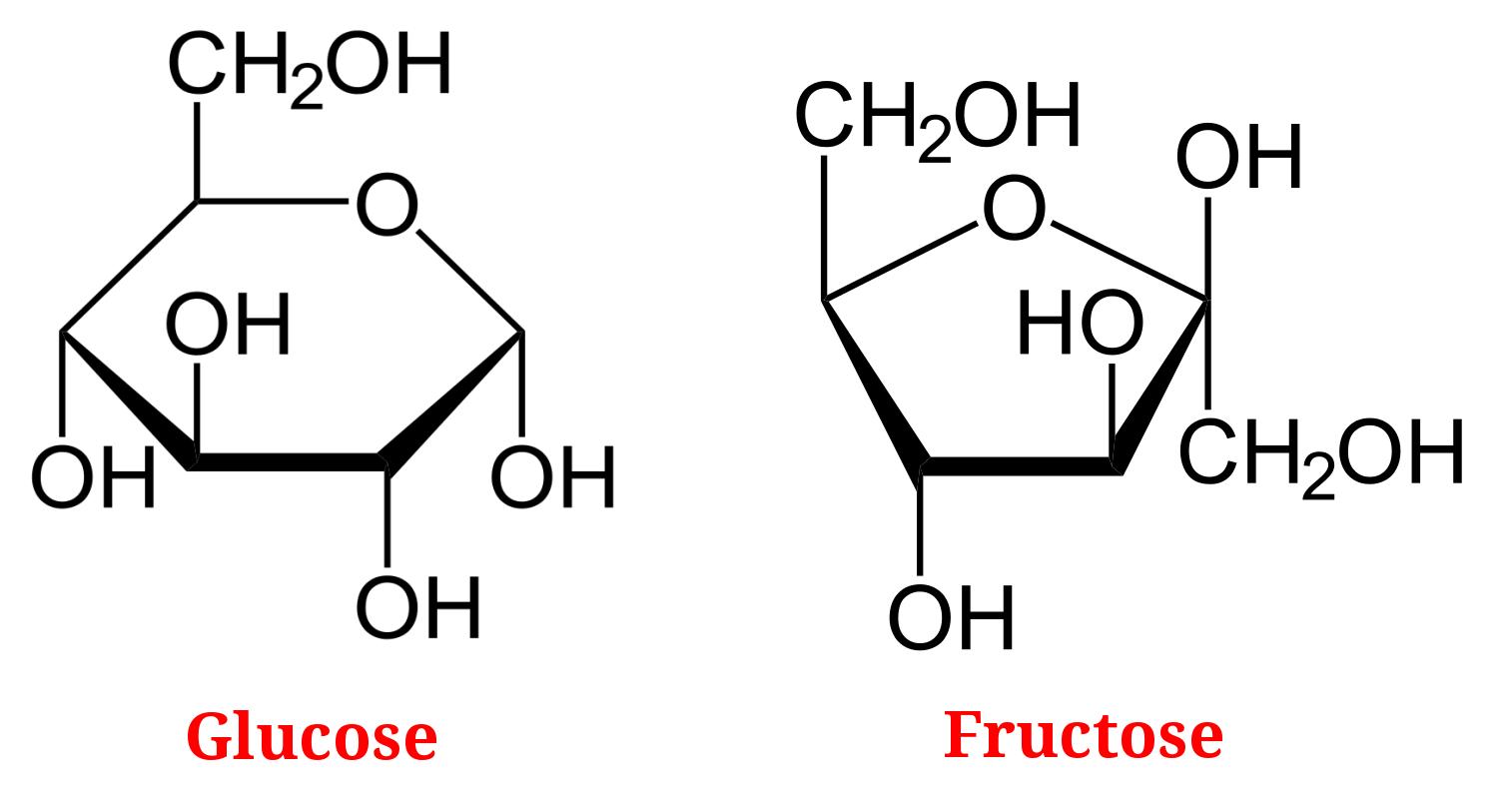
a)

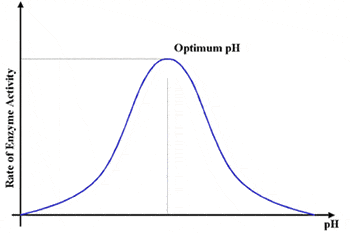
Carbohydrates

b)

Lipids

c)

Proteins

d)

Nucleic Acids

13.

Which macromolecule is composed of Carbon, Hydrogen, Oxygen, Nitrogen, and Phosphorus ?

a)

Carbohydrates

b)

Lipids

c)

Proteins

d)

Nucleic Acids

14.

The picture indicates which macromolecule?

a)

Carbohydrates

b)

Lipids

c)

Proteins

d)

Nucleic Acids

15.

Hemoglobin and Insulin are examples of...

a)

Carbohydrates

b)

Lipids

c)

Proteins

d)

Nucleic Acids

16.

The function of energy storage AND source goes with which macromolecule ______.

a)

Carbohydrates

b)

Lipids

c)

Proteins

d)

Nucleic Acids

17.

The function of Structural Enzymes, and the forming of muscles/skin/organs --

a)

Carbohydrates

b)

Lipids

c)

Proteins

d)

Nucleic Acids

18.

The following examples Glucose, Starch, Cellulose, and Glycogen belong to which macromolecule:

a)

Carbohydrates

b)

Lipids

c)

Proteins

d)

Nucleic Acid

19.

The picture indicates which macromolecule

a)

Carbohydrates

b)

Lipids

c)

Proteins

d)

Nucleic Acid

20.

The following examples Fats, Oils, Phospholipids, and Waxes belong to which macromolecule?

a)

Carbohydrates

b)

Lipids

c)

Proteins

d)

Nucleic Acid

21.

The following function Energy Storage, Insulation/Protection, and Vitamins belongs to which macromolecule?

a)

Carbohydrates

b)

Lipids

c)

Proteins

d)

Nucleic Acid

22.

The examples DNA and RNA belong to which macromolecule?

a)

Carbohydrates

b)

Lipids

c)

Proteins

d)

Nucleic Acid

23.

The picture indicates which macromolecule?

a)

Carbohydrates

b)

Lipids

c)

Proteins

d)

Nucleic Acid

24.

The following function Genetic Information belongs to which macromolecule?

a)

Carbohydrates

b)

Lipids

c)

Proteins

d)

Nucleic Acid

25.

The monomer Modnosaccarides belongs to which macromolecule?

a)

Carbohydrates

b)

Lipids

c)

Proteins

d)

Nucleic Acid

26.

The monomer of a fatty acid + glycerol belongs to which macromolecule?

a)

Carbohydrates

b)

Lipids

c)

Proteins

d)

Nucleic Acid

27.

The monomer amino acid belongs to which macromolecule?

a)

Carbohydrates

b)

Lipids

c)

Proteins

d)

Nucleic Acid

28.

Hydrolysis...

a)

puts monomers together with water.

b)

breaks a polymer into monomers releasing water.

c)

combines two peptides.

d)

breaks open cells with water.

29.
Monomers combine to form ________ through the process of ________.
a)
polymers; hydrolysis
b)
polymers; dehydration synthesis
c)
monomers; hydrolysis
d)
monomers; dehydration synthesis
30.

Polymer's split apart to form ________, by __________.

a)

monomers, hydrolysis

b)

monomers, dehydration synthesis

c)

amino acids, hydrolysis

d)

amino acids, dehydration synthesis

31.

a single unit or molecule

a)

polymer

b)

dimer

c)

monomer

d)

macromolecule

32.

How many monomers are shown here?

a)

1

b)

3

c)

5

d)

7

33.
Which of the following is NOT a biomolecule?
a)
Water
b)
Nucleic Acid
c)
Protein
d)
Lipid
34.
The process that builds molecules by removing water to bind them together is
a)
Hydrolysis
b)
Protein Synthesis
c)
Dehydration Synthesis
d)
Lysis
35.

Which way would the water molecules move through the semi-permeable membrane?

a)

From the A side to the B side

b)

From the B side to the A side

c)

The purple molecules would move to the B side.

d)

They would move equally back and forth in a state of dynamic equilibrium

36.

The picture is an example of...

a)

Active tranport

b)

Passive transport

c)

Endocytosis

d)

Osmosis

37.
Which of the following is responsible for getting large or charged (polar) molecules across the cell membrane?
a)
E
b)
B
c)
C
d)
D
38.
Hydrophobic region of the cell membrane?
a)
E
b)
B
c)
C
d)
39.

When cells are placed in a __________ solution they begin to swell, because the water potential in the cell is _______ than the solution.

a)

Hypertonic, lower

b)

Isotonic, equal

c)

Hypotonic, lower

d)

Equalized, higher

40.
Which form of active transport is being shown? (Inside of  the cell is tan colored) 
a)
Facilitated Diffusion
b)
Exocytosis
c)
Endocytosis
d)
Receptor-mediated endocytosis
41.
 Engulfing of bacteria by white blood cells is called as
a)
Phagocytosis
b)
Pinocytosis
c)
Exocytosis
d)
Endocytosis
42.

If a cell containing 5% salt is placed into a glass of water with 20% salt, the glass water is _______ compared to the cell.

a)

hypertonic & lower water potential

b)

hypotonic & higher water potential

c)

hypertonic & higher water potential

43.

If you looked at red blood cells under a microscope and saw the blood cells exploded, what would you say happened?

a)

The cells were placed in a hypotonic solution because the water entered the cell.

b)

the solution was isotonic and the water enter the cell.

c)

The solution was hypertonic and the water exited the cell.

44.
Water will move?
a)
Into the cell
b)
Out of the cell
c)
Neither into or out of the cell
45.
A HYPERTONIC solution has a _____ concentration of solute than the interior of the cell and a cell will ______ when placed into this solution.
a)
lower; shrink
b)
lower; swell
c)
higher; shrink
d)
higher; swell
46.
What type of transport is this?
a)
Endocytosis
b)
Diffusion
c)
Exocytosis
d)
Osmosis
47.
What type of organelle is used during endocytosis and exocytosis?
a)
Endoplasmic Reticulum
b)
Golgi Body
c)
Vesicle
d)
Lysosome
48.
What is plasmolysis?
a)
Pulling away of the plant cell membrane as it loses water in a hypertonic solution.
b)
Pulling away of the animal cell membrane as it undergoes osmosis.
c)
An increase in turgor pressure as the cell undergoes osmosis.
d)
Contraction of the protoplast of a plant cell as a result of gaining water.
49.
0.9% NaCl is isotonic to red blood cells.  Which of these describes what will happen if a technician misplaces a decimal point and makes 9.0% NaCl solution instead and administers it to a patient?
a)
The cells exposed to the solution will burst.
b)
The cells exposed to the solution will shrink.
c)
The cells will remain the same size.
d)
The cells exposed to the solution will expand but not burst.
50.
The soil surrounding the roots of a plant has a water potential of -15 bars. The leaves of the plant have a water potential of -18 bars.
What will happen?
a)
Water will leave the plant and the plant will wilt.
b)
Water will move from the roots to the leaves of the plant.
c)
Nothing - these solutions are isotonic.
d)
IDK - What is a bar????
51.
A cell in an isotonic solution will
a)
swell
b)
shrink
c)
stay the same size
d)
impossible to tell
52.

What type of transport is represented by figure "B"

a)

Active Transport energy is required

b)

Facilitated Diffusion energy is not required

c)

Protein Transport for large polar molecules

d)

Osmosis just moved water molecules

53.
A saltwater fish is accidentally placed in a freshwater aquarium in a few short hours it sadly died. Which explains why this occurred?
a)
The cells of the fish body were dehydrated by the quick loss of water. 
b)
The cells of the fish quickly absorbed massive amounts of water and it ended up killing the fish.  
c)
The fish hated the new decor in the freshwater tank. 
d)
It was just its time. 
54.
In which beaker will water move out of the cell?
a)
left
b)
middle
c)
right
55.
Where does glycolysis occur?
a)
Inner mitochondrial membrane
b)
Mitochondrial Matrix
c)
Cytosol
d)
At a ribosome
56.
NADH is a ______ form of NAD+.
a)
Reduced
b)
Oxidized
c)
Catabolized
d)
Hydrolized
57.
after strenuous exercise, a muscle cell would contain decreased amounts of ______ and increased amounts of ______ ____
a)
glucose ATP
b)
ATP glucose
c)
oxygen lactic acid
d)
lactic acid ATP
58.
the loss of hydrogen or electrons is known as 
a)
dehydration
b)
hydrogenation
c)
reduction
d)
oxidation
59.
Which process takes place in the presence of oxygen and produces nearly 20 times as much as ATP as glycolysis alone?
a)
photosynthesis
b)
lactic acid fermentation
c)
aerobic respiration
d)
alcoholic fermentation
60.
Two different species of bacteria are examined. Scientists find that species X always produces CO2 and H2O during cellular respiration. Species Y always produces ethyl alcohol and CO2. Which conclusion can be made from these observations?
a)
Only species Y is aerobic.
b)
Only species Y is anaerobic
c)
Both species X and Y are aerobic.
d)
Both species X and Y are anaerobic.
61.
What are the reactants in the equation for cellular respiration?
a)
oxygen and lactic acid
b)
carbon dioxide and water
c)
glucose and oxygen
d)
water and glucose
62.
The ATP's of glycolysis are produced through
a)
chemiosmosis
b)
substrate-level phosphorylation
63.
What determines the fate of pyruvate?
a)
carbon dioxide
b)
oxygen
c)
ATP
d)
water
64.
What is the main purpose of the Krebs cycle?
a)
to produce ATP
b)
to produce electron donators
c)
to produce water
d)
to produce carbon dioxide
65.
The final electron acceptor of aerobic respiration is
a)
oxygen
b)
water
c)
carbon dioxide
d)
NAD+
66.
Which molecules are made during the Krebs Cycle to power the electron transport chain?
a)
ATP and CO2
b)
ATP and NADH
c)
NADH and FADH2
d)
ADP, NADand FAD+
67.
What is cellular respiration?
a)
the breakdown of glucose  to release ATP
b)
the breakdown of glucose to release NADH
c)
the breakdown of glucose to release FADH
d)
the breakdown of glucose to release carbon
68.
Vacuole:
a)
A gel-like material that streams through the cell holding all the other organelles / Also stores chemicals needed for cell processes.
b)
The smallest organelle with a huge job / Makes proteins, which are the building blocks of the body.
c)
A small sack that stores water and food until the cell needs it /  Stores waste temporarily until the cell  gets rid of it.
d)
Stacks of pancake-like membranes that package materials to ship out of the cell.
69.
Nucleus:
a)
Stores information on DNA molecules / Directs and controls the activities of the cell.
b)
 A folded membrane that moves materials around inside cells / Also acts as the site of manufacturing materials needed by the cell.
c)
The smallest organelle with a huge job / Makes proteins, which are the building blocks of the body.
d)
A small sack that stores water and food until the cell needs it /  Stores waste temporarily until the cell  gets rid of it.
70.
Mitochondrion (plural is Mitochondria):
a)
Stacks of pancake-like membranes that package materials to ship out of the cell.
b)
Small sacks with pores / Contains digestive enzymes that get rid of waste, worn-out cell parts, and captured invaders.
c)
Bean-shaped organelle filled with folded membranes / Breaks down glucose to release energy for cell functions
d)
The protective outer layer that controls what enters and leaves the cell.
71.
Lysosome:
a)
The smallest organelle with a huge job / Makes proteins, which are the building blocks of the body.
b)
Small sacks with pores / Contains digestive enzymes that get rid of waste, worn-out cell parts, and captured invaders.
c)
Bean-shaped organelle filled with folded membranes / Breaks down glucose to release energy for cell functions
d)
Stacks of pancake-like membranes that package materials to ship out of the cell.
72.
Ribosome:
a)
a part of the cell containing DNA and RNA and responsible for growth and reproduction
b)
non membrane bounded organelle responsible for protein synthesis; found in eukaryotes and porkaryotes
c)
System of internal membranes within the cytoplasm. Membranes are rough due to the presence of ribosomes. functions in transport of substances such as proteins within the cytoplasm
d)
An endomembrane system where lipids are synthesized, calcium levels are regulated, and toxic substances are broken down.
73.
Rough Endoplasmic Reticulum:
a)
non membrane bounded organelles responsible for protein synthesis;found in eukaryotes and porkaryotes
b)
a part of the cell containing DNA and RNA and responsible for growth and reproduction
c)
System of internal membranes within the cytoplasm. Membranes are rough due to the presence of ribosomes. functions in transport of substances such as proteins within the cytoplasm
d)
An endomembrane system where lipids are synthesized, calcium levels are regulated, and toxic substances are broken down.
74.
What is the function of the Golgi Apparatus?
a)
To produce ribosomes
b)
To transfer materials
c)
To protect the cell
d)
To hold DNA
75.
In an eukaryotic cell, where is the DNA contained?
a)
The cell membrane
b)
The nucleus of a cell
c)
The mitochondria of a cell
d)
The vesicles of a cell
76.
Why do plants need chloroplasts?
a)
To carry out photosynthesis
b)
To carry out DNA transcription
c)
To collect food
d)
To collect water
77.

What is the boundary of the cell that is made of mostly phospholipids?

a)

Cell Wall

b)

Chloroplast

c)

Nucleus

d)

Cell Membrane

78.
What kind of cells have a cell wall?
a)
Plants and Animals
b)
Animals
c)
Plants
d)
Plants and Bacteria
79.
What is in all cells and provides protein synthesis?
a)
Cell Membrane
b)
Ribosome
c)
Lysosome
d)
Chlroplast
80.
What is the function of the smooth endoplasmic reticulum?
a)
to make energy
b)
modify and transport proteins made by the ribosomes on it
c)
store water and other vital molecules
d)
to make new membranes and neutralize toxins
81.
Vesicle filled with digestive enzymes that break down lipids, carbohydrates, and proteins into monomers. Recycle damaged or unused organelles.
a)
ER
b)
Lysosome
c)
Vacuole
d)
Mitochondria
82.
What is the organelle used in cellular respiration and converts glucose sugar to ATP? Contains a double membrane and its own DNA.
a)
Golgi Apparatus
b)
ER
c)
Nucleus
d)
Mitochondria
83.
A special set of microtubules used in movement. Long tail whip structure that propels the cell forward.
a)
Cilla
b)
Flagella
c)
Magellan
d)
Salmonela
84.

Which of the following is the closest definition of LYSOSOMES?

a)

An organelle in which cellular respiration occurs.

b)

The organelle that makes proteins by putting together chains of amino acids using instructions from the DNA.

c)

Organelles that contain digestive enzymes, which break down worn-out or damaged organelles and foreign invaders in the cell.

d)

A rigid structure that surrounds the cell membrane.
85.
Cell Membrane:
a)
The protective outer layer that controls what enters and leaves the cell.
b)
Stores information on DNA molecules / Directs and controls the activities of the cell.
c)
A folded membrane that moves materials around inside cells / Also acts as the site of manufacturing materials needed by the cell.
d)
The smallest organelle with a huge job / Makes proteins, which are the building blocks of the body.
86.
Which type of organelle or structure is primarily involved in the synthesis of oils, phospholipids, and steroids?
a)
smooth endoplasmic reticulum
b)
mitochondrion
c)
contractile vacuole
d)
ribosome
87.
Tay-Sachs disease is a human genetic abnormality that results in cells accumulating and becoming clogged with large and complex lipids.  Which cellular organelle must be involved in this condition?
a)
mitochondria
b)
membrane-bound ribosomes
c)
the lysosome
d)
the endoplasmic reticulum
88.
Which animal cell organelle contains enzymes that transfer hydrogen from various substrates to oxygen?
a)
vacuole
b)
peroxisome
c)
golgi apparatus
d)
lysosome
89.
Which of the following contain the 9 + 2 arrangement of microtubules, consisting of nine doublets of microtubules surrounding a pair of single microtubules?
a)
centrioles only
b)
both motile cilia and primary (nonmotile) cilia
c)
both flagella and motile cilia
d)
both centrioles and basal bodies
90.
Plasmodesmata in plants cells are most similar in function to which of the following structures in animal cells?
a)
tight junctions
b)
gap junctions
c)
desmosomes
d)
extracellular matrix
91.
All of the following serve an important role in determining or maintaining the structure of plant cells.  Which of the following are distinct from the others in their composition?
a)
plant cells walls
b)
microtubules
c)
intermediate filaments
d)
nuclear lamina
92.
Large numbers of ribosomes are present in cells that specialize in producing which of the following molecules?
a)
proteins
b)
lipids
c)
glycogen
d)
nucleic acid
93.
Phospholipids in the cell membrane arrange themselves by
a)
hydrophobic tails pointing out and hydrophilic heads inside
b)
hydrophobic tails pointing inside and hydrophilic head outside
c)
hydrophobic tail and head pointing towards each other
d)
hydrophilic tails pointing inside and hydrophobic head outside
94.
The pores in the nuclear envelope provide for the movement of
a)
proteins into the nucleus
b)
ribosomal subunits out of the nucleus
c)
mRNA out of the nucleus
d)
all of these
95.
Proteins to be used within the cytosol are generally synthesized
a)
by ribosomes bound to rough ER
b)
by free ribosomes
c)
by the nucleolus
d)
within the golgi apparatus
96.
In which cell would you expect to find muscle cell in the thigh muscle of a long-distance runner?
a)
the most lysosome
b)
the most bound ribosomes
c)
the most mitochondria
d)
the most smooth ER
97.
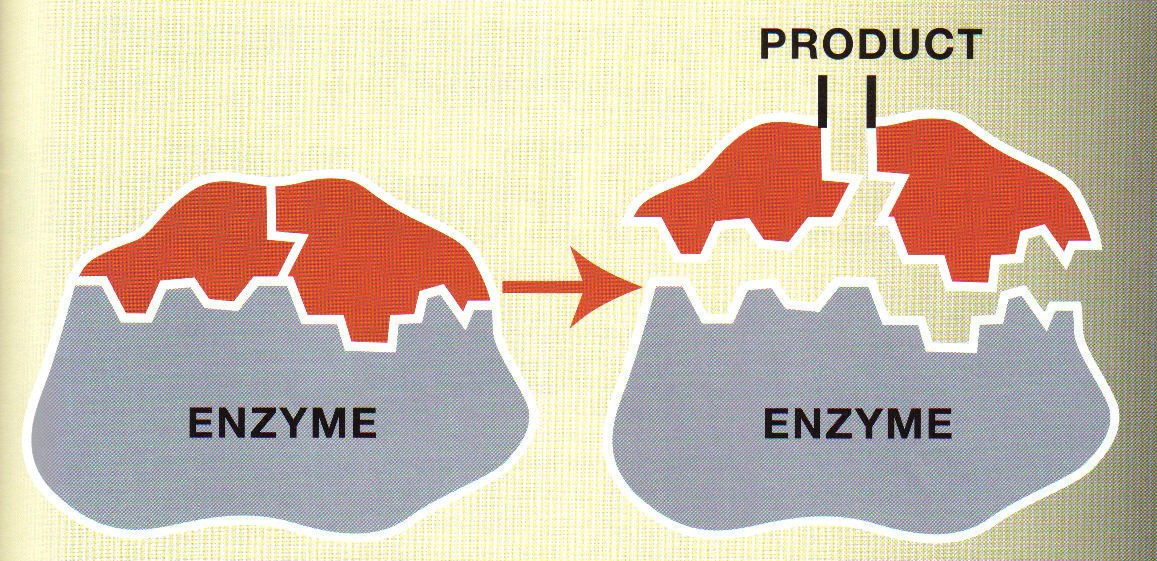
This reaction shows a(n) ____________ reaction
a)
Catabolic
b)
Anabolic
c)
Dehydration Synthesis
d)
Halogenation
98.
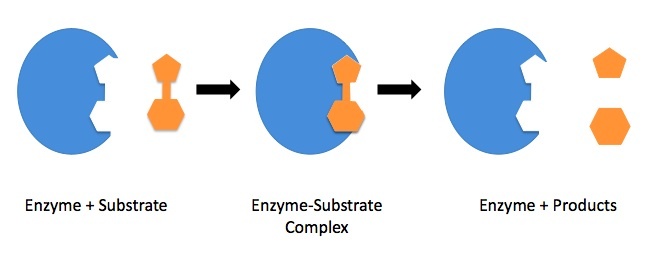
The area that the substrate fits into on the enzyme is called the:
a)
Active Site
b)
Allosteric Site
c)
DiSulphide Bridge
d)
β-Pleated Sheet
99.
The current model of enzyme action is referred to as the:
a)
Induced Fit Model
b)
Lock & Key Model
c)
Singer-Nicolson Model
d)
Davson-Danielli Model
100.
Enzymes catalyze reactions by ___________ Activation Energy.
a)
Increasing
b)
Decreasing
101.
Enzymes speed up reaction rates by changing:
a)
Activation Energy
b)
pH
c)
Hydrogen Bonds
d)
Kinetic Energy
102.
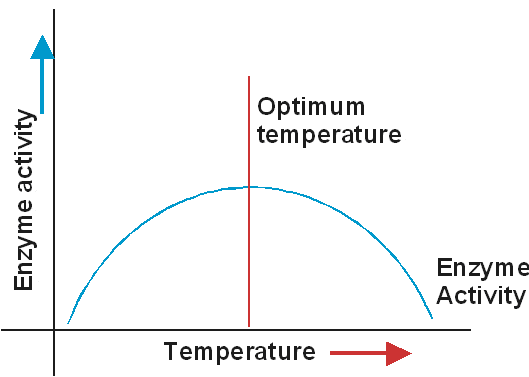
At high temperatures enzyme activity declines because of:
a)
Denaturation
b)
Decreased Kinetic Motion
c)
Increased H-Bonding
d)
Dissociation of Ionic Compounds
103.
At low temperatures enzyme activity declines because of:
a)
Denaturation
b)
Decreased Kinetic Motion
c)
Increased H-Bonding
d)
Dissociation of Ionic Compounds
104.
Most enzymes have the ending:
a)
-ase
b)
-ose
c)
-ic acid
d)
-ate
105.
The molecule an enzyme is working on is called the:
a)
Substrate
b)
Solvent
c)
Allosteric Inhibitor
d)
CoEnzyme
106.
When a molecule can occupy the same active site as the substrate, a situation called __________________ can result
a)
Competitive lnhibition
b)
Allosteric Regulation
c)
Non-Competitive Inhibition
d)
Feedback Inhibition
107.
A receptor site that a molecule can bind to that changes the shape of the active site is called a(n):
a)
Allosteric Site
b)
Active Site
c)
DiSulphide Bridge
d)
MHC Receptor
108.
A molecule binds to an enzyme and opens the active site so it can bind to the substrate. This is called:
a)
Allosteric Activation
b)
Allosteric Inhibition
c)
Competitive Activation
d)
Competitive Inhibition
109.
A molecule binds to an enzyme and decreases the ability of the active site to bind to the substrate. This is called:
a)
Allosteric Activation
b)
Allosteric Inhibition
c)
Competitive Activation
d)
Competitive Inhibition
110.
Molecules that bind to enzymes and enhance an enzyme's ability are called:
a)
CoFactors
b)
CoEnzymes
c)
Allosteric Inhibitors
d)
Allosteric Activators
111.
Organic molecules that temporarily bind to enzymes and enhance an enzyme's ability are called:
a)
CoFactors
b)
CoEnzymes
c)
Allosteric Inhibitors
d)
Allosteric Activators
112.
This type of reaction is a:
a)
Dehydration Synthesis
b)
Neutralization
c)
RedOx Reaction
d)
Phosphorylation
113.
A reaction where electrons are moved around is a:
a)
Neutralization
b)
Hydrolysis
c)
RedOx Reaction
d)
Phosphorylation
114.
An enzyme that changes glucose into fructose would be a(n):
a)
Isomerase
b)
Lyase
c)
Oxidoreductase
d)
Transferase
115.
Which explanation best fits the graph for pH's effect on an enzyme?
a)
As the pH gets closer to neutral more H-Bonds are broken
b)
Larger numbers of H+ & OH- ions distort the active site
c)
There are more collisions between substrates and active sites near the optimal pH
d)
Low pHs cause more H-Bonds to happen near the active site
116.
What enzyme is likely to catalyze this reaction?
a)
Kinase
b)
OxidoReductase
c)
Isomerase
d)
Transferase
117.
Where can DNA be found in the cell?
a)
cytoplasm
b)
nucleus
c)
ribosome
d)
everywhere
118.
Which sugar is contained in DNA
a)
Dextrose
b)
Ribose
c)
Deoxyribose
d)
Glucose
119.
DNA is a polymer made of:
a)
Nucleotides
b)
Ribosomes
c)
Purines
d)
Pyrimidines
120.
The enzyme that unzips the DNA to prepare for replication
a)
helicase
b)
replicase
c)
polymerase
d)
synthase
121.
A sample of DNA is analyzed, the percentage of Adenine is found to be 27% What is the percentage of Guanine?
a)
27%
b)
54%
c)
23%
d)
46%
122.

What is NOT true about the DNA strand?

a)

The two strands are antiparallel.

b)

The backbone consists of sugar.

c)

The two strands are parallel

d)

The backbone consists of sugar & phosphate.

123.

Which enzyme opens the DNA strand?

a)

helicase

b)

DNA polymerase

c)

RNA polymerase

d)

Free nucleotides

124.

Using the Complementary Base Rule for RNA, which of the pairing correct?

a)

Guanine & Cytosine

b)

Adenine & Uracil

c)

Uracil & Cytosine

d)

Thymine & Adenine

125.

During Mitosis, DNA is in the form of...

a)

Chromatin

b)

Chromosome

c)

RNA

d)

nucleus

126.

Transcription occurs in the _____ while Translation occurs in the _____.

a)

nucleus, cytoplasm

b)

cytoplasm, nucleus

c)

nucleus, ER

d)

ER, cytoplasm

127.

Which enzyme is essential in Transcription?

a)

RNA polymerase

b)

DNA polymerase

c)

methyl cap

d)

protein synthetase

128.

Which part of the DNA is used in Transcription?

a)

DNA template

b)

both sides of the DNA

c)

all of the DNA

d)

introns

129.

In Transcription, mRNA is constructed in which direction?

a)

5' tp 3'

b)

3' to 5'

c)

both 5' to 3' and 3' to 5'

d)

same as the DNA is read

130.

What is required to occur before Transcription?

a)

Transcription factor proteins attach at the promoter.

b)

RNA polymerase adds nucleotides.

c)

Transcription initiation complex forms at the promoter.

d)

Methyl cap is added to the front.

131.

Which of the following statements are TRUE?

a)

All cells contain the same DNA and thus all genes.

b)

Specialized cells only contain the genes it requires.

c)

Stem cells contain all genes while specialized cells contain only genes it requires.

d)

Specialized cells may contain all genes but only transcribes those needed for its functions.

132.

Which of the following statement is TRUE?

a)

Pre-mRNA contains introns & exons.

b)

Introns are removed from pre-mRNA before being Translated.

c)

Exons are removed from pre-mRNA before being Translated.

d)

All of the pre-mRNA is Translated.

133.

What is the importance of the codon "AUG"

a)

codes for methionine

b)

it is the "start" message to transcribe

c)

it is the "start" message to translate

d)

it is the "stop" message for translation.

134.

Which statement are TRUE?

a)

tRNA's anticodon & mRNA codons are complementary.

b)

mRNA bring amino acids to add to the protein in the ribosome.

c)

Two tRNAs can fit in the ribosome at a time.

d)

mRNA's anticodon matches the appropriate amino acid

135.

What is the role of exonuclease?

a)

opening the DNA

b)

place nucleotides to create mRNA

c)

takes apart mRNA to individual nucleotides

d)

places amino acids on proteins

136.

In DNA replication

a)

Both sides of the DNA is replicated in the same direction

b)

Each side is replicated 3'-5' direction.

c)

Okazaki fragments are created because one side of the DNA is the opposite to 3'-5'

d)

The resultant copies of DNA will have half a copy of each of the original DNA.

e)

The resultant copies of DNA: one has the original strands and the other copy has new strands

137.

What is required for TRANSLATION to occur?

a)

Exons edited out.

b)

Introns edited out.

c)

Ribosome(s)

d)

tRNA with their respective amino acids

e)

DNA template

138.

Is this DNA or RNA?


AUG AAG CCC GCA UUU UAA

a)

DNA

b)

RNA

139.

How many amino acids are translated from this code?


AUG AAG CCC GCA UUU UAA

a)

4

b)

5

c)

6

d)

7

140.

What is the correct TRANSLATION from the following...


AUG AAG CCC GCA UUU UAA

a)

start - lys - pro - ala - phe - stop

b)

met - lys - ser - ala - stop

c)

lys - pro - ala - stop

d)

asn - pro - phe