
 Worksheets
AP Bio A Final Review
Total questions: 138
Worksheet time: 2hrs 6mins
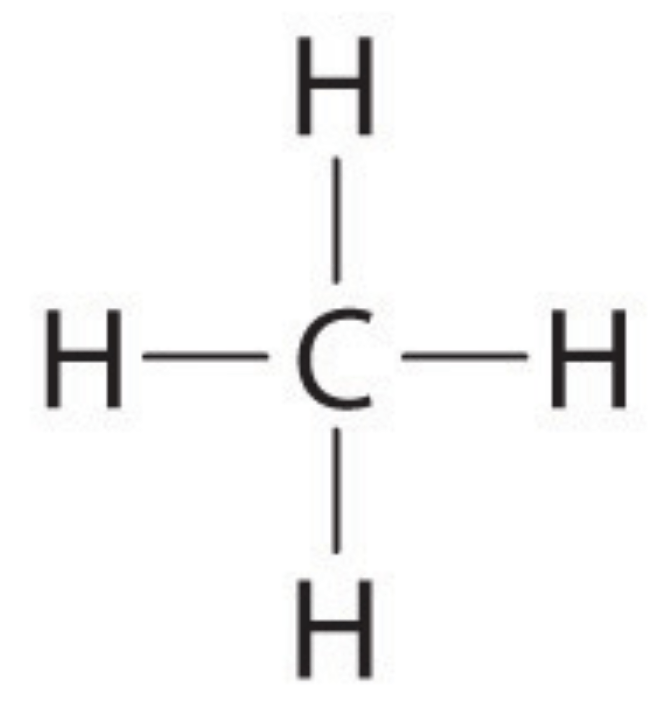
Is this molecule of CH4 polar or nonpolar?
polar
nonpolar
Electronegativity is a measurement of the ability of an atom to:
attract electrons
repel electrons
attract protons
attract other atoms
2H2 + O2 ----> 2H2O
What is the product?
------>
2H2O
2H2+ O2
Polar molecules have...
no charges.
slight positive and negative charges on opposite ends of the molecules.
only positive charges.
either positive or negative charges, but not both.

What are the products of the chemical reaction pictured?
CH4 and CO2
CH4 and O2
CO2 and H2O
O2 and H2O
Consider the chemical equation CH4 + 2 O2 → CO2 + 2 H2O. In this equation, CH4 is a ...
product
reactant
displacement


Describe the difference between rough ER and smooth ER.
Rough ER compartmentalizes cell; Smooth ER functions in detox and lipid synthesis
Rough ER functions in ribosome synthesis; Smooth ER functions in lipid synthesis
Rough ER functions in detox and lipid synthesis; Smooth ER compartmentalizes cell
Rough ER functions in lipid synthesis; Smooth ER functions in ribosome synthesis
Which organelle is a membrane-bound structure that functions in correct folding/chemical modification of proteins?
Golgi complex
Lysosome
Mitochondria
Chloroplast
Which is membrane-enclosed sacs that contain hydrolytic enzymes?
Golgi complex
Lysosome
Mitochondria
Chloroplast
Which is responsible for storage and release of macromolecules and cellular waster products. In plants, aids in turgor.
Endoplasmic Reticulum
Lysosome
Mitochondria
Vacuoles
Describe the relationship between cell size and SA:V ratios.
As cells increase in size, the SA:V ratio increases
As cells decrease in size, the SA:V ratio decreases
As cells increase in size, the SA:V ratio decreases
Cell size has no effect on the SA:V ratio
Describe the characteristics of a membrane-bound protein.
Entire protein is hydrophilic
Entire protein is hydrophobic
Hydrophilic R group exterior cell & hydrophobic R group interior membrane
Hydrophilic R group interior membrane & hydrophobic R group interior cell
Identify which of the following will bind to a membrane protein (and will not enter the cell).
Water
Protein Hormone
Steroid Hormone
Charged Ion
Which of the following requires an input of energy for membrane transport?
Charged ion moving against concentration gradient
Water moving into a hypertonic cell
Charged ion moving with concentration gradient
Water moving out of a hypotonic cell
What is the difference between endocytosis and exocytosis?
Endocytosis involves cytoplasm of a neighboring cell entering
Endocytosis involves phagocytosis or pinocytosis to bring materials in cell
Exocytosis involves cytoplasm of a neighboring cell exiting
Exocytosis involves phagocytosis or pinocytosis to remove material from cell
Which of the following correctly describe the movement of water?
Cell with 0.5M concentration will gain water from the 1.0M exterior solution
Cell with 0.5M concentration will gain water from the 0.5M exterior solution
Cell with 1.0M concentration will gain water from the 0.5M exterior solution
Cell with 0.5M concentration will lose water to the 0.5M exterior solution
Why is a eukaryotic cell able to be larger than a prokaryotic cell?
Membrane-bound organelles compartmentalize intracellular processes
Prokaryotic cells have a nucleus which decreases the volume of the cell
Eukaryotic cells have a nucleus which decreases the volume of the cell
Absence of membrane-bound organelles allows for enzymatic reactions.


If a cells Ψp = 3 bars and its Ψs = -4.5 bars, what is the resulting Ψ ?
-7.5
7.5
-1.5
1.5
The human body maintains a temperature of around 98.6 degrees at all times. Enzymes are involved in almost every chemical reaction in the body. Which of the following describes the connection between these two statements?
The body is kept relatively warm to prevent too much enzyme action.
The body needs to be warm to prevent hypothermia.
Enzymes function best at a specific temperature.
There is no connection between the two statements.

The active site of an enzyme can:
bind allosteric regulators.
bind competitive inhibitors.
bind non-competitive inhibitors.
change the Gibbs Free Energy of the reaction.


Which of the following is NOT a stage of the cell cycle?
interphase
cytokinesis
mitosis
apoptosis
Which of the following is the stage where the cell no longer divides?
G0
G1
G2
S
Which of the following describes the order of the steps in mitosis?
metaphase, telophase, anaphase, prophase
prophase, metaphase, anaphase, telophase
telophase, anaphase, metaphase, prophase
prophase, anaphase, metaphase, telophase
Which of the following is NOT a role of mitosis?
gametes
tissue repair
growth
asexual reproduction
Which checkpoint is responsible for ensuring nondisjunction does not take place?
G1 checkpoint
S checkpoint
G2 checkpoint
M checkpoint
Describe the interaction between cyclin and CdK.
cyclin interacts with CdK to initiate the mitotic phase
cyclin is the precursor to CdK, when synthesized allow for mitosis proceed
cyclin acts as an inhibitor to CdK to wait for all DNA to be synthesized
cyclin binds to CdK to initiate DNA replication
Mitosis results in...
2 identical diploid cells
4 unique diploid cells
2 unique haploid cells
4 identical haploid cells
An RNA strand has the following sequence of nucleotides: uracil, adenine, guanine, cytosine, cytosine. What is the nucleotide sequence in the DNA that was transcribed?
adenine, thymine, thymine, cytosine, guanine, guanine
adenine, thymine, thymine, uracil, guanine, guanine
guanine, adenine, cytosine, thymine, guanine, guanine
What do we call the region that joins two sister chromatids?
centriole
chromatin
centromere
chromosome
What do we call the region that joins two sister chromatids?
centriole
chromatin
centromere
chromosome
In which phase of mitosis are the chromosomes separated from their duplicates?
Anaphase
Telophase
Metaphase
Prophase
Which is the cellular basis for sexual reproduction?
Meiosis
Mitosis
What is a diploid cell?
A cell that has only one representative of each chromosome pair.
The number or homologous pairs in a cell.
A cell with chromosomes that come in homologous pairs.
The figure produced when the chromosomes of a species during metaphase are arranged according to their homologous pairs.
A cellular reproduction process results in two diploid cells. Is this mitosis or meiosis?
Mitosis
Meiosis
Cellular reproduction that only requires one parent cell and produces an identical offspring is ____________.
sexual reproduction
asexual reproduction
gametes
chromosomes
____________________________requires two parents and results in offspring that share traits of both parents DNA.
sexual reproduction
asexual reproduction
diploid
chromosomes
During which phase of mitosis do the sister chromatids line up down the middle of the cell?
prophase
metaphase
anaphase
telophase
Once the cell has undergone cell division and has completely separated, it is known as which of the following?
interphase
prophase
telophase
cytokinesis
Which of the following are a form of asexual reproduction?
budding
binary fission
regeneration
all of the above

Which phase of mitosis is depicted below?
interphase
prophase
metaphase
anaphase
This process involves homologous chromatids exchanging genetic material to increase genetic diversity.
crossing over
random fertilization
independent assortment
gene flow
What phase of meiosis describes the law of segregation?
telophase I
anaphase I
telophase II
anaphase II
Describe the process of nondisjunction.
Homologous chromosomes exchange genetic information
The alignment of the chromosomes on the metaphase plate
Homologous chromosomes or sister chromatids remain attached during anaphase
The process of sperm and egg fusing to create a zygote
Meiosis results in _____________ because there is/are _______________.
2 identical haploid cells, 1 round of division
4 identical diploid cells, 2 rounds of division
4 unique haploid cells, 2 rounds of division
2 unique diploid cells, 1 round of division
Gel electrophoresis
The method of copying strands of DNA
The method for cutting strands of DNA
The method for separating strands of DNA
A 2021bp plasmid is cut at the 5th base, the 1000th base, and the 1540th base. How many pieces are there and what's the longest piece?
3, 995bp
4, 540bp
3, 486bp
none of these
What is the enzyme responsible for DNA replication?
DNA polymerase
RNA polymerase
ribosome
nucleolus
CAT TCA CTG
What is transcription?
A molecule that contains the genetic code for organisms.
The RNA → Protein part of the central dogma
The DNA → RNA part of the central dogma of molecular biology
The process in which cells make proteins
What is translation?
The RNA → Protein part of the central dogma
The DNA → RNA part of the central dogma of molecular biology
The process in which cells make proteins
A molecule that contains the genetic code of organisms.
What is a mutation?
change the chromosome structure
Anything in the environment that can cause a mutation
A change in the sequence of bases in DNA or RNA
3'-ATATTTAGGCGTGTAAT-5'
Is sequence of non-coding strand, What would be the sequence of mRNA ?
5'-AUAUUUAGGCUGUAAU-3'
3'-AUAUUUAGGCUGUAAU-5'
5'-UAUAAAUCCGACAUUA-3'
None of the above
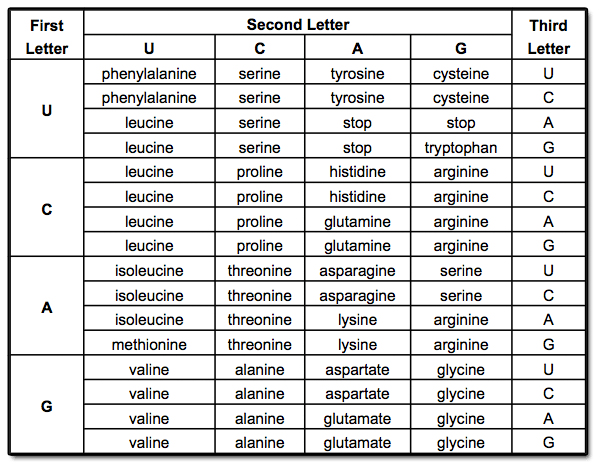
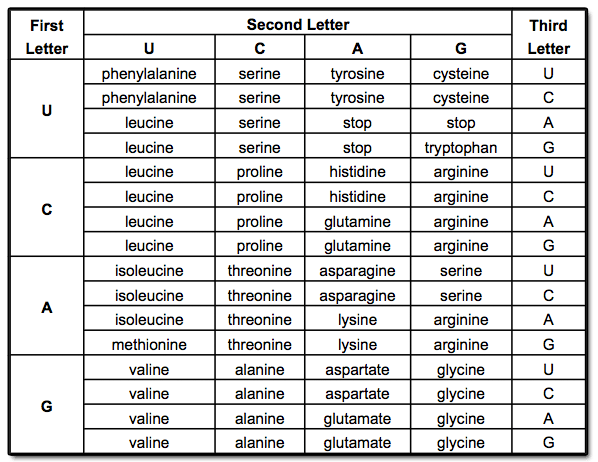
ATG GGA ACT CCA

TRANSLATION:
This is
tRNA
mRNA
DNA
a ribosome
Meiosis results in _____________ because there is/are _______________.
2 identical haploid cells, 1 round of division
4 identical diploid cells, 2 rounds of division
4 unique haploid cells, 2 rounds of division
2 unique diploid cells, 1 round of division
Which of the following does NOT increase variation in gamete formation?
crossing over
fertilization of gametes
random assortment of chromosomes
condensation of chromatin

Which of the following best describes the inheritance pattern of the shown pedigree?
Autosomal Dominant
Sex-Linked Dominant
Autosomal Recessive
Sex-Linked Recessive
In animals, traits determine by the mitochondrial DNA are inherited from the _______________.
mother
brother
father
sister

Identify the type of inheritance of the pedigree.
Sex-Linked
Mitochondrial
Autosomal
Random
Which of the following is the predicted ratio of a testcross with a dihybrid?
9:3:3:1
9:6:1
1:2:1
1:1:1:1
Describe why a male is more likely to be affected by a sex-linked trait?
Males have only 1 Y chromosome
Females have only 1 Y chromosome
Males have only 1 X chromosome
Females have only 1 X chromosomes

The different forms of a gene
alleles
atoms
proteins
wheels

B = brown fur b = white fur
In the Punnett square, what is the probability for white fur?
0%
25%
50%
75%

If a particular pedigree follows a sex-linked recessive trait, you would expect to see
more affected females
all carrier males
more affected males
an equal number of affected males and females

Which genotype represents a male with hemophilia?


(hint: check your notes - "modes of inheritance")

What is the inheritance pattern of this trait?
sex-linked recessive
autosomal dominant
autosomal recessive
Y-linked dominant

parent 2: ggBb
Find the gametes for parent 1.
Which of the following describes when an organism shows both traits equally at the same time, no blending? Example: AB blood type or Roan horse
Complete Dominance
Incomplete Dominance
Co-Dominance
Sex-Linked
What is the phenotypic ratio of a dihybrid cross of 2 heterozygous individuals?
10:4:2
16:0
9:3:3:1
5:9:2


What is the genotype ratio for the following cross?
Nn X NN


