
 Worksheets
2nd 9 Weeks DCA REVIEW
Total questions: 70
Worksheet time: 53mins
Name
Class
Date
1.
____ comes before Winter in the Southern hemisphere.
a)
summer
b)
spring
c)
fall
2.
The next season in the Northern hemisphere after spring is ____.
a)
fall
b)
summer
c)
winter
3.
Object spinning on its axis.
a)
revolution
b)
rotation
4.
Object orbiting another object.
a)
revolution
b)
rotation
5.
Longest day of the year
a)
Autumnal Equinox
b)
Summer Solstice
c)
Winter Solstice
d)
Vernal Equinox
6.
Shortest day of the year
a)
Autumnal Equinox
b)
Summer Solstice
c)
Winter Solstice
d)
Vernal Equinox
7.
23.5 degrees
a)
axis
b)
day
c)
tilt
d)
rotation
8.

What are the reasons for the season?
a)
Earth's tilt & rotation
b)
Earth's tilt & revolution
c)
Earth's rotation & rovolution
d)
Earth's tilt & resolution
9.

The hemisphere where you live
a)
equator
b)
southern
c)
northern
d)
eastern
10.

Which season(s) have the same amount of daylight hours as nighttime hours?
a)
More hour of light during spring, less in fall
b)
More hours of light during summer, less in winter
c)
None of the seasons have equal daylight hours
d)
All are equal
11.
What causes there to be longer number of hours of light during the summer
a)
Earth tilt's away from the sun in summer
b)
Earth's revolves slower in summer
c)
Earth tilts toward the sun in summer
d)
Earth is closer to the sun
12.

In winter, the axis of the earth is pointed away or toward the sun?
a)
towards
b)
up
c)
down
d)
away
13.

Why is it warmer in the summer?
a)
Closer to the sun
b)
More direct light from Earth's tilt
c)
Stronger light from the sun
d)
Earth spins slower
14.

Which season is taking place in the Southern Hemisphere in Position 1?
a)
Winter
b)
Spring
c)
Summer
d)
Fall
15.

Which season is taking place in the Northern Hemisphere in Position 1?
a)
Winter
b)
Spring
c)
Summer
d)
Fall
16.

Which season is taking place in the Northern Hemisphere in Position 4?
a)
Winter
b)
Spring
c)
Summer
d)
Fall
17.

Which body has the greater effect on Earth's tides?
a)
Sun
b)
Saturn
c)
Moon
d)
Venus
18.

Wha type of tide would this arrangement of earth-moon-sun create?
a)
full moon tide
b)
new moon tide
c)
neap tide
d)
spring tide
19.

What type of tides would this arrangement of earth-moon-sun create?
a)
neap tide
b)
spring tide
c)
new moon tide
d)
full moon tide
20.
What causes tides?
a)
gravity
b)
wind
c)
spring
d)
neap
21.
What do we call the small tides that happen when the sun and moon are at right angles to each other?
a)
Neap Tide
b)
Spring Tide
c)
Larger Change
d)
Smaller Change
22.
The Moon has a greater influence on Earth tides than the Sun because...
a)
it is smaller than the Sun
b)
it revolves around the Earth
c)
it is closer to the Earth
23.

What is a difference between spring and neap tides?
a)
Spring tides occur when the earth and sun are IN LINE with the new or full moon.
b)
Spring tides occur when moon in 3rd or 1st quarter phases
c)
Spring tides are LOWER than neap tides
d)
Spring tides occur in Spring and neap tides can occur in any season
24.
A neap tide is a tide with the greatest difference between low and high tides
a)
true
b)
false
25.
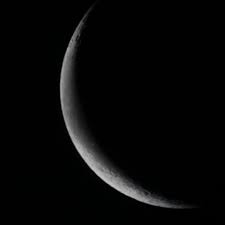
Name the moon phase
a)
waning crescent
b)
waxing crescent
c)
waning gibbous
d)
waxing gibbous
26.
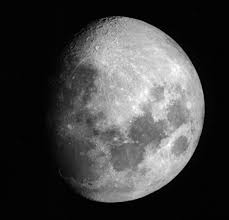
Name the moon phase
a)
waning crescent
b)
waxing crescent
c)
waning gibbous
d)
waxing gibbous
27.
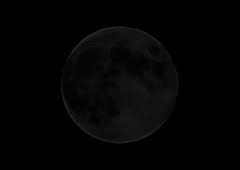
Name the moon phase
a)
First Quarter
b)
Last Quarter
c)
New Moon
d)
Full Moon
28.

Name the phase of the moon for letter a
a)
First Quarter
b)
Last Quarter
c)
Waxing Gibbous
d)
Waning Gibbous
29.
What is illuminating the Moon?
a)
Nuclear Fusion
b)
Sunlight
c)
Mirrors
d)
Flood Lights
30.

Name the phase of the moon for letter f
a)
Waning Gibbous
b)
Waxing Gibbous
c)
Waning Crescent
d)
Waxing Crescent
31.
Which moon phase is when you can't see the moon at all?
a)
Waning crescent
b)
Full moon
c)
Waxing gibbous
d)
New moon
32.
The cycle of the moon lasts about a _.
a)
day
b)
year
c)
week
d)
month
33.
Define Gibbous
a)
Less than half of moon visible
b)
More than half of moon visible
c)
All of moon visible
d)
None of moon visible
34.

Name the moon phase that would come AFTER this moon.
a)
waning crescent
b)
waxing crescent
c)
waning gibbous
d)
waxing gibbous
35.
The 1st Quarter moon is lit on the:
a)
Left Side
b)
Right Side
36.
Which of the following words describe the phases of the moon?
a)
none, quarter, half, three quarters, full
b)
new, crescent, quarter, gibbous, full
c)
dark, light, half, quarter, blue
d)
first quarter, second quarter, third quarter, fourth quarter
37.

If we are experiencing a new moon on March 6 what will the moon look like on 15?
a)
b)
c)
d)
38.

Which moon phases are "crescents"?
a)
1 and 5
b)
2 and 8
c)
4 and 6
d)
3 and 7
39.

What comes directly after this moon phase?
a)
First Quarter
b)
waning gibbious
c)
New Moon
d)
Full Moon
40.

What moon phase came right BEFORE this one?
a)
First Quarter
b)
Last Quarter
c)
New Moon
d)
Full Moon
41.

Which lunar phase is occurring at U?
a)
Waning gibbous
b)
Waxing gibbous
c)
1st quater
d)
3rd quarter
42.

Which lunar phase will complete the pattern?
a)
Last quarter
b)
New moon
c)
Full moon
d)
Waxing gibbous
43.
How much time passes between Position "a" and Position "g"
a)
One Day
b)
One Week
c)
Two Weeks
d)
One Month
44.
If there was a New Moon on December 30, approximately when would we have our next Full moon?
a)
January 14
b)
January 6
c)
January 30
d)
February 30
45.

Which moon phase is shown in this diagram?
a)
new moon
b)
first quarter
c)
full moon
d)
last quarter/3rd quarter
46.

Which lunar phase is visible when the moon is in this position?
a)
New moon
b)
Full moon
47.
Space and all the matter and energy in it.
a)
Space
b)
Solar System
c)
Universe
d)
Sun
48.
The sun and all of the planets and other bodies that travel around it.
a)
Universe
b)
Galaxy
c)
Star
d)
Solar System
49.
The actual brightness of an object such as a star
a)
Luminosity
b)
Apparent Magnitude
c)
Brightness
d)
Light Year
50.
The distance that light travels in one year; about 9.46 trillion kilometers.
a)
Light Year
b)
Light Kilometer
c)
Light Second
d)
Warp Speed
51.
A gigantic explosion in which a massive star collapses and throws its outer layers into space.
a)
Black Hole
b)
Supernova
c)
Neutron Star
d)
Nebula
52.
A small, hot, dim star that is the leftover center of an old sunlike star
a)
Red Dwarf
b)
White Dwarf
c)
Main Sequence
d)
Giant
53.
The most commonly accepted theory that explains the beginning of our known universe is the -
a)
Theory of Evolution
b)
Big Bang Theory
c)
Cell Theory
d)
Blackhole theory
54.

In the diagram given, what happens as we move to the left?
a)
Stars get larger
b)
Stars get colder
c)
Stars get hotter
d)
Stars get smaller
55.
________ holds all of the planets in orbit around the sun.
a)
Gravity
b)
String
c)
Bill Nye
d)
Duct tape
56.
Since the Big Bang, and even today, the universe is still _____.
a)
Expanding
b)
Shrinking
c)
Cooking
d)
Spinning
57.
Light emitted from a star or galaxy can be separated into a band of colors, called a ________.
a)
Red Shift
b)
Wave Length
c)
Spectrum
d)
Microwave
58.
A wave with a large wavelength will have a ______ frequency and _____ energy
a)
high, low
b)
high, high
c)
low, high
d)
low, low
59.
Which section of the spectrum is the ONLY one we can see?
a)
X-rays
b)
Visible Light
c)
Gamma Rays
d)
Ultraviolet Rays
60.

Hertzsprung-Russell Diagram shows the correct order of decreasing surface temp for stars is?
a)
Red, Yellow, White, Blue
b)
Red, Yellow, Red, Yellow
c)
Blue, White, Yellow, Red
d)
Blue, Red, White, Yellow
61.

Which stars have the highest surface temperature?
a)
Yellow
b)
Red
c)
Blue
d)
Orange
62.
Our Sun is a ______________ star.
a)
Blue
b)
Main Sequence
c)
Yellow
d)
Orange
63.

Betelgeuse is classified as a ____________ star.
a)
Supergiant
b)
Giant
c)
White Dwarf
d)
Main Sequence
64.

Which type of stars belong in spectral class K and have the lowest luminosity?
a)
White Dwarf
b)
Giants
c)
Main Sequence
d)
Supergiants
65.
Which type of galaxy has the highest percentage of old stars?
a)
Elliptical
b)
Irregular
c)
Spiral
d)
Hollywood
66.
What does the rotation of the earth cause us to experience?
a)
seasons
b)
year
c)
day & night
d)
eclipse
67.
How long does it take the earth to revolve once around the sun?
a)
12 hours
b)
24 hours
c)
30 days
d)
365.25 days
68.

What season is letter A in the northern hemisphere?
a)
Winter
b)
Summer
c)
Spring
d)
Fall
69.

What happens when the area in which you live tilts away from the sun?
a)
It is summer.
b)
It is spring.
c)
It is winter.
d)
It is fall.
70.
When the Northern Hemisphere learns toward the sun, daylight is -
a)
shorter
b)
longer
c)
equal
100 %

