
 Worksheets
FALL Biology Final Exam Review
Total questions: 105
Worksheet time: 2hrs 34mins
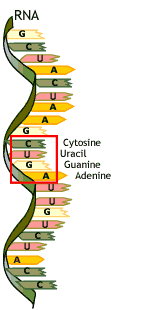
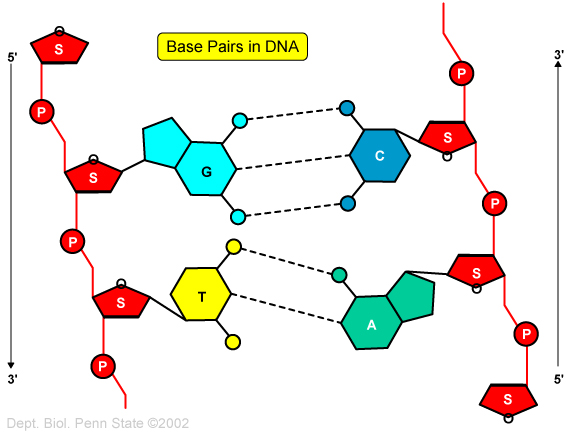
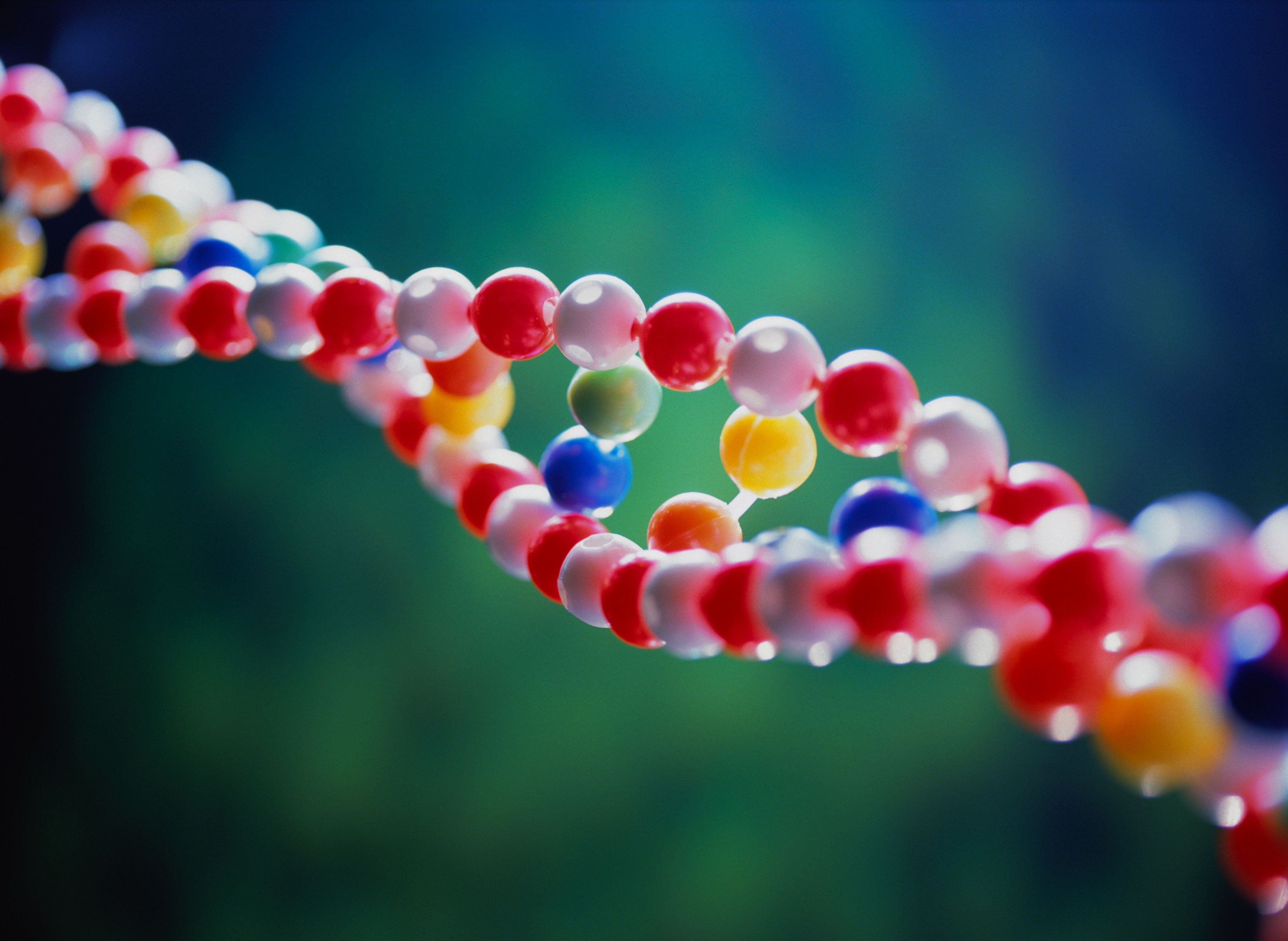
Which of the following are differences in the structure between RNA and DNA
DNA uses deoxyribose sugar, RNA uses sugar ribose
DNA pairs Adenine with Uracil, RNA pairs Adenine with Thymine
DNA is a double helix, RNA is a single helix
DNA pairs Adenine with Thymine, RNA pairs Adenine with Uracil
Which organelle is the location where protein is made?
Ribosome
Nucleus
Cytoplasm
Nucleotide
Insertion, deletion, and substitution are all examples of a change in a genetic sequence which is also referred to as (a)
Gene
Amino Acid
Ribose
Mutation
During transcription, this type of ribonucleic acid is responsible for copying the DNA and brining it out of the nucleus.
tRNA
mRNA
rRNA
dRNA
When these bond together, they form a protein
Amino Acids
Peptide Bonds
Ribose
Nucleotides
A string of nucleotides that contain the information to make a specific protein
Ribose
Amino Acids
tRNA
Gene
During translation, this type of ribonucleic acid is responsible for delivering amino acids to help make a protein.
mRNA
rRNA
tRNA
dRNA
mRNA occurs during this process
Translation
Transcription
Replication
Delivery
Which of the following is the complementary mRNA sequence to this DNA strand: AACTGAA
UUGACUU
TTGACTT
AACTGAA
AACUGAA
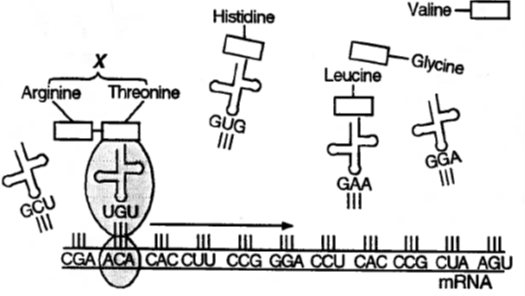
What is the location in the cell for translation?
nucleus
mitochondria in cytoplasm
ribosome in cytoplasm
chloroplast in cytoplasm

What process is happening in the diagram?
transcription
translation
dna replication
mitosis
T-G-A-C-C-A
T-G-A-G-C-A
ATG CCA AAT
Genetic mutations can be...
beneficial, harmful, or neutral
beneficial only
harmful only
neutral only

What type of mutation is shown in the diagram?
Point mutation - missense
Frameshift Mutation - deletion
Frameshift Mutation - addition
Point mutation - nonsense

Which organelle is responsible making food (Glucose) using sunlight?
Ribosomes
Nucleus
Chloroplast
Mitochondria


The movement of atoms, ions, or molecules (NOT WATER) from an area of high concentration to an area of low concentration.
osmosis
active transport
diffusion
hypertonic


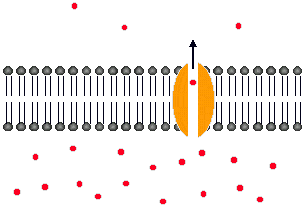
Need help from channel proteins. No energy required.
Viruses have structures that allow them to inject their genetic material directly into the DNA of the host cell. This strategy benefits the virus in that –
the host cell is turned into a virus.
mutations are introduced into the host cell.
it is able to transform into a host cell.
the virus uses the host’s machinery to replicate.

Which organism is pictured?
bacteria
plant cell
virus
animal cell
An infectious particle made of a strand of nucleic acid surrounded by protein coat is a
prion
bacteria
virus
viroid
Both viruses and cells
both reproduce by mitosis.
both have DNA.
both contain organelles.
both need a host cell to reproduce.
When HIV causes a lysogenic infection, it can remain dormant for years. When it becomes a lytic infection, it
causes no symptons.
destroys white blood cells.
mutates infrequently.
can no longer cause AIDS
Severe acute respiratory syndrome (SARS) is an illness caused by a coronavirus. Symptoms include a high fever, headaches, and body aches typically occur two to seven days after infection by the virus. SARS is more serious in elderly patients. This information suggests that the reproductive cycle of the SARS virus is-
lysogenic, because the virus is a coronavirus
lytic, because the virus causes respiratory illness
lysogenic, because the virus primarily affects older people
lytic, because of the quick onset of symptoms after infection
A) cell, organ, tissue, organ system, organism
B) cell, organism, organ system, organ, tissue
C) cell, tissue, organ, organ system, organism
D) tissue, cell, organism, organ, organ system


takes over the cell's functions.
Which cell is a prokaryote


Which cell is a virus?


The function of the nucleic acid is --
to store and transmit genetic information inherited from your parents
to maintain our body temperature
to build up muscles bones and other body parts
to regulate sugar in your blood and give your cells energy
Which of the following are biomolecules?
RNA, DNA, proteins, lipids
Proteins, lipids, carbohydrates, polymers
Nucleic acid, lipids, carbohydrates, monomers
Proteins, lipids, carbohydrates, nucleic acids

What are lipids?
Polymers made of amino acids
Monomers that store and transfer genetic information
Fatty acids not generally soluble in water
Complex carbohydrates like starch

Which of the following is a characteristic of protein?
Made up of amino acids and regulate cellular processes
Fats, oils, and waxes
Complex carbohydrates known as starches
DNA and RNA

Which biomolecule makes up cell membranes?
Protein
Carbohydrate
Lipid
Nucleic acid
Which biomolecule is helpful for long term energy storage?
Nucleic acid
Protein
Carbohydrate
Lipid

Which biomolecule is useful for a fast source of energy?
Lipid
Nucleic acid
Protein
Carbohydrate
What is the monomer for proteins?
Amino acid
Nucleotide
Fatty acid
Monosaccharide
Which monomer makes up nucleic acids?
Amino acid
Nucleotide
Fatty acid
Monosaccharide
What is the monomer for carbohydrates?
Amino acid
Nucleotide
Fatty acid
Monosaccharide


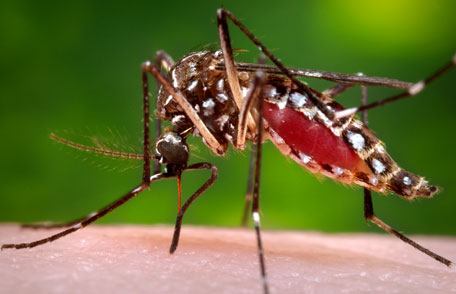
This is an example of which type of symbiosis?

This is an example of which type of symbiosis?

This is an example of which type of symbiosis?

This is an example of which type of symbiosis?
*Hermit crabs find shells left by snails that have died and move in.
* Snails die and leave behind their shells.
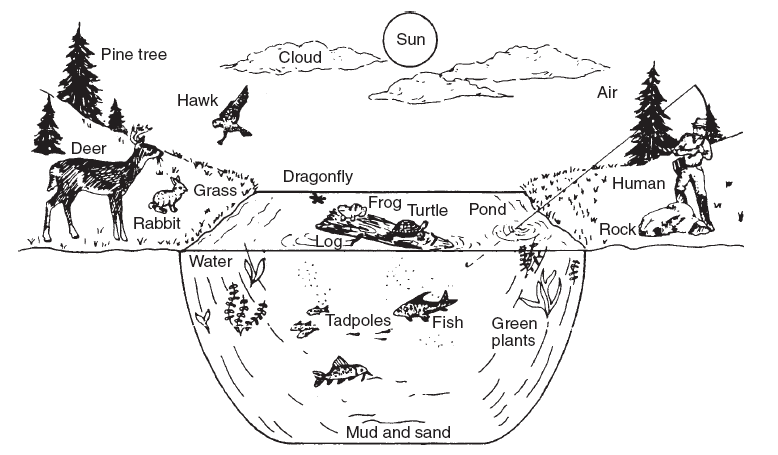
What is the primary source of energy for the ecosystem pictured above?
Grass and Green plants
Hawks and Deer
Tadpoles and Fish
Sun

Observe the food chain below. What would be the result of disease killing off most of the mouse population?
All populations would be relatively unaffected
The grasshoppers would become extinct
The grasshopper population would decrease; the owl population would increase
The grasshopper population would increase and the owl population would decrease

