wayground logo

Free Printable Worksheets

Font size

S
M
L
XL
Worksheets

Biology Part 2 Midterm Review

Total questions: 100

Worksheet time: 2hrs 6mins

Name
Class
Date
1.
Which of the following contains the genetic code for protein synthesis?
a)
carbohydrate
b)
lipid
c)
protein
d)
nucleic acid
2.
What type of macromolecule is being represented in this image? 
a)
carbohydrate
b)
lipid
c)
protein
d)
nucleic acid
3.
What are the building blocks of proteins?
a)
amino acid
b)
fatty acid
c)
nucleotide
d)
lipid
4.
What are the single sugars that are the building blocks of carbohydrates?
a)
monosaccharides
b)
disaccharides
c)
polysaccharides
d)
amino acid
5.
The element _______is found in all of the organic compounds.
a)
Iron
b)
Nitrogen
c)
Carbon
d)
Oxygen
6.
Proteins are made of monomers called ___________
a)
Nucleotides
b)
Monosaccharides
c)
Amino Acids
d)
Glycerol and fatty acids
7.
DNA and RNA are examples of 
a)
Carbohydrates
b)
Lipids
c)
Proteins
d)
Nucleic Acids
8.
Nucleotides are monomers of
a)
Carbohydrates
b)
Lipids
c)
Proteins
d)
Nucleic Acids
9.
Waxes, oils and fats are examples of
a)
Carbohydrates
b)
Lipids
c)
Proteins
d)
Nucleic Acids
10.

Which macromolecule is shown?

a)

lipid

b)

protein

c)

nucleic acid

d)

carbohydrate

11.
What type of macromolecule are enzymes?
a)
Protein
b)
Carbohydrate
c)
Lipid
d)
Nucleic Acid
12.
Carbohydrates are made of... 
a)
C H O
b)
C H O N
c)
C H O N P
d)
C H O N S
13.
Proteins are made of... 
a)
C H O
b)
C H O N
c)
C H O N P
d)
C H O N S
14.
Which macromolecule stores energy, insulates us, and makes up the cell membrane?
a)
lipids
b)
proteins
c)
carbohydrates
d)
nucleic acids
15.
Is found in the cell membrane as a bilayer. 
a)
lipids
b)
protein
c)
nucleic acid
d)
carbohydrate
16.
What is the primary function of carbohydrates in your body?
a)
Speed up chemical reactions.
b)
Give immediate energy.
c)
Help to store energy.
d)
Build cell walls in plants.
17.
Where does the energy from our food originally come from?
a)
the Sun
b)
chemical reactions
c)
carbohydrates
d)
mitochondria
18.
The picture indicates which macromolecule? 
a)
Carbohydrates
b)
Lipids
c)
Proteins
d)
Nucleic Acids 
19.
The picture indicates which macromolecule 
a)
Carbohydrates
b)
Lipids
c)
Proteins
d)
Nucleic Acid
20.
Made up of several cells
a)
Single Cellular
b)
Multi-Cellular
c)
Chloroplast
d)
Nucleus
21.
The site of photosynthesis
a)
ribosome
b)
mitochondria
c)
chloroplast
d)
nucleus
22.
Which organelle is only found in a plant cell? 
a)
nucleus
b)
chloroplast
c)
mitochondria
d)
cell membrane
23.
Which part of the cell is often called "the brain of the cell"?
a)
nuclear membrane
b)
endoplasmic reticulum
c)
nucleus
d)
mitochondria
24.
What is found in both plant and animal cells but is much larger in plant cells?
a)
Nucleus
b)
Mitochondria
c)
Chloroplast
d)
Vacuole
25.
A rigid layer that lies outside the cell's  membrane is...
a)
Cytoskeleton
b)
Cilia
c)
Cell Wall
d)
Flagella
26.
What is the gel-like substance inside of cells called?

a)
photoplasm
b)
photosynthesis
c)
cytoskeleton
d)
cytoplasm
27.
This sac with the cytoplasm stores water, food, waste, products and other materials.
a)
vacoule
b)
organelle
c)
cytoplasm
d)
cell membrane
28.
What is the function of a cell wall?
a)
to protect and support the cell
b)
to perform different functions in each cell
c)
to prevent water from passing through it
d)
to prevent oxygen from entering the cell
29.
A structure inside a cell that does a certain job is called an ___________________.
a)
cell
b)
organelle
c)
object 
d)
part
30.
All living things are made up of...
a)
cells
b)
cell tissues
c)
organ
d)
organ systems
31.

What is a cell membrane?

a)

a thin wall surrounding a cell

b)

the liquid substance of a cell

c)

part of a cell that converts food into energy

32.

What is mitochondria?

a)

the brain of cell

b)

the liquid susbtance of a cell

c)

part that converts food into energy

33.

What is an multicellular organism?

a)

It has an organism with one cell.

b)

It has more than one cell

c)

It does't have cell

34.

Bacteria is...

a)

a multicellular organism

b)

a nonliving thing

c)

a unicellular organism

35.

Example of unicellular organism

a)

Amoeba, bacteria

b)

cat, dog and fish

c)

sand, salt and pepper

36.

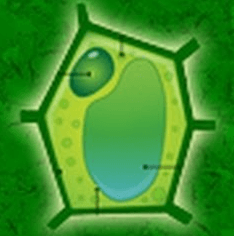
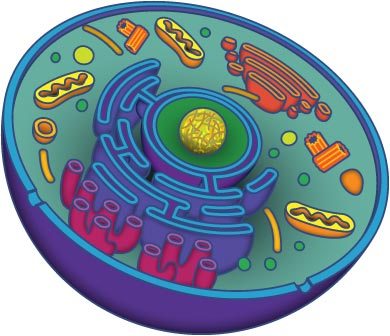
What part of the cell is this one?

a)

Vacuole

b)

Nucleus

c)

Chloroplast

d)

Mitochondria

37.

Which organelle produces energy?

a)

Chloroplast

b)

Mitochondria

c)

Nucleus

d)

Ribosomes

38.

Which organelle contains DNA and controls the cell?

a)

Endoplasmic Reticulum

b)

Golgi Apparatus

c)

Nucleus

d)

Vesicles

39.

Which organelle gets rid of worn-out cell parts?

a)

Lysosomes

b)

Vesicles

c)

Cell Membrane

d)

Nucleus

40.

The nucleus is only found in the animal cell

a)

True

b)

False

41.

The cell wall is found only in plant cells

a)

True

b)

False

42.

What do vacuoles do?

a)

store water, food, and waste

b)

create energy

c)

nothing

d)

give the cell its shape

43.
A ________________________ is a tool used to predict the possible genotype from certain parents
a)
Mendel Grid
b)
Genetic Tic Tac Toe
c)
Punnett Square
d)
Pedigree Plot
44.
The dominant trait is
a)
yellow pea seeds
b)
green pea seeds
c)
there is no dominant seed
d)
Jolly green giant
45.
What are the possible genotypes for this cross?
a)
TT = 25% Tt= 50% tt=25%
b)
all tall
c)
TT= 75% tt = 25%
d)
Tt = 100%
46.
Two brown eyed parents which are  both heterozygous(Bb) have a baby. What is the possibility of the baby being blue eyed?
a)
0 %
b)
25%
c)
50%
d)
75%
47.
In a heterozygous genotype, the ___________ allele takes over in the phenotype.
a)
recessive
b)
dominant
c)
lower case letter
d)
both 
48.
HH crossed with Hh. What is the probability of hh?
a)
0%
b)
25%
c)
50%
d)
100%
49.
Heredity is the passing of traits from _____________________ to _____________________
a)
predators to prey
b)
water to rain
c)
parents to offspring
d)
fungi to protists
50.
Offspring receives two sets of _____________ (one from each parent)
a)
blue jeans
b)
genes
c)
machines
d)
pedigree
51.
A mismatched pair of alleles is called
a)
dominant 
b)
recessive
c)
heterozygous
d)
homozygous
52.
What would the genotypes be?
a)
TT, TT, Tt, Tt
b)
TT, Tt, Tt, tt
c)
Tt, Tt, tt, tt
d)
None of the above
53.
Genotype refers to the ...
a)
physical expression of the genes
b)
the possible combination of alleles in a gene
c)
whether an allele is dominant or recessive
d)
how an organism will appear
54.
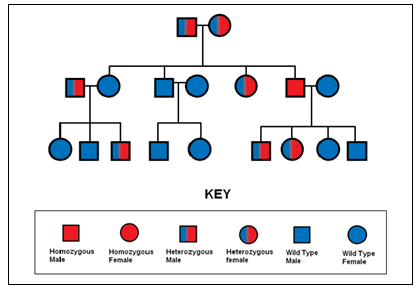
How many generations are shown in this pedigree?
a)
1
b)
2
c)
3
d)
4
55.
In a pedigree, what shape represents a male?
a)
circle
b)
square
c)
triangle
d)
diamond
56.
Who is considered the "father of genetics"?
a)
Gregor Mendel
b)
Reginald Punnett
c)
James Watson
d)
Justin Bieber
57.
When two identical alleles for a trait are in an organism, the organism is said to be ____________?
a)
Heterozygous
b)
Homozygous
c)
allele
d)
resseive
58.
Traits shown by capital letters
a)
dominant
b)
recessive
c)
sex-linked
d)
codominant
59.
The type of inheritance where both traits show at the same time
a)
dominant
b)
recessive
c)
sex-linked
d)
codominant
60.
What do you call the non-Mendelian inheritance pattern that states that neither trait is dominant and the traits appear to blend together?
a)
Codominance
b)
Incomplete dominance
c)
Polygenic traits
61.
When the heterozygous phenotype displays properties of both the phenotypes at the same time, this is called?
a)
Domiance
b)
Multi-Dominace
c)
Incomplete Dominace
d)
Co-Dominance
62.
What is the percentage of offspring that have green pods?
a)
100%
b)
75%
c)
50%
d)
25%
63.

Recessive alleles may not be expressed because they are

a)

masked by the dominant allele

b)

the least common allele in the population

c)

the most common allele in the population

d)

less likely to having crossing over

64.

Gametes have haploid or diploid number of chromosomes?

a)

Haploid

b)

Diploid

65.

diploid cell is to body cell, as haploid is to ___________________

a)

egg cell

b)

chromosome

c)

sex chromosome

d)

out of body cell

66.

Which of the following is NOT a somatic cell?

a)

sperm

b)

skin cell

c)

blood cell

d)

bone cell

67.
What is secreted in the stomach to kill bacteria?
a)
amylase
b)
Hydrochloric acid
c)
Sodium bicarbonate
d)
bile
68.
Number 5 is pointing to the...
a)
Liver
b)
Gallbladder
c)
Pancreas
d)
Stomach
69.
As waste moves through the digestive system, the ______ absorbs water before storing waste in the rectum.
a)
Small intestine
b)
Stomach
c)
Esophagus
d)
Large intestine
70.
mixes and churns food while it is being broken down by acids and enzymes
a)
Small Intestine
b)
Stomach
c)
Pancreas
d)
Esophagus
71.

What part of the digestive system is highlighted?

a)

Large intestine

b)

Small intestine

c)

Stomach

d)

Appendix

72.
This is where food is reduced to a liquid form.
a)
large intestine
b)
small intestine
c)
stomach
d)
rectum
73.
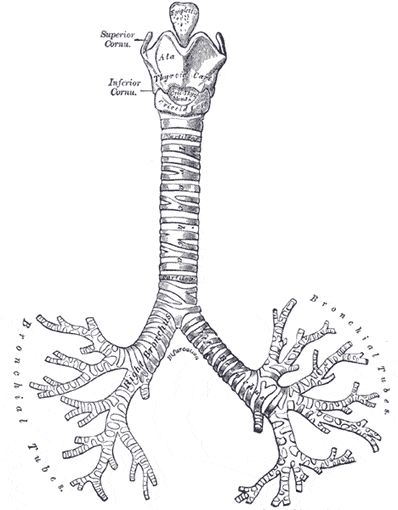
Given the following structures:
1. larynx
2. nasal cavity
3. pharynx
4. trachea
Which of the following is the correct order that air would flow during inhalation. 
a)
1,2,3,4
b)
2,3,1,4
c)
2,1,3,4
d)
4,2,3,1 
74.
The two main branches from the trachea (one to each lung)
a)
bronchi
b)
alveoli
c)
capillaries
d)
bronchioles
75.
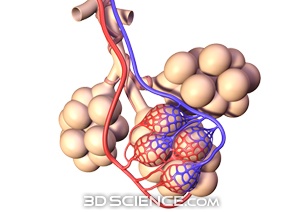
The air sacs that are covered with capillaries where gas exchange takes place
a)
bronchi
b)
lungs
c)
oxygen
d)
alveoli
76.
The passageway that is shared by both the digestive and respiratory system is the....
a)
larynx
b)
pharynx
c)
trachea
d)
nose
77.
What is the correct name for the windpipe?
a)
Trachea
b)
Bronchus
c)
Bronchiole
d)
Larynx
78.

A blood vessel that carries blood away from the heart.

a)

Blood

b)

Cardiovascular System

c)

Heart

d)

Artery

79.

Organ System that carries nutrients, gases, and hormones to body cells and waste products from body cells.

a)

Blood

b)

Cardiovascular System

c)

Heart

d)

Artery

80.

A hollow, muscular organ that pumps blood throughout the body.

a)

Blood

b)

Cardiovascular System

c)

Heart

d)

Artery

81.

Microscopic vessel through which exchanges take place between the blood and cells of the body.

a)

Platelets

b)

Capillaries

c)

Plasma

d)

Red Blood Cells

82.

Blood cells that carry oxygen from the lungs to the body cells.

a)

Platelets

b)

Capillaries

c)

Plasma

d)

Red Blood Cells

83.

The thickest and strongest blood vessel is the

a)

vein

b)

artery

c)

capillary

d)

both veins and capillaries

84.

The blood vessel that has the largest diameter is

a)

vein

b)

artery

c)

capillary

85.
Carry blood away from heart; mostly oxygen-rich
a)
Arteries
b)
Veins
c)
Capillaries
86.

These are one cell thick

a)

arteries

b)

capillaries

c)

veins

87.
Autotroph is when..
a)
An organism makes it's own food
b)
An organism has to eat other things
88.
Heterotroph is when an organism...
a)
Has to eat other things
b)
has to make it's own food
89.
Bacteria are all prokaryotic. What does it mean to be prokaryotic?
a)
Has a nucleus 
b)
Sometimes has a nucleus 
c)
Does not have a nucleus 
d)
Has a cell membrane 
90.
Eukaryotic cells always have a _______________.
a)
Nucleus 
b)
Plant
c)
no nucleus 
d)
heart 
91.
All these organisms are from the kingdom fungi. Are fungi autotrophic or heterotrophic?
a)
Autotrophic 
b)
Heterotrophic 
92.
Why are fungi considered heterotrophic?
a)
They make food by converting light energy into chemical energy.
b)
They make food for themselves 
c)
They get nutrients from dead or dying organisms.
d)
They use the sun for food.
93.
What are the key words that help you identify this kingdom?
a)
Heterotrophic & Autotrophic
b)
Autotrophic & Mobile 
c)
Heterotrophic & Prokaryotic 
d)
Autotrophic & Immobile 
94.

This is a lion from the kingdom animalia. What words identify the animalia kingdom?

a)

Heterotrophic & Motile

b)

Autotrophic & Immotile

c)

Heterotrophic & Immotile

d)

Motile & Immotile

95.
The bird is ___________________ and the plant is ____________________.
a)
Heterotrophic, Heterotrophic 
b)
Heterotrophic, Autotrophic 
c)
Autotrophic, Heterotrophic 
d)
Autotrophic, Autotrophic 
96.
Which kingdom is;
Prokaryotic
Heterotrophic
Unicellular
Motile

a)
Plant
b)
Animal
c)
Bacteria
d)
Fungi 
97.
This biomolecule is used to make energy for our cells. The simplest is glucose, a monosaccharide.
a)
Carbohydrates
b)
Lipids
c)
Nucleic Acids
d)
Proteins
98.
Enzymes make chemical reactions go faster by doing what?
a)
Lowering the activation energy of a reaction
b)
Making energy
c)
Absorbing energy
d)
Having a dance off with other enzymes
99.
Nucleic Acids are made up of smaller subunits called....
a)
Nucleotides
b)
Lipids
c)
Monosaccharides
d)
Subunits
100.
What is the smallest unit of matter that cannot be broken down by chemical means?
a)
Atom
b)
Element
c)
Ion
d)
Isotope