Wayground logo

Free Printable Worksheets

Font size

S
M
L
XL
Worksheets

Ecology Review ES

Total questions: 51

Worksheet time: 8hrs 44mins

Name
Class
Date
1.
In the energy pyramid here, which organisms have the most energy available?
a)
Producers
b)
Carnivores
c)
Herbivores
d)
Top Predator
2.
In the energy pyramid here, how much of the energy in the producers gets passed to the herbivores?
a)
10%
b)
20%
c)
80%
d)
90%
3.
Which of the following is a herbivore?
a)
cricket
b)
frog
c)
hawk
d)
shrew
4.
Which symbols best describe mutualism?
a)
+,+
b)
+,-
c)
+,0
d)
-,0
5.
Cattle egrets are birds that forage in fields among cattle. The egrets get easy access to food and the cattle don't care if they are there or not.
a)
mutualism
b)
commensalism
c)
competition
d)
parasitism
6.

Which type of growth is best illustrated by this rabbit population?

a)

exponential

b)

logistic

c)

S-shaped

d)

predator-prey

7.
How does carbon dioxide leave the atmosphere?
a)
Through transpiration
b)
Through photosynthesis
c)
Through factory emission
d)
Sunlight
8.
An organism that needs to eat other organisms to obtain energy is known as a:
a)
Autotroph
b)
Producer
c)
Consumer
d)
Mutualist
9.
The rabbit in this food web would be considered a:
a)
Decomposer
b)
Producer
c)
Secondary Consumer
d)
Primary Consumer
10.
Where an organism lives
a)
habitat
b)
niche 
c)
heterotrogh
d)
biosphere
11.
What part of the water cycle does this picture show?
a)
condensation
b)
precipitation
c)
evaporation
12.
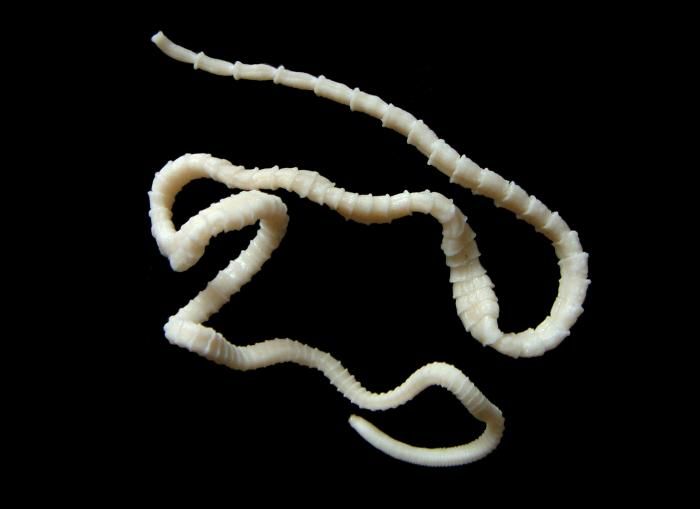
A tapeworm and a cat have this type of relationship.
a)
mutualism
b)
parasitism
c)
commensalism
d)
competition
13.

Define ecology

a)

is the study of how organisms interact with one another

b)

is the study of how organisms interact with one another and with their physical environment.

c)

is the study of how organisms interact with one another and with their chemical environment.

d)

is the study of how organisms interact with one another and with their bodies.

14.

Define community

a)

Two or more species of organisms in their environment

b)

The interaction between living organisms and their environment

c)

All the organisms of the same or closely-related species

d)

Two or more populations of organisms
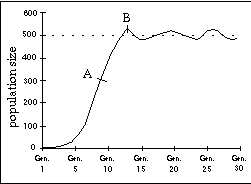
15.
What is the carrying capacity of the graph?
a)
around 500
b)
more than 500
c)
less than 500
d)
around 600
16.
If a disease destroying barley plants in a field swept through an ecosystem, what would happen to the barley eating bird population in the the field ?
a)
The bird population would stay the same
b)
The bird population would infinitely increase
c)
The bird population would decrease
17.
Which of the following would INCREASE the carrying capacity of an ecosystem?
a)
increase in predators
b)
disease
c)
increase in available food
d)
drought
18.
What point on the graph represents the carrying capacity?
a)
A
b)
B
c)
C
d)
D
19.

Which of the following is a density-independent limiting factor on population growth?

a)

competition

b)

parasitism/disease

c)

predation

d)

natural disasters

20.

The term for the variety of life in the world or in a particular habitat or ecosystem.

a)

Biodiversity

b)

succession

c)

food web

d)

carrying capacity

21.

If the plant has 14,000 J, how much will the Eagle get?
a)
140 J
b)
14,000 J
c)
14 J
d)
1.4 J
22.
What type of biome would this organism be found in?
a)
Desert
b)
Grassland/Savannah
c)
Tundra
d)
Temperate Forest
23.

A pioneer species is one that's first to colonize an uninhabited area. Which of the following is a pioneer species?

a)
lichen
b)
trees
c)
grass
24.
A carbon "sink" is best described as:
a)
a reservoir that readily releases carbon to another reservoir
b)
a carbon reservoir that stores more carbon that it is releasing
c)
something that causes carbon to leak out to the atmosphere
d)
a carbon reservoir that is releasing more carbon than it is taking in
25.
What is it called when water is changed from a liquid to a gas?
a)
EVAPORATION
b)
PRECIPITATION
c)
TRANSPIRATION
26.

A bird eats a worm. Who is the predator?

a)

Worm

b)

The bird and the worm

c)

Bird

d)

Neither the bird or the worm

27.
The ecological niches of three bird species are shown in the diagram. What is the advantage of each bird species having a different niche?
a)
As more birds feed higher in the tree, available energy increases.
b)
More abiotic resources are available for each bird.
c)
Predators are less likely to feed on birds in a variety of locations.
d)
There is less competition for food.
28.

Which biome is best represented by this climatograph?

a)

Tundra

b)

Desert

c)

Tropical rainforest

d)

Grasslands

29.

___ is a cold, dry biome where the soil stays frozen the entire year and has very little precipitation.

a)

Savannah

b)

Boreal Forest

c)

Tundra

d)

Desert

30.
Northern biome with many coniferous trees; very cold temperatures in the winter months.
a)

Boreal Forest

b)

Tundra

c)

Desert

d)

Temperate Rainforest

31.

_______ increases the amount of atmospheric CO2 while ______ decreases the amount of atmospheric CO2.

a)

Cellular Respiration, Photosynthesis

b)

Photosynthesis, Burning of Fossil Fuels

c)

Burning of Fossil Fuels, Photosynthesis

d)

Photosynthesis, Cellular Respiration

32.

The process of atmospheric nitrogen being converted into a usable form is called...

a)

nitrogen fixation

b)

nitrification

c)

ammonification

d)

assimilation

33.

If producers capture 80,000 J of energy from the sun, how much will be passed on to the secondary consumers?

a)

8,000 J

b)

800 J

c)

80 J

d)

8 J

34.

If producers capture 55,000 J of energy from the sun, how much will be passed on to the primary consumers?

a)

5,500 J

b)

550 J

c)

55 J

d)

5.5 J

35.

The number of individuals in a population

a)

Population size

b)

Immigration

c)

Emigration

d)

Limiting factor

36.

An interaction in which one organism kills another for food.

a)

Predation

b)

Parasitism

c)

Commensalism

d)

Competition

37.

When a population is stable it means....

a)

there are more births than deaths.

b)

there are less births than deaths.

c)

there are the same number as births than deaths.

38.

Which is most likely to be a primary consumer?

a)

herbivore

b)

carnivore

c)

omnivore

d)

multivore

39.

Which are NOT considered heterotrophs?

a)

herbivores

b)

carnivores

c)

decomposers

d)

producers

40.
Approximately how many inches of rain did Anqing receive in June?
a)
5 inches
b)
7 inches
c)
10 inches
d)
12 inches
41.

Which month has the lowest average temperature?

a)

December

b)

November

c)

January

d)

February

42.

hot and dry, mild winter, fire and drought are common:

a)

grassland

b)

deciduous forest

c)

chaparral

d)

rainforest

e)

desert

43.

year-round warmth, near equator, rainy and dry seasons:

a)

grassland

b)

deciduous forest

c)

chaparral

d)

rainforest

e)

desert

44.

Which of the following begins in areas where there is no prior soil or plant life?

a)

primary succession

b)

secondary succession

c)

allogenic succession

d)

degradation succession

45.

The first organisms to inhabit barren environments:

a)

pioneer species

b)

climax community

c)

invasive species

d)

endangered species

46.

A stable community that remains relatively unchanged:

a)

pioneer community

b)

climax community

c)

invasive community

d)

endangered community

47.
Barnacles create home sites by attaching themselves to whales. This neither harms nor benefits the whales.
a)
Mutualsim 
b)
Parasitism 
c)
Commensalism 
48.

Identify this populations carrying capacity

49.

Which type of factor is an earthquake?

a)

Density dependent

b)

Density independent

50.
Increased carbon dioxide may cause global warming by trapping more ____________ in the atmosphere.
a)
water
b)
gases
c)
heat
d)
water vapor
51.

How can Global Warming cause sea levels to rise?

a)

by causing it to rain more often.

b)

by creating bigger and more powerful hurricanes.

c)

by melting glaciers and ice caps.

d)

by increasing the number of undersea volcanic eruptions.