
 Worksheets
Density + Heating Curve Review
Total questions: 68
Worksheet time: 1hrs 17mins






What is the volume of an object whose density is 10.5 g/ml and has a mass of 100 grams?
V = 105 ml
V = 1005 ml
V = 10500 ml
V = 9.5 ml
What change is occurring at the particle level during the phase change boiling?
Particles are moving faster
Particles are moving slower
Particles are moving further apart
Particles are moving closer together
What change is occurring at the particle level while heating up a solid? Hint: A phase change is not occurring.
particle are moving faster
particle are moving slower
particle are moving further apart
particle are moving closer together


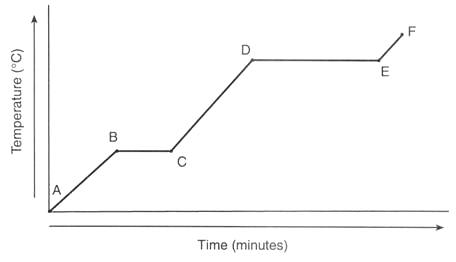
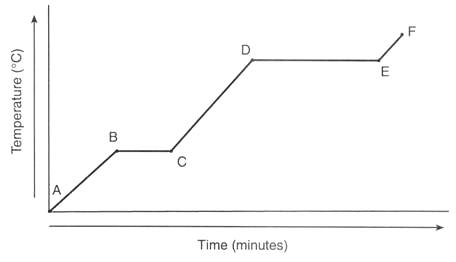
What is the phase of the substance at point E?
Liquid
Solid
Gas
Plasma

What phase change is happening at point D?
Vaporization
Sublimation
Freezing
Melting

Why does the graph have two flat lines at "b" and "d"?
Those are times when we took the water off the hot plate
Those are phase changes where temperature doesn't change while adding heat
The line is flat because the water is all in the solid or gas phase
The line is flat because temperature increases the most at those locations
What is occurring during segments "b" and "d"?
Substances are being heated
Substances are going through a phase change
Nothing is happening during those segments
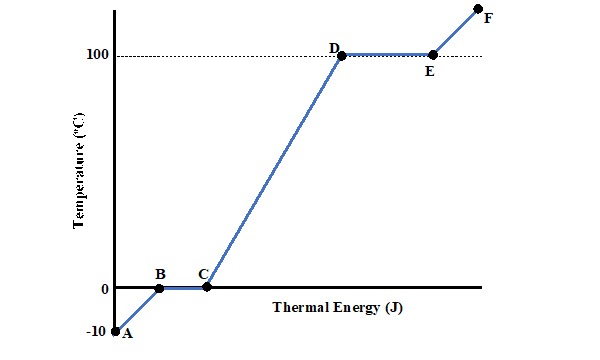
Between which two points is Heat of Vaporization?
A <----> B
B <----> C
C <----> D
D <----> E
E <----> F

Which of the following correctly explains what is happening to Kinetic and Potential energy during segment A.
KE is increasing, PE remains the same
KE is decreasing, PE remains the same
KE is increasing, PE is increasing
KE is increasing, PE is decreasing
Which of the following correctly explains what is happening to Kinetic and Potential energy during segment B-C?
KE is increasing, PE remains the same
KE remains the same, PE is decreasing
KE remains the same, PE is increasing
KE is increasing, PE is decreasing
Which of the following correctly explains what is happening to Kinetic and Potential energy during segment D-E?
KE is increasing, PE remains the same
KE remains the same, PE is decreasing
KE remains the same, PE is increasing
KE is increasing, PE is decreasing

Which of the following correctly explains what is happening to Kinetic and Potential energy at 150oC ?
KE is increasing, PE remains the same
KE remains the same, PE is increasing
KE remains the same, PE is decreasing
KE is increasing, PE is increasing
Which of the following correctly explains what is happening to Kinetic and Potential energy from 90oC to 50oC ?
KE is decreasing, PE remains the same
KE remains the same, PE is increasing
KE remains the same, PE is decreasing
KE is decreasing, PE is increasing
Which of the following correctly explains what is happening to Kinetic and Potential energy at 90oC ?
KE is decreasing, PE remains the same
KE remains the same, PE is increasing
KE remains the same, PE is decreasing
KE is decreasing, PE is increasing
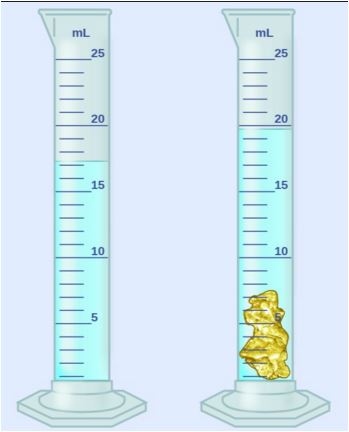

An irregularly shaped rock was lowered into a graduated cylinder holding a volume of water equal to 50 ml. The height of the water rose to 75 ml. If the mass of the stone was 250 g, what was its density?
15 g/mL
5 g/mL
10 g/mL
20 g/mL


A lead cylinder has a mass of 54.0 grams and a volume of 2.70 mL. Calculate the density of the lead cylinder. Remember to move the decimal on both sides of the problem.
15 g/mL
19 g/mL
20 g/mL
12 g/mL


What is the phase of water when its temperature is 150 °C?
Solid
Liquid
Gas
None of the above

Which of the graphs below illustrates water boiling in Denver, Colorado? (Altitude 1,600 meters above sea level)
Graph A
Graph B
Graph C
Graph D
Which of the following descriptions explains the process of water freezing?
Water molecules speed up until they escape into a different phase.
Water molecules slow down until they begin to bond together.
Water molecules are squeezed together by high pressure until they begin to stick to one another
As water molecules cool, their shape changes from rounded to irregular, making them more likely to link to one another.
Which of the following statements is most accurate?
When liquid water is heated, the molecules move faster.
When liquid water is heated, the molecules collide more often.
When liquid water is heated, collisions between molecules are more violent.
All of the statements are accurate

