wayground logo

Free Printable Worksheets

Font size

S
M
L
XL
Worksheets

Layers of the Earth

Total questions: 58

Worksheet time: 37mins
Name
Class
Date
1.

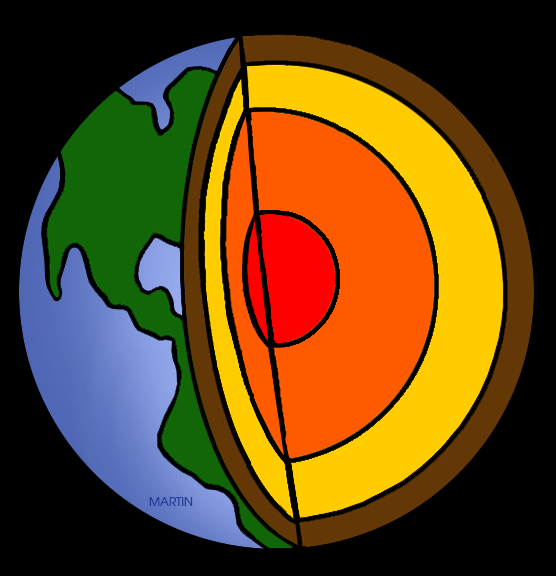
Which layer is shown in red?

a)

crust

b)

mantle

c)

outer core

d)

inner core

2.

Which layer is shown in orange?

a)

crust

b)

mantle

c)

outer core

d)

inner core

3.

Which layer is shown in yellow?

a)

crust

b)

mantle

c)

outer core

d)

inner core

4.

Which layer is shown in brown?

a)

crust

b)

mantle

c)

outer core

d)

inner core

5.

Which shows the order of the layers from COOLEST to HOTTEST?

a)

crust, mantle, outer core, inner core

b)

inner core, outer core, mantle, crust

c)

crust, outer core, inner core, mantle

d)

Trick question! All of the layers are the same temperature!
6.

Which layer is made of "flowing" solid rock (think clay or pudding)?

a)

crust

b)

mantle

c)

outer core

d)

inner core

7.

Which layer is made (mostly) of LIQUID iron and nickel?

a)

crust

b)

mantle

c)

outer core

d)

inner core

8.

Which layer is made (mostly) of SOLID iron and nickel?

a)

crust

b)

mantle

c)

outer core

d)

inner core

9.

Which layer of the Earth is the THINNEST?

a)

crust

b)

mantle

c)

outer core

d)

inner core

10.

Which layer is the hottest?

a)

crust

b)

mantle

c)

outer core

d)

inner core

11.
Tectonic plates are made up of continental crust and ________ crust.
a)
continental
b)
oceanic
c)
plates
d)
mantle
12.
There are how many different types of crust?
a)
1
b)
2
c)
5
d)
3
13.
What is the core made of?
a)
steel
b)
iron 
c)
aluminum
d)
iron and nickel
14.
What describes the outer core?
a)
solid
b)
liquid
c)
viscous
d)
gas
15.
Why is the inner core solid?
a)
its unknown
b)
what it's made of
c)
the pressure
d)
it is colder than the outer core
16.
What layer is a semisolid and acts like a plastic?
a)
Lithosphere
b)
Mantle
c)
Asthenosphere
d)
crust
17.
What happens to pressure as we move from the crust to the inner core?
a)
Pressure Decreases
b)
Pressure Increases
c)
Nothing
18.
What happens to temperature as we move from the crust to the inner core?
a)
Decreases
b)
Increases
c)
Nothing
19.
Less dense materials rise to the top.
a)
True
b)
False
20.
Which layer of Earth has the GREATEST density?
a)
crust
b)
mantle
c)
outer core
d)
inner core
21.
Which layer of Earth is made up of tectonic plates?
a)
outer core
b)
inner core
c)
asthenosphere
d)
lithosphere
22.
What two layers make up the core?  
a)
Mesosphere and 
Asthenosphere 
b)
Inner and Outer core
c)
Lithosphere and Outer Core
d)
Inner core and Mesosphere
23.
Middle part of the mantle that is partially molten rock, or putty like, or semisolid.
a)
Asthenosphere
b)
Mesosphere
c)
Lithosphere
d)
Crust
24.
Includes the crust and upper mantle that is divided into several constant moving plates of solid rock that floats on the layer below it. 
a)
Asthenosphere 
b)
Mesosphere
c)
Lithosphere 
d)
Crust
25.

Sally is researching the differences that exist in each layer of the Earth. Which of the following best describes Earth's crust?

a)

Solid, rocky

b)

Liquid, metallic

c)

Semisolid, convecting

d)

Dense, extremely hot

26.

Which of the following is true regarding the composition of the lithosphere?

a)

The lithosphere is mostly liquid, with some medium-density materials, such as silicon.

b)

The lithosphere is more plastic and flows slowly compared to the solid crust of Earth.

c)

The lithosphere includes the core and the lower portion of the mantle.

d)

The lithosphere includes the crust and the uppermost portion of the mantle, which is sold and rigid.

27.

Which of the following correctly lists the layers from innermost to outermost?

a)

inner core, outer core, lower mantle, upper mantle, crust

b)

lower mantle, upper mantle, crust, inner core, outer core

c)

lower mantle, inner core, upper mantle, outer core, crust

d)

crust, inner core, lower mantle, upper mantle, outer core

28.
As you travel from the inner core to the crust, how would temperature, pressure and density of the material change?
a)
The would all increase
b)
The would all decrease.
c)
Nothing, the layers are made of the same material throughout
d)
Temperature would decrease, but pressure and density would increase
29.
Scientists determine what Earth’s interior looks like by using:
a)
Volcanoes
b)
Seismic Waves
c)
Continental Drift
d)
Convection Currents
30.
What observation can we make about Earth’s lithosphere AND asthenosphere?
a)
The asthenosphere floats on top of the lithosphere.
b)
The crust and the core make up the lithosphere.
c)
The crust and mantle make up the asthenosphere. 
d)
The lithosphere floats on top of the asthenosphere
31.
What observation can we make about Earth’s lithosphere AND asthenosphere?
a)
The asthenosphere floats on top of the lithosphere.
b)
The crust and the core make up the lithosphere.
c)
The crust and mantle make up the asthenosphere. 
d)
The lithosphere floats on top of the asthenosphere
32.
What is the inner core composed of?
a)
Basalt
b)
Granite
c)
Iron and Nickel
d)
Molten (liquid) Metals
33.
What was the name given to all the continents when they were joined as one super continent
a)
Supreme Continent
b)
United States
c)
Eurasia
d)
Pangea
34.
Scientists think that convection currents that move the plates flow in Earth's
a)
Continental crust
b)
oceanic crust
c)
Asthenosphere
d)
Lithosphere
35.

Movement of the liquid metal of the outer core causes

a)

Volcanic eruptions

b)

Earthquakes

c)

Convection Currents

d)

Earth's magnetic field

36.

Seismic waves are

a)

Energy waves released by earthquakes

b)

caused my the Coriolis force

c)

caused by density differences

d)

epic surf!

37.

Where does the information about earth's interior come from?

a)

Deep mines

b)

Digging deep holes

c)

We actually don't know anything about Earth's interior

d)

Seismic waves

38.

Earth's magnetic field protects us from

a)

Solar wind

b)

earthquakes

c)

aliens

d)

convection currents

39.

Basalt and granite are

a)

Layers of the earth

b)

Types of rock

c)

Cartoon characters

d)

Boundaries between layers

40.

Which of the following statements are true?

a)

As you go deeper into Earth, pressure increases.

b)

As you go deeper into Earth, temperature increases.

c)

As you go deeper into Earth, the particles are packed tighter together (increasing density).

d)

All of the above.

41.

What is part of the mantle?

a)

uppermost mantle

b)

lower mantle

c)

upper mantle

d)

asthenosphere

42.

which two layers spin to create the magnetosphere?

a)

inner core

b)

asthenosphere

c)

lower mantle

d)

outer core

43.
Which layer of Earth is solid and why?
a)
The inner core is solid because of movement of the outer core.
b)
The inner core is solid because of the freezing temperatures.
c)
The inner core is solid because of the extreme pressure from the other layers.
d)
The outer core is solid because of the extreme pressure from the other layers.
44.
Which layer of earth is molten?
a)
inner core
b)
outer core
c)
crust
d)
lithosphere
45.

How are the materials of the Earths core different from those of the crust (in general)?

a)

They are harder

b)

They are more dense

c)

They are older

d)

They are darker in color

46.

Which area of the Earth is least dense ?

a)

Outer core

b)

inner core

c)

mantle

d)

crust

47.

Which of the following increases as depth increases into the Earth? (choose all that apply)

a)

time

b)

Pressure

c)

temperature

d)

density

48.

Which layer contains BOTH the uppermost mantle and the crust?

a)

lithosphere

b)

atmosphere

c)

mesosphere

d)

athensosphere

49.
Choose the statement that is TRUE
a)
Oceanic crust is thinner than Continental Crust and  denser than Continental Crust
b)
OOceanic crust is thicker than Continental Crust and  denser than Continental Crust
c)
Continential  crust is thinner than OceanicCrust and  denser than Oceanic Crust
d)
Continential crust is thicker than Oceanic Crust and  denser than Oceanic Crust
50.

Which part of the mantle makes up the Lithosphere along with the crust?

a)

Uppermost Mantle

b)

Upper Mantle

c)

Lower Mantle

51.
The Inner Core is a liquid ball of fire
a)
TRUE
b)
FALSE
52.
What increases as you go deeper inside the interior of the earth?
a)
Heat, Pressure, and Density
b)
Heat, Pressure, Volume
c)
Volume, Mass, Acceleration
d)
Mass, Volume, Heat
53.
Many earthquakes happen along the borders of...
a)
Countries
b)
Tectonic Plates
c)
Climate Zones
d)
None of the above.
54.

Which of the following is arranged according to increasing density?

a)

Lithosphere --> Asthenosphere --> Outer Core

b)

Lithosphere --> Outer Core --> Asthenosphere

c)

Asthenosphere --> Lithosphere --> Outer Core

d)

Outer Core --> Asthenosphere --> Lithosphere

55.

Which of the following interior layers of the Earth can flow?

a)

Mesosphere and Outer Core

b)

Asthenosphere and Inner Core

c)

Asthenosphere and Outer Core

d)

Lithosphere and Asthenosphere

56.

In which layer of the Earth do earthquakes happen?

a)

Asthenosphere

b)

Lithosphere

c)

Inner Core

d)

Outer Core

57.

Which of the following statements is TRUE?

a)

The inner core is less dense than the outer core.

b)

The continental crust is denser than the oceanic crust.

c)

The oceanic crust is denser than the continental crust.

d)

The lower mantle is less dense than the asthenosphere.

58.

Which layers are arranged according to DECREASING pressure?

a)

Inner Core --> Asthenosphere --> Lithosphere

b)

Inner Core --> Lithosphere --> Asthenosphere

c)

Lithosphere --> Asthenosphere --> Inner Core

d)

Lithosphere --> Inner Core--> Asthenosphere