wayground logo

Free Printable Worksheets

Font size

S
M
L
XL
Worksheets

Energy

Total questions: 135

Worksheet time: 3hrs 40mins

Name
Class
Date
1.
GRAVITATIONAL POTENTIAL ENERGY DEPENDS ON
a)
MASS AND VELOCITY
b)
MASS AND WEIGHT
c)
WEIGHT AND HEIGHT
d)
HEIGHT AND DISTANCE
2.
WHICH OF THE FOLLOWING IS NOT AN EXAMPLE OF POTENTIAL ENERGY?
a)
A BALL TRAVELING AT 10 M/S
b)
A COMPRESSED SPRING
c)
WATER BEING STORED AT A WATER DAM
d)
A STRETCHED RUBBER BAND
3.
YOUR BODY OBTAINS ENERGY FROM THE FOOD YOU EAT. WHAT IS THE FORM OF ENERGY IN FOOD?
a)
KINETIC
b)
ELASTIC
c)
GRAVITATIONAL
d)
CHEMICAL
4.
WHEN AN ARCHER BENDS A BOW, WHAT TYPE OF ENERGY INCREASES IN THE BOW?
a)
GRAVITATIONAL
b)
ELASTIC
c)
KINETIC
d)
THERMAL
5.
WHICH ENERGY TRANSFORMATION OCCURS WHEN A TELEVISION SPEAKER PRODUCES MUSIC?
a)
ELECTRICAL TO SOUND
b)
ELASTIC TO SOUND
c)
THERMAL TO SOUND
d)
SOUND TO ELECTRICAL
6.
WHAT ANOTHER NAME FOR THERMAL ENERGY?
a)
HEAT ENERGY
b)
ITS SIZE
c)
ITS POTENTIAL ENERGY
d)
ITS MECHANICAL ENERGY
7.
WHICH OF THESE DESCRIBES THE LAW OF CONSERVATION OF ENERGY?
a)
NO MACHINE IS 100% EFFICIENT
b)
ENERGY IS NEITHER CREATED OR DESTROYED
c)
THE ENERGY RESOURCES OF EARTH ARE LIMITED
d)
THE ENERGY OF A SYSTEM IS ALWAYS DECREASING
8.
AS A ROLLER COASTER MOVES DOWN A HILL, POTENTIAL ENERGY IS CONVERTED INTO KINETIC ENERGY, THERMAL ENERGY, AND SOUND ENERGY. WHAT IS TRUE ABOUT THE TOTAL ENERGY OF THIS SYSTEM?
a)
ENERGY IS GAINED (CREATED) AS THE ROLLER COASTER MOVES
b)
ENERGY IS LOST (DESTROYED) AS THE ROLLER COASTER MOVES
c)
THE TOTAL ENERGY REMAINS THE SAME AS THE ROLLER COASTER MOVES
d)
THE TOTAL ENERGY CONSTANTLY CHANGES AS THE ROLLER COASTER MOVES
9.
WHICH OF THE FOLLOWING IS AN ENERGY CONVERSION FROM LIGHT ENERGY TO CHEMICAL ENERGY?
a)
TURNING ON A STOVE TO HEAT DINNER
b)
TURNING ON A LAMP
c)
GROWING AN APPLE TREE
d)
MAKING TOAST IN A TOASTER
10.

What is NOT a renewable energy source?

a)

coal

b)

wind

c)

solar

d)

water

11.

What is given off from energy?

a)

water

b)

heat

c)

smoke

d)

ash

12.

Identify the type of energy

a)

Electrical Energy

b)

Mechanical energy

c)

Sound energy

d)

Thermal energy

13.

Identify the type of energy

a)

Thermal energy

b)

Mechanical energy

c)

Sound energy

d)

Electrical energy

14.

The image shows

a)

Renewable energy

b)

Non renewable energy

c)

Both

d)

None

15.

Choose the right answer

a)

Light bulb.

b)

Battery.

c)

Switch.

d)

Wire.

16.

Choose the right answer

a)

Switch.

b)

Battery.

c)

Wire.

d)

Light bulb.

17.

Can the electricity go through ?

a)

Yes.

b)

No, because it is open.

c)

Yes, because it is closed.

18.

Choose the source of energy

a)

Coal

b)

Petrol

c)

Nuclear

d)

Wind

19.

Choose the type of energy

a)

Sound

b)

Thermal

c)

Electrical

d)

Chemical

20.

The _______________ is transformed into electrical energy inside the battery.

a)

Chemical energy

b)

Sound energy

c)

Kinetic energy

d)

Sun energy

21.

What is energy?

a)

moving energy

b)

stored energy

c)

renewable energy

d)

The ability to do work.

22.

What is potential energy?

a)

moving energy

b)

stored energy

c)

renewable energy

d)

non renewable energy

23.
A cut piece of clear glass or plastic in the form of a triangle or other geometric shape.
a)
Person
b)
Prison
c)
Prism
d)
Preacher
24.
Curve in
a)
Converse
b)
Convex
c)
Convection
d)
Concave
25.
When light strikes an object with a rough surface, photons bounce off at random angles.
a)
Occer
b)
Scope
c)
Scattering
d)
Scattegories
26.
A tiny bundle of energy by which light travels
a)
Photographs
b)
Photos
c)
Photons
d)
Friends
27.
A region that contains few or no particles
a)
Vacuum
b)
Velocity
c)
Velcro
d)
Volcano
28.
Allows little to no light through.
a)
Transparent
b)
Translucent
c)
Opal
d)
Opaque
29.
Curve Out
a)
Converse
b)
Concave
c)
Convex
d)
Convection
30.
The bending of waves as they pass from one substance into another.
a)
Reaction
b)
Reflection
c)
Refraction
d)
Repost
31.
Band of color in a rainbow, or from a light passing through a prism.
a)
Spectrum
b)
Space
c)
Prism
d)
Refraction
32.
The distance between one peak and the next in a wave
a)
Transpartent
b)
Scattering
c)
Wavelength
d)
Waste Pro
33.
The term for any wave that hits a surface and bounces off
a)
Transparent
b)
Translucent
c)
Refraction
d)
Reflection
34.
Blurs light as it passes through
a)
Transparent
b)
Translucent
c)
Opaque
d)
Refraction
35.
Transfer of energy when a wave disappears into a surface
a)
Transparent
b)
Refraction
c)
Reflection
d)
Absorption
36.
Allows most light through
a)
eflection
b)
Refraction
c)
Translucent
d)
Transparent
37.
The number of vibrations a wave makes in a given amount of time is a 
a)
Absorption
b)
Medium
c)
Frequency
d)
Photon
38.
A substance through which light travels.
a)
Wavelength
b)
Opaque
c)
Frequency
d)
Medium
39.
Light travels on straight lines.
a)
Light Bulb
b)
Sunshine
c)
Light Rays
d)
Frequency
40.
Light is a kind of.....
a)
reflection
b)
energy
c)
heat
d)
matter
41.
What happens to light after it hits a mirror?
a)
It goes through the mirror and bend.
b)
It goes straight through the mirror.
c)
It goes around the mirror.
d)
It bounces off the mirror.
42.
Which of these describes how light travels through an empty space?
a)
It travels straight but may change direction to avoid objects.
b)
It changes direction often even if there are no objects. 
c)
It comes to a stop after it travels a certain distance. 
d)
It travels in a straight line without stopping. 
43.
What surface best reflects light?
a)
dull
b)
shiny
c)
clear
d)
black
44.
If a black and white car were in the parking lot all day. Compare the temperatures of the two cars.
a)
The black car would be cooler.
b)
The white car would be hotter.
c)
The black car would be hotter.
d)
They would be the same
45.

Which of these provides the best explanation for why the pencil appears broken?

a)

The pencil absorbs the light rays that hit it.

b)

Water reflects light rays away from the pencil.

c)

Light rays are bent by the water in the glass.

d)

The surface of the water reflects the light rays.

46.

Which of the following types of electromagnetic radiation has the shortest wavelengths?

a)

Infrared

b)

Ultraviolet

c)

Visible light

d)

Radio waves

47.

Which portion has the longest wavelengths?

a)

A

b)

B

c)

C

d)

D

48.

Adrian is observing a piece of white paper. His eye perceives the paper to be white because his eye is receiving what kind of light?

a)

Light in all the colors of the visible spectrum.

b)

Light mostly at the ultraviolet end of the spectrum.

c)

Light mostly at the infrared end of the spectrum.

d)

Light the paper produces when heated by the Sun.

49.

Sunlight is a mixture of electromagnetic waves, ranging from infrared to ultraviolet. Which of the following types of electromagnetic radiation has the longest wavelengths?

a)

Infrared

b)

Ultraviolet

c)

Visible light

d)

Radio waves

50.

Which portion can be detected by the human eye?

a)

A

b)

B

c)

C

d)

D

51.

A combination of all the wavelengths with in the visible light portion of the electromagnetic spectrum will result in which of the following colors?

a)

White

b)

Red

c)

Violet

d)

Blue

52.
Tools that are solar powered are using what type of energy
a)
mechanical 
b)
light
c)
chemical
53.
Light travels slower through water than it does through air, this cause the light to be ___________.
a)
reflected
b)
refracted
54.
Opaque means...
a)
No light passes through it
b)
All light passes through it
c)
Some light passes through it
55.
What is being blocked when a shadow is formed?
a)
Light Source
b)
Light Path
c)
Object
d)
Eye
56.
Why does an apple appear red?
a)
All colors are absorbed & none are reflected
b)
All colors are absorbed except for blue, which is reflected
c)
All colors are reflected and none are absorbed
d)
All colors are absorbed except for red, which is reflected
57.
How does light travel
a)
It curves around corners
b)
Really slow
c)
In a straight line
d)
In circles
58.
Sunlight is
a)
not light at all
b)
red light
c)
yellow light
d)
white light
59.
Which material is NOT translucent?
a)
Brick
b)
Tissue paper
c)
Thin sheet of plastic
60.
What is light?
a)
A form of energy
b)
A form of sound
c)
bright stuff
d)
A form of excitement
61.
Which one is NOT a property of light?
a)
Refraction
b)
Brightness
c)
Color
62.
___________ is when light BENDS or CHANGES direction.
a)
Reflection
b)
Refraction
63.
What part of the wave is shown at letter A?
a)
crest
b)
trough
c)
wavelength
d)
frequency
64.
What happens to frequency when the energy increases?
a)
it increases
b)
it decreases
c)
it stays the same
65.
Which part of the wave is shown at letter B?
a)
crest
b)
trough
c)
wavelength resting point
66.
Which part of the wave is shown at letter D?
a)
trough
b)
resting point
c)
wavelength
d)
frequency
67.
Which part of the wave is shown at letter E?
a)
trough
b)
crest
c)
resting point
d)
amplitude
68.
What does a wave carry?
a)
boats
b)
matter
c)
energy
d)
water
69.
If there is no wave, the particles would be at the _____________________.
a)
wavelength
b)
resting point
c)
trough
d)
beach
70.
Which wave has a longer wavelength?
a)
wave C
b)
wave D
71.
Which wave has a greater frequency?
a)
wave B
b)
wave C
72.

The highest point on a wave is:

a)

the crest

b)

the trough

c)

the top

d)

the coast

73.
What kind of wave is pictured below?
a)
compressional wave
b)
transverse wave
c)
sound wave
d)
mechanical wave
74.
How would a person measure the wavelength on this sound wave?
a)
dense to less dense
b)
trough to crest
c)
compression to compression
d)
beginning of illustration to the end
75.

You can't hear sounds in outer space because there is no

a)

medium

b)

light

c)

energy

d)

heat

76.

All waves carry ________ as they travel from one place to another.

a)

matter

b)

space

c)

energy

d)

water

77.
How often a wave occurs is the wave's __________________
a)
crest
b)
frequency
c)
wavelength
d)
resting point
78.
The distance between 2 corresponding parts of a wave  (example- crest to crest) is its _____________________
a)
trough
b)
frequency
c)
amplitude
d)
wavelength
79.
The frequency of a wave is measured in __________________. 
a)
inches
b)
hertz
c)
periods
d)
eras
80.
Any material that a wave travels through is called a ____________________.
a)
vibration
b)
compression
c)
medium
d)
crest
81.
In what type of wave does the medium vibrate parallel to the direction of the wave?
a)
surface wave
b)
longitudinal wave
c)
transverse wave
d)
electromagnetic wave
82.
What are the highest parts of a transverse wave called?
a)
amplitude
b)
trough
c)
resting point
d)
crest
83.
In longitudinal waves, the parts where the coils are spread apart are called what?
a)
rarefactions
b)
compressions
c)
mechanicals
d)
longitudes
84.
In what type of wave does the medium move perpendicular to the movement of the wave?
a)
Transverse
b)
Longitudinal
c)
Electromagnetic
d)
Radio
85.
As the frequency of a wave increases, the __________________ decreases.
a)
amplitude
b)
resting point
c)
wavelength
d)
crest
86.
What number represents the amplitude?
a)
1
b)
2
c)
3
d)
4
87.
In a longitudinal wave, the parts where the coils are close together are called what?
a)
longitudes
b)
rarefactions
c)
compressions
d)
contractions
88.
Can heat be created or destroyed?
a)
Yes
b)
No
c)
Only when things are cooling off
d)
Only when things are warming up
89.
When things are hot molecules are moving...
a)
Fast
b)
Slow
c)
They are not moving
d)
They are moving by not fast or slow
90.
Everything has heat
a)
True
b)
False
91.
Heat that is transferred because of touching is called...
a)
Radiation
b)
Conduction
c)
Convection
d)
Reflection
92.
Energy that does NOT need a medium to transfer heat is called...
a)
Radiation
b)
Conduction
c)
Convection
d)
Reflection
93.
Heat passes from...
a)
High to low
b)
Cold to hot
c)
Hot to cold
d)
Heat cannot be passed
94.
Why do objects cool down?
a)
All heat will slowly be destroyed.
b)
The cold attacks the heat.
c)
Heat is always transferring so the heat will always move to a cooler place.
d)
The heat disappears.
95.
what kind of heat is happening when the sun heats your body
a)
conduction
b)
convection
c)
density
d)
radiation
96.
heat energy traveling through space is an example of _____
a)
convection
b)
density
c)
radiation
d)
conduction
97.
Walking on the warm sand sand with your bare feet.
a)
conduction
b)
convection
c)
radiation
98.
Warm air rises and the cool air sinks.
a)
conduction
b)
convection
c)
radiation
99.
The warm air from this heater creates a current when the warm air rises and the cold air sinks.
a)
conduction
b)
convection
c)
radiation
100.
Heat transfers from an area of ____temperature to an area of ___ temperature.
a)
high to low
b)
low to high
c)
high to high
101.
My hands feel warm because 
a)
The temperature is cold outside
b)
The molecules are moving
c)
The heat is transferring 
102.
A sound with a high frequency has a _____ pitch. A sound with a ____ frequency has a low pitch.
a)
high, low
b)
low, high
c)
medium, high
d)
high, medium
103.
A sound that bounces off a surface is called an ________.
a)
loud sound
b)
echo
c)
repeat
d)
quiet sound
104.
Matter that carries sound waves is called a _________
a)
low
b)
high
c)
medium
d)
surface
105.
A back and forth movement of matter
a)
volume
b)
vibration
c)
pitch
d)
frequency
106.
how high or low a sound is
a)
frequency
b)
volume
c)
vibration
d)
pitch
107.
Sound travels FASTEST through which of these materials?
a)
Air
b)
Empty space
c)
Metal
d)
Water
108.
Sound is caused by? 
a)
force
b)
vibrations
c)
instruments
109.
Sound is a form of? 
a)
energy
b)
pitch
c)
volume
110.
Why is sound able to travel faster through a solid than a gas?
a)
Gas molecules are packed tightly.
b)
Sound does not travel faster through a solid than a gas.
c)
Solid molecules are packed tightly.
d)
Gas molecules move slowly.
111.
Sound does not travel in space because
a)
Space is too far away.
b)
There is no matter in space.
c)
Space is the final frontier
d)
Space has planets.
112.
Why is the school library covered with carpet?
a)
So everyone can make a lot of noise
b)
to help absorb sounds to keep it quiet
c)
because it looks good
d)
to help absorb sounds so it can stay noisy
113.

______________ sounds have a larger amplitude

a)

quiet

b)

loud

114.
Sound moves in a _________.
a)
Transverse wave
b)
Longitudinal wave
115.
___________ affects how fast or slow sound waves travel. 
a)
Temperature
b)
Speed
c)
Amplitude
d)
Frequency 
116.
_______ is how high or low we listen/perceive  a sound. 
a)
Pitch
b)
Frequency
c)
Amplitude
d)
I don't know
117.
If you had to make some headphones to isolate sound, which material would you use?
a)
Soft, because they absorb sound. 
b)
Hard, because they reflect sound. 
118.
Sound is a form of? 
a)
energy
b)
pitch
c)
volume
119.
An object that does not vibrate cannot produce
a)
sound
b)
light
c)
heat
d)
electricity
120.

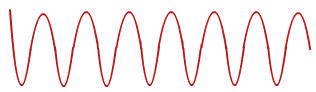
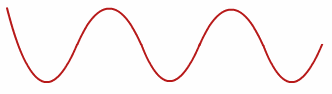
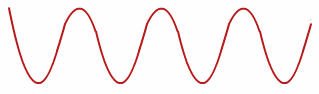
Which of these sound waves has the highest frequency?
a)
b)
c)
121.
True or False, Lighting is a form of static electricity.
a)
True
b)
False
122.

Static means ____________.

a)

moving

b)

not moving

123.

What is electricity?

a)

an object that electrons do not flow through

b)

energy created by moving charged particles

c)

when two objects repel each other

d)

a circuit that has only one path for electricity to flow

124.

Which of the following is an insulator?

a)

an eraser

b)

a wire

c)

a penny

d)

a metal spoon

125.

Which of the following is a conductor?

a)

wood

b)

rubber

c)

metal

d)

plastic

126.

This picture shows a circuit that is

a)

closed

b)

open

c)

an insulator

d)

static electricity

127.

What kind of electricity is natural (example: lightning)?

a)

current electricity

b)

static electricity

c)

power source

d)

insulator

128.

Items that have the same charge will do what?

a)

attract

b)

repel

129.

Items that have opposite charges do what?

a)

attract

b)

repel

c)

nothing changes

130.

What is the build up of electrical charges in one place called?


a)

neutrons

b)

static electricity

c)

insulator

d)

conductor

131.
A particle that carries a negative electric charge is called a(n) ______.
a)
neutron
b)
atom
c)
proton
d)
electron
132.

Why do electricians always wrap wires in plastic?

a)

Plastic comes in many different colors

b)

Plastic is a good electrical conductor

c)

Plastic makes the wires easy to bend

d)

Plastic is a good electrical insulator

133.

How can it be explained that someone's hair can stick to a balloon?

a)

There is static electricity

b)

There is too much dust in the air

c)

A parallel circuit was too long

d)

The person needs to wash his hair

134.

The student arrived home and turned on a light switch, so she could see how to get to her bedroom. The switch allowed electricity to flow and was transformed into-

a)

Light energy

b)

mechanical energy

c)

superior energy

d)

radiant energy

135.

After returning from a winter vacation, a boy wanted to heat his home using electricity. The electricity was transformed into -

a)

Mechanical energy

b)

Superior energy

c)

Thermal energy

d)

Light energy