wayground logo

Free Printable Worksheets

Font size

S
M
L
XL
Worksheets

AQA Chemistry Revision (C1-C5)

Total questions: 96

Worksheet time: 2hrs 5mins

Name
Class
Date
1.
What is atomic number?
a)
Number of protons in an atoms 
b)
Number of neutrons in an atom
c)
Mass of an atom
d)
Charge on an atom
2.
Which subatomic particles are found in the nucleus of an atom?
a)
Protons and Electrons
b)
Protons and Neutrons
c)
Neutrons and Electrons
d)
Protons, Neutrons and Electrons
3.
What electrical charge does a proton have?
a)
+1
b)
0
c)
-1
d)
+2
4.
The total number of protons and neutrons in an atom is called the...
a)
Atomic number
b)
Proton number
c)
Mass number
d)
Weight number
5.
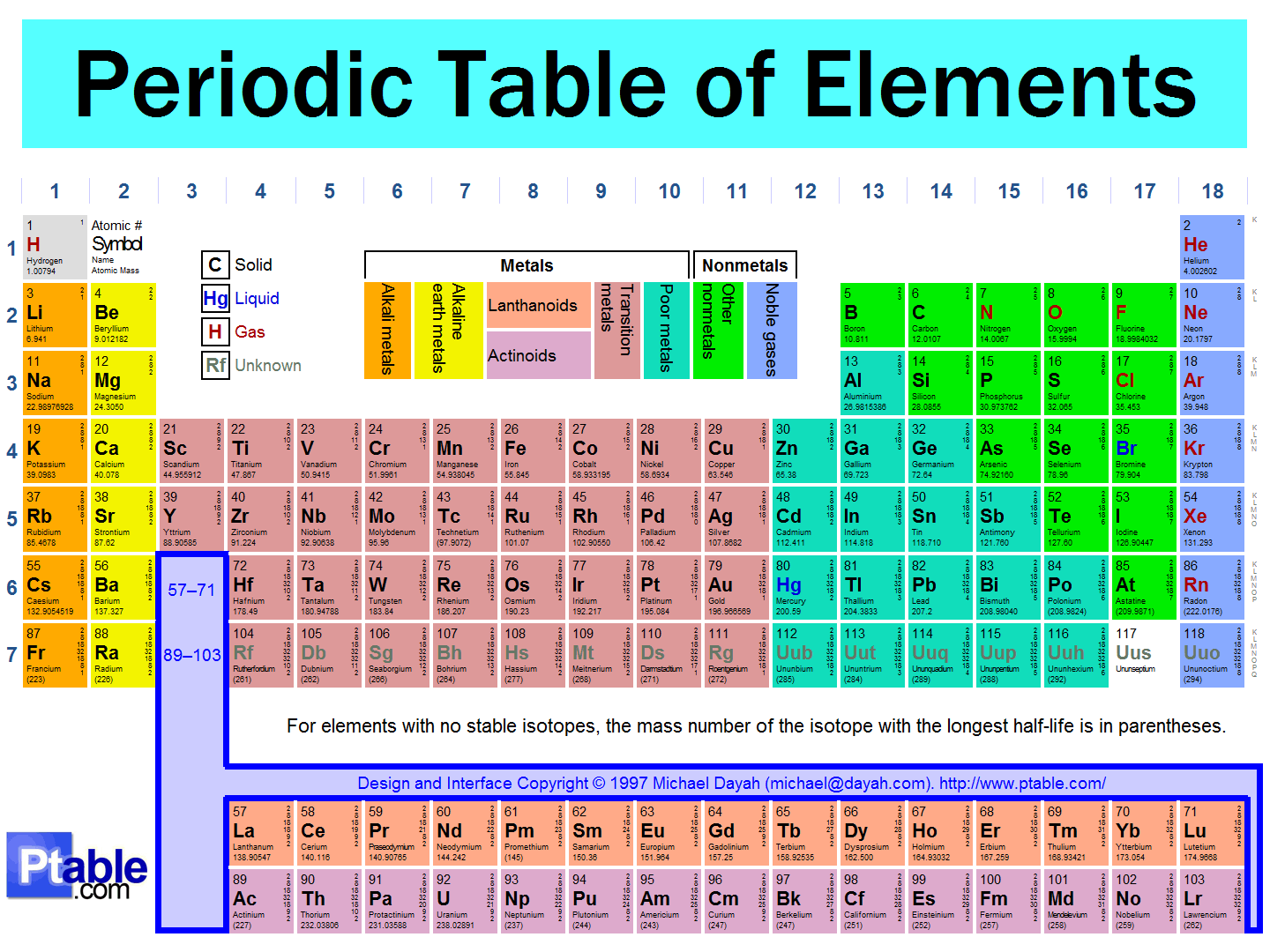
How many protons does an aluminium atom have? (Use the image to help you)
a)
27
b)
14
c)
40
d)
13
6.
How many neutrons does a sodium atom have? (Use the image to help you)
a)
23
b)
11
c)
12
d)
34
7.
Which particle is negatively charged?
a)
proton
b)
atom
c)
neutron
d)
electron
8.
The atomic number of an element that has 9 protons, 9 electrons, and 10 neutrons is _____.
a)
9
b)
10
c)
19
d)
28
9.
The __________ of an atom is the sum of the protons and neutrons in the nucleus of that atom.
a)
mass number
b)
atomic number 
c)
atomic weuight
d)
isotope weight
10.

The center of an atom is known as the

a)

nucleus

b)

electron cloud

c)

neutron cloud

d)

mass circle

11.
Protons have this type of charge
a)
positive
b)
negative
c)
neutral - no charge
12.
What are the 3 subatomic particles that make-up the atom?
a)
protons, neutrons, and isotopes
b)
neutrons, isotopes, and electrons
c)
positives, negatives, and electrons
d)
protons, neutrons, and electrons
13.
Neutrons have this type of charge
a)
positive
b)
negative
c)
neutral - no charge
14.
All matter is made of what?
a)
energy 
b)
atoms 
c)
volume
d)
compounds 
15.

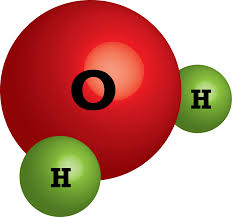
How many atoms are in this molecule?

a)

1

b)

2

c)

3

d)

4

16.
What is an atom mostly made up of?
a)
protons
b)
electrons
c)
empty space
d)
neutrons
17.
Particles that have the same charge
a)
Attract
b)
Repel
c)
Show no action
d)
None of the above
18.
Particles that have different charge will
a)
Attract
b)
Repel
c)
Show no action
d)
None of the above
19.

The atomic number of an atom is 22, therefore it has_______electrons

a)

11

b)

22

c)

44

d)

None of the above

20.
Find the value of N
45 =  N - 24
a)
48
b)
21
c)
69
d)
None of the above
21.
GOLD
a)
Al
b)
Ag
c)
Ar
d)
Au
22.
CHLORINE
a)
C
b)
Ca
c)
Cl
d)
Cu
23.
CALCIUM
a)
C
b)
Ca
c)
Cu
d)
Cl
24.
CARBON
a)
C
b)
Ca
c)
Cl
d)
Cu
25.
COPPER
a)
C
b)
Ca
c)
Cu
d)
Cl
26.
SULFUR
a)
Su
b)
S
c)
Sf
d)
Si
27.
SILVER
a)
Au
b)
Ag
c)
Al
d)
Ar
28.
SILICON
a)
S
b)
Si
c)
Su
d)
Sc
29.
SODIUM
a)
S
b)
So
c)
N
d)
Na
30.
POTASSIUM
a)
P
b)
Ka
c)
K
d)
Pt
31.
How many different elements are in this chemical formula: C2H2ClK3
a)
6
b)
8
c)
2
d)
4
32.
Which of the following is a pure substance?
a)
O2
b)
Al2CO5
c)
C6H12O6
d)
SiO2
33.
What is krypton?
a)
element
b)
compound
c)
mixture
34.
What is water?
a)
element
b)
compound
c)
mixture
35.
What is the chemical symbol for mercury?
a)
Hg
b)
Mc
c)
My
d)
C
36.
a)
Element
b)
Compound
37.
a)
Element
b)
Compound
38.

what is the biggest group on the table

a)

metals

b)

nonmetals

c)

metaloids

d)

halogens

39.

what is the name of group number 1

a)

halogens

b)

noble gases

c)

alkali

d)

alkaline earth

40.

symbols must have at least

a)

1 cap. letter

b)

2 cap. letters

c)

2 lower case letters

d)

any letter you want

41.

The vertical (up and down) columns in the Periodic Table are called

a)

groups

b)

towers

c)

periods

d)

atomic numbers

42.

What are the horizontal rows on the periodic table called?

a)

periods

b)

groups

c)

metals

d)

nonmetals

e)

metalloids

43.

How many valence electrons does the element have?

a)

1

b)

2

c)

3

d)

4

44.

Who discovered the nucleus?

a)

Rutherford

b)

Bohr

c)

Thomson

d)

Dalton

45.

Typically, atoms are more stable when they are

a)

bonded together

b)

apart from each other

46.

Why do atoms bond?

a)

They typically don't bond

b)

To add or take away energy levels

c)

To have a full valance shell.

d)

To have a full inner shell

47.

Ionic bonding is between a

a)

nonmetal and nonmetal

b)

metal and nonmetal

c)

metal and metal

d)

Depends on the situation

48.

Covalent bonding is between a

a)

nonmetal and nonmetal

b)

metal and nonmetal

c)

metal and metal

d)

It depends on the situation

49.

What do positive ions tend to do?

a)

lose electrons

b)

gain electrons

c)

lose protons

d)

gain protons

50.

Predict the bond between Mg and Cl

a)

covalent

b)

ionic

c)

metallic

d)

none of the above

51.

What happens when magnesium loses 2 electrons?

a)

It stabilizes to a net charge of 0

b)

It turns into an atom

c)

It becomes negatively charged

d)

It becomes positively charged

52.

What category of element usually forms a positive ion?

a)

Metals

b)

Nonmetals

c)

metalloids

d)

Noble gases

53.

Which category of elements usually form negative ions?

a)

metals

b)

nonmetals

c)

metalloids

d)

noble gases

54.

CaCl2 is an example of what type of bond?

a)

Covalent

b)

Metallic

c)

Ionic

55.
An ionic bond forms when atoms ___________ electrons.
a)
gain
b)
share
c)
increase
d)
transfer
56.
How many valence electrons in this structure?
a)
6
b)
5
c)
4
d)
7
57.
What type of bond forms between two or more atoms that are charged (+/-)?
a)
Covalent bond
b)
Incomplete bond
c)
Ionic bond
d)
Metallic bond
58.
Which of the following is an example of an IONIC COMPOUND?
a)
NaCl
b)
H2O
c)
CO2
d)
NO
59.
Which of the following is an example of a COVALENT COMPOUND?
a)
H2S
b)
KI
c)
CaCl2
d)
MgO
60.
According to the diagram below, how many bonds will this atom need to make to be stable?
a)
1
b)
2
c)
3
d)
4
61.
The octet rule means that all valence shells want to have the number...... 
a)
1
b)
9
c)
8
d)
16
62.
Which side of a chemical equation is the reactant side?
a)
Left (before the yields sign)
b)
Right (after the yields sign)
63.
Which side of a chemical equation os the product side?
a)
Left (before the yields sign)
b)
Right (after the yields sign)
64.

The two sides of a chemical equation are called?

a)

Reactants (left) and Products (right)

b)

Ingredients (left) and Product (right)

c)

Cations and Anions

d)

Reactants (left) and Results (right)

65.
Freezing Juice?
a)
Physical Change
b)
Chemical Change
66.
Exploding Fireworks?
a)
Physical Change 
b)
Chemical Change 
67.
Melting a chocolate bar?
a)
Physical Change
b)
Chemical Change 
68.
Rotting bananas?
a)
Physical Change
b)
Chemical Change
69.
Cutting your hair?
a)
Physical Change
b)
Chemical Change
70.
A change that does not result in a new substance.
a)
Physical Change
b)
Chemical Change 
71.
A student is creating a potting soil mix. She combines 100 grams of sand, 200 grams of soil, and 200 grams of pebbles to make her potting soil. What is the mass of the potting soil?
a)
100 grams 
b)
200 grams
c)
300 grams
d)
500 grams
72.
Can a same substance undergo both physical and chemical changes.
a)
True
b)
False
73.
How do we know if it is a chemical change?
a)
can be undone
b)
cannot be undone
c)
both
d)
none
74.
What is photosynthesis?
a)
when energy is expose. 
b)
when water and oxygen is composed.
c)
when plants turn carbon dioxide and water into energy. 
d)
none
75.
KMnO4
How many atoms of oxygen are in this molecule?
a)
1
b)
2
c)
4
d)
6
76.
The reactants are on the left side of the chemical equation.
a)
True
b)
False
77.

How many atoms in all are in a molecule of serotonin?

C10H12N2O

a)
22
b)
24
c)
25
d)
4
78.

How many F atoms are in this compound?

6MgF2

a)

2

b)

6

c)

8

d)

12

79.

___________________ are the elements or compounds that leave (are formed in) a chemical reaction.

a)

Polymers

b)

Bonds

c)

Reactants

d)

Products

80.
Photosynthesis is an example of a
a)
physical change
b)
chemical change
81.
What happens when water freezes?
a)
ice is formed; chemical property
b)
cold water is formed; physical change
c)
ice is formed; physical change
d)
cold water is formed; chemical change
82.
How would you separate a mixture of two liquids that mix (miscible)  together perfectly. 
a)
Filtration
b)
Magnetism
c)
Chromatography
d)
Distillation
83.
A block of metal has a mass of 14.0 Kg and a volume of 2.0 Liters what is the density?
a)
14.0 kg/L 
b)
7.0 Kg/L
c)
2.0 Kg/L 
d)
0.5 Kg/l
84.
No Definite Shape and No Definite Volume
a)
Gas
b)
Liquid
c)
Solid
85.
Phase change from a solid to a gas.
a)
sublimation
b)
deposition
c)
condensation
d)
evaporation
86.
A gas
a)
has a definite shape but no definite volume
b)
has a definite volume but no definite shape
c)
has fast-moving particles
87.
What was Dmitri Mendeleev's greatest contribution to the history of the periodic table?
a)
He arranged all of the known elements by their atomic number
b)
He realised that there was a pattern of reactivity which repeated every 8 elements
c)
He predicted the existence (and properties) of new elements
d)
He identified the "law of triads" which became the groups
88.
The periodic table is organized by the number of ______ in each element's nucleus
a)
neutrons
b)
protons
c)
electrons
d)
atoms
89.
Who arranged the first periodic table.
a)
Mosely
b)
Einstein
c)
Mendeleev
d)
Bohr
90.
What property did Menedleev use to organize his first periodic table?
a)
atomic number
b)
atomic mass
c)
alphabetical order
d)
chemical properties
91.
Why did scientists need/want to organize the elements?
a)
Scientists like things organized
b)
make it easier to understand the elements
c)
have one list of the known elements.
d)
none of the above
92.
Why were there blank spaces left in Mendeleev's periodic table?                                              
a)
He didn't know what to put there.
b)
 Undiscovered elements not yet known.
c)
Multiple elements could have fit
d)
He forgot to add the elements in.
93.
Moseley discovered that the ________ was the most fundamental property needed for organization.                                                 
a)
atomic mass
b)
mass number
c)
atomic number
d)
number of protons
94.
A ___________ is an arrangement of elements in columns
a)
columns
b)
rows
c)
periodic table
d)
electron shell
95.

In the modern periodic table elements are arranged by:

a)

atomic mass

b)

atomic number

c)

valence electrons

d)

number of isotopes

96.

I am a British scientist who came up with today's periodic table of elements that is based on ATOMIC NUMBER. Who am i?

a)

Henry G.J Mosely

b)

J.J Thomson

c)

Erwin Schrodinger

d)

John Dalton