wayground logo

Free Printable Worksheets

Font size

S
M
L
XL
Worksheets

100 Question: Semester One Practice Test (Basics)

Total questions: 100

Worksheet time: 5hrs 0mins

Name
Class
Date
1.

A protein is a macromolecule that is used to...

a)

give cells/systems energy.

b)

build cell parts.

c)

give cells/systems long term energy storage.

d)

help cells with chemical processes.

2.

A carbohydrate is a macromolecule that is used to...

a)

give cells/systems energy.

b)

build cell parts.

c)

give cells/systems long term energy storage.

d)

help cells with chemical processes.

3.
The diagram shows the general structure of an amino acid. Which type of molecule is formed from amino acids?
a)
lipids
b)
proteins
c)
carbohydrates
d)
nucleic acids
4.
Fats, oils and cholesterol are all types of what?
a)
cell membranes
b)
hormones
hormones
c)
lipids
d)
fatty acids
5.
RNA and DNA are which type of macromolecules?
a)
carbohydrate
b)
lipid
c)
nucleic acid
d)
protein
6.
Glycerol and fatty acids combine to form...?
a)
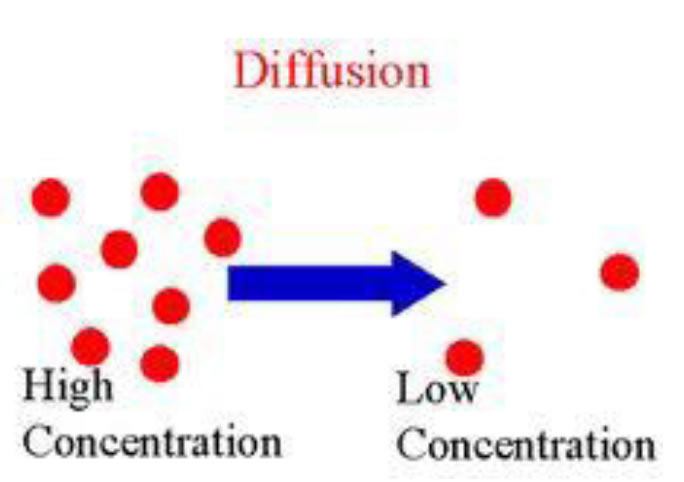
Carbohydrates
b)
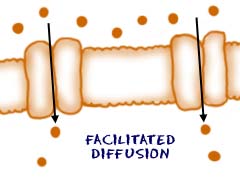
Lipids
c)
Proteins
d)
Nucleic Acids
7.

Which is shown in the picture?

a)

Monsaccharide

b)

Amino Acid

c)

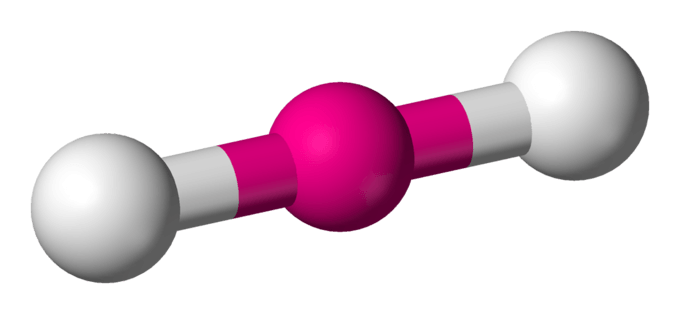
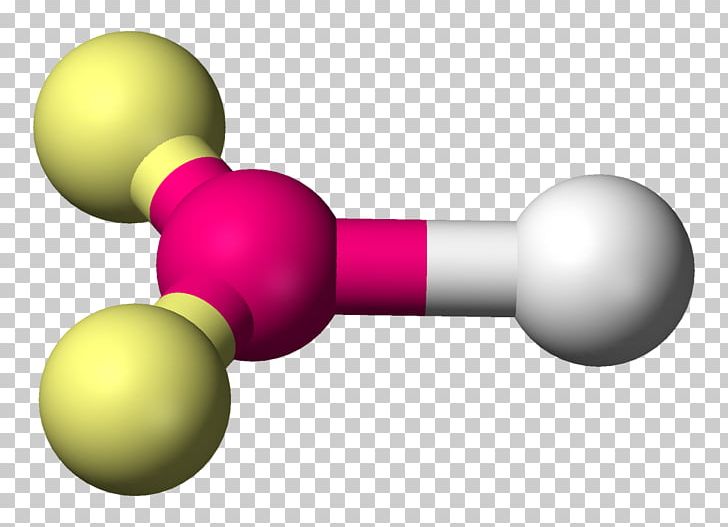
Fatty Acid

d)

Nucleotide

8.

Which is shown in the picture?

a)

Amino Acid (Monomer for a protein)

b)

Nucleotide (Monomer for a nucleic acid)

c)

Fatty Acid (Monomer for a Lipid)

d)

Monosaccharide (Monomer for a Carbohydrate)

9.
The Cell Theory states...
a)
atoms create all matter
b)
living things evolve
c)
the cell is the backbone of all matter
d)
cells are the basic unit of structure and organization of organisms
10.

The _______ is the smallest structural and functional unit of a living thing. (this will be matching on the test)

a)

cell

b)

metabolism

c)

nutrition

d)

defense

11.
Which statement is a part of the cell theory?
a)
all cells come from preexisting cells
b)
bacteria are prokaryotic cells
c)
eukaryotic cells are complex
d)
humans are multicellular
12.

Cell theory states that...

a)

cells are the basic building block of life

b)

cells are cool

c)

cells are microscopic

d)

cells cannot be destroyed

13.
A plant and an animal are both living things. According to the Cell Theory, what can you conclude about these two very different organisms?
a)
Plants have cells but animals do not.
b)
They are both made of one or more cells. 
c)
They both come from the same kind of cell.
d)
They both come from a non-living organism.
14.
A new organism is produced from one parent organism.
a)
Sexual Reproduction
b)
Asexual Reproduction
15.
Mitosis is a type of ________________ reproduction.
a)
Sexual
b)
Asexual
16.
How many daughter cells are produced in mitosis?
a)
1
b)
2
c)
4
d)
6
17.
Where does an off spring get its traits in asexual reproduction?
a)
From both parents
b)
From only one parent
c)
From neither parent
d)
There are no traits handed down
18.

Reproducing asexually will produce offspring ...

a)

genetically different from each other

b)

genetically identical to the parent

19.

During what phase of Mitosis do the chromosomes line up in the Middle

a)

Metaphase

b)

Prophase

c)

Telophase

d)

Anaphase

20.

PMAT helps us remember the correct order of the phases of Mitosis. Which of the following has the phases of Mitosis in the correct Order

a)

Interphase, Mitosis, Cytokinesis

b)

Prophase, Metaphase, Anaphase, Prophase

c)

Anaphase, Telophase, Prophase, Telophase

d)

Prophase, Metaphase, Anaphase, Telophase

21.

In which phase of Mitosis do the Chromosomes pull Apart

a)

Metaphase

b)

Prophase

c)

Anaphase

d)

Telophase

22.
DNA is replicated during the ______ phase of the cell cycle.
a)
G1
b)
Synthesis
c)
G2
d)
G0
23.
What do the cells look like at the end of mitosis?
a)
different from original cell
b)
similar to the original cell
c)
identical to the original cell
d)
none of these
24.
Before cells can divide, what must be copied?
a)
mitochondria
b)
cytoplasm
c)
DNA
d)
Cell Wall
25.
What phase of mitosis is pictured?
a)
Metaphase
b)
Telophase
c)
Prophase
d)
Anaphase
26.
What phase of mitosis is occuring in the picture?
a)
Prophase
b)
Metaphase
c)
Cytokinesis
d)
Telophase
27.
Name the phase:
a)
Prophase
b)
Metaphase
c)
Anaphase
d)
Telophase
28.

Which are sex cells?

a)

Egg cell and bacon

b)

Sperm and egg cell

c)

Sperm cell and egg cell

29.
Which process and type of resulting cells are represented?
a)
mitosis, gametes
b)
mitosis, body cells
c)
meiosis, gametes
d)
meiosis, body cells
30.
What causes genetic variation in meiosis?
a)
chromosomes lining up
b)
crossing over of chromosomes
c)
separation of chromosomes
d)
chromosomes pulling apart
31.
What is one of the advantages, why is it better to reproduce sexually versus asexually?
a)
survival of the fittest
b)
overproduction
c)
genetic variation
d)
cloning
32.
Crossing over helps promote 
a)
male genotype
b)
genetic variation
c)
DNA replication
d)
mitosis
33.
Chromosomes exchange genetic material during 
a)
crossing over
b)
replication
c)
synthesis
d)
translation
34.

CROSSING OVER INCREASES

a)

LIFE SPAN

b)

GENETIC VARIATION

c)

THE NUMBER OF OFF-SPRING

d)

ALL ARE TRUE

35.

MITOSIS

a)

INCREASES GENETIC VARIATION

b)

ALLOWS TRAITS TO BE PASSED ON TO OFFSPRING

c)

PRODUCES 2 IDENTICAL DAUGHTER CELLS

d)

ALL ARE TRUE

36.

The products of meiosis are genetically...

a)

different.

b)

identical.

37.

Identify a purpose of mitosis. Select all that apply.

a)

Produce gametes for reproduction.

b)

Repair damaged or dead cells.

c)

Reduce the chromosome number.

d)

Growth of organisms from birth to adulthood.

38.
Asexual reproduction and mitosis occur in...
a)
Body Cells
b)
Sex Cells or Gametes
39.
The purpose of sexual reproduction and meiosis is to form ________ cells.
a)
body
b)
sex
c)
somatic
d)
brain
40.
Before mitosis or meiosis can begin, DNA must go through Interphase. This is when...
a)
DNA replicates
b)
DNA splits
c)
DNA forms chromosomes
d)
Chromosomes cross over
41.
What causes genetic variation in meiosis?
a)
chromosomes lining up
b)
crossing over of chromosomes
c)
separation of chromosomes
d)
chromosomes pulling apart
42.

Is the body creating more cells during interphase?

a)

No! Cells are growing, duplicating DNA, and preparing for division.

b)

Yes! Cells are reorganizing their chromosomes in order to split the DNA evenly.

43.
Before cells can divide, what must be copied?
a)
mitochondria
b)
cytoplasm
c)
DNA
d)
Cell Wall
44.

Why would it be important to replicate DNAbefore a cell divides in mitosis?

a)

In order for genetic information to be transferred into daughter cells.

b)

In order for the cell to be able to increase in size.

c)

In order for the DNA to be contained in the nucleus.

d)

In order for the cell to re-order the DNA sequencing in the new cells.

45.
In mitosis, the two resulting cells are
a)
different from the starting cell and identical to each other.
b)
different from the starting cell and different from each other.
c)
identical to the starting cell and different from each other.
d)
identical to the starting cell and identical to each other.
46.

Cancer is caused due to

a)

Controlled mitosis

b)

Uncontrolled mitosis

c)

Controlled meiosis

d)

Uncontrolled meiosis

47.

Interphase:

a)

occupies the majority of the cell cycle

b)

includes DNA replication

c)

includes growth of cell

d)

all are correct

48.
What is cancer?
a)
The heart does not receive enough blood.
b)
Sudden disruption of blood flow to part of the brain.
c)
Blood filled weak spot.
d)
Uncontrolled growth and spread of abnormal cells.
49.
What is the function of ATP in living things?
a)
provides energy for cells
b)
stores genetic information
c)
provides structure in the nucleus
50.
Which cellular organelle is responsible for manufacturing ATP?
a)
Ribosome
b)
Nucleus
c)
Mitochondria
d)
Chloroplast
51.
What are the products of photosynthesis?
a)
water and carbon dioxide
b)
oxygen and glucose
c)
oxygen and carbon dioxide
d)
oxygen and water
52.
____________________ provides the energy necessary for photosynthesis.
a)
water
b)
sunlight
c)
glucose
d)
soil
53.
The formula for glucose is...
a)
C12 H22 O11
b)
NaCl
c)
NaOH
d)
C6 H12 O6
54.

Which of the following is the correct equation for PHOTOSYNTHESIS?

a)

6CO2 + light + 6H2O --> 6O2 + Sugar

b)

6CO2 + sugar + 6H2O --> 6O2 + light

c)

6O2 + light + 6H2O --> 6CO2 + Sugar

d)

6CO2 + 6O2 + 6H2O --> Light+ Sugar

55.
What process occurs when light energy is captured in autotrophs and converted into sugar?
a)
Photosynthesis
b)
Cellular Respiration
56.
Which organelle performs PHOTOSYNTHESIS?
a)
Chloroplast
b)
Mitochondria
57.
What are the products of photosynthesis?
a)
water and carbon dioxide
b)
oxygen and glucose
c)
oxygen and carbon dioxide
d)
oxygen and water
58.

Under anaerobic conditions yeast release

a)

oxygen

b)

carbon monoxide

c)

lactic acid

d)

ethyl alcohol

59.
The purpose of cellular respiration is to produce ?
a)
energy
b)
oxygen
c)
sugar
d)
protein
60.
What is the correct equation for cellular respiration?
a)
6O2 + C6H12O6 -> 6CO2 + 6H2O + Energy
b)
6O2 + C6H12O6 + Energy -> 6CO2 + 6H2O
c)
6CO2 + 6H2O -> 6O2 + C6H12O6 + Energy
d)
6CO2 + 6H2O + Energy -> 6O2 + C6H12O6
61.
Fermentation enables glycolysis to continue under 
a)
anaerobic conditions
b)
aerobic conditions
c)
photosynthetic conditions
d)
hydrophobic conditions
62.

Cellular Respiration occurs in what cell organelle?

a)

chloroplast

b)

cytoplasm

c)

mitochondria

d)

animal

63.

Select ALL the products of Cellular Respiration? *clue: 3*

a)

oxygen

b)

glucose

c)

carbon dioxide

d)

water

e)

ATP (energy)

64.

What is important about cellular respiration?

a)

It produces energy from the sun.

b)

It forms sugar.

c)

It transforms sugar into a usable form of energy (ATP)

d)

Only plants perform this process.

65.
What cells in the body may undergo lactic acid fermentation during exercise? 
a)
Muscle cells
b)
Fat cells
c)
Liver cells
d)
Skin cells
66.
In which way are photosynthesis and cellular respiration different?
a)
Cellular respiration stores ATP, while photosynthesis releases ATP.
b)
Cellular respiration produces oxygen, while photosynthesis uses oxygen.
c)
Photosynthesis releases energy, while cellular respiration stores energy.
d)
Photosynthesis used carbon dioxide, while cellular respiration produces carbon dioxide.
67.
What are the products of aerobic respiration?
a)
Glucose and oxygen
b)
Carbon dioxide and water
c)
Lactic acid
d)
Carbon monoxide
68.

The movement of particles from an area of high to low concentration is known as--

a)

Passive Transport

b)

Active Transport

69.

How does a cell maintain homeostasis?

a)

By controlling what enters and leaves the cell

b)

Flexibility

c)

Protective barrier

d)

Structure and support

70.

What is the name of the process in which small molecules move from an area of high concentration to an area of low concentration across the cell membrane

a)

Diffusion

b)

Osmosis

c)

Active Transport

d)

Facilitated Diffusion

71.
a)
Passive Transport
b)
Active Transport
72.
Active Transport typically uses ______ to transport materials across the cell membrane.
a)
ATP
b)
Glucose
c)
Na+
d)
K+
73.
What type of transport is this?
a)
Endocytosis
b)
Facilitated Diffusion
c)
Active Transport Pump
d)
Osmosis
74.
The picture is an example of...
a)
active tranport
b)
passive transport
c)
diffusion
d)
osmosis
75.
What kind of cell is this?
a)
Eukaryotic
b)
Prokaryotic
76.
What type of cell has a nucleus? 
a)
eukaryotic
b)
prokaryotic 
77.
Plants and animal cells are examples of ___ cells 
a)
prokaryotic cells 
b)
eukaryotic cells 
78.
Prokaryotic and eukaryotic cells have many differences, but they also share some common features.  Which of the following may be found in either type of cell?
a)
Golgi bodies
b)
ribosomes
c)
mitochondria
d)
nucleus
79.

All cells have DNA

a)

True

b)

False

80.
Which organelle belongs in both plant and animal cells?
a)
Chloroplast
b)
Cell Wall
c)
Large Central Vacuole
d)
Cell Membrane
81.

Which of the following is the CORRECT list of water's properties?

Read Carefully!

a)

adhesion, cohesion, high specific heat, universal solvent

b)

adhesion, cohesion, low specific heat, universal solvent

c)

adhesion, no cohesion, low specific heat, universal solute

d)

no adhesion, cohesion, high specific heat, universal solute

82.

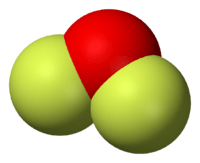
Which of the following is the correct molecular structure for water, H2O?
a)
b)
c)
d)
83.
Large bodies of water do not quickly fluctuate in temperature. Why?
a)
Water is a solvent.
b)
Water has a high heat capacity.
c)
Water acts as a buffer.
d)
Water is non-polar.
84.
Large bodies of water do not quickly fluctuate in temperature. Why?
a)
Water is a solvent.
b)
Water has a high heat capacity.
c)
Water acts as a buffer.
d)
Water is non-polar.
85.
The fact that ice floats on liquid water is due to the fact that water's solid is ___________ than it's liquid form
a)
less polar
b)
more polar
c)
less dense
d)
more dense
86.
Water is a universal solvent because it...
a)
It can be found anywhere
b)
It freezes when it gets cold
c)
floats when frozen
d)
Dissolves most substances
87.
Water is essential for life. Its special properties make water the single most important molecule in plant life. Which of the following properties of water enables it to move from the roots to the leaves of plants?
a)
Water expands as it freezes.
b)
Water is an excellent solvent.
c)
Water exhibits cohesive behavior.
d)
Water is able to moderate temperature.
88.
Large bodies of water, such as lakes and oceans, do not quickly fluctuate in temperature. What is the reason for this phenomenon?
a)
Water is an acid.
b)
Water is a versatile solvent.
c)
Water has a high heat capacity.
d)
 Water acts as a buffer.
89.
Why does ice stay at the top of oceans instead of sinking to the bottom?
a)
 Ice is colder than liquid water.
b)
Ice is less dense than liquid water.
c)
Ice is more dense than liquid water.
d)
Ice is warmer than liquid water.
90.

What is an inference?

a)

an idea using prior experiences that guesses the square root of pi

b)

an idea (or prediction) using evidence and prior knowledge

c)

using your five senses to get information about the world

91.
When experimenting with the growth of a plant, a scientist uses three (of the same type of) plants, two different fertilizers, equal light, and equal water. What type of variable is the fertilizer?
a)
Dependent
b)
Independent
c)
Control
d)
Constant
92.
Why should an experiment be repeated?
a)
to form a hypothesis
b)
to reduce the chance of error
c)
to change constants
d)
to identify the problem
93.

A biology student designed an experiment to test music on plant growth. She set up five plants in a soundproof room with music playing continuously during daylight hours. She put five other plants in a second soundproof room with no music playing. She set up a bank of grow-lights in each room and gave all plants the same amount of water, fertilizer, soil, and light.In the above example, what is the independent variable?

a)

type of fertilizer used

b)

amount of growth seen

c)

types of plants used

d)

music playing

94.

A biology student designed an experiment to test music on plant growth. She set up five plants in a soundproof room with music playing continuously during daylight hours. She put five other plants in a second soundproof room with no music playing. She set up a bank of grow-lights in each room and gave all plants the same amount of water, fertilizer, soil, and light.In the above example, what is the dependent variable?

a)

Music played

b)

type of plants used

c)

type of fertilizer used

d)

amount of growth recorded

95.
Which of the following is the independent variable in the experiment shown in the image?
a)
amount of chlorine used
b)
volume of water used
c)
length of time of the experiment
d)
temperature of the test tubes
96.
Which of the following is not an example of scientific honesty?
a)
Reporting when data was collected as the result of an equipment malfunction
b)
Discussing all sources of error
c)
Citing work of previous experiments that informed the current experiment
d)
Manipulating graphs or statistical analyses to fit a hypothesis
97.

Which is a sign that the author is not credible?

a)

.edu

b)

a respectable author

c)

a bibliography

d)

no author

98.

Which is a sign that the site is credible?

a)

misspelled words

b)

.org

c)

angry rant

d)

.com

99.

Which of the following is not used to determine the reliability of a resource:

a)

objectivity

b)

fact-based

c)

credibility

d)

creativity

100.

To see if an author is credible you might:

a)

Answer A: research him or her to learn more about their credentials

b)

Answer B: see how many likes the article got

c)

Answer C: look at the sources that he or she cited

d)

Both- Answers A and C