Wayground logo

Free Printable Worksheets

Font size

S
M
L
XL
Worksheets

Human Body Systems Exam Review

Total questions: 65

Worksheet time: 51mins

Name
Class
Date
1.
What process best explains how muscle cells and nerve cells can develop from the same fertilized egg?
a)
genetic engineering
b)
survival of the fittest
c)
differentiation
d)
selective breeding
2.

Tiny projections that increase surface area for absorption.

a)

Villi

b)

Rugae

c)

Bolus

d)

Flora

3.
What function do the kidneys perform?
a)
eliminate carbon dioxide
b)
supply oxygen to body cells
c)
remove urea and excess water
d)
play a role in gas exchange
4.
This tissue carries nutrients, waste, respiratory gases, and many other substances throughout the body.
a)
Bone
b)
Cartilage
c)
Blood
d)
Adipose
5.
Which connective tissue contains a gel-like matrix and is found in the nose, ear, and at the end of bones.
a)
Bone
b)
Cartilage
c)
Blood
d)
Adipose
6.
Attach muscles to bones
a)
Tendons
b)
Ligaments
7.
This type of dense connective tissue connects bone to bone at joints 
a)
Tendons
b)
Ligaments
8.
Which organ of the excretory system stores urine until the body is ready to eliminate it?
a)
ureters
b)
urethra
c)
urinary bladder
d)
urea
9.

The majority of the absorption of nutrients into the bloodstream occurs in the _______.

a)

Stomach

b)

Small intestine

c)

Large intestine

d)

Liver

10.

Identify the correct function of platelets

a)

Transport oxygen to the working muscles

b)

Fight infection and disease

c)

Form scabs around the site of a wound

d)

Allows the blood to flow

11.
The main purpose of Red Blood Cells is to 
a)
carry gases, wastes, and nutrients
b)
attack and destroy pathogens
c)
clot the blood
d)
digest food
12.
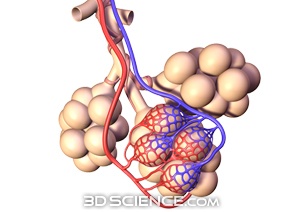
When you breathe, your lungs take in ___ and remove ___. 
a)
air/oxygen
b)
oxygen/carbon dioxide 
c)
carbon dioxide/waste 
d)
waste/air 
13.
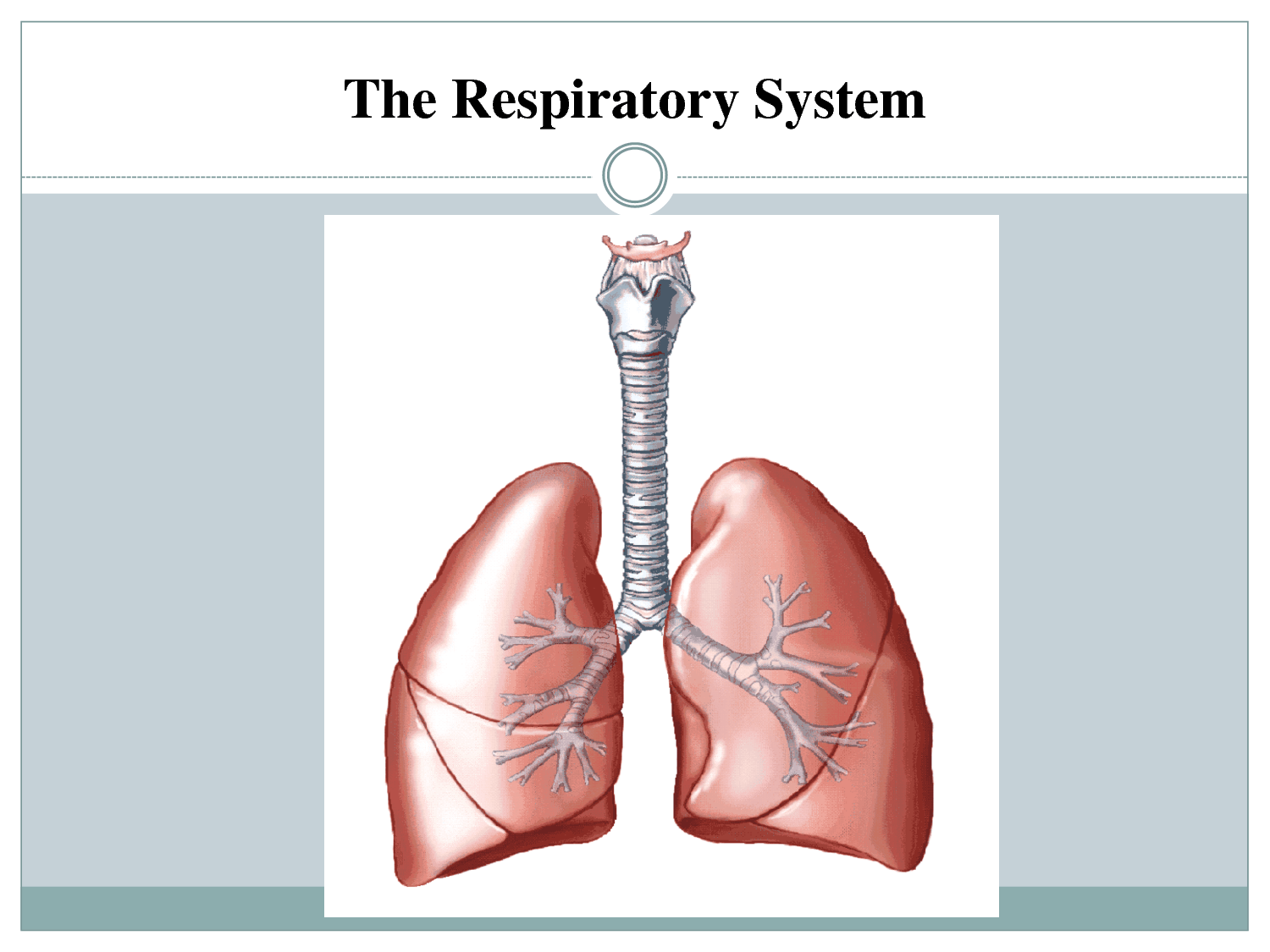
What is the main function of the respiratory system?
a)
to provide oxygen and remove carbon dioxide from the body
b)
to bring oxygen to the body
c)
to break down food and absorb nutrients
d)
to remove oxygen from the body and deliver carbon dioxide
14.
Given the following structures:
1. larynx
2. nasal cavity
3. pharynx
4. trachea
Which of the following is the correct order that air would flow during inhalation. 
a)
1,2,3,4
b)
2,3,1,4
c)
2,1,3,4
d)
4,2,3,1 
15.

The nerve cells in your body are called neurons. From the picture which part of the neuron is most likely responsible for carrying signals between the dendrite and axon terminal?

a)

soma

b)

axon

c)

Node of Ranvier

d)

Schwann cell

16.
This insulating material forms a layer, around the axon of a neuron.  It enables electrical signals to travel down the axon at higher speeds.
a)
neuron
b)
myelin sheath
c)
dendrite
d)
neurotransmitter
17.

Why would the body benefit from vasodilation as part of its recovery?

a)

Increased blood flow allows delivery of nutrients and blood cells to the damaged site.

b)

It reduces loss of blood.

c)

Increased blood flow will reduce phagocytosis.

d)

It will allow damaged cells from the area to be removed.

18.

Which is not a characteristic of inflammation?

a)

increased temperature

b)

redness

c)

loss of function

d)

bluish discoloration

19.
These cells activate killer T cells and other helper T cells as well as activate B cells
a)
Helper T Cells
b)
Cytotoxic T Cells
c)
Macrophages
d)
Suppressor Cells
20.
A white blood cell that makes antibodies
a)
T cell
b)
bacteria
c)
B cell
d)
mast cell
21.
Proteins produced by B cells and designed to mark antigens to be destroyed, specific to the antigen.
a)
Antigens
b)
Active Immunity
c)
Antibodies
d)
Antibiotics
22.
The part of foreign materials that cause a response from the immune system are called _____________________.
a)
Antigens
b)
Active Immunity
c)
Antibodies
d)
Antibiotics
23.
What is the role of antibodies?
a)
Kills pathogens
b)
Helps activate other immune cells
c)
Produces antibodies
d)
Binds to antigens and neutralizes pathogen
24.

A vaccination

a)

Is a type of white blood cell that eats bacteria

b)

Protects your body via needle or capsule

c)

Causes your body to react as if it had met a pathogen

d)

Is made up of collagen, and can be in the form of gelatine

25.

Which system functions primarily to coordinate the body’s response to changes in its internal and external environment?

a)

digestive system

b)

excretory system

c)

nervous system

d)

skeletal system

26.
The basic unit of structure and function for the body.
a)
cell
b)
atom
c)
organelle
d)
nucleus
27.

A structure made up of different types of tissue and performs a specific job.

a)

cells

b)

tissue

c)

organ

d)

organ system

28.
A group of similar cells that perform the same function.
a)
tissue
b)
organelle
c)
mass
d)
tendon
29.
A group of organs that work together to perform a major function is an organ
a)
system
b)
column
c)
bank
d)
stack
30.

What is the main function of the endocrine system?

a)

It creates chemicals, or hormones, that are sent around the body to maintain homeostasis.

b)

It creates electrical messages that are sent around the body to maintain homeostasis.

c)

It maintains the correct level of oxygen in the body to maintain homeostasis.

d)

It releases waste from the body to maintain homeostasis.

31.
The gland that stimulates body metabolism
a)
Thyroid
b)
testes
c)
ovary
d)
adrenal
32.

Which of the following are chemicals that travel in the blood and cause changes in different parts of the body?

a)

Hormones

b)

Glands

c)

Parathyroid

d)

Adrenal Gland

33.

Hormone regulation operates under which type of feedback mechanism?

a)

positive feedback

b)

negative feedback

c)

zero feedback

d)

Hormones are not regulated

34.
If the environment gets cold, we will often shiver in order to:
a)
keep body temperature the same as the external temperature
b)
decrease body temperature
c)
increase body temperature
d)
regulate blood pressure
35.

What type of product is secreted by endocrine glands?

a)

Sweat

b)

Hormones

c)

Saliva

d)

Tears

36.
the reproductive organs that produce sperm and testosterone
a)
prostate gland & seminal vesicle
b)
testes or testicles
c)
semen
37.

The sex cells that are made by the testes and are needed to fertilize eggs

a)

sperm

b)

vas deferens

c)

epididymis

38.

Reproductive organs that produce eggs, progesterone and estrogen

a)

cervix

b)

vagina

c)

ovaries

39.

Sex cells of females that can be fertilized by sperm

a)

ovaries

b)

eggs or ovum

c)

uterus

40.
The picture below is an example of _________________.
a)
osmosis
b)
isotonic
c)
diffusion
d)
active transport
41.
 An animal cell placed in a hypertonic (salty) solution will
a)
Stay the same
b)
Shrink- get smaller
c)
Swell- get bigger
42.

What happened to the CELL WALL and the CELL MEMBRANE in these plant cells?

a)

Both the CELL WALL and CELL MEMBRANE shrunk

b)

Only the CELL WALL shrunk, the CELL MEMBRANE stayed the same

c)

The CELL WALL stayed the same, only the CELL MEMBRANE shrunk

d)

Both the CELL WALL and CELL MEMBRANE stayed the same

43.
Permeable means
a)
things can pass through
b)
the concentration levels are different
c)
it is permanent
d)
things are stuck
44.
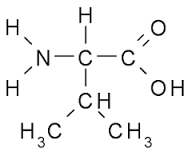
Which biomolecule is this a picture of?
a)
Protein
b)
Nucleic Acid
c)
Lipid
d)
Carbohydrate
45.
Carbon, Hydrogen, Oxygen and Nitrogen are elements in what biomolecule?
a)
Carbohydrate
b)
Lipid
c)
Protein
d)
Nucleic acid
46.
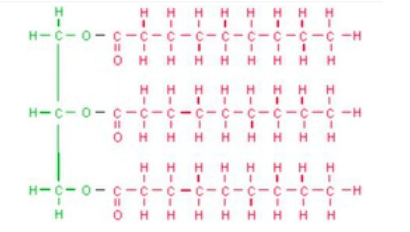
Which biomolecule is this a picture of?
a)
Protein
b)
Nucleic Acid
c)
Lipid
d)
Carbohydrate
47.
Organisms whose cells have NO nucleus are classified as...
a)
Eukaryotic
b)
Prokaryotic
c)
Dead
48.
A vaccine makes people immune to a disease by causing their bodies to make
a)
bacteria
b)
virus-fighting antibodies
c)
antibiotics 
d)
more protective skin cells
49.
All bacteria have DNA. 
a)
true
b)
false
50.

Layer outside the cell membrane that gives the bacterial cell a solid shape.

a)

Cytoplasm

b)

Cell wall

c)

Plasma membrane

d)

Pilli

51.

Select all that are products of Photosynthesis.

a)

Water

b)

Carbon Dioxide

c)

Oxygen

d)

Sunlight (Light Energy)

e)

Glucose (Sugar/food)

52.
The main source of energy for all life comes from ____.
a)
the Earth
b)
the moon
c)
the sun
d)
the food we eat/make
53.

The first phase of mitosis is called _______________ .

a)

telophase

b)

metaphase

c)

anaphase

d)

prophase

54.

The stage of mitosis where the sister chromatids separate:

a)

prophase

b)

anaphase

c)

telophase

d)

metaphase

55.

During mitosis chromosomes meet in the middle to get divided into two daughter cells in a phase called:

a)

prophase

b)

anaphase

c)

metaphase

d)

telophase

56.

The final stage of the cell cycle is called:

a)

Interphase

b)

mitosis

c)

cytokinesis

d)

daughter cells

57.

The three stages of the cell cycle are __________, mitosis, and

cytokinesis.

a)

interphase

b)

anaphase

c)

metaphase

d)

prophase

58.
Which of the following best describes a DNA molecule?
a)
double helix
b)
contains ribose
c)
made of amino acids
d)
contains Uracil
59.
What is the process of turning DNA into mRNA?
a)
Central Dogma
b)
Transcription
c)
Translation
d)
Trapezoid
60.
Which type of RNA takes the instructions from the nucleus to the cytoplasm?
a)
mRNA
b)
tRNA
c)
rRNA
d)
RNA polymerase
61.
How does RNA differ from DNA?
a)
RNA contains uracil and deoxyribose
b)
RNA contains ribose and thymine
c)
RNA contains uracil and ribose
d)
RNA contains adenine and ribose
62.
Colorblindness is a sex-linked recessive disorder. A normal woman whose father was colorblind marries a man with normal color vision. What percentage of their sons will be colorblind?
a)
0%
b)
25%
c)
50%
d)
100%
63.
Structures that are inherited from a common ancestor are homologous.
a)
True
b)
False
64.
Humans, birds, whales, and lizards all have similar arm bones. What is the reason for this?
a)
The function of these bones is the same in all animals
b)
They live in similar environments
c)
They have a common ancestor
d)
All organisms resemble humans
65.
Bird wings and butterfly wings are an example of
a)
Homologous structure
b)
Analogous structure
c)
Mimicry
d)
Camoflague