
NEW
Font size
S
M
L
XL
 Worksheets
U8: Conservation of Mass Review
Total questions: 40
Worksheet time: 57mins
Name
Class
Date
1.
In a reaction A + B ----> C, reactant A has 5g and product C has 9g. How many grams does reactant B should have?
a)
4g
b)
5g
c)
9g
d)
14g
2.
The number in front of a compound or element is a
a)
Subscript
b)
Coefficient
c)
Superscript
d)
Charge
3.
Which is Chemical Equation is Balanced?
a)
CH₄+O₂------CO₂+2H₂O
b)
H₂+O₂-----2H₂O₄
c)
4Al+3O₂-----2Al₂O₃
4.
How many nitrogen atoms does NH3 have?
a)
1
b)
2
c)
3
d)
4
5.

How many oxygen atoms are in this chemical formula?
a)
6 oxygen atoms
b)
2 oxygen atoms
c)
3 oxygen atoms
d)
4 oxygen atoms
6.
Which Chemical Equation is Balanced?
a)
CH₄+O₂------CO₂+2H₂O
b)
H₂+O₂-----2H₂O₄
c)
4Al+3O₂-----2Al₂O₃
7.
Bob puts 200 grams of ice into a pitcher with 900 grams of water. He gets distracted and comes back later to find that the ice has melted in the water. How many grams of water does Bob now have in the pitcher?
a)
200 g
b)
700 g
c)
1,100 g
8.
24 g of magnesium reacts with 38 g of fluorine to produce _____ g magnesium fluoride
a)
62
b)
38
c)
24
d)
14
9.
What is the law of conservation of mass?
a)
The amount of matter changes when reacted or changed.
b)
The mass of all reactants are changed during a physical or chemical change
c)
The mass of the reactants equals the mass of the products
d)
The mass of the products is different than the mass of the reactants.
10.
Students react baking soda & vinegar.
Which of the following would provide the evidence that the number of atoms present before a chemical reaction is equal to the number of atoms present after the chemical reaction?
Which of the following would provide the evidence that the number of atoms present before a chemical reaction is equal to the number of atoms present after the chemical reaction?
a)
The mass of the plastic bag, baking soda, and vinegar before the reaction was equal to the mass after the reaction.
b)
Bubbles were produced during the reaction, which meant that a gas was being produced.
c)
The plastic bag did not change in any way, indicating that it was not involved in the reaction.
d)
The mass of the baking soda was exactly equal to the mass of the vinegar used to create the chemical reaction.
11.
When CaCO3 is heated, it forms CaO and CO2. Which of these statements best describes the mass of the products if 100 g of CaCO3 is heated?
a)
The difference in the products’ masses is equal to the mass of the CaCO3
b)
The sum of the products’ masses is less than the mass of the CaCO3
c)
The mass of each product is equal to the mass of the CaCO3
d)
The sum of the products’ masses equals the mass of the CaCO3
12.
What will weigh more when a chemical change is complete? The reactants before the chemical reaction, or the product after the reaction is complete?
a)
They both will weigh the same
b)
The product always weighs more than the reactant
c)
The reactant will weigh more than the product
d)
They both will loose mass after the reaction
13.
Suppose a reaction were to happen in an open container in a lab. During the reaction, the scientist observes the chemicals bubble, and produce a gas. During the analysis the scientist notices that the reactants weighed 20 g when he started, and the product weighed 18 g. Explain what happened.
a)
His chemical reaction defied the law of conservation of mass
b)
The product destroyed mass during the reaction
c)
The reactants created matter during the reaction
d)
The gas that was produced was not able to be weighed since the container was open.
14.
What is the atomic number?
a)
the number of protons
b)
the number of protons and neutrons
c)
the number of neutrons
d)
the number of protons and electrons
15.
What is the mass number?
a)
the number of protons
b)
the number of protons and neutrons
c)
the number of neutrons
d)
the number of protons and electrons
16.
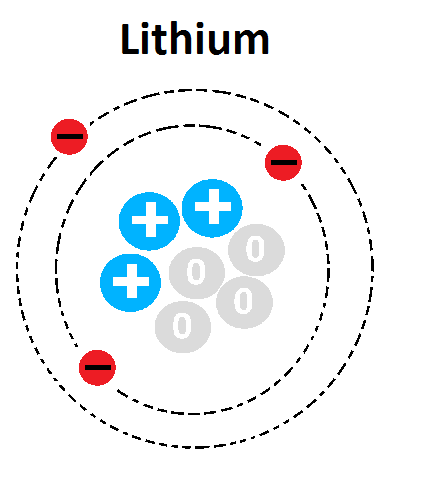
What is the atomic mass of this atom?
a)
1
b)
3
c)
4
d)
7
17.
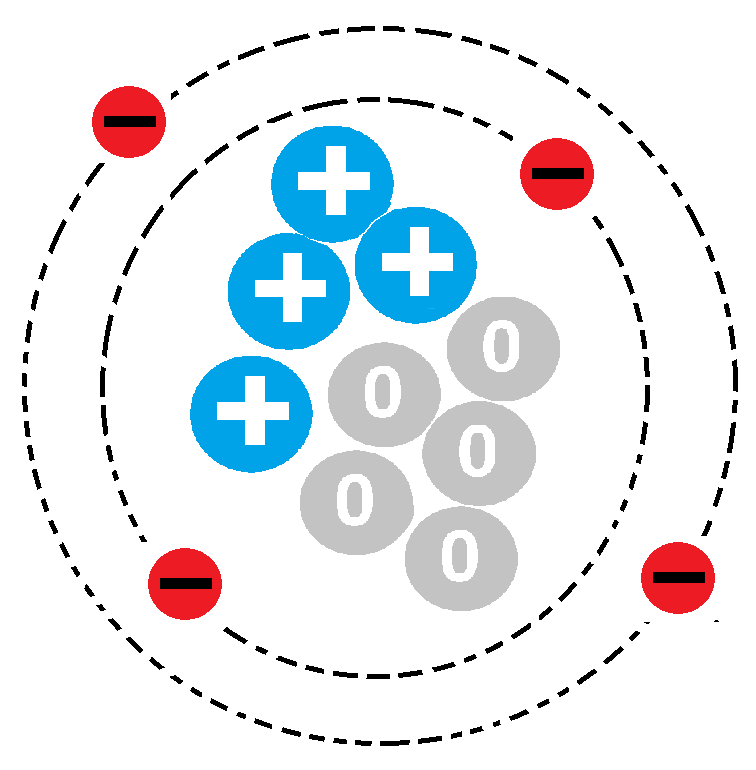
What is the atomic number of this atom?
a)
4
b)
5
c)
9
d)
none of the above
18.

What is the mass number of this atom?
a)
4
b)
5
c)
9
d)
none of the above
19.
Which side of a chemical equation is the product side?
a)
Left (before the yields sign)
b)
Right (after the yields sign)
20.
What is a coefficient?
a)
The small number on the right of the chemical symbol.
b)
The large number to the left of a formula.
21.
A replacement occurs when...
a)
Two formulas combine.
b)
A formula breaks apart.
c)
An atom is replaced during a reaction.
22.
Decomposition occurs when...
a)
Two formulas combine.
b)
A formula breaks apart.
c)
An atom is replaced during a reaction.
23.
A synthesis occurs when...
a)
Two formulas combine.
b)
A formula breaks apart.
c)
An atom is replaced during a reaction.
24.
Which side of a chemical equation is the reactant side?
a)
Left (before the yields sign)
b)
Right (after the yields sign)
25.
Which problem is balanced?
a)
PbO2 + 2H2
b)
SO2 + H20 --> H2SO4
c)
2Na + 2H2O --> 2NaOH + H2
26.
Is the equation balanced?: 2H2O + O2 --> 4MgO + 3Fe
a)
Yes
b)
No
27.
How would this equation be classified?
O2 + 2H2 --> 2H2O
O2 + 2H2 --> 2H2O
a)
Synthesis
b)
Decomposition
c)
Combustion
d)
Single Displacement
28.
Balance this equation:
MgCl2 --> Mg4+ Cl2
MgCl2 --> Mg4+ Cl2
a)
It's already balanced.
b)
4MgCl2 --> Mg4+ 4Cl2
c)
4MgCl2 --> Mg4+ 5Cl2
29.
Balance this equation:
FeS + 2HCl -->
FeCl2 + H2O
FeS + 2HCl -->
FeCl2 + H2O
a)
FeS2 + 2HCl --> FeCl2 + H2O
b)
It's already balanced
c)
FeS2 + 2HCl --> FeCl2 + H4O
d)
None of these
30.
Balance this equation:
2Li + Cl2 -> LiCl
2Li + Cl2 -> LiCl
a)
2Li + Cl2 -> 4LiCl2
b)
2Li + Cl2 -> LiCl2
c)
2Li + Cl2 -> 2LiCl
31.
What is the right ratio of chemicals for the BCE (Balanced Chemical Equation)?__Na + __H2O --> __NaOH + __H2
a)
2,2 --> 2,1
b)
4,4 --> 4,1
c)
1,2 --> 2,4
d)
1,2 --> 2,1
32.
What is the right ratio of chemicals for the BCE (Balanced Chemical Equation)?
__Ca + __H2O --> __Ca(OH)2 + __H2
a)
2,1 --> 2,1
b)
1,2 --> 1,1
c)
1,2 --> 2,4
d)
1,2 --> 2,1
33.
What is the right ratio of chemicals for the BCE (Balanced Chemical Equation)?__CO + __Fe2O3--> __Fe + __CO2
a)
3,1 --> 2,3
b)
3,2 --> 1,1
c)
3,2 --> 2,4
d)
3,2 --> 2,1
34.
What is the right ratio of chemicals for the BCE (Balanced Chemical Equation)?__CH4 + __O2 --> __CO2+ __H2O
a)
2,1 --> 2,1
b)
1,2 --> 1,1
c)
1,2 --> 1,2
d)
1,2 --> 2,1
35.
What is the right ratio of chemicals for the BCE (Balanced Chemical Equation)?__AgNO3 + __H2S --> __Ag2S+ __HNO3
a)
2,1 --> 1,2
b)
1,2 --> 1,1
c)
1,2 --> 1,2
d)
1,2 --> 2,1
36.
What is the right ratio of chemicals for the BCE (Balanced Chemical Equation)?__H2SO3 + __KOH--> __H2O+ __K2SO3
a)
2,1 --> 2,1
b)
1,2 --> 1,1
c)
1,2 --> 1,2
d)
1,2 --> 2,1
37.
What is the right ratio of chemicals for the BCE (Balanced Chemical Equation)?__H2 + __S --> __H2S
a)
1,1 --> 1
b)
2,2 --> 2
c)
1,2 --> 1
d)
1,2 --> 2
38.
What is the right ratio of chemicals for the BCE (Balanced Chemical Equation)?__Al + __O2--> __Al2O3
a)
4,1 --> 2
b)
4,3 --> 4
c)
3,4 --> 1
d)
4,3 --> 2
39.
What is the right ratio of chemicals for the BCE (Balanced Chemical Equation)?__MnO2 + __HCl --> __MnCl2 + __H2O __Cl2
a)
4,1 --> 2,1,2
b)
1,2 --> 1,1,4
c)
1,4 --> 1,2,1
d)
1,4 --> 2,2,1
40.
What is the right ratio of chemicals for the BCE (Balanced Chemical Equation)?__FeCl3 + __Ca(OH)2 --> __Fe(OH)3 + __CaCl2
a)
4,3--> 2,1
b)
3,2 --> 3,1
c)
2,3 --> 2,2
d)
2,3 --> 2,3
Reset

