wayground logo

Free Printable Worksheets

Font size

S
M
L
XL
Worksheets

Evolution, Natural Selection, and some other stuff too

Total questions: 72

Worksheet time: 2hrs 38mins

Name
Class
Date
1.

What is gradual change in a species over time

a)

evolution

b)

natural selection

c)

diversity

d)

extinct

2.

What is the process by which individuals are better adapted to their environment and are more likely to survive

a)

mutation

b)

variation

c)

natural selection

d)

fossil

3.

What are any difference between organisms of the same species

a)

Homologous Structure

b)

Diversity

c)

Fossil

d)

Variation

4.

The variety of organisms that inhabit the Earth

a)

diversity

b)

mutation

c)

evolution

d)

natural selection

5.
What is a change in an organism that allows for it to survive in its environment?
a)
homologous
b)
vestigial
c)
variation
d)
adaptation
6.
Which layer is the oldest?
a)
1
b)
2
c)
3
d)
4
7.
What is an organism that has similar characteristics and can reproduce?
a)
species
b)
organism
c)
embryology
d)
vestigial 
8.
When the DNA of an organism is altered it is referred to as…
a)
Mutation
b)
Gene Flow
c)
Genetic Drift
d)
Sexual Selection
9.
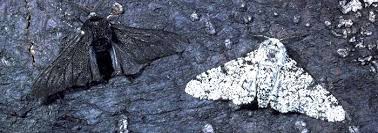
Predict which moth would increase in population
a)
light 
b)
dark
10.
Two organisms that are closely related would have
a)
very similar DNA sequence
b)
exactly the same DNA sequences
c)
no proteins in common
d)
completely different DNA sequence
11.
This picture is an example of
a)
homologous structures
b)
embryological similarities
c)
analogous structures
d)
vestigial structures
12.

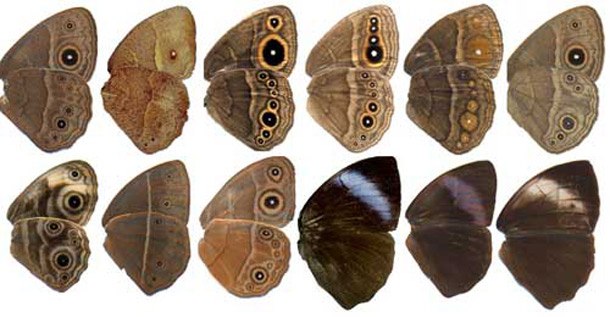
These moths are all the same species. The differences between their wings is an example of ________________

a)

Natural Selection

b)

Variation

c)

An acquired trait

d)

Extinction

13.
The struggle for existence against other members of an organisms species is
a)
Competition
b)
Natural Selection
c)
gene flow
d)
genetic drift
14.
Why are advantageous traits more likely to be passed on to the offspring?
a)
Because parents with those traits can teach their offspring
b)
Because parents with those traits can surive and reproduce better
c)
Because parents with those traits care more about their offspring
15.

The chart shows that species B and C have the fewest amino acid differences for a protein among four species. What does this suggest about their evolutionary relationship?

a)

They are more closely related to each other than to the other species

b)

They evolved at a faster rate compared to other species

c)

They share a developmental similarity not observed in the other species

d)

They do not share a common ancestor with the other species

16.

Which of the following observations best supports the conclusion that two animal species evolved from a common ancestor in recent geological history?

a)

The species are both herbivores.

b)

The species both obtain oxygen from the air.

c)

The species live in the same environment.

d)

The species have similar bone structure.

17.

Millions of years ago, a small population of birds lived on the Hawaiian Islands. Over time, this population evolved into more than 54 separate species, each with different colors, beak shapes, and food sources.


Which of the following best explains why the original population of birds evolved into so many different species?

a)

The bird population moved into and adapted to many different environments on the Hawaiian Islands.

b)

Many of the birds were killed each time a volcano erupted on the Hawaiian Islands.

c)

The Hawaiian Islands had few predator species to decrease the lifespan of the birds.

d)

The climate of the Hawaiian Islands rarely changed, which helped the bird population increase in size.

18.

The figure shows the limbs of several different organisms. Which term describes these structures?

a)

homologous

b)

analogous

c)

vestigial

19.

Some organisms have remnants of a structure that may have had an important function for an ancestor, but serves no clear function in the modern species. Which term describes these structures?

a)

homologous

b)

analogous

c)

vestigial

20.

How would you expect the population of beetles shown in this figure to change over time due to natural selection?

a)

Over time the percentage of striped-winged beetles will increase.

b)

Over time the percentage of dark-winged beetles will increase.

c)

The dark-winged beetles will adapt to have striped wings.

d)

The dark-winged beetles will eat the striped-winged beetles.

21.
When lions prey on a herd of antelopes, some antelopes are killed and some escape. Which part of Darwin’s concept of natural selection might be used to describe this situation?
a)
reproductive isolation
b)
descent with modification
c)
acquired characteristics
d)
survival of the fittest
22.
In a particular population, sexual reproduction can produce
a)
many different phenotypes.
b)
meiosis.
c)
mutations.
23.
According to Darwin’s theory of natural selection, the individuals that tend to survive are those that have
a)
characteristics their parents acquired by use and disuse.
b)
the greatest number of offspring.
c)
characteristics that plant and animal breeders value.
d)
variations best suited to the environment.
24.
Natural selection and evolution work on what level of life organization?
a)
individuals
b)
biomes
c)
populations
d)
ecosystems
25.
Organisms with traits that are favorable to their survival and reproduction are ________ likely to pass on their genes to the next generation, and thus ________ common in the population
a)
more, less
b)
more, more
c)
less, less
d)
less, more
26.
Comparing two individuals of a species, evolutionary “fitness” would be best measured by which of the following?
a)
the length and width of the individuals
b)
the number of offspring
c)
the mass of the food eaten in its life
d)
the mass of the individuals
27.

Individual organisms evolve their genes to best fit their environment.

a)

True

b)

False

28.

Which of the following can be used to study the early development of organisms to figure out similiarities to other species that cannot be seen in adult form?

a)

Ethology

b)

Embryology

c)

Biochemistry

d)

Anatomy

29.

How would you best define a selective advantage?

a)

The trait allows the organism to attract more mates more often

b)

The trait allows the organism to spot predators easier

c)

The trait causes the organism to require more food in order to survive

d)

The trait causes the organism to require less food in order to survive

30.

The movement of genes into and out of a gene pool is

a)

Gene Flow

b)

Extinction

c)

Random Mating

d)

Emigration

31.

What is the human appendix an example of?

a)

Analogous Structure

b)

Homologous Structure

c)

Extinction

d)

Vestigial Structure

32.
Which best describes the role of mutations in natural selection?
a)
Mutations help an organism to better survive in their environment
b)
An organism may acquire a helpful mutation by interacting with the environment
c)
A mutation may result in an adaptive trait that makes an organism more likely to survive and reproduce
d)
Organisms with certain traits are more likely to win competitions for mutations
33.
The diagram illustrates an embryonic stage of two organisms. Which of the following can be determined by observing the embryos shown in the diagram?  
a)
 The organisms share a common ancestry. 
b)
The organisms belong to the same genus.
c)
The organisms are native to the same geographic areas.
d)
The organisms will grow into anatomically similar adults
34.
Which of the following best illustrates natural selection?
a)
An organism with favorable genetic variations will tend to survive and breed successfully.
b)
A population monopolizes all of the resources in its habitat, forcing other species to migrate.
c)
A community whose members work together utilizing all existing resources and migratory  routes.
d)
The largest organisms in a species receive the only breeding opportunities
35.
Which explains why the tortoises on the different islands of the Galápagos had slightly different variations in their shells?
a)
The different tortoises were different species.
b)
The environment on each island was different.
c)
Each type of tortoise could survive only on its  own island.
d)
They arrived on the islands from different continents.
36.

A butterfly wing and a bird wing are structures that are

a)

homologous

b)

analogous

c)

vestigial

37.

The wings of a flightless bird, such as an ostrich are considered

a)

homologous structures

b)

analogous structures

c)

vestigial structures

38.

The forearms of a bat and the forearms of a human are structures that are

a)

homologous

b)

analogous

c)

vestigial

39.

An organisms evolutionary fitness is measured by

a)

how much they eat

b)

where they live

c)

their ability to survive and reproduce

40.

Which on the these fossils is least ancient?

a)
b)
c)
d)
41.
DNA and RNA are examples of...
a)
proteins
b)
nucleic acids
c)
carbohydrates
d)
lipids
42.
What is the function of nucleic acids?
a)
Stores energy
b)
Stores genetic information
c)
Movement
d)
Physical structure
43.
What is the monomer of nucleic acids?
a)
Glycerol
b)
Monosaccharides
c)
Amino Acids
d)
Nucleotides
44.
What are the components of a nucleotide?
a)
nitrogen base, phosphate group, and pentose sugar
b)
pentose sugar, purine, and pyrimidine
c)
nitrogen base and a phosphate group
d)
DNA, phosphate group, monosaccharide
45.
The monomer, building block, of DNA and RNA; made up of a sugar, phosphate, and nitrogenous base
a)
Amino Acid
b)
Fatty Acid
c)
Nucleotide
d)
Monosaccharide
46.

Which Nitrogen bases go together?

a)

Adenine and Cytosine

b)

Adenine and Thymine

c)

Cytosine and Guanine

d)

Thymine and Guanine

47.

Steps or rungs of ladder, are made up of:

a)

Nitrogen containing bases that connect in center by weak hydrogen bonds.

b)

Nitrogen containing bases that connect in the center by carbohydrate bonds

c)

Nitrogen containing bases that connect in the center by weak phosphate bonds

d)

Nitrogen containing bases that connect in the center by strong phosphate bonds
48.
The end result of amino acids joining together in translation is a....
a)
polysaccharide
b)
protein
c)
DNA
d)
RNA
49.
If AAGAGG went through DNA replication, the complementary bases would be....
a)
TTCTCC
b)
UUCUCC
50.
If you have 40 adenine in a DNA molecule, how many thymine can you expect?
a)
20
b)
30
c)
40
d)
50
51.
The process to go from DNA to mRNA is _______
a)
translation
b)
transcription
c)
replication
52.
The main function of tRNA is to...
a)
carry a message that, when translated, forms proteins
b)
form a portion of ribosomes
c)
string together complementary RNA and DNA strands
d)
bring amino acids from the cytoplasm to the ribosomes
53.
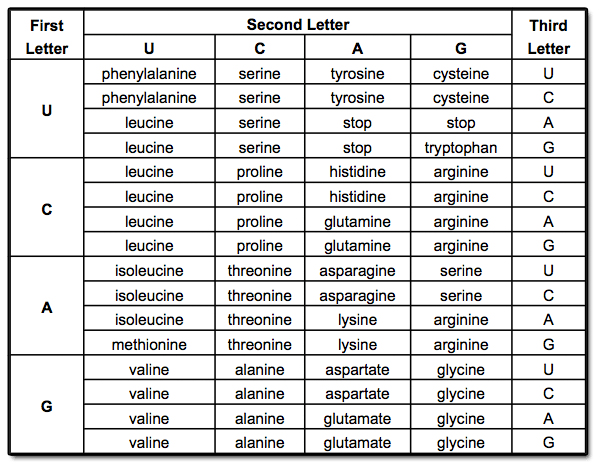
What amino acid is represented by the codon UUA?
a)
Phenylalanine
b)
Tyrosine
c)
Leucine
d)
Stop codon
54.
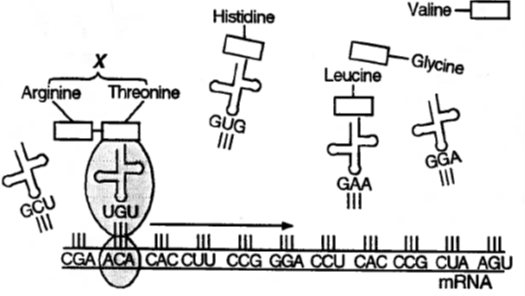
What process is going on in this photo? 
a)
Transcription 
b)
Translation 
c)
Replication 
d)
All the above 
55.
What is the three base sequence of mRNA that codes for a single amino acid?
a)
Anticodon
b)
Codon
c)
Protein
56.
How many amino acids are coded for by this sequence of nucleotides:
ATG GGA ACT CCA
a)
4
b)
2
c)
6
d)
12
57.
An illustration and a dichotomous key are given. What is the correct classification for this organism?
a)
Class Insecta
b)
Order Amblygygi
c)
Order Araneae
d)
Order Scorpiones
58.
Which organisms pictured on the cladogram have hair?
a)
prosimians only
b)
prosimians and humans
c)
humans only
d)
prosimians and birds
59.
Which group(s) of organisms do not have vertebrae?
a)
lampreys and lancelets
b)
lampreys and tuna
c)
lancelets only
d)
salamanders, tuna, and lampreys
60.
 Using the cladogram to the right, flies are most closely related to:
a)
Beetles
b)
Wasps
c)
Butterflies
d)
Ants
61.

When lions prey on a herd of antelopes, some antelopes are killed and some escape. Which part of Darwin’s concept of natural selection might be used to describe this situation?

a)

reproductive isolation

b)

descent with modification

c)

acquired characteristics

d)

survival of the fittest

62.
Genetic drift is change in the allele frequency of a population due to...
a)
random chance
b)
natural selection
c)
non-random mating (sexual selection)
d)
artificial selection
63.
 Genetic Drift is more likely to happen in... 
a)
aquatic populations
b)
small populations
c)
terrestrial populations
d)
older populations
64.
This mechanism of evolution occurs when individuals migrate between populations.
a)
Extinction
b)
Gene flow
c)
Genetic drift
d)
Natural Selection
65.
A virus killed most of the seals in the North Sea (e.g. dropped the population from 8000 to 800).  In an effort to help preserve the species, scientists caught 20 of the remaining seals and used them to start a new population in the northwest Pacific Ocean.  Which of the following statements would accurately describe the new   population?  
a)
The new seal population is genetically less diverse than the original population 
b)
The new seal population is genetically more diverse than the original population
c)
There is equal genetic variety compared  to the original population 
d)
None of the answers
66.
Which of the following is an example of the bottle neck effect?
a)
Bald Eagles are hunted until near extinction, population recovers.
b)
Small group of iguanas floats to an island, starts a new population.
c)
Red fox pups are more likely to survive in a snowy environment if they are born white.
d)
Farmer chooses seeds from largest apples to plant next year.  This results in larger apples from year to year.
67.

Which of the following is an example of natural selection?

a)

Bald Eagles are hunted until near extinction, population recovers.

b)

Small group of iguanas floats to an island, starts a new population.

c)

Red fox pups are more likely to survive in a snowy environment if they are born white.

d)

Farmer chooses seeds from largest apples to plant next year. This results in larger apples from year to year.

68.

All of the genetic information found in a population.

a)

population

b)

genetic drift

c)

evolution

d)

gene pool

69.
A change in the genetic composition of a population as a result of descending from a small number of colonizing individuals is called:
a)
founder effect
b)
bottleneck
c)
genetic drift
d)
gene flow
70.
According to the bead lab, Genetic drift (bottleneck or founder) tends to ___________ genetic variation (diversity)
a)
Increase
b)
Decrease
c)
Stabilize
d)
Exaggerate 
71.
Gene Flow tends to ___________ genetic variation (diversity)
a)
Increase
b)
Decrease
c)
Stabilize
d)
Exaggerate 
72.
Which of the following is an example of the bottleneck effect?
a)
Cheetah populations reach their lowest levels with reduced diversity and as they rebound are so genetically similar they appear to be inbred.
b)
Affected individuals with blue skin can trace their ancestry back to one of the first settlers in the region.
c)
The environment of a fox population changes and over time foxes who are white survive and pass on their genes to their offspring.
d)
Humans choose two dogs they like the characteristics of and breed them together.