wayground logo

Free Printable Worksheets

Font size

S
M
L
XL
Worksheets

Year 10 Combined Sci Cycle 3 Baseline Assessment

Total questions: 104

Worksheet time: 3hrs 44mins

Name
Class
Date
1.

What do you call the cell that forms from fertilization?

a)

fertilized egg

b)

sperm cell

c)

zygote

d)

egg cell

2.

What do you call the type of reproduction in which the genetic materials from two different cells combine, producing an offspring?

a)

pollination

b)

sexual reproduction

c)

fertilization

d)

asexual reproduction

3.

In this cell division, one diploid cell divides and makes four haploid sex cells. What do you call this special kind of cell division?

a)

mitosis

b)

meiosis

c)

fertilization

d)

pollination

4.

Which of the following is an advantage of sexual reproduction?

a)

Genetic variation

b)

Down syndrome

c)

Mutation

d)

New trait formed

5.

What type of reproduction takes place when one parent organism produces offspring without meiosis and fertilization?

a)

pollination

b)

sexual reproduction

c)

asexual reproduction

d)

fertilization

6.

All of the following are advantages of asexual reproduction except ____________.

a)

produce varied offspring

b)

spread and colonize certain part of an area

c)

Reproduce without a mate

d)

produce a large number of offspring

7.

Which of the following is a disadvantage of asexual reproduction?

a)

All organisms have genetic variation

b)

Parents produces identical off spring which is not suitable for survival in a changing environment

c)

Finding a mate is not needed

d)

It can produce a lot of offspring

8.

What is a dominant allele

a)

An allele which if present will give the organism that characteristic

b)

A bossy allele

c)

You need two of these to give that characteristic

d)

A strong one

9.

What is the genotype of the organism?

a)

How the organism looks

b)

The type of jeans a human wears

c)

The arrangement of genes in the organism

d)

The way it is affected by its environment

10.

What is the genotype of the organism?

a)

How the organism looks

b)

The type of jeans a human wears

c)

The arrangement of genes in the organism

d)

The way it is affected by its environment

11.

Which of these is a possible homozygous genotype

a)

Bbb

b)

CC

c)

Dd

d)

aAaA

12.

Why might 2 parents who do not have cystic fibrosis have a child with it?

a)

The disease relies on a dominant allele

b)

Its all random

c)

They are unlucky

d)

They could be carriers

13.

Name another hereditary condition

a)

Salmonella

b)

Measles

c)

HIV

d)

Polydactyly

14.

What is the shape of DNA?

a)

A long rope

b)

A genetic cross

c)

A double helix

d)

Three strands with complementary base pairs

15.
What stores the code for making an individual protein?
a)
DNA
b)
a gene
c)
a chromosome
d)
transfer RNA
16.

Why are there more boys than girls in my y11 class of 10 when it should be 50-50

a)

Its a small sample size

b)

Boys are cleverer than girls

c)

Its to do with the XY chromosomes

d)

Its a random selection of students

17.
Both parents in this Punnet square
a)
are homozygous dominant
b)
are homozygous recessive
c)
are heterozygous
d)
have blue eyes
18.

Brown is dominant to green. What is the probability of these parents having green offspring?

a)

1/4

b)

2/4

c)

3/4

d)

4/4

19.

The allele for brown eyes is B and the allele for blue eyes is b. Which of the following genotypes is homozygous dominant?

a)

BB

b)

bB

c)

bb

d)

Bb

20.

What is the condition where a person inherits extra toes or fingers

a)

Polydactyl

b)

CF

c)

Huntingtons

d)

Parkinson's

21.

Polydactyl is caused by a

a)

dominant allele

b)

recessive allele

22.
Which one of the following is an inherited variation?
a)
Blood group
b)
Long hair
c)
Scar on your knee
d)
Speaking English
23.
Which one of the following is an environmental variation?
a)
Attached ear lobes
b)
Eye colour
c)
Male or female
d)
Short hair
24.
The gradual change in species over time is...
a)
Evolution
b)
Nucleotide 
c)
Adaptation
d)
Natural Selection
25.
Which term refers to the process by which individuals that are better suited to the environment survive and reproduce therefore passing down their genes to their offspring? 
a)
Evolution 
b)
Variation 
c)
Adaptation
d)
Natural Selection 
26.
The purpose of selective breeding is to 
a)
Get bigger animals
b)
get smaller animals
c)
create animals with desirable traits
d)
create animals with bad traits
27.
A farmer has bred his pineapple plants from the sweetest pineapples from his last harvest to get even sweeter pineapple plants. What is this an example of?
a)
Selective breeding
b)
Natural selection
c)
Extinction
d)
Mutagenesis
28.
Making changes in the DNA of an organism is
a)
selective breeding
b)
artificial selection
c)
genetic engineering
d)
genetic transformation
29.

What is one of the processes involved in selective breeding?

a)

allowing organisms to reproduce without interference

b)

choosing individuals with desirable characteristics to be parents of the next generation

30.
When the DNA of an organism is altered it is referred to as…
a)
Mutation
b)
Gene Flow
c)
Genetic Drift
d)
Sexual Selection
31.
Which is a use genetically modified bacteria?
a)
Identifying the remains of an unknown person.
b)
developing a DNA fingerprint for blood left at a crime scene
c)
making human insulin for diabetics
d)
producing corn that is resistant to herbicides
32.
Traits that help an organism survive are called....
a)
evolution
b)
natural selection
c)
adaptations
d)
habitats
33.
Differences that exist naturally among members of a population or species___?
a)
mutation
b)
adaptation
c)
variations
d)
evolution
34.
Sources of variations include _______ and ______?
a)
sexual reproduction, mutations
b)
asexual reproduction, mutations
c)
biological evolution, genetics
d)
biological evolution, genetics
35.
Species with ______variation are ______likely to survive.
a)
more, less
b)
less,less
c)
less,more
d)
more,more
36.
group of the same type of organisms that may breed and produce fertile offspring
a)
species
b)
evolution
c)
plate techtonics
d)
crust
37.
What evidence supports the theory that continents were once a large landmass?
a)
The continents share a similar climate.
b)
Similar fossils have been found on different continents.
c)
Minerals like gold and copper are found worldwide.
d)
Coconut trees are found on coastlines.
38.
Who organized living things by creating binomial nomenclature?
a)
Carolus Linnaeus
b)
Robert Hooke
c)
Anton van Leeuwenhoek
d)
James Watson
39.
What are the 8 levels of classification of living things from most general to most specific?
a)
domain, kingdom, phylum, class, order, family, genus, species
b)
domain, kingdom, phylum, class, order, family, genius, species
c)
domain, kingdom, phamily, class, order, family, genus, species
d)
domain, king, phillip, class, order, family, genus, species
40.
The scientific name for water bear is Hypsibius dujardini.  What is its genus?
a)
Hypsibius 
b)
dujardini
c)
water 
d)
tardigrade
41.
In a properly written scientific name, which part is lowercase?
a)
species
b)
genus
42.
Who is the closest relative to the birds?
a)
crocodiles
b)
sharks
c)
fish
d)
amphibians
43.
Which of these describes a species that has become extinct?
a)
fewer members of the species are dying than being born
b)
more members of the species are dying than being born
c)
very few members of a species are alive
d)
all members of a species have died
44.
Adelie penguins live in large groups in Antarctica. They lay their eggs in dry, rocky areas. These areas can be flooded when snow melts. According to the text, which of these is the greatest threat to Adelie penguins?
a)
new predators moving into the area
b)
competition from other Adelie penguins
c)
rising temperatures in the penguins' habitat
d)
people polluting and building in the penguins' habitat
45.
Which of the following is NOT a reason a species may become extinct?
a)
competition
b)
reproducing
c)
habitat loss
d)
overhunting
46.

Explain why there are no fossils of many early forms of life

a)

Early forms of life where too soft to form fossils

b)

Early forms of life were very, very small so finding fossilised remains is very difficult.

c)

Most dead organisms do not form fossils they decay

d)

All of the above

47.
Which of the following is NOT an example of a fossil?
a)
a petrified dinosaur bone
b)
a footprint captured in mud
c)
a seashell found on the beach
d)
an insect stuck in amber
48.

Lily sees a skeleton of a dinosaur at a museum. What is true about the bones that make up the skeleton?

a)

The bones are made up of minerals.

b)

The bones are those of the dinosaur itself.

c)

The bones were formed from mud that hardened.

d)

The bones are made up of amber.

49.

Which of these are causes of extinction

a)

Habitat Destruction

b)

A New Predator

c)

A New Disease

d)

A New Competing Species

e)

All of the above

50.

The endangered seabird the marbled murrelet, in California, is dependent upon Sequoia forests and trees for survival. What might happen to the marbled murrelet population if the sequoia population went extinct?

a)

the population of marbled murrelet would remain the same

b)

the population of marbled murrelet would increase

c)

The marbled murrelet would become extinct

d)

The marbled murrelet would be placed on the threatened species list

51.
The number 6.02 x 10²³, which is the number of particles found in a mole. 
a)
molar mass
b)
mole
c)
Avogadro's number
d)
hydrate
52.
What is the atomic mass of magnesium?
a)
2
b)
4
c)
12
d)
24
53.
What is the mass number?
a)
the number of protons
b)
the number of protons and neutrons
c)
the number of neutrons
d)
the number of protons and electrons
54.
Calculate the molar mass of Magnesium Oxide - MgO
a)
40
b)
24
c)
16
d)
56
55.
Calculate the number of moles of atoms in 6g of Magnesium
a)
6.00 moles
b)
24.00 moles
c)
0.50 moles
d)
0.25 moles
56.
Calculate the number of atoms of Carbon in 44g of Carbon Dioxide
a)
3x10²³
b)
6x10²³
c)
12x1024
d)
1.2x1024
57.

Which solution is more concentrated?

Solution 1:

500 mL of water

100 g of salt


Solution 2:

500 mL of water

90 g of salt

a)

Solution 1

b)

Solution 2

c)

They have the same concentration

d)

I have no idea

58.
When a solution is very concentrated, it has a high amount of _________ to _________.
a)
solute to solvent
b)
solvent to solute
c)
solvent to solution
d)
solution to solute
59.
What is the relative atomic mass of sodium?
a)
11
b)
23
c)
46
d)
64
60.
The relative molecular mass of a compound is equal to the sum of its
a)
Atomic mass
b)
Atomic number
c)
Oxidation number
d)
Valence electrons
61.

What is the relative formula mass of ammonium nitrate, NH4NO3 ?


[Relative atomic mass: N, 14; H, 1; O, 16]

a)

76

b)

79

c)

80

d)

90

62.
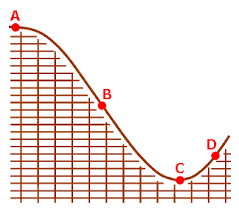
At which point(s) on the roller coaster is the gravitational potential energy at its maximum?
a)
A
b)
B
c)
C
d)
D
63.
What does the Law of Conservation of Energy state?
a)
Energy cannot be created or destroyed
b)
Nothing can exchange energy
c)
Energy will increase over time.
d)
Energy will decrease over time.
64.
Energy of motion is which type of energy?
a)
Potential
b)
Kinetic
c)
Sound
d)
Gravitational
65.
What force ultimately slows the roller coaster to a stop?
a)
Applied
b)
Normal
c)
Friction
d)
Magnetic
66.

Which energy store is LEAST important in this appliance?

a)

electrical

b)

light

c)

sound

d)

thermal

67.

What is the Equation for Kinetic Energy?

a)

Kinetic Energy = 0.5 x Mass x Speed²

b)

Kinetic Energy = 0.5 x Mass² x Speed

c)

Kinetic Energy = 0.5 x Mass² / Speed

68.

What are Equations for Gravitational Potential Energy?

a)

Gravitational Potential Energy = Mass x Gravitational Field Strength x Height

b)

Gravitational Potential Energy = Weight x Height

c)

Gravitational Potential Energy = Mass x Gravitational Field Strength / Height

d)

Gravitational Potential Energy = Weight / Height

69.

Which are the Equations for Power?

a)

Power = Energy Transferred / Time

b)

Power = Work Done / Time

c)

Power = Energy Transferred x Time

d)

Power = Work Done x Time

70.

What is the Equation for Work Done?

a)

Work Done = Force x Distance

b)

Work Done = Force / Distance

c)

Work Done = Distance / Force

71.
When a pendulum swings, at which point is kinetic energy highest: 
a)
1
b)
2
c)
3
d)
4
72.
You serve a volleyball with a mass of 2 kg. The ball leaves your hand with a speed of 30 m/s. What is the KE of the ball?
a)
900 J
b)
1800 J
c)
60 J
d)
30 J
73.
How much power is needed to do 648 Joules of work in 100 seconds?
a)
64800 Joules
b)
64800 watts
c)
6.48 watts
d)
0.15 watts
74.
What is the efficiency of a machine if 55.3 J are put into a machine, but only 14.3 J of energy is useful output?
a)
0.26 Joules
b)
26%
c)
3.86 Joules
d)
386%
75.
If you buy a machine that has an efficiency of 82%, what happened to the other 18%?
a)
Most of the rest of the energy was dissipated to the surroundings as a thermal energy store
b)
There is not enough information given
76.
A bird used 8 watts of power and flew for 5 seconds.  How much work did the bird do?
a)
40 watts
b)
40 joules
c)
1.6 watts
d)
1.6 joules
77.
_____________________ __________________Stops heat from the house being lost through the roof.
a)
loft insulation
b)
cavity
c)
specific
d)
Braking
e)
Weight
78.
An _____________________ reduces heat transfer.
a)
insulator
b)
conduction
c)
solid
d)
Conserved
e)
vector
79.
A _______________ allows heat to move through it carried by free electrons.
a)
conductor
b)
alpha
c)
radiation
d)
Directly proportional
e)
vector
80.
____________ currents occur in liquids and gases.
a)
Convection
b)
good
c)
insulator
d)
Stopping
e)
N/kg
81.
The type of heat transfer that happens through direct contact of molecules or particles with each other is ___________________.
a)
Convection
b)
Conduction
c)
Radiation
d)
insulation.
82.
When particles are heated they gain...
a)
chemical energy
b)
electrical energy
c)
kinetic energy
83.
Energy = Specific Heat Capacity x ________ x temperature change
a)
mass
b)
Metals
c)
dense
d)
kg m/s
e)
Elastic
84.
energy transferred = mass x __________ heat capacity x temperature change
a)
specific
b)
radiation
c)
conductor
d)
extension
e)
Conserved
85.
Copper, Stainless Steel, Carbon Steel, and Zinc were all heated using the same thermal energy.  What material would be the coolest after being heated?
a)
Copper
b)
Carbon Steel
c)
Zinc
d)
Stainless Steel
86.
Specific heat of water is  4.18 J/g°C. Specific heat of wood is 1.760 J/g°What material needs more heat energy to raise the temperature?
a)
Water
b)
Wood
c)
Both are same
87.
A high specific heat means...
a)
It heats up quickly with energy added
b)
It requires more energy to change temperature
88.
What is Specific Heat?
a)
The  amount of thermal energy required to increase the temperature of 1kg of a material by 1°C.
b)
The  amount of radiant energy required to increase the temperature of 1kgof a material by 1°C
c)
The  amount of energy required to increase the temperature of 1kgof a material by 1°C.
d)
The  amount of friction  required to increase the temperature of 1kgof a material by 1°C.
89.
Coal is a __________ energy resource.
a)
Renewable
b)
Nonrenewable
90.
Natural Gas is a __________ energy resource.
a)
Renewable
b)
Nonrenewable
91.
Geothermal Power is a __________ energy resource.
a)
Renewable
b)
Nonrenewable
92.
Why are fossil fuels like coal, oil, and natural gas called nonrenewable resources?
a)
a.  They can never be replaced.
b)
a.  They cannot be easily replaced.
c)
a.  They can be recycled.
d)
a.  They can be made in factories.
93.
Some power plants pump water down deep holes into hot rock. The hot rock heats the water, which turns the water into steam. The steam rushes back to Earth’s surface and is used to make electricity. This plant is generating which alternative energy resource?
a)
biomass
b)
wind
c)
solar energy
d)
geothermal energy
94.

Use the diagram to put the steps below in the correct order to describe how electrical energy is generated in an electrical power plant.

  1. Electricity is generated.
  2. Magnet spins between wire coils.
  3. Water is heated and changes to steam.
  4. Steam makes turbine spin.
  5. Fossil fuel is burned.
a)

Steps 1, 3, 4, 2, then 5.

b)

Steps 5, 2, 4, 3, then 1.

c)

Steps 5, 3, 4, 2, then 1.

d)

Steps 1, 2, 4, 3, then 5.

95.

Which of the following is NOT a fossil fuel?

a)

Coal

b)

Oil

c)

Natural gas

d)

Nuclear

96.

Which of the following is not used as a fuel in nuclear power stations?

a)

Plutonium

b)

Uranium

c)

Platinum

97.

What phrase means that the carbon taken in by the living organism can balance the amount released when the biofuel is burnt?

a)

Carbon-positive

b)

Carbon-negative

c)

Carbon-neutral

d)

Carbon-zero

98.

What type of renewable energy is this?

a)

Solar

b)

Hydroelectric

c)

Wind

d)

Tidal

99.

Which of the photos show GEOTHERMAL energy?

a)
b)
c)
d)
100.

Give one ADVANTAGE of using nuclear energy.

a)

They do not produce greenhouse gases.

b)

They produce nuclear waste.

c)

An accident can make the surrounding area unsafe for many years.

d)

It costs a lot of money to set up.

101.

Why is solar energy considered renewable energy?

a)

It's cheaper than fossil fuels

b)

The sun's energy would not run out for billions of years

c)

Solar energy recharges batteries

d)

All of them

102.
Geothermal energy is energy from 
a)
the sun
b)
heat from deep in the earth
c)
wind
d)
inexhaustable
103.
What is a disadvantage to Hydroelectricity?
a)
lots and lots of pollution
b)
Kills wild bird population
c)
Radioactive waste
d)
Increases potential for flooding 
104.
Fossil fuels are classified as nonrenewable because they.......
a)
require expensive equipment
b)
take millions of years to replace
c)
can be found all over 
d)
provide all the energy we use