Wayground logo

Free Printable Worksheets

Font size

S
M
L
XL
Worksheets

third term

Total questions: 92

Worksheet time: 2hrs 16mins

Name
Class
Date
1.

What functional group(s) is/are present on the molecule? (check all that apply)

a)

Hydroxyl

b)

Carboxyl

c)

Methyl

d)

Carbonyl Aldehyde

2.
Classify the compound based on the functional group present.
a)
carboxylic acid
b)
aldehyde
c)
alcohol
d)
ether
3.

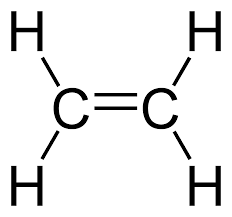
Classify the compound based on the functional group present.

a)

alkane

b)

alkene

c)

alkyne

4.
Classify the compound based on the functional group present.
a)
aldehyde
b)
ketone
c)
alcohol
d)
carboxylic acid
5.
Classify the compound based on the functional group present.
a)
alkane
b)
alkene
c)
alkyne
d)
aromatic
6.

Carboxylic acids combined with alcohols in high temperature will form a(n)

a)

ester

b)

alcohol

c)

amine

7.
Classify the compound based on the functional group present.
a)
alkane
b)
alkene
c)
alkyne
d)
aromatic
8.
Classify the compound based on the functional group present.
a)
amine
b)
amide
c)
ether
d)
ester
9.
The molecular formula for Heptane is
a)
C4H10
b)
C8H18
c)
C5H12
d)
C7H16
10.
How many carbon atoms are in ethane?
a)
1
b)
2
c)
3
d)
4
11.
At which pipe: M or N are hydrocarbons with lower boiling points collected?
a)
M
b)
N
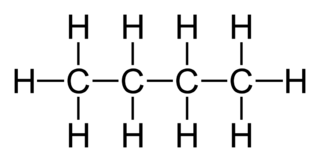
12.
Name this alkane
a)
Methane
b)
Ethane
c)
Propane
d)
Butane
13.
Which of the following would have the highest melting point?
a)
C3H8
b)
C4H8
c)
C5H12
d)
C22H44
14.
Which of the following has the highest viscosity
a)
petrol 
b)
diesel
c)
biodiesel
d)
LPG
15.

Where in the fractionating column are shorter chain hydrocarbon molecules obtained?

a)

At the top

b)

At the bottom

16.

Fractional distillation separates crude oil based on the different __________ of the molecules in the mixture

a)

melting point

b)

boiling point

c)

freezing point

d)

chemical reactivity

17.

Molecules collected at the bottom of the fractionating column tend to be...

a)

more viscous, less flammable and less volatile

b)

less viscous, more flammable and more volatile

c)

more viscous, more flammable and less volatile

d)

less viscous, less flammable and more volatile

18.

What are the 2 products of complete combustion?

a)

carbon dioxide + hydrogen

b)

carbon dioxide + water

c)

carbon monoxide + water

d)

carbon monoxide + hydrogen

19.

What does a fuel react with when it burns?

a)

oxygen

b)

water

c)

carbon dioxide

d)

methane

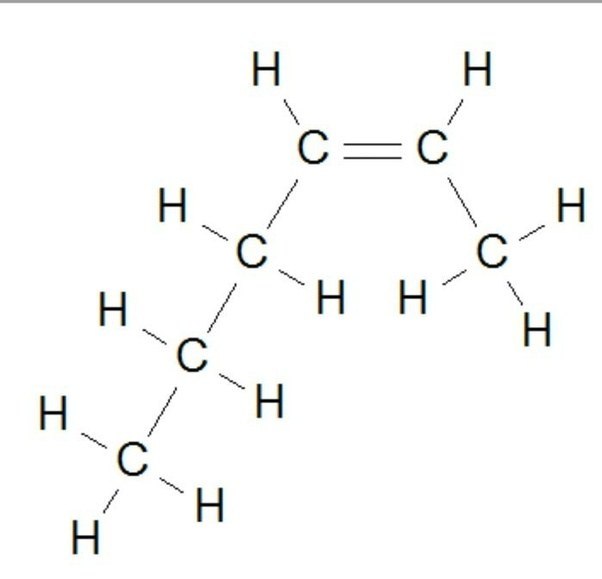
20.

Name the following hydrocarbon

a)

butane

b)

hexane

c)

heptane

d)

hexene

21.

Limewater turning cloudy is the test for...

a)

carbon dioxide

b)

water

c)

hydrogen

d)

oxygen

22.
Which of the following has a full valence shell?
a)
Oxygen
b)
Neon
c)
Barium
d)
Carbon
23.
An ionic bond forms when atoms ___________ electrons.
a)
gain
b)
share
c)
increase
d)
transfer
24.
Chemical bonds form when atoms
a)
combined nuclei
b)
give up neutrons
c)
gain protons
d)
share or transfer electrons
25.
Bonds that form between two metals are called ______________ bonds.
a)
ionic 
b)
covalent
c)
metallic
d)
pervasive
26.
If an atom loses two electrons what charge will it have?
a)
+ 2
b)
 - 2
c)
+1
d)
-1
27.
Covalent compounds
a)
Share electrons
b)
transfer electrons
c)
contain a sea of electrons
d)
conduct electricity
28.
How many valence electrons in this structure?
a)
6
b)
5
c)
4
d)
7
29.
Na2S
a)
Sodium Sulfide
b)
Sodium Sulfate
c)
Sodium Sulfite
d)
Disodium Sulfide
30.

What is the name of Li3P?

a)

Trilithium phosphide

b)

Lithium III Phosophide

c)

Lithium Phosphate

d)

Lithium Phosphide

31.
What is the formula for magnesium chloride?
a)
MgCl
b)
Mg2Cl
c)
MgCl2
d)
Mg(ClO3)2
32.

What is the formula for selenium tetrafluoride

a)

SeF4

b)

SeF

c)

FSe4

d)

FSe

33.

Name CCl4

a)

tetracarbon chloride

b)

carbon tetrachloride

c)

monocarbon tetrachloride

d)

Carbon chloride

34.
Name BCl3
a)
boron chloride
b)
boron (III) chloride
c)
boron trichloride
d)
boron chlorine
35.

Give the name for OCl2

a)

oxygen dichloride

b)

oxygen chloride

c)

oxygen (II) chloride

d)

oxygen chlorate

36.
PBr5
a)
Phosphorus Bromide
b)
Phosphorus Pentabromide
c)
Pentaphosphorus bromide
d)
Phosphorus Bromine
37.

What is Covalent Bonding?

a)

Bonding that is the result of two nonmetals sharing electrons

b)

Bonding between two metals

c)

Bonding that is the result of a nonmetal and a metal exchanging electrons

d)

Bonding between more than two elements

38.

What is ionic bonding?

a)

Bonding that is the result of two elements sharing electrons

b)

Bonding involving only one atom

c)

Bonding that is the result of an exchange of electrons between a metal and a nonmetal

d)

Bonding between two metals

39.

Which particle is responsible for bonding?

a)

Protons

b)

Electrons

c)

Neutrons

d)

Nucleus

40.

Is this picture of the lewis dot stucture of Potassium Iodide correct?

a)

Yes

b)

No

41.

Potassium Chloride is...

a)

Ionic

b)

Covalent

42.

Ammonium (NH4) is...

a)

Ionic

b)

Covalent

43.

The name for K2S is

a)

Dipotassium Sulfur

b)

Dipotassium Sulfide

c)

Potassium Sulfide

d)

Potassium Sulfur

44.
What is the name of this compound?  Na2CO3
a)
Disodium carbonate
b)
Sodium carbon oxide
c)
Sodium II carbonate
d)
Sodium carbonate
45.
Name this formula: 
Al2O3
a)
Aluminum Oxide
b)
Aluminum Oxygen
c)
Antimony Oxide
d)
Aluminum (VII) Oxide
46.
Among the following, which combination would be most likely to form an ionic compound? 
a)
N and Br
b)
S and Cl
c)
Na and I
d)
H and O 
47.
Prefixes are used only for _______________ compounds
a)
Ionic
b)
covalent
48.

Neutral solutions have a pH of:

a)

0

b)

1

c)

7

d)

14

49.

True or false: a neutral solution has equal amounts of H+ and OH-.

a)

True

b)

False

50.

NaOH may be found in drain cleaners and as a component of soaps. Is NaOH an acid or a base?

a)

Acid

b)

Base

c)

Neither (Neutral)

51.

HCl is found in household products, including some toilet bowl cleaners. Is HCl an acid or a base?

a)

Acid

b)

Base

c)

Neither (Neutral)

52.

Is laundry detergent an acid or a base?

a)

Acid

b)

Base

c)

Neither (Neutral)

53.

Water found near sources of air pollution tends to be:

a)

Acidic.

b)

Basic.

c)

Neither. Air pollution doesn't alter the pH of water.

54.

Stronger acids have a pH closer to...

a)

7

b)

0

c)

14

d)

9

55.

Weaker bases have a pH closer to...

a)

8

b)

0

c)

14

d)

4

56.

You test a solution with pH paper, and the paper turns blue. The solution is ______.

a)

neutral

b)

an acid

c)

a base

d)

an acid & a base

57.

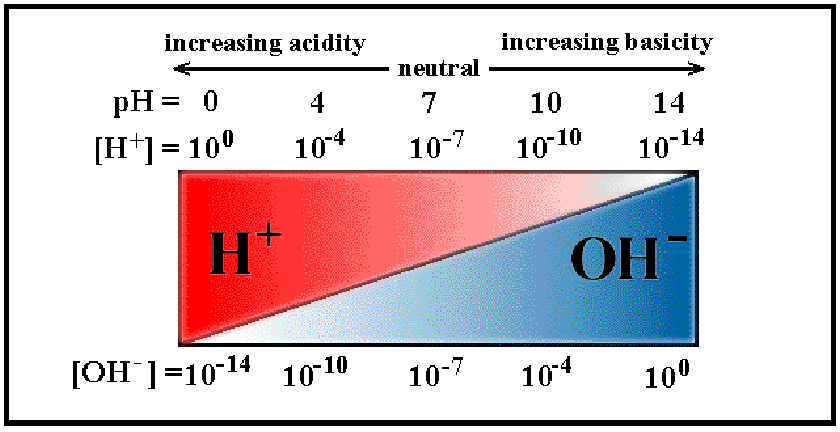
According to the pH scale, which item is more acidic than lemons?

a)

battery

b)

vinegar

c)

milk

d)

blood

58.

According to the pH scale, which item is a stronger base than soap?

a)

baking soda

b)

ammonia solution

c)

tomato

d)

bleach

59.
What is a substance that is dissolved in another substance? 
a)
solution
b)
solute
c)
solvent
d)
compound
60.
What is a solvent?
a)
The substance that does the dissolving in a solution.
b)
The substance that is being dissolved in a solution.
c)
The mixing of different substances.
d)
The process in which neutral molecules lose or gain electrons
61.
In the above picture, a powder is about to be poured into the liquid. Which of the following should be done to make this powder dissolve faster?

a)
stir the powder in the liquid
b)
freeze the mixture
c)
add more powder to the liquid
d)
store the mixture in a dark place
62.
air is a 
a)
compound
b)
element
c)
heterogeneous mixture
d)
solution
63.
Kool-Aid - Powder, sugar, and water
Identify the solvent 
a)
water
b)
powder
c)
sugar
d)
powder and sugar
64.
To make a solute dissolve more quickly i n a solvent which would you do?
a)
Put it in cold water and stir it
b)
Put it in warm water and stir it
65.
How does a solution become supersaturated?
a)
dissolve lots of solvent in it.
b)
dissolve a little solute in it. 
c)
dissolve more solute than you should be able to. 
d)
dissolve a super amount of solvent in it. 
66.

You are given a small beaker of solution at room temp. You add a bit of solute to the solution and it dissolves. The solution was:

a)

saturated

b)

unsaturated

c)

concentrated

d)

warm

67.
How many liters would you need to make a 1 M solution if you have 6 mol of Sodium Hydroxide? 
a)
2
b)
3
c)
4
d)
6 
68.
What is the molarity of 4 g of NaCl (MM=58.45) in 3,800 mL of solution?
a)
0.018 M
b)
0.0011 M
c)
1.052 M
d)
0.062 M
69.
How many grams of solute are dissolved in 125.0 mL of 5.00 M NaCl (MM = 58.45)?
a)
0.625 g NaCl
b)
625 g NaCl
c)
36.5 g NaCl
d)
0.04 mol NaCl
70.
A sample of a gas has a volume of 852 mL at 298 K. What temperature is necessary for the gas to have a volume of 945 mL?
a)
Pt = P1 + P2 + P3 + ...
b)
P1V1 = P2V2
c)
V1/T1 = V2/T2
d)
P1V1/T1 = P2V2/T2
71.
A sample of gas with a volume of 30.0 mL at 25.0oC is heated to 50.0oC.  What is the new volume of the gas?
a)
P1V1 = P2V2
b)
P1/T1 + P2/T2
c)
PV = nRT
d)
V1/T1 = V2/T2
72.
In order to convert to Kelvin, you add ______ to the Celsius measurement.
a)
372
b)
273
c)
237
d)
732
73.
What is 50 C in Kelvin?
a)
223
b)
323
c)
100
d)
50
74.
If a balloon is cooled what will happen to the volume?
a)
Volume will increase
b)
Volume will decrease
c)
Volume will not change
75.
The following graph shows ____ relationship. 
a)
Direct
b)
Inverse
76.
A sample of gas with a volume of 30.0 mL at 25.0oC is heated to 50.0oC.  What is the new volume of the gas?
a)
60.0 mL
b)
15.0 mL
c)
27.5 mL
d)
32.5 mL
77.
Determine the initial temperature of a random gas when the initial volume is 2.2 L and it is cooled to 88K with a volume of 0.85 L. 
a)
0.029 K
b)
0.021 K
c)
227.76 K
d)
34 K
78.
Boyle's Law shows the relationship between between which two factors of a gas?
a)
volume and pressure 
b)
temperature and pressure 
c)
pressure and temperature 
d)
Volume and mass
79.
Charles's law shows the relationship between which two factors of a gas ?
a)
volume and temperature 
b)
volume and pressure 
c)
pressure and volume
d)
volume and mass
80.
Boyle's law shows the volume and pressure of a gas are always ........
a)
inversely proportional 
b)
directly proportional 
81.
Charles's law shows that the temperature and volume of a gas are always........
a)
inversely proportional 
b)
directly proportional 
82.
Gas pressure is caused by
a)
gas molecules colliding with surfaces
b)
gas molecules condensing to a liquid
c)
gas molecules hitting other gas molecule
d)
barometers
83.
a)
Gas particles are elastic and do not attract each other.
b)
The kinetic energy of gas is dependent on temperature 
c)
Energy is not lost when gas particles collide with each other or with the walls of the container.
d)
All of the above
84.

Energy is lost when particles collide with each other or the walls of the container

a)

True

b)

False

85.
__Al + __Fe3N2 -->__AlN + __Fe
a)
already balanced
b)
4,2,4,6
c)
2,1,2,3
d)
1,2,1,3
86.
__C6H12O6 + __O2 --> __H2O + __CO2
a)
1,6,6,6
b)
already balanced
c)
1,6,1,6
d)
2,12,12,12
87.
__H2O + __CO2 --> __C7H8 + __O2
a)
4,7,1,9
b)
4,7,1,7
c)
2,3,1,3
d)
already balanced
88.
Which of the following is an example of synthesis?
a)
Na + Br2 --> NaBr
b)
KClO3 --> KCl + O2
c)
HgO + Cl2-->HgCl + O2
d)
Cl2 + NaBr --> NaCl + Br2
89.
Identify this type of reaction,
Cl2 + 2KI -->  I2 + 2KCl
a)
Synthesis
b)
Single Replacement
c)
Double Replacement
d)
Decomposition
90.
Which chemical reaction forms Carbon Dioxide and Water?
a)
Double Replacement
b)
Single Replacement
c)
Combustion
d)
Decomposition
91.
Which reaction type is the following: AgF + CaCl2 --> AgCl + CaF2
a)
Decomposition
b)
Single Replacement
c)
Synthesis
d)
Double Replacement
92.

Balance this reaction:

____ NaF + ____ Br2 ---> ___ NaBr + ____ F2

a)

3,1,2,1

b)

1,2,3,4

c)

2,1,2,1

d)

1,2,1,2