Worksheets
Phase Change
Total questions: 124
Worksheet time: 1hrs 24mins
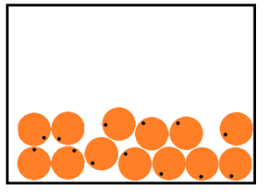


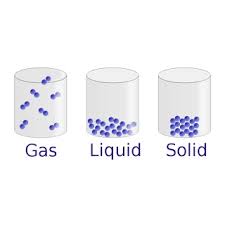
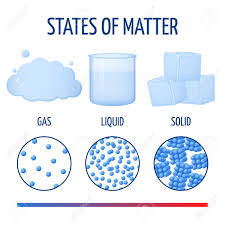
How would you describe the way molecules move when the molecules are liquid?
the molecules are moving in place.
the molecules are moving around each other.
the molecules are moving away from each other.
the molecules are not moving
How would you describe the way molecules move when the molecules are solid?
the molecules are moving in place.
the molecules are moving around each other.
the molecules are moving away from each other.
the molecules are not moving
How would you describe the way molecules move when the molecules are gas?
the molecules are moving in place.
the molecules are moving around each other.
the molecules are moving away from each other.
the molecules are not moving
What happens to molecules when energy transfers into a substance?
The substance's molecules will move faster.
The substances's molecules will move slower.
The substance's molecules will continue to move at the same speed.
The substance's molecules will stop moving.
What happens to molecules when energy transfers out of a substance?
The substance's molecules will move faster.
The substances's molecules will move slower.
The substance's molecules will continue to move at the same speed.
The substance's molecules will stop moving.
What happens to molecules when the temperature drops or lowers?
The molecules get closer together
The molecules start moving faster.
The molecules stop moving.
The molecules become smaller.
What must happen for molecules to move slower?
Kinetic energy is not changing. Temperature decreases.
Kinetic energy and temperature depend on the molecules.
Kinetic energy is decreasing and temperature is decreasing.
Kinetic energy is decreasing and temperature is increasing.
What happens to molecules when their kinetic energy increases?
They move slower.
They move faster.
They get heavier
It depends on the type of molecules
Molecules are always moving no matter what phase they are in: solid, liquid, gas.
True
False
What would be a reason for a phase change to occur in one substance and not another substance even if both substances began at the same phase and were transferred the same amount of energy?
The molecular attraction of one of the substances was weaker than the other substance causing phase change to occur.
The molecular attraction of both substances were the same causing phase change to occur in one of them.
The molecular attraction of one of the substances was stronger than the other substance causing phase change to occur.
Phase change can not occur in one substance and not the other because they both started in the same phase.
In order to increase the speed of a substance's molecules, someone must...
transfer energy into the substance.
transfer energy out of the substance.
lower the temperature of the substance.
keep the temperature the same for the substance.
A phase change can be observed at the molecular scale and can be explained at the macro-scale.
True
False
Which options are correct about molecular attraction and freedom of movement?
High molecular attraction = High freedom of movement
Low molecular attraction = Low freedom of movement
Low molecular attraction = High freedom of movement
These two vocabulary words have nothing to do with each other.
The way molecules in a substance move around relative to each other
Kinetic Energy
Molecule
Phase
Freedom of Movement

The energy that an object has because it is moving
Molecule
Refute
Density
Kinetic Energy

A pull between two molecules that is always the same for a substance
Kinetic Energy
Molecular Attraction
Molecule
Mixture

A group of atoms joined together in a particular way
Scale
Refute
Mass
Molecule
A noticeably different form or state of the same substance
Mixture
Phase
Mass
Density

The relative size of things
Weight
Mass
Density
Scale

A measure of how hot or cold something is
Phase
Molecule
Density
Temperature
To provide evidence that goes against a claim
Mixture
Refute
Claim
Sclae

A substance made by mixing other substances together
Refute
Molecule
Phase
Mixture

The amount of matter an object has to its volume
Mass
Weight
Mixture
Density

A measure of how much matter is in an object
Weight
Mass
Density
Scale
A measure of how much matter is in an object
Weight
Mass
Density
Scale

The gravitational pull exerted on an object
Density
Mass
Weight
Scale

A student left a sealed jar of water outside her home. Water can be a solid, liquid, or gas. When she put it outside, the water was a solid. Twelve hours later, the water had changed phase and was a liquid. What happened to the water molecules?
Before the student left, the molecules were moving in place. After, the molecules were moving around each other.
Before the student left, the molecules were moving around each other. After, the molecules were moving away from each other.
Before the student left, the molecules were moving around each other. After, the molecules were moving in place.
Before the student left, the molecules were moving away from each other. After, the molecules were moving around each other.
Lily is doing a science experiment with a substance in a sealed jar. At first, the substance’s molecules are moving around each other. What will happen to Lily’s substance if she transfers energy into the substance and causes a phase change?
After the phase change, the substance’s molecules will move . . .
faster, and the substance will be a liquid.
faster, and the substance will be a gas.
slower, and the substance will be a solid.
slower, and the substance will be a liquid.
Divers found two substances on the bottom of the ocean. At room temperature, both substances are liquid. Scientists then transferred the same amount of energy out of both substances. When a scientist checked again, Substance 1 had changed phase, but Substance 2 had not. How are Substances 1 and 2 different?
Substance 1 has a . . .
weaker attraction between its molecules than Substance 2. Its molecules now move in place.
weaker attraction between its molecules than Substance 2. Its molecules now move around each other.
stronger attraction between its molecules than Substance 2. Its molecules now move away from each other.
stronger attraction between its molecules than Substance 2. Its molecules now move in place.
Anh measured the temperature of a pond near his house. Before he left for school, the water in the pond was 18°C. When he came home from school, the temperature of the pond was higher than it was in the morning. What happened to the water molecules while he was at school?
The molecules got closer together.
The molecules started moving faster.
The water lost cold molecules.
The molecules became larger.

A scientist has a container with a substance inside. At first, the molecules in the substance move away from each other. Later, the molecules move around each other. What change did the scientist observe in the substance?
Before, the substance was a liquid. Later, it was a solid.
Before, the substance was a gas. Later, it was a liquid.
Before, the substance was a liquid. Later, it was a gas.
Before, the substance was a solid. Later, it was a liquid.
Scientists digging in a cave found an unknown substance. The scientists found that the substance’s molecules were moving around each other. The scientists increased the speed of the substance’s molecules and caused a phase change. How did the scientists do this, and how did this affect the substance?
The scientists transferred energy . . .
into the substance, and the substance changed into a gas.
into the substance, and the substance changed into a liquid.
out of the substance, and the substance changed into a solid.
out of the substance, and the substance changed into a liquid.

A cook had a jar containing a sweet food and a jar containing a sour food. The image above shows the sweet and sour foods. At room temperature, both foods are liquids. The same amount of energy was transferred into both substances. Later, one of the foods had changed phase while the other had not. Which food changed phase, and how did it change?
The sweet food changed because the molecules were able to move fast enough to overcome the attraction between them. Its molecules now move away from each other.
The sweet food changed because the strong attraction between molecules made their movement slower. Its molecules now move around each other.
The sour food changed because the weak attraction between molecules let them move faster. Its molecules now move away from each other.
The sour food changed because the molecules were able to move fast enough to overcome the attraction between them. Its molecules now move in place.

Which object has molecules that are moving?
Only the water in the glass has molecules that are moving.
Only the water in the ocean has molecules that are moving.
Both have molecules that are moving.
Neither has molecules that are moving.
What happens to molecules when their kinetic energy decreases?
They move slower.
They move faster.
They get heavier.
It depends on the type of molecules.

Mario is making chocolate. In part of the chocolate-making process, he changed the phase from a liquid to a solid. What happened to the molecules of chocolate when it changed phase?
Before changing phase, the molecules were moving around each other. After changing phase, they were moving away from each other.
Before changing phase, the molecules were moving around each other. After changing phase, they were moving in place.
Before changing phase, the molecules were moving away from each other. After changing phase, they were moving around each other.
Before changing phase, the molecules were moving in place. After changing phase, they were moving around each other.

Scientists put a sample of water into a sealed tank. Water can be a solid, liquid, or gas. At first, the water was a liquid. Then, the scientists transferred energy out of the substance, and the water changed phase. What happened to the movement of the water molecules?
After the phase change, the water molecules moved . . .
faster and started moving away from each other.
faster and started moving around each other.
slower and started moving in place.
slower and started moving around each other.

A scientist has two substances that she is testing in her lab: a pink substance and a green substance. At room temperature, both substances are liquids. The scientist transferred the same amount of energy into both substances. She finds only the pink substance changed phase. How is the pink substance different from the green substance?
The pink substance has a . . .
weaker attraction between its molecules than the green substance. Its molecules now move away from each other.
weaker attraction between its molecules than the green substance. Its molecules now move in place.
stronger attraction between its molecules than the green substance. Its molecules now move away from each other.
stronger attraction between its molecules than the green substance. Its molecules move around each other.
The fuel tank of an airplane has a device that measures the fuel’s temperature. Before the airplane took off, the temperature of the fuel was 27°C. After the airplane had been flying for one hour, the temperature of the fuel had decreased to 3°C. Which of the following must have happened to the molecules of the fuel?
The molecules got farther apart.
The molecules started moving slower.
The fuel gained cold molecules.
The molecules became smaller in size.

The diagram above describes the movement of molecules in a substance used to make fuel. What change did the fuel scientist observe in the substance?
Before the process, the substance was a solid. After the process, it was a liquid.
Before the process, the substance was a gas. After the process, it was a liquid.
Before the process, the substance was a liquid. After the process, it was a solid.
Before the process, the substance was a liquid. After the process, it was a gas.

The medicine in the diagram above has molecules that are moving around each other. The doctor needs to slow down the molecules enough to cause a phase change. How will she do this, and how will this affect the medicine?
She transfers energy . . .
into the medicine until it is a liquid.
into the medicine until it is a gas.
out of the medicine until it is a solid.
out of the medicine until it is a liquid.

A scientist did a test to compare two substances: substance Q and substance R. At room temperature, both substances are liquid. When the scientist transferred the same amount of energy out of both substances, only one substance changed phase while the other did not. Which substance changed phase, and how did it change?
Substance Q changed phase because the attraction of the molecules was able to overcome their slower movement. Its molecules now move in place.
Substance Q changed phase because the strong attraction between molecules made their movement slower. Its molecules now move in place.
Substance R changed phase because the weak attraction between molecules let them move faster. Its molecules now move around each other.
Substance R changed phase because the attraction was able to overcome the slower molecules. Its molecules now move away from each other.
Jamil’s bicycle is made of aluminum. When are the aluminum molecules in his bicycle moving?
The aluminum molecules are . . .
only moving when Jamil is riding his bicycle.
only moving when Jamil is not riding his bicycle.
always moving.
never moving.
How is the kinetic energy of molecules changing when the molecules move faster?
The kinetic energy . . .
is not changing.
depends on the molecules.
is decreasing.
is increasing.

You have decided to start sealing all your letters with glittery wax because you are so "cool". Which answer BEST explains what you must do to make the SOLID wax a LIQUID?
In order to make the SOLID wax a LIQUID you must ADD HEAT ENERGY by putting the wax in the FREEZER.
In order to make the SOLID wax a LIQUID you must ADD HEAT ENERGY by putting the wax over a FLAME.
In order to make the SOLID wax a LIQUID you must REMOVE HEAT ENERGY by putting the wax in an OVEN.

You decide to blow bubbles (soapy WATER) outside on a snowy day. Which answer BEST explains what has happened to the molecule ARRANGEMENT of the WATER?
The WATER molecule ARRANGEMENT has become CLOSER.
The WATER molecule ARRANGEMENT has become FARTHER APART, forming rings.
The WATER molecule ARRANGEMENT has become CLOSER, forming squares.

You have dropped your popsicle and are watching it become a LIQUID. Which answer BEST explains what PHASE CHANGE has occurred AND how the molecule MOVEMENT has changed?
The PHASE CHANGE that has occurred is CONDENSATION and the molecule MOVEMENT has become FASTER.
The PHASE CHANGE that has occurred is EVAPORATION and the molecule MOVEMENT has become SLOWER.
The PHASE CHANGE that has occurred is MELTNG and the molecule MOVEMENT has become FASTER.

You are drinking a cold drink on a hot day when you notice LIQUID water has collected on the can. Which answer BEST explains what PHASE CHANGE has occurred AND how the molecule ARRANGEMENT has changed?
The PHASE CHANGE that has occurred is CONDENSATION and the molecule ARRANGEMENT has become CLOSER.
The PHASE CHANGE that has occurred is FREEZING and the molecule ARRANGEMENT has become CLOSER.
The PHASE CHANGE that has occurred is EVAPORATION and the molecule MOVEMENT has become FASTER.

You are relaxing on some grass when you notice LIQUID water droplets have begun to seemingly disappear off the grass leaves. Which answer BEST explains what PHASE CHANGE has occurred AND how the molecule ARRANGEMENT has changed?
The PHASE CHANGE that has occurred is EVAPORATION and the molecule ARRANGEMENT has become FARTHER APART.
The PHASE CHANGE that has occurred is FREEZING and the molecule ARRANGEMENT has become CLOSER.
The PHASE CHANGE that has occurred is MELTING and the molecule MOVEMENT has become FASTER.

You watch your science teacher put a balloon in a bowl of liquid nitrogen and see the balloon has shrunk like a raisin. Which answer BEST explains how you know if HEAT ENERGY been ADDED or REMOVED.
HEAT ENERGY has been ADDED. I know this because the balloon has become LARGER meaning the molecule ARRANGEMENT is FARTHER APART.
HEAT ENERGY has been REMOVED. I know this because the balloon has become SMALLER meaning the molecule ARRANGEMENT is CLOSER.
HEAT ENERGY has actually stayed the SAME. I know this because the balloon has NOT CHANGED meaning the molecule ARRANGEMENT is also NOT CHANGED.

Which answer BEST explain what molecule ARRANGEMENT tells us?
Molecule ARRANGEMENT tells us how FAST or SLOW the atoms or molecules are moving.
Molecule ARRANGEMENT tells us how CLOSE or FAR APART the atoms or molecules are to one another.
Molecule ARRANGEMENT tells us how BIG or SMALL the atoms or molecules are compared to one another.

Which answer BEST explains what molecule MOVEMENT tells us?
Molecule MOVEMENT tells us how FAST or SLOW the atoms or molecules are moving.
Molecule MOVEMENT tells us how CLOSE or FAR APART the atoms or molecules are to one another.
Molecule MOVEMENT tells us how BIG or SMALL the atoms or molecules are compared to one another.

Your teacher asks your group to discuss molecule MOVEMENT and molecule ARRANGEMENT in a SOLID. Each of your group members shares their answer. Decide who has the BEST answer.
Betsy says molecule MOVEMENT in a SOLID is SLOW and the molecule ARRANGEMENT is FAR APART.
Yazmin says molecules DO NOT MOVE in a SOLID and the molecule ARRANGEMENT is CLOSE.
Leila says molecule MOVEMENT in a SOLID is SLOW and the molecule ARRANGEMENT is CLOSE.

Your teacher asks your group to discuss HOW molecule MOVEMENT and molecule ARRANGEMENT in a LIQUID is DIFFERENT than in a SOLID. Each of your group members shares their answer. Decide who has the BEST answer.
Zachary says molecule MOVEMENT in a LIQUID is SLOWER and the molecule ARRANGEMENT is FARTHER APART than a SOLID.
Miguel says molecule MOVEMENT in a LIQUID is SLOWER and the molecule ARRANGEMENT is CLOSER than a SOLID.
Julian says molecule MOVEMENT in a LIQUID is FASTER and the molecule ARRANGEMENT is FARTHER APART than a SOLID.

Your teacher asks your group to discuss HOW molecule MOVEMENT and molecule ARRANGEMENT in a GAS is DIFFERENT than in a LIQUID. Each of your group members shares their answer. Decide who has the BEST answer.
Villette says molecule MOVEMENT in a GAS is FASTER and the molecule ARRANGEMENT is FARTHER APART than a LIQUID.
Vivian says molecule MOVEMENT in a GAS is SLOWER and the molecule ARRANGEMENT is FARTHER APART than a LIQUID.
Griselda says molecule MOVEMENT in a GAS is FASTER and the molecule ARRANGEMENT is CLOSER than a LIQUID.
Which state of matter has molecules that slide past each other but stay close together? They do not form a regular pattern.
solid
liquid
gas
The phase change from water vapor to liquid water is known as...
evaporation
precipitation
condensation
sublimation