wayground logo

Free Printable Worksheets

Font size

S
M
L
XL
Worksheets

Biology 101 Review

Total questions: 88

Worksheet time: 56mins

Name
Class
Date
1.
_____ are cells that enclose their DNA in nuclei.
a)
Phototophylites
b)
Prokaryote
c)
Eukaryote
d)
LocoKaryotes
2.
In general, Eukaryota cells (including plant and animal cells) are ____ _____ than Prokaryotic cells. 
a)
obviously stronger
b)
less complex
c)
more complex
d)
obviously weaker
3.
What is the total magnification of a microscope with an eyepiece magnification of 10x and an objective lens magnification of 50x ?
a)
500x
b)
50x
c)
5x
d)
5000x
4.
_____ are located near the nucleus, help organize cell division, and are not found in plant cells.
a)
vacuoles
b)
centrioles
c)
chloroplasts
d)
organelles
5.
_____ cells contain an internal membrane system known as the ______ ____ where lipid components of the cell membrane are assembled along with proteins and other materials
a)
Eukaryotic, endoplasmic reticulum (ER)
b)
Prokaryotic, endoplasmic reticulum (ER)
c)
Mutant, oxygen exchanger
d)
New, permeable membrane
6.
______ are the biological equivalent of a solar cell.
a)
Mitochondria
b)
Chloroplasts
c)
ER
d)
Golgi Apparatus
7.
Most prokaryotic cells produce a strong supporting layer around the cell membrane known as a(n) ___ ____. 
a)
plastic cellotite
b)
cell wall
c)
selective argroleme
d)
vacuole pyrite
8.
The ____ ____ regulates what enters and leaves the cell and also protects and supports the cell.
a)
Golgi Apparatus
b)
ER
c)
cell wall
d)
cell membrane
9.
Particles moving from a high concentration to a lower concentration are demonstrating _____.
a)
diffusion
b)
confusion
c)
permeable response to environment
d)
permanent membrane
10.
Molecules that are unable to diffuse across the membrane may use _____ ____ or special protein channels to pass through,
a)
permits glucosomine
b)
permits forfietures
c)
facilitated diffusion
d)
optional optusion
11.
Isotonic, as pertains to water and sugar, refers to ______ _____.
a)
strong limbs
b)
same strength
c)
upside down
d)
over production
12.
When it is said that the more concentrated sugar solution is "above strength" then it is referring to _______.
a)
hyper-speed
b)
hyper-solution
c)
hypertonic
d)
supersonic
13.
When the membrane allows one substance to pass but not another it is said to be ____ ___
a)
picky picky
b)
selectively blind
c)
selectively permeable
d)
permeable lock
14.
The _____ convert chemical energy stored in food into compounds the cells can use.
a)
lipid corigidors
b)
mitochondria
c)
celluliptaz
d)
permitria
15.
Relatively stable internal and external conditions is referred to as ______.
a)
homeopathy
b)
homo-sapiens
c)
homogenous
d)
homeostasis
16.
A group of similar cells that perform a particular function.
a)
tissue
b)
no cells are similar
c)
plutonium
d)
argon
17.
Many groups of tissue work together as a (n) _____.
a)
peticure
b)
organ
c)
oligarchy
d)
olive
18.
What type of macromolecule are enzymes?
a)
Protein
b)
Carbohydrate
c)
Lipid
d)
Nucleic Acid
19.
Which of the following correctly describes how enzymes work?  
a)
they lower the energy of the reactants to increase the rxn rate
b)
they supply energy to the reaction to increase the rxn rate
c)
they lower the energy of the products to increase the rxn rate
d)
they lower the activation energy of the reaction to increase the rxn rate
20.
Enzymes are made up of these repeating monomers.
a)
monosaccharides
b)
amino acids
c)
nucleotides
d)
phospholipids
21.
The part of the enzyme that the substrate bonds to is called the _____.
a)
active site
b)
activation energy
c)
bond site
d)
peptide bond
22.
The energy needed to start a reaction
a)
activation energy
b)
adhesion energy
c)
chemical energy
d)
cohesion energy
23.
Which of these is NOT true?
a)
Enzymes can denature (change shape) when the temperature gets too high.
b)
Enzymes can only be used once in a chemical reaction. 
c)
Extreme pH can denature enzymes.
d)
Enzymes speed up chemical reactions. 
24.

Which of the following is directly responsible for the shape of an enzyme/protein?

a)

The amino acid sequence of the protein and the properties of the amino acids that make up the protein.

b)

The temperature of the surrounding environment.

c)

The pH of the surrounding environment.

d)

The amount of substrate present.

25.

Which enzyme breaks down hydrogen peroxide to water and oxygen gas?

a)

sucrase

b)

lactase

c)

amylase

d)

peroxidase

26.
Which of these is most likely an enzyme?  
a)
Sucrose
b)
Galactose
c)
Fructose
d)
Amylase
27.

If a mutation occurs in a DNA sequence that codes for an enzyme, what is the most likely result?

a)

There will likely be no change in the shape and function of the enzyme.

b)

The enzyme will most likely fold in a way that makes its shape incompatible with the substrate and the enzyme will not function correctly.

c)

The enzyme will not be produced at all.

d)

The enzyme will have an enhanced ability to bind with the substrate.

28.
Which process is the largest contributor to the release of CO
a)
Citric Acid Cycle or Krebs Cycle
b)
Pyruvate Oxidation
c)
Glycolysis
d)
Oxidative Phosphorylation 
29.
Which of the following molecules is NOT a byproduct of cellular respiration? 
a)
CO2
b)
Heat
c)
H2O
d)
ATP
30.
If ADP is phosphorylated then what is this indicating in the reaction? 
a)
ADP is forming into ATP
b)
ADP is becoming AMP
c)
ADP is being used to power other reactions
d)
ADP is being created by the reaction
31.
Why is ATP considered the most significant energy carrying molecule? 
a)
It's delta G is negative. 
b)
ATP has different bond energy between its phosphate groups. 
c)
ATP can hold large amounts of energy between all of its bonds. 
d)
ATP's positive delta G contributes to the large amounts of energy between its 3rd and 2nd phosphate groups. 
32.
Which process least amount of ATP in cells? 
a)
Glycolysis
b)
Citric Acid cycle
c)
Lactic acid Fermentation
d)
Pyruvate Oxidation
33.
Which molecule is not an important molecule regarding Cellular Respiration? 
a)
H2O
b)
NADH
c)
O2
d)
CO2
34.
Which process does not occur in aerobic conditions? 
a)
Fermentation
b)
Pyruvate Oxidation
c)
Citric Acid Cycle or Krebs cycle 
d)
Oxidative Phosphorylation 
35.
Which of the following is not a part of interphase?
a)
G2
b)
M
c)
G1
d)
S
36.
DNA is replicated during ______ of the cell cycle.
a)
G1
b)
S
c)
G2
d)
G0
37.
Which of the following shows the correct sequence of the cell cycle?
a)
Mitosis-> G1->S->G2->cytokinesis
b)
S->G1-> G2-> mitosis-> cytokinesis
c)
cytokinesis->mitosis->G1->S->G2
d)
 G1->S->G2->mitosis->cytokinesis
38.
sequence
a)
C,D, B, A, F, E
b)
D,A,F,C,E,B
c)
B,E,C,F,A,D
d)
C,B,D,A E,F
39.
The phase of mitosis in which the sister chromatids separate from each other
a)
prophase
b)
metaphase
c)
anaphase
d)
telophase
40.
How does mitosis in plant cells differ from mitosis in animal cells?
a)
animal cells form a cell plate
b)
plant cells form a cell plate
c)
plant cells go through the process in reverse
d)
plant cells go through two rounds of mitosis while animal cells just do one
41.
In which phase of mitosis do the sister chromatids line up on the equator of the cell?
a)
Prophase
b)
Metaphase
c)
Anaphase
d)
Telophase
42.
In which phase of mitosis does the nucleus disappear, centrioles move to the poles, and chromosomes condense into sister chromatids?
a)
Prophase
b)
Metaphase
c)
Anaphase
d)
Telophase
43.
Why do cells go through cell division
a)
Growth
b)
Reproduction
c)
Repair
d)
All of the above
44.
Structure (b) is a ____.
a)
chromosome
b)
chromatid
c)
centromere
45.
Which of the following phrases best describes cytokenesis
a)
division of the cytoplasm
b)
division of the nucleus
c)
division of DNA
d)
division of surface area
46.
The process by which the nuclear material is divided equally between two new cells
a)
mitosis
b)
cancer
c)
spindle
d)
centromere
47.
Chromosome movement in mitosis and meiosis is regulated by
a)
microtubules
b)
microfilaments
c)
intermediate filaments
d)
All of thiese
48.
What is the primary function of the light reactions of photosynthesis?
a)
To produce glucose
b)
To produce NADPH and ATP
c)
To use ATP
d)
To produce RuBP
49.
What is the function of NADP+?
a)
It absorbs light
b)
It is an electron carrier
c)
It is a light-reflecting pigment
d)
It acts as long-term energy storage
50.
Which of the following molecules is not needed for the Calvin Cycle?
a)
CO2
b)
ATP
c)
NADPH
d)
H2O
51.
Green plants reflect ________ light.
a)
Red
b)
Green
c)
All
d)
Red and Violet
52.
The light reactions occur in the ________ and the dark reactions take place in the ________.
a)
Chloroplast / thylakoid membrane
b)
stroma / thylakoid
c)
mesophyl / stomata
d)
thylakoid membrane / stroma
53.
Where does the carbon come from that is used to form glucose?
a)
The soil
b)
CO2 in the air
c)
From other carbohydrates
d)
Calvin Cycle
54.
Where is glucose synthesized
a)
Photosystem II
b)
Photosystem I
c)
Calvin Cycle
d)
Glycolysis
55.
Where does the Calvin cycle take place?
a)
stroma of the chloroplast
b)
thylakoid membrane
c)
outer membrane of the chloroplast
d)
interior of the thylakoid membrane
56.
When oxygen is released as a result of photosynthesis, it is a direct by-product of
a)
reducing NADP+
b)
splitting water molecules
c)
chemiosmosis
d)
electron transfer in photosystem II and I
57.
What is the primary function of the Calvin cycle?
a)
regenerate ATP for use in the light reactions of photosynthesis
b)
produce carbon dioxide for use in the light reactions of photosynthesis
c)
produce oxygen by oxidizing water
d)
produce simple sugars from carbon dioxide
58.
How many sugar molecules are produced from every six molecules of carbon dioxide that enter the Calvin cycle?
a)
1
b)
3
c)
6
d)
12
59.
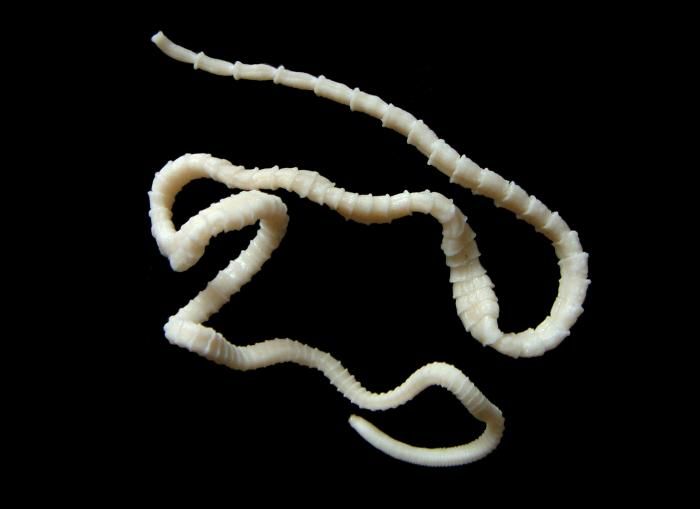
A tapeworm and a cat have this type of relationship.
a)
mutualism
b)
parasitism
c)
commensalism
d)
competition
60.

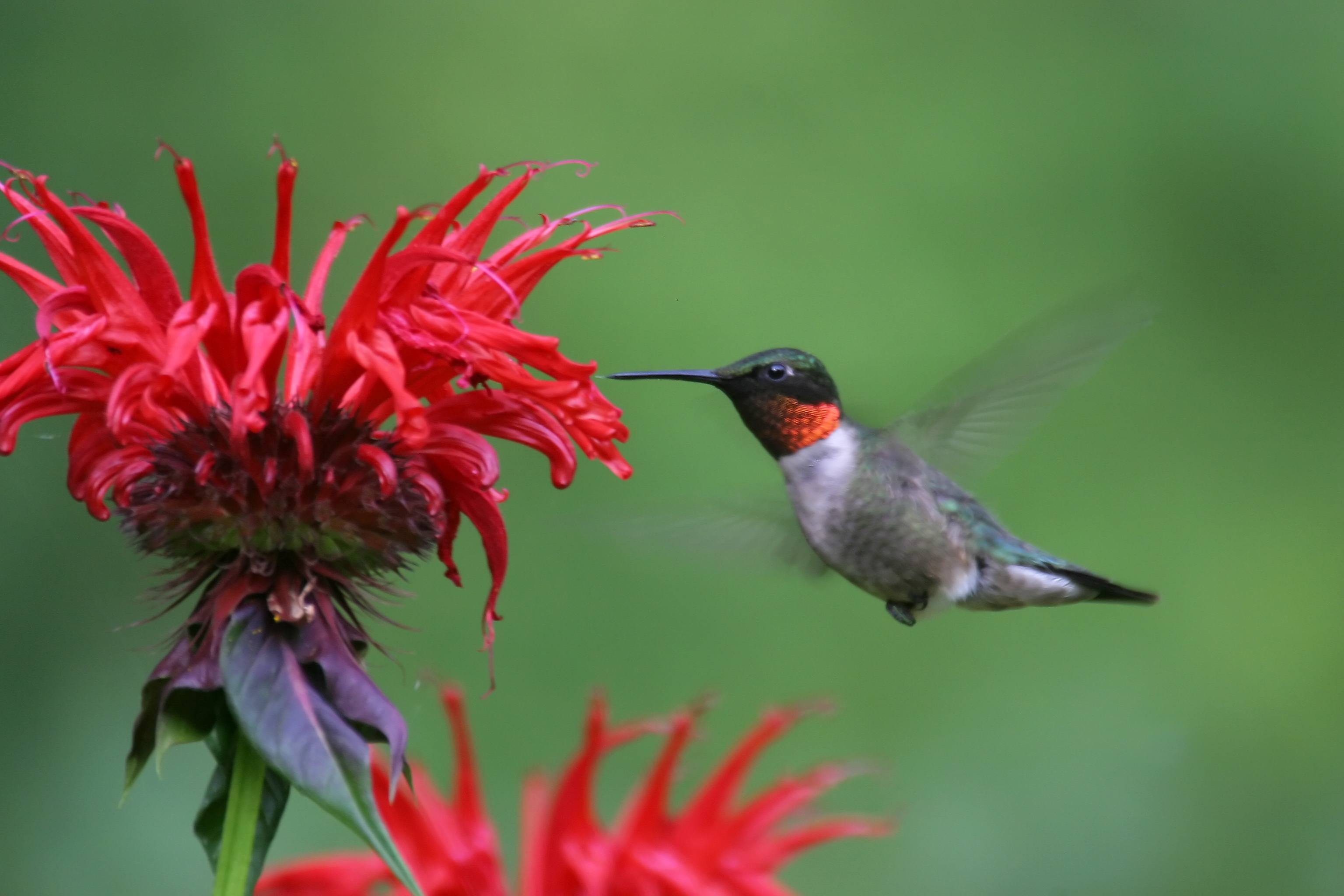
Type of symbiosis: Hummingbirds feed on nectar from flowers. The flowers are pollinated by hummingbirds as they move from flower to flower.

a)

commensalism

b)

mutualism

c)

parasitism

d)

predation

61.

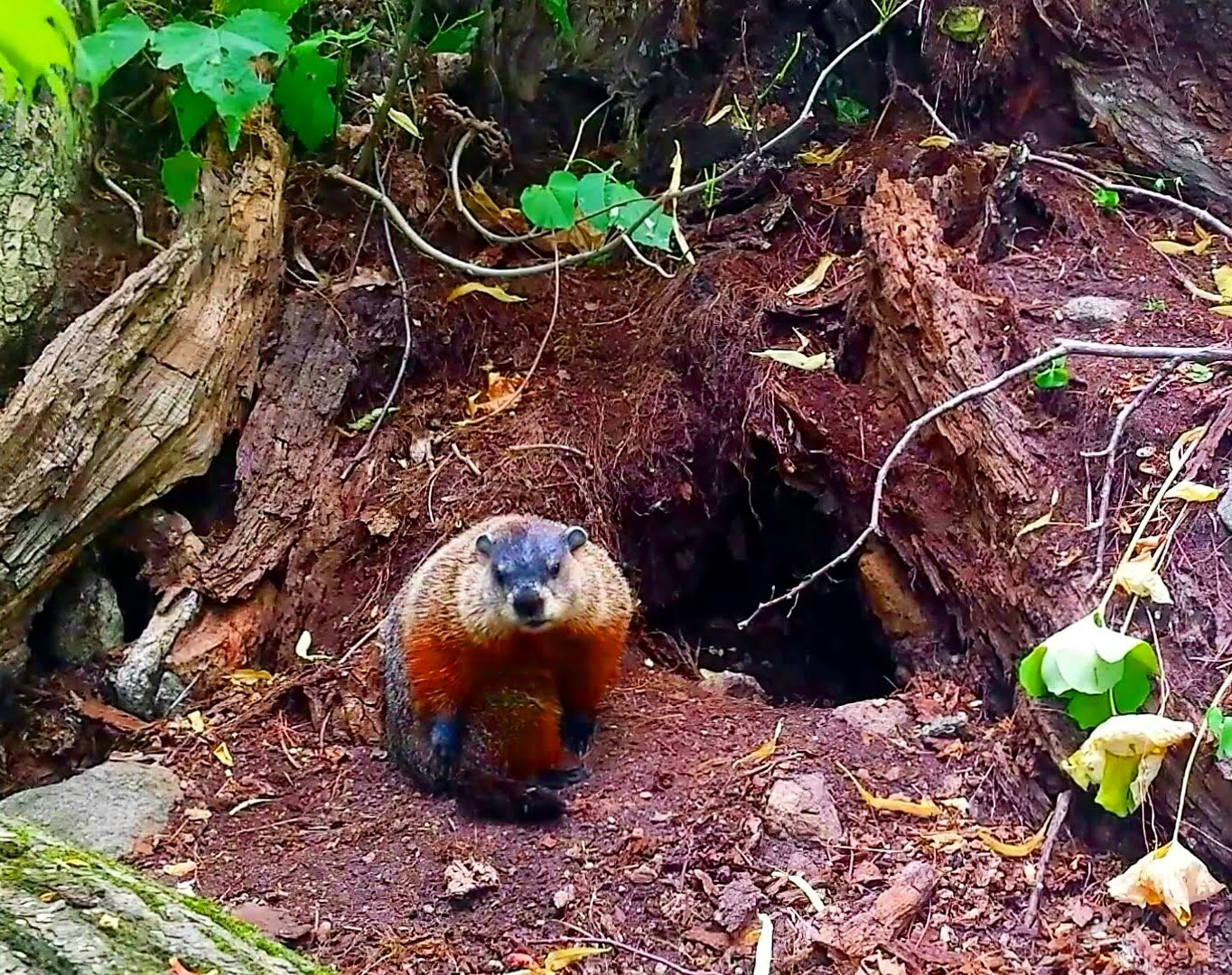
Type of symbiosis: Skunks often live in burrows that have been dug and abandoned by woodchucks.

a)

commensalism

b)

mutualism

c)

parasitism

d)

predation

62.
Bees use flower nectar for food, and they carry flower pollen to other flowers, allowing the flower to reproduce.
a)
Mutualism
b)
Commensalism
c)
Parasitism
63.
Starfish are probably the most important predator in the shallow ecosystem because they eat basically anything that they can come across. Their feeding activities control the whole ecosystem. This is an example of the starfish ___.
a)
habitat
b)
biotic factors
c)
tolerance level
d)
niche
64.
A relationship in which two species live closely together.
a)
resource
b)
mutualism
c)
succession
d)
symbiosis
65.

What level of ecological organization would include all squirrels that live in the same area?

a)

biome

b)

community

c)

ecosystem

d)

population

66.
All the different populations that live together in an area make up a(n)
a)
community.
b)
ecosystem.
c)
organism.
d)
species.
67.
Several species of warblers can live in the same spruce tree ONLY because they
a)
have different habitats within the tree.
b)
don’t eat food from the tree.
c)
occupy different niches within the tree.
d)
can find different temperatures within the tree.
68.
All of the following statements concerning characteristics of predator-prey relationship are correct EXCEPT:
a)
Camouflage is an adaptation that protects prey.
b)
A rise in the population of predators is followed by a decreased in the population of prey.
c)
A rise in the population of prey is often followed by a rise in the population of predators.
d)
The population of predators most often eliminates the population of prey
69.
Many poisonous animals are brightly colored (red or orange) as a warning to predators.  The special coloration is called
a)
Mullerian mimicry
b)
Batesian mimicry
c)
aposematic coloration 
d)
mutualistic coloration
70.
What is the corresponding codon for AGT?
a)
UCA
b)
TCA
c)
UGA
d)
ACU
71.
RNA polymerase moves in which direction along the DNA?
a)
5' to 3' 
b)
3' to 5' along the template strand
c)
3' to 5' along nontemplate(coding) strand
d)
5' to 3' along the template strand
72.
What is the anticodon on the tRNA that binds to mRNA codon for the DNA coding sequence AAA?
a)
TTT
b)
UUU
c)
UUA
d)
AAA
73.
Which is the best description of a gene?
a)
a DNA sequence that is expressed to form a functional product; either RNA or polypeptide
b)
a DNA subunit that codes for a single complete protein
c)
a DNA-RNA sequence combination that results in an enzymatic product
d)
a descrete unit of hereditary information that consists of a sequence of amino acids 
74.
A possible sequence of nucleotides in the template strand of DNA that would code for the polypeptide sequence phe-leu-ile-val would be?
a)
5'-TTG-CTG-CAG-TAG-3'
b)
3'-AAC-GAC-GUC-AUA-5'
c)
3'-AAA-AAT-ATA-ACA-5'
d)
3'-AAA-GAA-TAA-CAA-5'
75.
In a nucleosome, the DNA is wrapped around
a)
polymerase molecules.
b)
ribosomes.
c)
histones.
d)
a thymine dimer.
76.
When does crossing over occur?
a)
Interphase
b)
Prophase 1
c)
Prophase 2
d)
Metaphase 1
77.

If a stem cell (body cell) has 24 chromosomes, how many will it have at the end of meiosis?

a)

24

b)

12

c)

6

d)

the number varies per species

78.

Meiosis results in ______.

a)

4 genetically unique haploid gametes

b)

4 genetically unique diploid cells

c)

2 genetically identical cells

d)

4 genetically identical cells

79.
The chromosomes that pair up during meiosis, are called __________ chromosomes.  
a)
homozygous 
b)
asexual
c)
homologous
d)
genes
80.
When homologous chromosomes match up, they form a structure call a ___________.
a)
tetrad
b)
triad
c)
diploid
d)
gamete
81.
What phase is  shown in the picture?
a)
anaphase 1
b)
anaphase 2
c)
metaphase 1
d)
telophase 1
82.

Two processes that increase genetic variation during meiosis are crossing over and _____

a)

Synapsis

b)

Tetrad

c)

Independent assortment

d)

Gameiosis

83.

A haploid cell has

a)

three sets of chromosomes

b)

one set of chromosomes

c)

two sets of chromosomes

d)

four sets of chromosomes

84.
Human eggs and sperm are _____, and each has ____ chromosomes.
a)
diploid, 23
b)
diploid, 46
c)
haploid, 23
d)
haploid, 46
85.
A male shark has 40 chromosomes in each of its sex cells. How many would be present in its body cells?
a)
20
b)
40
c)
80
d)
160
86.

What is one of the advantages of reproducing sexually versus asexually?

a)

underproduction of offspring

b)

overproduction of offspring

c)

genetic variation

d)

artificial selection

87.
What phase is represented?
a)
metaphase 1
b)
metaphase 2
c)
anaphase 1
d)
anaphase 2
88.

The organelle located within centrosome region of animal cells; aids in spindle fiber formation

a)

Chromatid

b)

Centriole

c)

Centromere

d)

Centrosome