wayground logo

Free Printable Worksheets

NEW

Font size

S
M
L
XL
Worksheets

Unit 7 Evolution

Total questions: 76

Worksheet time: 1hrs 7mins

Name
Class
Date
1.
A characteristic that improves an individual's ability to survive and reproduce in a particular environment.
a)
Ancestor
b)
Adaptation
c)
Descendant
d)
Fossil
2.
English natural scientist who formulated a theory of evolution by natural selection (1809-1882).
a)
Darwin
b)
Wallace
c)
Linnaeus
d)
Lamarck
3.
An original species from which all other species evolved.
a)
Fossil
b)
Natural Selection
c)
Descendant
d)
Common Ancestor
4.
A term that typically describes a species that no longer has any known living individuals
a)
Generation Time
b)
Fossil Record
c)
Extinct
d)
Speciation
5.
The information provided by fossils about the Earth's history.
a)
Fossil Record
b)
Extinction
c)
Evolution
d)
Genetic Variation
6.
A trait passed from parent to offspring through DNA.
a)
Natural Resources
b)
Survival of the Fittest
c)
Genetic variation
d)
Genetic trait
7.
Differences among individuals in the composition of their genes or other DNA segments.
a)
Natural Selection
b)
Derived traits
c)
Genetic Variation
d)
Adaptation
8.
Formation of new species.
a)
Speciation
b)
Trait
c)
Fossil record
d)
Ancestor
9.

Process by which individuals that are better suited to their environment survive and reproduce most successfully; also called survival of the fittest.

a)

Natural Selection

b)

Extinction

c)

Derived trait

d)

Artificial Selection

10.

What is gradual change in a species over time

a)

evolution

b)

natural selection

c)

diversity

d)

extinct

11.

What are any difference between organisms of the same species

a)

Homologous Structure

b)

Diversity

c)

Fossil

d)

Variation

12.

The variety of organisms that inhabit the Earth

a)

diversity

b)

mutation

c)

evolution

d)

natural selection

13.
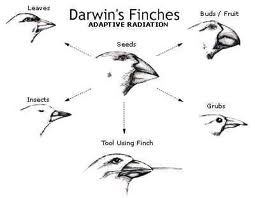
What characteristic did Darwin observe about the finches on the Galapagos Islands?
a)
Their feathers 
b)
Genotypes 
c)
Their beaks
d)
Their body sizes
14.
Which layer is the oldest?
a)
1
b)
2
c)
3
d)
4
15.
What is an organism that has similar characteristics and can reproduce?
a)
species
b)
organism
c)
embryology
d)
vestigial 
16.
When the DNA of an organism is altered it is referred to as…
a)
Mutation
b)
Gene Flow
c)
Genetic Drift
d)
Sexual Selection
17.
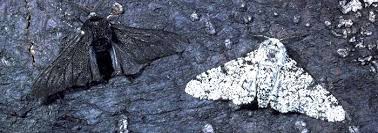
Predict which moth would increase in population
a)
light 
b)
dark
18.
Two organisms that are closely related would have
a)
very similar DNA sequence
b)
exactly the same DNA sequences
c)
no proteins in common
d)
completely different DNA sequence
19.
This picture is an example of
a)
homologous structures
b)
embryological similarities
c)
analogous structures
d)
vestigial structures
20.
How are camels especially suited to their environment? Choose best
a)
Their humps make them good pack animals for humans
b)
Their long eyelashes make them look pretty
c)
They can go long without water
d)
They get along well with other animals
21.

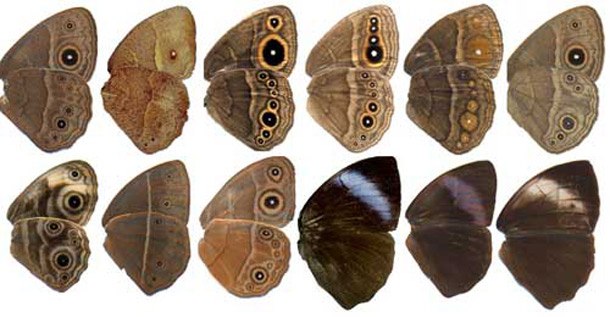
These moths are all the same species. The differences between their wings is an example of ________________

a)

Natural Selection

b)

Variation

c)

An acquired trait

d)

Extinction

22.
What does these image depict? 
a)
Vestigial Structures 
b)
Fossils 
c)
Adaptations
d)
Species 
23.
Which is not an example of a species? 
a)
Dodo Bird 
b)
Donkey 
c)
Mule 
d)
Zebra 
24.
Which is not an adaptation of a polar bear? 
a)
White fur 
b)
Large Feet 
c)
Thin Layer of fat 
d)
Strong Swimmer 
25.
Darwin wrote that organisms with traits that are best suited to the environment will ________________
a)
increase in number
b)
become extinct
26.
What is the advantage of having different shaped beaks?
a)
To look different from other species.
b)
To be able to eat the food readily available in the environment.
c)
To protect itself against predators.
d)
To protect itself against prey.
27.
The struggle for existence against other members of an organisms species is
a)
Competition
b)
Natural Selection
c)
gene flow
d)
genetic drift
28.
Remains of ancient organisms are called
a)
Extinctions
b)
Fossils
c)
Mutations
d)
Variations
29.
A well-tested concept that explains a wide range of observations is called a(an):
a)
hypothesis
b)
experiment
c)
cause and effect
d)
scientific theory
30.
In a particular population, sexual reproduction can produce
a)
many different phenotypes.
b)
meiosis.
c)
mutations.
31.
A population of peppered moths with a dark grey variation and a light grey variation lives in light colored birch forest. It is hunted by sight. Which statement is most likely true?
a)
there are equal number of light and dark grey peppered moths in the population
b)
more light grey moths survive than dark grey moths
c)
more dark grey moths survive than light grey moths
d)
all peppered moths will be eaten before they can reproduce
32.
If a rabbit species lives in an extremely cold environment with their main predator hunting at night and by sound, which mutation would be most favorable to the rabbit?
a)
camouflage fur
b)
a dense undercoat of fur underneath
c)
bigger ears
d)
being more visibly active at night
33.
Natural selection and evolution work on what level of life organization?
a)
individuals
b)
biomes
c)
populations
d)
ecosystems
34.
Organisms with traits that are favorable to their survival and reproduction are ________ likely to pass on their genes to the next generation, and thus ________ common in the population
a)
more, less
b)
more, more
c)
less, less
d)
less, more
35.
For natural selection to impact evolution, which condition is not required?
a)
selection pressures
b)
inheritance of traits
c)
genetic variation within a population
d)
each population occupies its own niche
36.
Comparing two individuals of a species, evolutionary “fitness” would be best measured by which of the following?
a)
the length and width of the individuals
b)
the number of offspring
c)
the mass of the food eaten in its life
d)
the mass of the individuals
37.

True or False. Theories can change as new evidence is discovered.

a)

True

b)

False

38.

True or False. Genetic variation would increase an organisms chance for survival.

a)

True

b)

False

39.

When more predators are introduced into an organism's habitat, which ones would likely survive?

a)

the larger ones

b)

the ones the predators could not see (camouflaged

c)

the stronger ones

d)

the smaller ones

40.

What factor may cause 2 groups of the same species to adapt differently?

a)

isolation of the 2 groups in different environments

b)

not very much genetic diversity

c)

too much genetic diversity

d)

differences in the time it takes them to reproduce

41.

When there is a negative change in a specie's environment, what is the 1st thing to be seen?

a)

an increase in population

b)

immediate adaptation

c)

a decrease in population

d)

evolution

42.

Sand Hill Cranes have a long beak to reach their food, what would happen if it was short?

a)

It would eat different food

b)

it would share food with other birds

c)

it would have a hard time getting food and possible die

d)

it would attract more mates

43.

What is the most common reason that an animal's color would evolve over time?

a)

to blend in better with its environment

b)

to make it easier to find food

c)

to help find mates

d)

to make them more attractive

44.

True or False. You can infer where an animal lived (land, sea, air) by its skeletal remains.

a)

True

b)

False

45.

What is NOT a possible cause of extinction?

a)

little or no genetic variation

b)

introduction of new predators in area

c)

many offspring with a variety of new traits

d)

few offspring with no new traits

46.

Why can the fossil record be used as evidence of the scientific theory of evolution?

a)

it shows every known life form

b)

It shows how an organism has changed over time

c)

It shows the process of reproduction

d)

it shows the variety of different species

47.

What evidence do we have that different species may have once shared common ancestors?

a)

shared environments

b)

similarities in the fossil record

c)

similar life cycles

d)

shared food sources

48.
In recent years "SuperBugs" (bacteria that aren't effected by antibiotics) are becoming more and more common. How could natural selection explain this?
a)
Superbugs survive antibiotics and reproduce
b)
Antibiotics cause bacteria to become superbugs
c)
We have always had the same amount of superbugs; modern media just discusses them more.
d)
There is no reliable data on the origin of super bugs.
49.
Humans have been a very successful species on earth.  They have very large, very diverse populations spread all around the world. As a result,
a)
Human have very limited ability to adapt to changes in the environment.
b)
Young humans have lower survival rates as compared to other species.
c)
Humans have a potential to adapt to various environmental changes.
d)
All humans are more disease resistant.
50.
A large herd of goats lives in a field full of poison ivy.  Some goats are able to eat the poison ivy while others have become sick when they eat it. Over time the herd as a whole will tend to
a)
Become more likely to eat poison ivy.
b)
Become less likely to eat poison ivy.
c)
Not change in the proportion of goats that can and can not eat poison ivy.
d)
Eat all the poison ivy and leave only plants all the goats can eat.
51.
Darwin studied which of these species on Galapagos?
a)
Pigeons and tortoises
b)
Tortoises and finches
c)
Finches and Pigeons
d)
Zebras and Mockingbirds
52.
The clear wing moth and the wasp look similar to each other. Why? 
a)
The wasp mimics the moth to attract prey.
b)
The moth and the wasp are closely related
c)
The moth mimics the wasp to repel predators
d)
The moth had one wasp parent
53.
Among organism that live in the desert, the most common adaptation is 
a)
water conservation
b)
large ears
c)
broad leaves
d)
deep roots
54.
Define homologous structures.
a)
Structures that appear the same, but have different ancestral origins.
b)
Structures that appear the different, but have the same ancestral origins.
c)
Any two body parts from the same organism
d)
Parts that no longer appear to have a function
55.
Define analogous structures.
a)
Structures that appear the same, but have different ancestral origins.
b)
Structures that appear the different, but have the same ancestral origins.
c)
Any two body parts from the same organism
d)
Parts that no longer appear to have a function
56.
Some people use similarities in embryos to support the the theory that 
a)
The organisms have the same ancestors 
b)
The organisms have similar numbers of offspring
c)
Cells naturally develop along similar line 
d)
There are no connections 
57.

The figure shows the wings of a bat and an insect. Which term describes these structures?

a)

homologous

b)

analogous

c)

vestigial

58.

The chart shows that species B and C have the fewest amino acid differences for a protein among four species. What does this suggest about their evolutionary relationship?

a)

They are more closely related to each other than to the other species

b)

They evolved at a faster rate compared to other species

c)

They share a developmental similarity not observed in the other species

d)

They do not share a common ancestor with the other species

59.

Students were asked to identify the following birds using the classification key shown.

Which statement correctly identifies two of the birds?

a)

Bird 1 is a Ruby-throated hummingbird and Bird 2 is a Tufted titmouse.

b)

Bird 2 is a Great blue heron and Bird 3 is an Ovenbird.

c)

Bird 2 is a Red-tailed hawk and Bird 3 is a Killdeer.

d)

Bird 1 is an Ovenbird and Bird 3 is a Tufted titmouse.

60.

Manatees are large marine mammals that live in warm coastal waters of the southeastern United States, the Gulf Coast, Central America, and South America. Elephants are large land mammals native to Africa and Southeast Asia. Manatees and elephants share a recent common ancestor. Manatees do not have hind legs, but they do have small bones near their pelvises. Scientists think these bones indicate that ancestors of manatees did have hind legs. Which claim about the common ancestor of manatees and elephants is BEST supported by the facts above?

a)

The common ancestor lived on land.

b)

The common ancestor swam in water

c)

The common ancestor walked upright.

d)

The common ancestor was a plant-eater.

61.

The forelimb of the monkey, bat, penguin, and alligator look very different on the outside, but their skeletal structures are similar. This evidence suggests that these animals

a)

may have evolved from a common ancestor.

b)

all reproduce in a similar fashion.

c)

live in similar environments.

d)

should all be able to fly someday.

62.

In the past, African elephants have been hunted for their tusks. Over time, the number of tuskless elephants has increased while the number of elephants with tusks has decreased.

What is the MOST likely explanation for the increase in the number of tuskless elephants?

a)

Fewer elephants with tusks survived to reproduce.

b)

The gene for tusks has become recessive over time.

c)

The hunting of elephants resulted in genetic mutation of the tusk gene.

d)

Elephants began to lose their tusks because of climate changes.

63.

Some scientists have suggested that pandas may be more closely related to raccoons than to bears. What could scientists compare between pandas and the raccoons to help classify the panda more accurately?

a)

their diets

b)

their DNA

c)

their body sizes

d)

their geographic distribution

64.

Examine the data in the table below.

Which cladogram BEST represents the data in the table?

a)
b)
c)
d)
65.

Scientists study similarities between groups of organisms to determine how they may have changed over time.

All of the following are used as evidence for the similarities between the two organisms shown above EXCEPT

a)

early development.

b)

body structure.

c)

habitat.

d)

DNA.

66.

The fossil record provides evidence of change and common ancestries in organisms. The diagram is a portion of the fossil record that shows the common ancestry of certain organisms.

Which is illustrated in the diagram of the fossil record?

a)

Crocodiles appear in the fossil record before turtles.

b)

Turtles are a common ancestor of snakes and lizards.

c)

Birds and crocodiles developed separately from turtles.

d)

Turtles and lizards are more closely related than snakes and lizards.

67.

On a small, isolated island, a hurricane destroyed all the trees that produced a large, hard shelled nut. Which bird population would MOST likely decrease?

a)

birds with long, probing beaks

b)

birds with thick, strong beaks

c)

birds with thin, short beaks

d)

birds with large, pouch beaks

68.

Natural selection CANNOT occur without

a)

competition for unlimited resources.

b)

gradual warming of Earth.

c)

genetic variation in species.

d)

asexual reproduction in species.

69.

Which scientist believed the following: that organisms used or disused traits throughout their lifetime, which led Darwin to believe that populations gain traits through natural selection.

a)

Lamarck

b)

Hutton

c)

Darwin

d)

Malthus

70.

Two similar organisms living on different continents have similar structures. Which type of evidence does this illustrate?

a)

Fossil Evidence

b)

Biogeography

c)

Comparative Biochemistry

71.
According to the cladogram, which organism is most distantly related to the human?
a)
crayfish
b)
rat
c)
perch
d)
frog
72.

A new river forms and splits two populations, causing ______________ speciation

a)

Sympatric

b)

Allopatric

c)

Extreme

d)

Convergent

73.

A speciation in which new species evolve from a single ancestral species while inhabiting the SAME geographic region.

a)

Sympatric speciation

b)

Allopatric speciation

c)

Complex speciation

d)

Divergent speciation

74.

Orcas occur in the same habitat but some are avoiding each other and do not interbreed. They have different diets, vocal behavior, and social structures. What type of speciation is this?

a)

Allopatric

b)

Sympatric

c)

Complex

d)

Covergent

75.

When the Grand Canyon in Arizona formed, two populations of one squirrel species were separated by the giant canyon. This is an example of _____________ speciation.

a)

Allopatric

b)

Sympatric

c)

Simple

d)

Divergent

76.

Different finch populations lived on separate islands with different environments. They evolved to best adapt to those particular environments and can no longer mate. What type of speciation is this?

a)

Allopatric

b)

Sympatric

c)

Temporal

d)

Mechanical