
 Worksheets
Exam 6 - Bonding and Solutions
Total questions: 150
Worksheet time: 4hrs 48mins
A bond between a metal and a nonmetal is called a(n)
covalent bond
ionic bond
metallic bond
transfer bond
A bond between a nonmetal and a nonmetal is called a(n)
covalent bond
ionic bond
metallic bond
transfer bond
What type of bond involves the sharing of electrons between atoms?
covalent bond
ionic bond
metallic bond
transfer bond
Identify the following compound as ionic or covalent: MgO
ionic
covalent
Identify the following compound as ionic or covalent: SO2
ionic
covalent
What is a mixture?
A combination of two or more substances that can't be easily separated.
A combination of two or more substances that can be easily separated.
Which is an example of a solution?
Salt and Sugar
Salt Water
Jelly beans
Concrete
What can you do to separate salt from water?
Add aditional water.
Take some water out.
Let it stand in the sun for a while.
Decrease the temperature of the water.
H2 + Cl2 ➔ 2HCl


Li+
What occurs when potassium reacts with chlorine to form potassium chloride?
Electrons are shared and the bonding is ionic.
Electrons are shared and the bonding is covalent.
Electrons are transferred and the bonding is ionic.
Electrons are transferred and the bonding is covalent.
What is the net charge of an ion that has 8 protons, 9 neutrons, and 10 electrons?
1+
2+
1-
2-

The equation in the image represents the formation of a
fluorine atom, which is smaller in radius than a fluoride ion
fluorine atom, which is larger is radius than a fluoride ion
fluoride ion, which is larger in radius than a fluorine atom
fluoride ion, which is smaller in radius than a fluorine atom
Two grams of potassium chloride are completely dissolved in a sample of water in a beaker. This solution is classified as
an element
a compound
a homogeneous mixture
a heterogeneous mixture
Which compound has the strongest hydrogen bonding between its molecules?
HBr
HCl
HF
HI

What is the number of moles of C that must completely react to produce 2.0 moles of C2H6?
3.0 mol
4.0 mol
The Lewis structure of the CO32- ion is


Which formula represents a polar molecule?
Cl2
CH4
HCl
CO2
Which compound has both ionic and covalent bonds?
CH4
CO
CaCl2
MgSO4
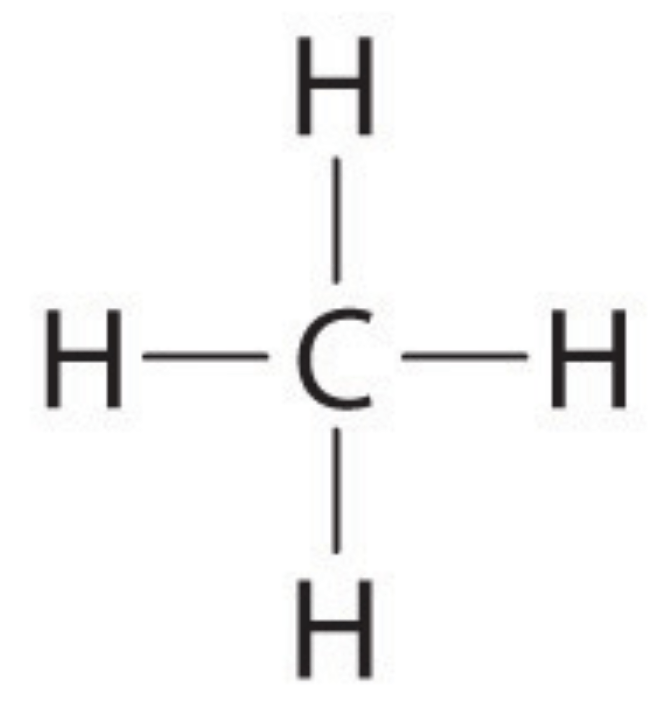
Classify the following molecule.
polar
nonpolar

Classify the following molecule.
polar
nonpolar

Classify the following molecule.
polar
nonpolar

Is the following molecule polar or nonpolar?
polar
nonpolar

Is the following molecule polar or nonpolar?
polar
nonpolar

Is the following molecule polar or nonpolar?
polar
nonpolar

Is the following molecule polar or nonpolar?
polar
nonpolar

Is the following molecule polar or nonpolar?
polar
nonpolar

Why is the molecule polar?
There is a nonbonding pair on the central atom.
There are different types of elements bonded to the central atom.
There are no nonbonding pairs on the central atom and all of the atoms bonded to the central atom are the same.

Why is the molecule polar?
There are nonbonding pairs on the central atom.
There are different types of elements bonded to the central atom.
There are no nonbonding pairs on the central atom and all of the atoms bonded to the central atom are the same.

Classify the following molecule.
polar
nonpolar

Why is the molecule nonpolar?
There are nonbonding pairs on the central atom.
There are different types of elements bonded to the central atom.
There are no nonbonding pairs on the central atom and all of the atoms bonded to the central atom are the same.

Why is the molecule polar?
There is a nonbonding pair on the central atom.
There are different types of elements bonded to the central atom.
There are no nonbonding pairs on the central atom and all of the atoms bonded to the central atom are the same.

Why is the molecule polar?
There are nonbonding pairs on the central atom.
There are different types of elements bonded to the central atom.
There are no nonbonding pairs on the central atom and all of the atoms bonded to the central atom are the same.

Why is the molecule nonpolar?
There are nonbonding pairs on the central atom.
There are different types of elements bonded to the central atom.
There are no nonbonding pairs on the central atom and all of the atoms bonded to the central atom are the same.
How many bonding pairs and lone pairs for a pyramidal molecule?
2 bonding pairs 2 lone pairs
2 bonding pairs 0 lone pairs
3 bonding pairs 1 lone pairs
4 bonding pairs 2 lone pairs
What is the bond angle of an ammonium ion
107.0
104.5
109.5
120.0

What would be the bond angle between atoms in this molecule?
109.5
120
180
90
What shape would a molecule have if it has 2 bonded pairs and 1 lone pair around its central atom? (It may help if you sketch this out)
Linear
Trigonal planar
Tetrahedral
Bent

What is the name of this molecule's shape?
Bent
Linear
Tetrahedral
Trigonal pyramidal

What 3-D shape would this molecule have: H2S ?
bent
tetrahedral
linear
trigonal pyramidal

What 3-D shape would this molecule have?
Trigonal planar
Pyramidal
Tetrahedral
Bent

What 3-D shape would this molecule have?
tetrahedral
trigonal planar
trigonal pyramid
bent
Which Lewis Dot Model drawing correctly shows an O2 molecule?


Which best describes a triple bond?
3 shared pairs of electrons
3 shared electrons
a central electron with 3 atoms bonded around it
What shape would a molecule have if it has 4 bonded pairs around its central atom? (It may help if you sketch this out)
Linear
Trigonal planar
Tetrahedral
Bent
How many valence electrons should Lithium have in its Lewis dot model?
1
2
3
4

This is a correct dot diagram for carbon (C)
true
false
Which of these is incorrect?


Which is the correct molecular structure for carbon dioxide?


How many total valence electrons are participating in bonding in the molecule above?
8
4
2
3
CO2 has how many lone pairs?
0
1
2
3
4


CCl4 has how many double bonds?
0
1
2
3

What is a cation?
a metal with a negative (-) charge that gains electrons
a non-metal with a negative (-) charge that loses electrons
a metal with a positive (+) charge that loses electrons
a non-metal with a positive (+) charge that loses electrons

What is a anion?
a metal with a negative (-) charge that loses electrons
a non-metal with a negative (-) charge that gains electrons
a metal with a positive (+) charge that gains electrons
a non-metal with a positive (+) charge that loses electrons
True or false:
Dissolved particles will pass through a piece of filter paper.
True
False
Solutions that conduct a current are called ____________ and are made from ___________ compounds.
electrolytes; ionic
nonelectrolytes; ionic
electrolytes; molecular
electrolytes; covalent
You and your friend have a contest to see who can make sweet iced tea the fastest. Which of the following would NOT help you win?
Cooling the water
Using smaller sugar crystals
Heating the water
Stirring quickly


How much KNO3 solute is saturated at 40 degrees?
75
55
65
85

At what temperature can you fully dissolve 140g of NaNO3?
62
73
81
You cannot determine this
At what temperature can you fully dissolve 60g of KNO3?
27
30
37
You cannot determine this
What type of a solution is 100g KNO3 at 40ºC in 100g H2O?
Saturated
Unsaturated
Supersaturated
What type of a solution is 55g KCl at 70ºC in 100g H2O?
Saturated
Unsaturated
Supersaturated

Define the term soluble.
Can dissolve in water
Cannot dissolve in water
Partially dissolves in water
Define the term insoluble.
Can dissolve in water.
Cannot dissolve in water.
Partially dissolves in water.

Which substance is least soluble at 0 ºC?
KI
KNO3
KClO3
Ce2(SO4)3
Which solution is more concentrated?
Solution 1:
500 mL of water
100 g of salt
Solution 2:
500 mL of water
90 g of salt
Solution 1
Solution 2
They have the same concentration
I have no idea
What is the concentration of a solution in parts per million if 0.02 grams of NaCl is dissolved in 1000 grams of water?
2 ppm
20 ppm
200 pm
0.2 ppm
Which unit can be used to express the concentration of a solution?
mols/L
m/s
g/mol
amu
Which unit can be used to express the concentration of a solution?
L/s
J/g
ppm
kPa
Which salt below has the largest effect on freezing point?
C2H4O2
H2S
LiBr
CaF2

Using the graph above, which compound would dissolve the fastest at 20° C, KCl, NaCl, KNO3, or KClO3?
KCl
NaCl
KNO3
KClO3

