wayground logo

Free Printable Worksheets

NEW

Font size

S
M
L
XL
Worksheets

The world goes round and round

Total questions: 61

Worksheet time: 2hrs 16mins

Name
Class
Date
1.
The earth is tilted on its _____
a)
line
b)
equator
c)
axis
d)
core
2.
Earth does a complete revolution every _______
a)
10 years
b)
12 hours
c)
24 hours
d)
365 days
3.
The earth rotates every
a)
24 hours
b)
15 hours
c)
365 days
d)
hour
4.
How many moons does earth have
a)
2
b)
5
c)
9
d)
1
5.
How long does it take for the moon to go through all moon phases
a)
day
b)
week
c)
month
d)
year
6.
How many moon phases are there in all
a)
3
b)
6
c)
11
d)
8
7.
How many weeks in a revolution?
a)
67
b)
52
c)
32
d)
77
8.
What does the tilt of the earth cause?
a)
heating
b)
Seasons
c)
Atmosphere
d)
Years
9.
How many times does earth rotate in one year?
a)
365
b)
2
c)
97
d)
120
10.

What causes day and night cycles?

a)

mars

b)

seasons

c)

Earth's rotation

d)

moon phases

11.
Objects made of ice, gas and dust and orbit our sun are called:
a)
Asteroids
b)
Comets
c)
moon
d)
Meteors
12.
These objects that orbit the sun are nicknamed, "dirty snowballs."
a)
Comets
b)
Asteroids
c)
Meteors
d)
Meteroids
13.
When a meteoroid STRIKES the surface of the earth scientists refer to them as:
a)
Asteroids
b)
Comets
c)
Meteors
d)
Meteorites 
14.
Millions of pieces of rocky material of various sizes orbit the Sun between the orbits of Mars and Jupiter. These objects are known as -
a)
Asteroids
b)
Meteors
c)
Comets
d)
Planets
15.
A shooting star is actually a...
a)
Comet
b)
Meteoroid
c)
Meteorite
d)
Meteor
16.
The luminous celestial body (a bright space object) around which Earth and other planets revolve and from which they receive heat and light.
a)
satellite
b)
planet
c)
sun
d)
galaxy
17.
A ball of gas in space that produces its own light and heat.
a)
planet
b)
meteorite
c)
star
d)
asteroid belt
18.
Hale-Bopp is made of ice and dust. It orbits far beyond the orbit of Pluto. This tail extends more than 1 million km. What am I?
a)
star
b)
comet
c)
meteor
d)
asteroid
19.
Which object is essentially stationary compared to all other objects in the solar system?
a)
comet
b)
asteroid
c)
star
d)
moon
20.

What is a constellation?

a)

A group of stars that forms a pattern in the sky

b)

A way to find the North Star

c)

When a planet "spins" around its axis

d)

The process that creates energy inside of a star

21.
The stars we see in each constellation are very close to us.
a)
True
b)
False
22.
What constellation is this?
a)
Lyra
b)
Cygnus
c)
Aquila
d)
Delphinus
23.
Near the poles, the stars appear to rotate in a circle in the sky and never set.
a)
True
b)
False
24.

Which constellation is this?

a)

Ursa Major

b)

Ursa Minor

c)

Cepheus

d)

Leo

25.

Which constellation is this?

a)

Taurus

b)

Pegasus

c)

Scorpius

d)

Orion

26.

The big dipper is a part of what larger constellation?

a)

Orion

b)

Ursa Minor

c)

Cancer

d)

Ursa Major

27.

What does the name Cygnus mean?

a)

Swan

b)

Duck

c)

Bird

d)

Baked Turkey

28.

Constellations may be only visible during certain seasons due to the Earth’s orbit around the____.

a)

Earth

b)

Mars

c)

Planets

d)

Sun

29.

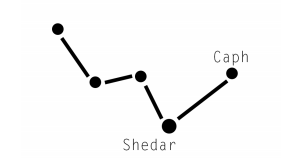
Which constellation is this?

a)

Cassiopeia

b)

Cygnus

c)

Auriga

d)

Cepheus

30.
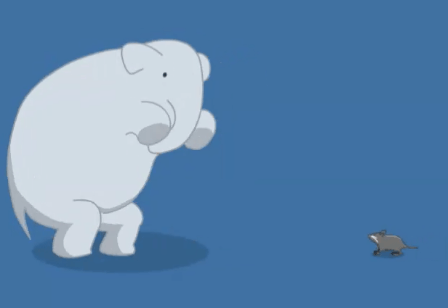
Which objects have a STRONG force of gravity?
a)
Objects with GREATER mass, like elephants
b)
Objects with LESS mass, like mice
31.
A person would weigh less on on the Moon than on the Earth because . . .
a)
Moon has more mass, and therefore more gravity
b)
Moon has less mass, and therefore more gravity
c)
Moon has more mass, and therefore less gravity
d)
Moon has less mass and therefore less gravity
32.
Which model has greater gravitational attraction (if any)
a)
Model A
b)
Model B
c)
Both Model A and Model B (same gravity)
33.
What best describes the mass and weight of a person as they move around the universe?
a)
mass and weight changes
b)
Mass and weight stays constant
c)
weight remains constant, mass changes
d)
Mass stays constant, weight changes
34.

What is the winter solstice?

a)

The day and night are the same length.

b)

We have the longest day and shortest night of the year.

c)

We have the longest day and longest night of the year.

d)

We have the shortest day and longest night of the year.

35.

In which hemisphere do we live (in US)?

a)

Northern

b)

Southern

36.

The day of the year with the most daylight hours is the

a)

spring equinox

b)

fall equinox

c)

summer solstice

d)

winter solstice

37.
What are the days of the year when day and light hours are equal?
a)
Solstices
b)
Seasons
c)
Daylight savings time
d)
Equinoxes
38.

An equinox occurs when the Sun is positioned directly over the equator.

a)

True

b)

False

39.

Where on Earth can you experience entire days of darkness?

a)

The equator

b)

The poles

c)

The Tropic of Cancer

d)

The Tropic of Capricorn

40.
When an object free falls around another object in space.
a)
terminal velocity
b)
projectile motion
c)
orbit
d)
rocket science
41.
Attracts all objects towards each other
a)
gravity
b)
mass
c)
weight
d)
inertia
42.
Every object in the universe attracts every other object.
a)
Law of Universal Gravitation
b)
Mass and Distance
c)
Inertia
d)
Newton's First Law of Motion
43.
What does the strength of gravity between two objects depend upon?
a)
Mass & distance
b)
Mass & weight
c)
Gravity & inertia
d)
Inertia & mass
44.
The amount of matter in an object
a)
mass
b)
weight
c)
inertia
d)
gravity
45.
The force of gravity on an object
a)
mass
b)
weight
c)
volume
d)
inertia
46.
What keeps the moon in orbit around Earth?
a)
Mass & distance
b)
Mass & weight
c)
Inertia & gravity
d)
Gravity & mass
47.
Gravity pulls any object on or near Earth toward the planet's center. 
a)
True
b)
False
48.
Which of these best describes why your weight (on Earth) would change on another planet?
a)
Dehydration effects on different planets change weight.
b)
In general, the smaller the planet, the greater weight
c)
Different planets have different gravitational pulls
d)
Weight does not change, no matter where you are.
49.
What is the longest day of the year?
a)
winter solstice
b)
summer solstice
c)
fall equinox
d)
spring equinox
50.
When is the winter solstice?
a)
December
b)
June
c)
March
d)
September
51.

Why can we see the Moon?

a)

It reflects sunlight.

b)

It goes through phases.

c)

It produces its own light

d)

It comes out at night.

52.

What causes the Moon to revolve around Earth?

a)

Earth's gravity

b)

the Sun's gravity

c)

the Moon's lack of gravity

d)

the Moon's jet packs

53.

The Moon's phase is waning when it changes from _____

a)

first quarter to a full moon.

b)

last quarter to a new moon.

c)

first quarter to a new moon.

54.

What is a characteristic of the far side of the Moon?

a)

It is covered in low rolling hills.

b)

It is seen during the new moon phase.

c)

It cannot be seen from Earth.

d)

It is always bright.

55.
_______ is the apparent changing shapes of the Moon 
a)
New Moon
b)
Crescent Moon
c)
Full Moon
d)
Moon Phases
56.
A ______ is when the side of the Moon facing Earth appears lite. 
a)
New Moon
b)
Crescent Moon
c)
Full Moon 
d)
Moon Phases
57.
A ______ is when the side of the Moon facing Earth appears to be not lit. 
a)
New Moon
b)
Crescent Moon
c)
Full Moon
d)
Moon Phases
58.
A ________ is when a small section of the Moon facing Earth is lighted. 
a)
New Moon
b)
Crescent Moon
c)
Full Moon
d)
Moon Phases
59.
How would you describe the Moon? 
a)
Smooth surface with an atmosphere but no water
b)
Surface filled with carters and water but no atmosphere
c)
Filled with carters and dust, no water or atmosphere 
d)
The same as Earth 
60.
Which of the following choices has the moon phases in the correct order? 
a)
Full moon, new moon, waxing gibbous, first quarter, waxing crescent, waning gibbous, waning cresent, last quarter
b)
waxing gibbous, new moon, first quarter, waxing crescent, full moon, waning crescent, third/last quarter, waning gibbous
c)
New Moon, Waxing Crescent, First Quarter, Waxing Gibbous, Full Moon, Waning Gibbous, Third/last quarter, Waning Crescent
d)
New Moon, Waning Crescent, First Quarter, Waning Gibbous, Full Moon, Waxing Gibbous, Third/Last Quarter, Waxing Cresecent 
61.
Why does the Moon have phases? 
a)
The moon reflects light from the sun. Sometimes there is a shadow on the moon and we only see part of it. 
b)
Only part of the moon is turned on and shining at a time. 
c)
The Earth is blocking the moon when we don't see it. 
d)
The moon moves out of sight.