wayground logo

Free Printable Worksheets

Font size

S
M
L
XL
Worksheets

Human Body 1

Total questions: 100

Worksheet time: 50mins

Name
Class
Date
1.
The process by which the body breaks down food so that it can be used for energy.
a)
composition
b)
digestion
c)
deposition
d)
absorption
2.
The muscular organ in the body where chemical and mechanical digestion take place.
a)
pancreas
b)
liver
c)
stomach
d)
esophagus
3.
A long folded tube inside the body attached to the stomach where nutrients in the food are absorbed.
a)
large intestine
b)
small intestine
c)
esophagus
d)
rectum
4.
The opening at the end of the digestive track where feces exits the body.
a)
large intestine
b)
small intestine
c)
rectum
d)
anus
5.
A muscular tube that helps move food from the mouth to the stomach.
a)
esophagus
b)
trachaea
c)
small intestine
d)
gall bladder
6.
Provides additional enzymes(pancreatic juice) to help nutrients get absorbed by the small intestine.
a)
liver
b)
kidneys
c)
gall bladder
d)
pancreas
7.
The tube after the small intestine where the liquid is absorbed.
a)
large intestine
b)
small intestine
c)
rectum
d)
stomach
8.
A substance such as a fat, a protein, or a carbohydrate that a living thing needs to survive.
a)
saliva
b)
carrots
c)
nutrients
d)
minerals
9.
An organ of the digestive system that makes chemicals to help the body break down fats and rid itself of harmful substances.
a)
esophagus
b)
mouth
c)
liver
d)
stomach
10.
A series of wave-like muscle contractions that moves food to different processing stations in the digestive tract.
a)
adduction
b)
primary wave
c)
peristalsis
d)
inversion
11.
The place where waste is stored before it leaves the body.
a)
rectum
b)
anus
c)
small intestine
d)
large intestine
12.
a)
pancreas
b)
esophagus
c)
stomach
d)
liver
13.
a)
esophagus
b)
liver
c)
stomach
d)
pancreas
14.
a)
stomach
b)
pancreas
c)
large intestine
d)
small intestine
15.
a)
pancreas
b)
trachea
c)
liver
d)
esophagus
16.
a)
large intestine
b)
small intestine
c)
rectum
d)
esophagus
17.
a)
purging
b)
peristalsis
c)
platinum
d)
paralysis
18.
What macromolecule would be broken down by these structures?
a)
carbs
b)
lipids
c)
proteins
d)
nucleic acids
19.
Name this structure
a)
spleen
b)
gall bladder
c)
pancreas
d)
jejunum
20.
What best describes what occurs here
a)
nutrients are absorbed
b)
water and salts are reclaimed
c)
bacteria assist with vitamin absorbtion
d)
most mechanical digestion
21.
What macromolecule is broken down by this structure?
a)
carbs
b)
fats
c)
proteins
d)
nucleic acids
22.
The chewing and grinding of food into smaller pieces is an example of...
a)
Mechanical Digestion
b)
Chemical Digestion
23.
As waste moves through the digestive system, the ______ absorbs water before storing waste in the rectum.
a)
Small intestine
b)
Stomach
c)
Esophagus
d)
Large intestine
24.
Enzymes (chemicals) in your saliva help break down food while chewing.  This is...
a)
Mechanical digestion
b)
Chemical digestion
25.
Which structure is a 'trapdoor' that prevents food from entering the trachea?
a)
epiglottis
b)
esophagus
c)
pharynx
d)
appendix
26.
When you breathe, your lungs take in ___ and remove ___. 
a)
air/oxygen
b)
oxygen/carbon dioxide 
c)
carbon dioxide/waste 
d)
waste/air 
27.
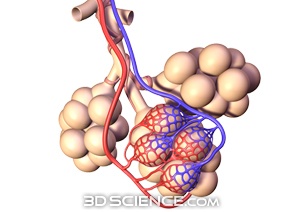
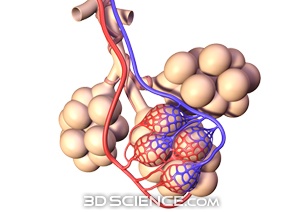
The air sacs that are covered with capillaries where gas exchange takes place
a)
bronchi
b)
lungs
c)
oxygen
d)
alveoli
28.

Flap of tissue that covers the opening to the windpipe during swallowing

a)

Pharynx

b)

Trachea

c)

Epiglottis

29.
Given the following structures:
1. larynx
2. nasal cavity
3. pharynx
4. trachea
Which of the following is the correct order that air would flow during inhalation. 
a)
1,2,3,4
b)
2,3,1,4
c)
2,1,3,4
d)
4,2,3,1 
30.
A chamber behind the nose and mouth that leads to the trachea
a)
pharynx
b)
trachea
c)
epiglottis
d)
larynx
31.

What is the site of gas exchange?

a)

alveoli

b)

nose

c)

lung

d)

bronchi

32.

Which part of the Respiratory System plays a major role in speech?

a)

nose

b)

pharynx

c)

larynx

d)

trachea

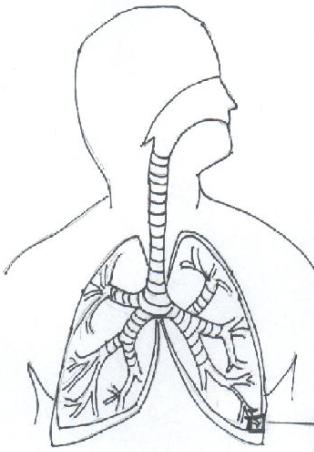
33.

NUMBER 2:

a)

Pharynx

b)

Bronchi

c)

Alveoli

d)

Lungs

34.

NUMBER 6:

a)

Lungs

b)

Trachea

c)

Mouth

d)

Alveoli

35.

NUMBER 3:

a)

Pharynx

b)

Trachea

c)

Bronchi

d)

Alveoli

36.

Inside the lungs, the bronchi divide into smaller tubes. At the end of these tubes, there are tiny sacs called...

a)

Pharynx

b)

Trachea

c)

Lungs

d)

Alveoli

37.

When we breath in the diaphragm...

a)

Contracts

b)

Relaxes

38.

When we breathe out the diaphragm...

a)

Contracts

b)

Relaxes

39.

Which are the main organs in the respiratory system?

a)

Heart

b)

Stomach

c)

Lungs

d)

Nose

40.
The tube in the body through which air moves as it travels to and from the lungs;the windpipe.
a)
heart
b)
bone
c)
blood vessel
d)
trachea 
41.
A wide muscle that separates the chest cavity from the abdominal cavity and aids in the inflation of the lungs.
a)
diaphragm​
b)
heart
c)
nose
d)
trachea
42.
Swelling of the bronchi. It causes coughing, fever, and chest tightness.
a)
Allergies
b)
Bronchitis
c)
Asthma
d)
Pneumonia
43.
Inflammatory disease that causes the bronchi to become blocked or narrowed. (Not Bronchitis)
a)
Bronchitis
b)
Asthma
c)
Allergies
d)
Emphysema
44.
Disease in which the alveoli are damaged or destroyed. Strongly linked to smoking.
a)
Allergies
b)
Emphysema
c)
Asthma
d)
Pneumonia
45.
The Bronchi branch out into many different smaller tubes which take oxygen to the alveoli. What are these tiny tubes called?
a)
Trachea
b)
Larynx
c)
Pharynx
d)
Bronchioles
46.
Where are your vocal cords located?
a)
Nose
b)
Lungs
c)
Larynx
d)
Alveoli
47.

The "windpipe" is also called the...

a)

trachea

b)

bronchi

c)

bronchioles

d)

alveoli

48.
What is the function of the bronchi?
a)
Transport air from nose to lungs
b)
Transport air from trachea to lungs
c)
Transport air from lungs to alveoli
d)
Transport air from alveoli to blood
49.

What is oxygen needed for?

a)

energy releasing chemical reactions

b)

to make glucose

c)

to take in sunlight

d)

none of the above

50.

Which is not a job of the nose?

a)

warm air

b)

moisten air

c)

traps particles like dust and bacteria

d)

bring in carbon dioxide

51.
What is the main function of the excretory system?
a)
to collect and remove wastes from the body
b)
to strengthen skeletal muscles
c)
to protect the nervous system
d)
to bring oxygen to body cells
52.
Which organ of the excretory system stores urine until the body is ready to eliminate it?
a)
ureters
b)
urethra
c)
urinary bladder
d)
urea
53.
Tiny filtering structures where urine is produced in the kidneys are called
a)
ureters.
b)
alveoli.
c)
nephrons.
d)
bronchi.
54.
Under normal conditions, which of the following substances is found in urine?
a)
blood cells
b)
protein
c)
glucose
d)
urea
55.
In which excretory organ is urea produced?
a)
skin
b)
liver
c)
kidneys
d)
lungs
56.
Which excretory organ eliminates water and some chemical wastes in perspiration?
a)
lungs
b)
skin
c)
liver
d)
kidneys
57.
What function do the kidneys perform?
a)
eliminate carbon dioxide
b)
supply oxygen to body cells
c)
remove urea and excess water
d)
play a role in gas exchange
58.
The process of removal of the body’s wastes is called
a)
gas exchange.
b)
respiration.
c)
excretion.
d)
filtration.
59.
Organs of excretion that maintain homeostasis include the kidneys, lungs, skin, and
a)
bronchus.
b)
diaphragm.
c)
bladder.
d)
liver.
60.
Using the picture, what is the structure of A?
a)
ureter
b)
kidney
c)
urinary bladder
d)
urethra
61.
Using the picture, what is the function of structure A?
a)
Carries urine away from the kidneys
b)
Stores urine
c)
Eliminates urea, excess water, and some other materials
d)
Carries urine away from body and eliminates it
62.
Using the picture, what is the function of structure B?
a)
Carries urine away from the kidneys
b)
Stores urine
c)
Eliminates urea, excess water, and some other materials
d)
Carries urine away from body and eliminates it
63.
Using the picture, what is the function of structure C?
a)
Carries urine away from the kidneys
b)
Stores urine
c)
Eliminates urea, excess water, and some other materials
d)
Carries urine away from body and eliminates it
64.
Using the picture, what is the function of structure D?
a)
Carries urine away from the kidneys
b)
Stores urine
c)
Eliminates urea, excess water, and some other materials
d)
Carries urine away from body and eliminates it
65.
Use the diagram, what is structure B?
a)
urethra
b)
kidney
c)
ureter
d)
urinary bladder
66.
Use the diagram, what is structure C?
a)
urethra
b)
kidney
c)
ureter
d)
urinary bladder
67.
Use the diagram, what is structure D?
a)
urethra
b)
kidney
c)
ureter
d)
urinary bladder
68.

How many kidneys does a human have?

a)

1

b)

2

c)

3

d)

4

69.

How many bladders does a human have?

a)

1

b)

2

c)

3

d)

4

70.

Where are fluids going when they are going through the urethra?

a)

Into the kidneys

b)

Into the Bladder

c)

Out of the body

d)

Into the Ureter

71.

What is the function of the kidneys?

a)

To filter the waste

b)

To store the urine

c)

To transport the urine

72.
What word describes the function of the nephrons?
a)
Tube
b)
Passageway
c)
Filter
d)
Reservoir
73.
fingerlike folds in the intestine to increase the surface area
a)
villi
b)
vector
c)
vanilla
d)
vortex
74.
secrete wastes including water, salts, and small amounts of urea
a)
appendix
b)
gall bladder
c)
salivary glands
d)
sweat glands
75.
These organs are responsible for what?
a)
storing urine
b)
storing water
c)
filtering blood
d)
they don't have a particular job 
76.
What part of blood is responsible for carrying oxygen and carbon dioxide to body cells?
a)
Red Blood Cells
b)
White Blood Cells
c)
Platelets
d)
Plasma
77.
What part of blood is responsible for fighting infections?
a)
Red Blood Cells
b)
White Blood Cells
c)
Platelets
d)
Plasma
78.
What part of blood is responsible for carrying wastes, nutrients, and minerals?
a)
Red Blood Cells
b)
White Blood Cells
c)
Platelets
d)
Plasma
79.
THE TYPE OF BLOOD VESSELS THAT RETURNS BLOOD TO THE HEART 
a)
ARTEY
b)
VEIN
c)
CAPILLARIES
d)
BLOOD VESSEL
80.
What do the arteries do?
a)
pumps blood to the heart
b)
pumps blood to and from the heart
c)
carry's blood away from the heart 
d)
a muscle 
81.
How many chambers does the heart have ? 
a)
4
b)
6
c)
3
d)
1
82.
What is the main organ in the circulatory system?
a)
vein
b)
lung
c)
heart
d)
aorta 
83.
The main function of the circulatory system is 
a)
To give the body structure and support
b)
Excrete waste
c)
transport blood, nutrients, and gases throughout the body
d)
to transport messages from the body to the brain
84.
Platelets 
a)
allow for gases to exchange
b)
give blood its color
c)
fight infection and disease
d)
help clot blood
85.
Oxygen deprived blood enters the heart through the 
a)
right ventricle 
b)
left ventricle
c)
right atrium
d)
left atrium
86.

How does the heart work?

a)

It pumps blood first to the lungs, back to the heart and then around the rest of the body.

b)

It pumps blood first to the rest of the body, back to the lungs and then to the heart.

c)

It pumps blood around the rest of the body, back to the heart and then to the lungs,

87.
The circulatory system works with the ___________ system to provide our body with oxygen.
a)
respiratory
b)
digestive
c)
muscular
d)
skeletal
88.
The circulatory system works with the __________ system to obtain energy from nutrients that we eat. 
a)
respiratory 
b)
digestive
c)
skeletal
d)
nervous
89.
Your heart is an example of which type of muscle?
a)
a big one
b)
voluntary
c)
involuntary
d)
bicep
90.
Veins have special ________________ to stop blood from flowing backward.
a)
gravity
b)
valves
c)
arteries
d)
ventricles
91.

What part of the heart has strong walls and is bigger?

a)

atrium

b)

Aorta

c)

ventricle

92.

What part of the heart divides the ventricles into two sides?

a)

ventricular separator

b)

divider

c)

Septum

93.

The main artery in the heart is the

a)

aorta

b)

vena cava

c)

pulmonary artery

d)

pulmonary flow

94.

When you go to the doctor and they want to see how hard your heart is pumping, they take your...

a)

blood pressure

b)

temperature

c)

pulse

d)

name and address

95.
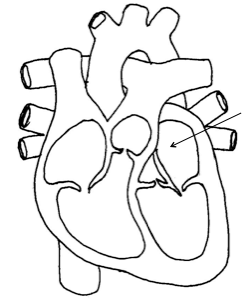
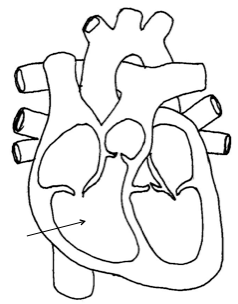
Name this part.
a)
Right atrium
b)
Left ventricle
c)
Right ventricle
d)
Left atrium
96.
Name this part.
a)
Left ventricle
b)
Pulmonary artery
c)
Right atrium
d)
Pulmonary veins
97.
Name this part.
a)
Right ventricle
b)
Pulmonary artery
c)
Left ventricle
d)
Right atrium
98.
Which side of the heart pumps oxygen-rich blood to the rest of the body?
a)
Right
b)
Left
99.
Which side of the heart pumps blood into the lungs?
a)
Right
b)
Left
100.

what is the part as labeled num 1

a)

aorta

b)

lung

c)

hart