wayground logo

Free Printable Worksheets

Font size

S
M
L
XL
Worksheets

Chemical Bonds

Total questions: 66

Worksheet time: 2hrs 49mins

Name
Class
Date
1.
Ionic bonds are between...
a)
nonmetals and nonmetals
b)
carbon and oxygen
c)
metals and nonmentals
d)
hydrogen and chlorine
2.
Covalent bonds are between...
a)
two or more nonmetals
b)
sodium and chlorine
c)
metals and metals
d)
metals and nonmetals
3.
What is the name for an ion with a positive charge?
a)
cation
b)
anion
c)
onion
d)
union
4.
What is the name for an ion with a negative charge?
a)
cation
b)
anion
c)
onion
d)
union
5.
What kind of bond forms when atoms share electrons?
a)
ionic
b)
covalent
c)
artificial
d)
univalent
6.
What are valence electrons?
a)
sum of the protons and neutrons
b)
protons minus electrons
c)
electrons in the inner shells
d)
electrons in the outer shell
7.
What kind of bond forms when atoms exchange electrons?
a)
ionic
b)
covalent
c)
artificial
d)
univalent
8.
If an atom loses two electrons what charge will it have?
a)
-2
b)
-1
c)
+1
d)
+2
9.
If an atom gains two electrons what charge will it have?
a)
-2
b)
-1
c)
+1
d)
+2
10.
Atoms gain lose, gain, or ______electrons to get a stable outer energy level.
a)
share
b)
split
c)
create
d)
destroy
11.
A ____________is the force that holds atoms together in a compound.
a)
Chemical Formula
b)
Chemical Reaction
c)
Chemical Bond
d)
Synthesis Reaction
12.
__________are neutral particles formed as  result of sharing electrons.
a)
Protons
b)
Electrons
c)
Molecules
d)
Ions
13.
Atoms can form double or triple ______depending on whether they share two or three pairs of electrons.
a)
Molecules
b)
Bonds
c)
Compounds
d)
Elements
14.
Electrons shared in a molecule are held ________to the atoms with the larger nucleus.
a)
more closely
b)
relative
c)
adjacent
d)
next
15.
What is the proper name for CaCl2?
a)
Calcium dichloride
b)
Monocalcium dichloride
c)
Calcium chloride
d)
Calcium chlorine
16.
What is the proper name for Cu2O?
a)
Copper oxide
b)
dicopper oxide
c)
copper (II) oxide
d)
copper (I) oxide
17.
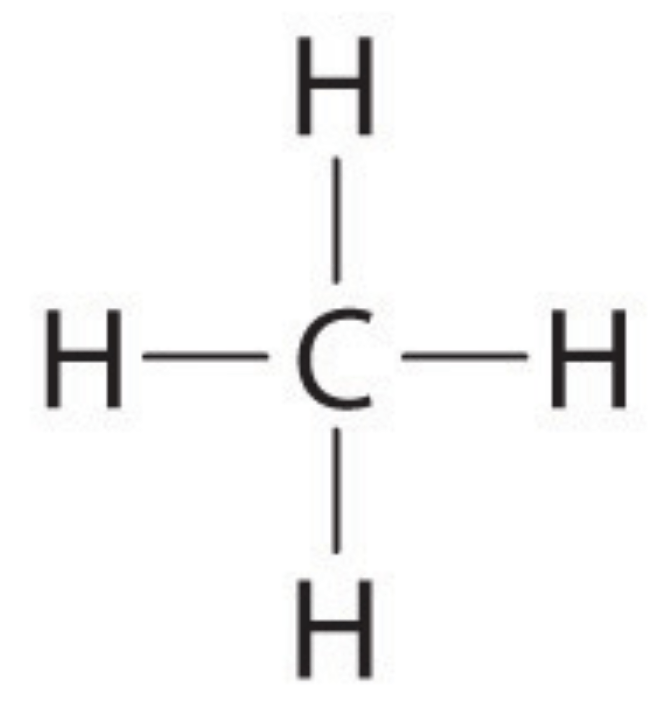
What molecule is this?
a)
CO
b)
CO2
c)
C2O
d)
C2O2
18.
What is ionization energy?
a)
Energy needed to destroy an atom
b)
Energy required to remove an electron
c)
Energy needed to split an electron
d)
Energy required to add an electron
19.

For metals (groups 1-3), its easier to _____ electrons to have a full outer shell.

a)

gain

b)

lose

c)

share

20.

For nonmetals (grousp 5-7), its easier to _____ electrons to have a full outer shell.

a)

gain

b)

lose

c)

share

21.
Phosphorous trichloride
a)
PCl3
b)
P3Cl
c)
P3Cl3
d)
PCL
22.

The octet rules states that most elements want to have _____ valence electrons.

a)

2

b)

4

c)

6

d)

8

23.
Chlorine and Fluorine are both very electronegative, as they are both missing a single electron from their valence energy level.  Why is Fluorine more electronegative than Chlorine? 
a)
Fluorine has less energy levels.
b)
Chlorine has more electrons in its outer shell
c)
Fluorine has more protons.
d)
None of these
24.

Which type of bond has an unequal sharing of electrons between two atoms?

a)

nonpolar covalent

b)

polar covalent

c)

ionic

d)

mettalic

25.
What is the basis of a metallic bond?
a)
the attraction of neutral metal atoms.
b)
the attraction between protons and neutrons.
c)
the attraction between positive metal ions and interlocking electrons.
d)
the attraction between positive metal ions and free floating electrons.
26.
Which of the elements are exceptions to the octet rule?
a)
Oxygen & Carbon
b)
Hydrogen & Helium
c)
Nitrogen & Argon
d)
Krypton & Iron
27.
A bond between a metal and metal is called
a)
Ionic Bond
b)
Covalent Bond
c)
Metallic Bond
28.
Why do the noble gases not react with other elements?
a)
They don't want to
b)
They need many electrons
c)
They have 8 valence electrons
d)
Their protons and electrons are balanced
29.
What kind of bond is formed when a hydrogen and a hydrogen shares a electron..
a)
Covalent Bond
b)
Ionic Bond
c)
Metallic Bond
d)
Treasury Bond
30.
Which type of bond creates a "pool" of electrons between atoms?
a)
Ionic Bonds
b)
Covalent Bonds
c)
Metallic Bonds
d)
Saving Bonds
31.

How many atoms of hydrogen are in a sugar molecule with the formula C6H12O6

a)

12

b)

6

c)

24

d)

18

32.

Polar molecules form due to ___________ sharing of valence electrons.

a)

equal

b)

unequal

c)

greater

d)

group

33.

A triple covalent bond forms when two atoms share ____________.

a)

2 pair of electrons

b)

4 total electrons

c)

3 pair of electrons

d)

3 total electrons

34.

Why do all bonds form?

a)

so the number of protons equals the number of electrons

b)

so an atom can become unstable

c)

to fill the outermost energy level

35.

This Lewis Dot Structure for water is correct

a)

True

b)

False

36.
When naming ionic compounds with transition metals you need to include roman numerals to show the _____ of the metal..
a)
atomic number
b)
mass number
c)
charge
d)
ionization energy
37.
Name the following compound: 
N2O4
a)
dinitrogren tetraoxide
b)
tetranitrogen dioxide
c)
nitrogen oxide
d)
dinitrogen tetraoxygen
38.
Name the following compound:
NF3
a)
nitrogen triflouride
b)
mononitrogen triflouride
c)
nitrogen flouride
d)
tetranitroflouide
39.
In an electron dot diagram, two pairs of shared electrons represents a ...
a)
single bond
b)
double bond
c)
triple bond
d)
quadruple bond
40.

Write the correct formula for Sodium Chloride.

a)

SC

b)

SCl

c)

NaCl

d)

NaCl2

41.
SiCl4
a)
silicon tetrachloride
b)
silicon quadchloride
c)
monosilicon tetrachloride
d)
silicon chloride
42.

tetraphosphorus heptoxide

a)

K₄O₁₀

b)

P₄O7

c)

KO

d)

P₁₀O₄

43.

What is the OFFICIAL name for H2O? Hint.. This is a trick question so choose carefully!

a)

Hydrogen Oxide

b)

Oxygen Dinitride

c)

Water

d)

Dihydrogen Monoxide

44.
N2, Cl2, and O2 are all 
a)
diatomic molecules.
b)
ionic bonds.
c)
of equal mass.
d)
solids.
45.
How do the following two elements bond together?
Cr3+  O2-         
a)
CrO
b)
Cr3O2
c)
Cr2O3
d)
CrO3
46.
PbS2
a)
lead sulfide
b)
lead sulfur
c)
lead II sulfide
d)
lead IV sulfide
47.
In the compound TiO2, titanium has a charge of
a)
4+
b)
2+
c)
2-
d)
4-
48.
The name for CrN:
a)
Chromium nitride
b)
Chromium (I) nitride
c)
Chromium (III) nitride
d)
Chromium nitride (III)
49.

Classify the following molecule.

a)

polar

b)

nonpolar

50.

Classify the following molecule.

a)

polar

b)

nonpolar

51.

Is the following molecule polar or nonpolar?

a)

polar

b)

nonpolar

52.

Is the following molecule polar or nonpolar?

a)

polar

b)

nonpolar

53.

Polar and nonpolar are two types of the ... bond

a)

Ionic

b)

Covalent

54.

... bond happens when electrons are shared EVENLY between the two bonded atoms.

a)

Covalent polar

b)

Covalent nonpolar

c)

Ionic

d)

Metallic

55.

A polar bond happens between ...

a)

metal/ non metal

b)

Two non metals of the same strength

c)

Two non metals, one is stronger than the other

d)

Two metals

56.
How do covalent bonds form?
a)
Donating & receiving valence e- between atoms.
b)
Opposite slight charges attract each other between compounds.
c)
Scientists are still not sure how they form.
d)
Sharing valence e- between atoms.
57.
Ionic Bonding involves...
a)
The transfer of protons
b)
The transfer of nuetrons 
c)
The transfer of electrons
d)
None Of the above
58.
What is the basis of a metallic bond?
a)
the attraction of neutral metal atoms.
b)
the attraction between protons and neutrons.
c)
the attraction between positive metal ions and interlocking electrons.
d)
the attraction between positive metal ions and free floating electrons.
59.
At room temperature, most metals are
a)
liquid
b)
solid
c)
gas
d)
an alloy
60.

Which of these are considered properties of metals? (choose ALL that apply)

a)

brittleness

b)

low melting point

c)

luster (shininess)

d)

malleability

e)

ductility

61.
A mixture of two or more metals is called:
a)
mixture
b)
solution
c)
compound
d)
alloy
62.
What is the ability of a substance to be pulled into a thin strand?
a)
Malleability
b)
Ductility 
c)
Conductivity
d)
Solubility
63.

Why do metallic compounds conduct electricity as solids?

a)

core electrons are mobile, allowing electricity to flow through the metal

b)

valence electrons are mobile, allowing electricity to flow through the metal

c)

protons are mobile, allowing electricity to flow through the metal

d)

the metal cations are mobile, allowing electricity to flow through the metal

64.
What's the name of the compound NH4NO?
a)
nitrogen hydrogen oxygen
b)
ammonium nitrite
c)
nitrogenous water
d)
ammonium nitrate
65.

OH is

a)

hydroxide

b)

bromate

c)

ammonium

d)

phosphate

66.

Match the following polyatomic formulas and names

a)

sulfate

1.

SO42-

b)

carbonate

2.

CO32-

c)

hydroxide

3.

OH-

d)

chlorate

4.

ClO3-

e)

nitrate

5.

NO3-