
 Worksheets
6th- Chapter 5 Test- Introduction to Plants
Total questions: 91
Worksheet time: 46mins
Small opening in the surfaces of most plant leaves are called ________________.
rhizoids
roots
stems
stomata
______________are rootlike structures that anchor a plant without transport tissue to the surface.
rhizoids
roots
stems
stomata
______________ produce seeds inside or on a fruit.
vascular plants
gymnosperms
angiosperms
nonvascular plants
______________ produce seeds without a fruit.
vascular plants
gymnosperms
angiosperms
nonvascular plants
______________ lack specialized tissues for transporting nutrients.
Vascular plants
Gymnosperms
Angiosperms
Nonvascular plants
______________have specialized tissues for transporting materials.
vascular plants
gymnosperms
angiosperms
nonvascular plants
Plants and animal cells have many of the SAME organelles including which of the following: check all that apply
vacuole
nucleus
cell wall
mitochondria
ribosomes
Animal and plant cells both contain chloroplasts.
True
False; only plant cells
The ____________ surrounds the plant cell and helps protect and support it.
cell membrane
cell wall
chloroplast
vacuole
Most plants have these specialized structures: check all that apply
root
plasma
stems
leaves
plasma
______________ anchor a plant in the soil, absorb water and minerals, and sometimes store sugar and starch.
leaves
stems
roots
stomata
______________ contain stomata and chloroplasts and is the site of photosynthesis.
leaves
stems
roots
stomata
______________ help support a plant's leaves and sometimes it s flowers.
leaves
stems
roots
stomata
The two types of stems are woody and herbaceous.
True
False
___________ in stems help carry water and nutrients absorbed by the roots to a plant's leaves.
Stomata
Chloroplast
Tissues
Leaves
_____________________ takes place when light energy is converted into the chemical energy stored in sugar.
Cellular respiration
Exhalation
Photosynthesis
Respiration
_____________, located in the leaves, stores sugar.
stomata
chloroplasts
vacuoles
stems
Water vapor, carbon dioxide, and oxygen pass into and out of most plant leaves through the ______________.
stomata
chloroplasts
vacuoles
stems
The division of nonvascular plants include: check all that apply
mosses
horsetails
hornworts
liverworts
club mosses
The division of vasuclar plants include: check all that apply
mosses
horsetails
ferns
liverworts
club mosses
Mosses have roots and tiny green leaflike structures.
True
False, rhizoids
Flowering plants are gymnosperms.
True
False: angiosperms
Gymnosperms and angiosperms are classified as _________________ plants.
vascular
nonvascular
thallose
club mosses
Gymnosperms have seeds as part of a fruit.
True
False: no fruit
____________are usually evergreen and have needlelike or scalelike leaves, and most produce cones that contain seeds.
Ferns
Mosses
Conifers
Angiosperms

Flowering plants reproduce...
Sexually
Asexually
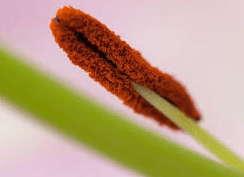
This is when a pollen grain combines with an egg in the plant's ovary.
Fertilization
Pollination
Reproduction
Germination
These are non-flowering plants that produce naked seeds, not fruit.
Cochemeas
Gymnosperms
Wildflowers
Angiosperms
These are flowering plants that protect their seeds inside of a fruit.
Cochemeas
Gymnosperms
Wildflowers
Angiosperms
Sexual reproduction occurs when only one parent organism produces a new organism.
True
False; asexual
In sexual reproduction, male sex cells and female sex cells each contribute genetic material to the offspring.
True
False; asexual
In plants, sperm are the _________ sex cells.
female
male
In plants, eggs are the _________ sex cells.
female
male
The process of in which sperm and an egg join and combine their genetic material is called ___________.
pollination
germination
fertilization
regeneration
The life cycle of every plant includes these two stages:
gametophyte; gymnosperm
gametophyte; sporophyte
angiosperm; gymnosperm
sporophyte;gymnosperm
Through mitosis, a_________spore or cell produces a plant structure or an entire plant called a gametophyte.
haploid- half the number of chromosomes
diploid- full set of chromosomes.
In gametophytes, male and female sex cells are produced through a process called _______________.
meiosis
mitosis
pollination
germination
In gametophytes, male and female sex cells are produced through a process called _______________.
meiosis
mitosis
pollination
germination
When male and female sex cells combine during fertilization, it produces a _________ zygote.
haploid
diploid
Diploid cells divide through mitosis and cell division to form the ________________.
sperm
gametophyte
sporophyte
egg
_______________ plants can reproduce by asexual reproduction or by producing spores.
Seed
Seedless
In seedless plants, sexual reproduction results in production of the _______________ which produces spores.
gametophyte
gymnosperm
sporophyte
angiosperm
Most plants produce seeds that result from _____________ reproduction.
asexual
sexual
Pollen is transferred during a process called germination.
True
False; pollination
If the sperm joins with the egg, fertilization occurs.
True
False; pollination
After fertilization, the embryo and its food supply are enclosed within a protective coat, forming a(n) _________.
mature plant
flower
cone
seed
In most seed plants, the seed will go through a period of no growth called __________________.
dormancy
germination
pollination
fertilization
_______________ is the process of a seed beginning to grow.
Pollination
Germination
Fertilization
Reproduction
In_______reproduction, the male cone produces pollen;the eggs and eventually the seeds, are contained within the female cone.
angiosperm
gymnosperm
seedless plants
fern
A plant that grows from a seed and takes one growing season to flower is called a(n)___________________.
perennial
biennial
annual
biannual
Plants that have two growing seasons are called ______________,
perennials
biennials
annuals
bipernnials.
Plants that grow and bud for many years are called ______________.
perennials
biennials
annuals
bipernnials.

How does water flow through a plant (from entry to exit)?
stem-root-leaves
leaves-stem-root
root-stem-leaves
root-leaves-stem

Which of the following describe transpiration best?
Water enters the leaves of a plant as a liquid.
Water exits the leaves of a plant as liquid.
Water enters the leaves of a plant as a gas.
Water exits the leaves of a plant as a gas.
What is it called when water sticks to other items, like a xylem tube or penny?
Cohesion
Adhesion
Capillary Action
Glucose
Which statement is correct?
The xylem carries water, while the phloem carries glucose.
The xylem carries glucose, while the phloem carries water.
The xylem carries oxygen, while the phloem carries carbon dioxide.
The xylem carries carbon dioxide, while the phloem carries oxygen.

What is it called when a plant grows in response to light?
Geotropism
Phototropism
Thigmotropism

When a plant grows in response to gravity, it is called....
Gravitropism
Phototropism
Thigmotropism

In your terrarium, when the stem grows up because of gravity it is showing a .........
Positive tropism
Negative tropism
Phototropism

In your terrarium, when the roots grow down because of gravity they are showing a .........
Positive tropism
Negative tropism
Phototropism

What plant process occurs in the chloroplasts (located in the leaf) and allows a plant to make its own food?
Respiration
Photosynthesis
Transpiration
Capillary Action

What are the products (result) of photosynthesis?
Carbon dioxide and water
Oxygen and glucose
Carbon dioxide and oxygen
Glucose and carbon dioxide

What are the raw materials (reactants) needed for photosynthesis to occur?
Carbon Dioxide (CO2)
Water (H2O)
Sunlight (radiant energy)
Chlorphyll
All of the above

What substances exit the leaf through the stomata? Select all that are correct
Water (H2O) as a gas
Oxygen (O2)
Glucose (C6H12O6)
Carbon Dioxide (CO2)

Which substance(s) enter the leaf as an ingredient for photosynthesis?
Glucose (sugar)
Oxygen
Water
Carbon Dioxide

The process of photosynthesis takes ____________ energy from the sun and transforms it into ________________ energy.
chemical, sunlight
chemical, electrical
sunlight, chemical
sunlight, electrical

Cellular respiration is the process by which chemical energy is released from the food that plants make, Where does it occur?
Cholorplast
Mitochondria
Cytoplasm
Stomata

How are the processes of photosynthesis and cellular respiration related?
They both occur in the chloroplast.
They both occur in the mitochondria.
The products of respiration become the raw materials of photosynthesis.
Neither benefit the plant.
A vine coiling around the stem of another plant is an example of __________________.
thigmotropism
phototropism
gravitropism
All choices are correct.
The movement or transport of materials in nonvascular plants occurs through diffusion and vascular tissue.
True
False; osmosis
False; photosynthesis
False; cellular respiration.
Plant processes such as growth, repair, and reproduction use carbon dioxide for energy.
True
False; water
False; oxygen
False; ATP (adenosine triphosphate)
Use of light energy to make sugars is called_________.
cellular respiration
transpiration
photosynthesis
absorption
The release of water vapor through stomata is called_________.
cellular respiration
transpiration
photosynthesis
absorption
The breakdown of sugars to release energy is called ________.
cellular respiration
transpiration
photosynthesis
absorption
A change that causes a response is called_________.
tropism
stimulus
glucose
hormone
A chemical that causes an internal response is called ______________.
tropism
stimulus
glucose
hormone
A pigment that absorbs light energy is called _______.
chlorophyll
glucose
chloroform
sugar
6CO2 + 6H2O ---------> C6H12O6 + 6O2 is the process of __________.
cellular Respiration
photosynthesis
transpiration
absorption
C6H12O6 + 6O2 -------->6CO2 + 6H2O is the process of __________.
cellular Respiration
photosynthesis
transpiration
absorption

