wayground logo

Free Printable Worksheets

Font size

S
M
L
XL
Worksheets

Year 7 end of year practice

Total questions: 106

Worksheet time: 1hrs 12mins
Name
Class
Date
1.
Which states allow easy flow of particles
a)
Gas and Solid
b)
Gas and Liquid
c)
Solid and Liquid
d)
Gas only
2.
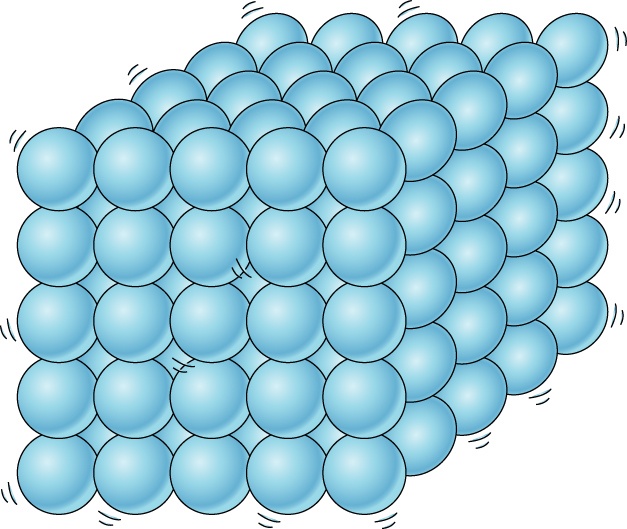
Which description best matches this particle model?
a)
Closely packed and can't move a lot. 
b)
Particles are close together but can move a little. 
c)
Particles have lots of energy and can move around. 
3.
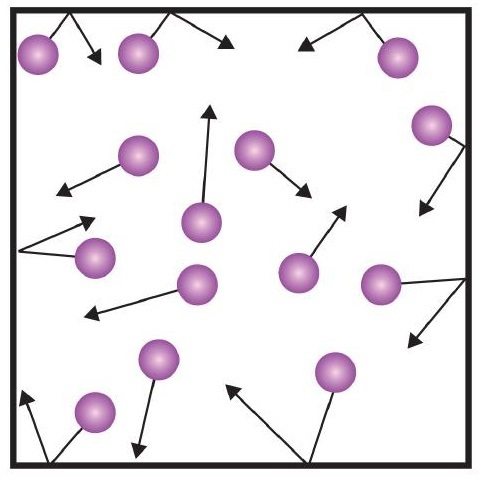
Which description best matches this particle model?
a)
Closely packed and can't move a lot. 
b)
Particles are close together but can move a little. 
c)
Particles have lots of energy and can move around. 
4.
Which description best describes what a particle model shows?
a)
How many particles are in a solid, liquid or gas.
b)
How the particles in a solid, liquid or gas are arranged. 
c)
If there are any particles in a solid liquid or gas. 
5.
Which state of matter can be compressed?
a)
Solid
b)
Liquid 
c)
Gas
6.
a)

Element

b)

Compound

c)

Mixture

7.
a)

Element

b)

Compound

c)

Mixture

8.
a)

Element

b)

Compound

c)

Mixture

9.
a)

Element

b)

Compound

c)

Mixture

10.
a)

Element

b)

Compound

c)

Mixture

11.
a)

Element

b)

Compound

c)

Mixture

12.
a)

Element

b)

Compound

c)

Mixture

13.
a)

Element

b)

Compound

c)

Mixture

14.
a)

Element

b)

Compound

c)

Mixture

15.
a)

Element

b)

Compound

c)

Mixture

16.
a)

Element

b)

Compound

c)

Mixture

17.
a)

Element

b)

Compound

c)

Mixture

18.
a)

Element

b)

Compound

c)

Mixture

19.
a)

Element

b)

Compound

c)

Mixture

20.

Condensation involves a change of state from ___ to ___

a)

Liquid to Solid

b)

Liquid to Gaseous

c)

Solid to Liquid

d)

Gaseous to Liquid

21.

Condensation occurs when water vapour....

a)

loses heat

b)

gains heat

22.

Boiling occurs when water ...

a)

loses heat

b)

gains heat

23.

Boiling involves a change of state from ___ to ___.

a)

Solid to Liquid

b)

Liquid to Gaseous

c)

Gaseous to Liquid

d)

Liquid to Solid

24.

Evaporate involves a change of state from ___ to ___.

a)

Solid to Liquid

b)

Gaseous to Liquid

c)

Liquid to Gaseous

d)

Liquid to Solid

25.

What factors affect the rate of evaporation?

a)

Temperature only

b)

Temperature and Wind only

c)

Temperature, Wind and Exposed Surface Area

d)

None of the above

26.

Ice melts at what temperature?

a)

100o

b)

10o

c)

5o

d)

0o

27.

Melting involves a change of state from ___ to ___

a)

Gaseous to Liquid

b)

Solid to Liquid

c)

Liquid to Gaseous

d)

Liquid to Solid

28.

Evaporation is a process where _____________________

a)

liquid changes to gas

b)

throughout whole water

c)

on surface of water

d)

at any temperature

e)

at boiling point

29.

Diagram above shows the change in the water level in a beaker after a few days. Which of the following explains the situation?

a)

Water diffuses quickly

b)

Water evaporates into the air

c)

Water turns to solid

d)

Water loses heat energy

30.
When a liquid reaches the temperatures of its ___, it can become a gas.
a)
melting point
b)
freezing point
c)
boiling point
d)
density
31.
What is happening at water melting point?
a)
liquid to gas
b)
solid to liquid
c)
gas to liquid
d)
liquid to soild
32.
melting
a)
change of state from solid to liquid
b)
change of state from liquid to solid
33.
if the surroundings transfer energy to particles...
a)
it solidifies
b)
 it melts
34.
What is the state of the substance at point A?
a)
Liquid
b)
Solid
c)
Gas
d)
Plasma
35.
What is the state of the substance at point C?
a)
Liquid
b)
Solid
c)
Gas
d)
Plasma
36.
What is the state of the substance at point E?
a)
Liquid
b)
Solid
c)
Gas
d)
Plasma
37.
What phase change is happening at point B?
a)
Vaporization
b)
Sublimation
c)
Condensation
d)
Melting
38.
What phase change is happening at point D?
a)
Vaporization
b)
Sublimation
c)
Freezing
d)
Melting
39.
What is the chemical symbol for the element hydrogen
a)
H
b)
He
c)
h
d)
he
40.
What is the chemical symbol for the element Carbon
a)
ca
b)
co2
c)
C
d)
Cd
41.
What is the chemical symbol for the element oxygen
a)
O
b)
Oxy
c)
ox
d)
Oy
42.
What is the chemical symbol for the element Iron
a)
I
b)
Ir
c)
Fe
d)
fe
43.
What is the chemical symbol for the element Zinc
a)
Z
b)
Zn
c)
Zr
d)
zn
44.

Carbon dioxide is a:

a)

compound

b)

element

c)

mixture

d)

molecule

45.

Which substance is used to prove that an unknown gas is carbon dioxide?

a)

a glowing splint

b)

hydrogen gas

c)

plain drinking water

d)

lime water

46.
Another term for burning is
a)
Fire triangle
b)
Magnesium oxide
c)
Combustion
d)
Bustion
47.
The word equation for combustion is: fuel + oxygen --> water + ________ __________
a)
Carbon dioxide
b)
Limewater
48.

This is the brain or control center of the cell.

a)

Cytoplasm

b)

Nucleus

c)

Cell membrane

49.

What cell part is NOT found in all cells?

a)

Chloroplasts

b)

Cell Membrane

c)

Cytoplasm

d)

Nucleus

50.

True or False:

Plant cells have a more rigid structure than animal cells.

a)

True

b)

False

51.

This type of cell needs a cell wall and chloroplasts

a)

Animal Cell

b)

Plant Cell

52.

This cell part is in ALL cells. It is the gel-like substance that provides cell shape.

a)

Chloroplasts

b)

Cell membrane

c)

Cytoplasm

d)

Nucleus

53.

Plants perform photosynthesis through this organelle. It captures energy from the sun and uses it to produce food for the cell.

a)

Cytoplasm

b)

Chloroplasts

c)

Cell Wall

d)

Nucleus

54.

What shape are most plant cells?

a)

round

b)

rectangular

55.

What shape are most animal cells?

a)

round

b)

rectangular

56.

What type of cell is pictured above?

a)

Plant Cell

b)

Animal Cell

57.

What type of cell is pictured above?

a)

Plant Cell

b)

Animal Cell

58.

Identify the structure in the illustrations

a)

Eukaryotic Cell

b)

Nucleus

c)

Chromosome

d)

DNA

e)

Gene

59.

Identify the structure in the illustration

a)

Eukaryotic Cell

b)

Nucleus

c)

Chromosome

d)

DNA

e)

Gene

60.

Contains the Genetic material (chromosomes) of the cell and or organism

a)

Eukaryotic Cell

b)

Nucleus

c)

Chromosome

d)

DNA

e)

Gene

61.

What is the function of the nucleus?

a)

Makes proteins for the cell

b)

Produces energy for the cell

c)

Control center of the cell

d)

Regulates what enters and exits the cell

62.

What is found in the nucleus?

a)

Chromosomes

b)

DNA

c)

Genes

d)

All of the options

63.

Which statement describes what DNA is?

a)

A ladder shape

b)

A threadlike material

c)

A single gene in a gene pair

d)

Instructions for the organism

64.
All cells have a:
a)
Nucleus
b)
Plasma membrane
c)
Cell wall
d)
Buddy
65.
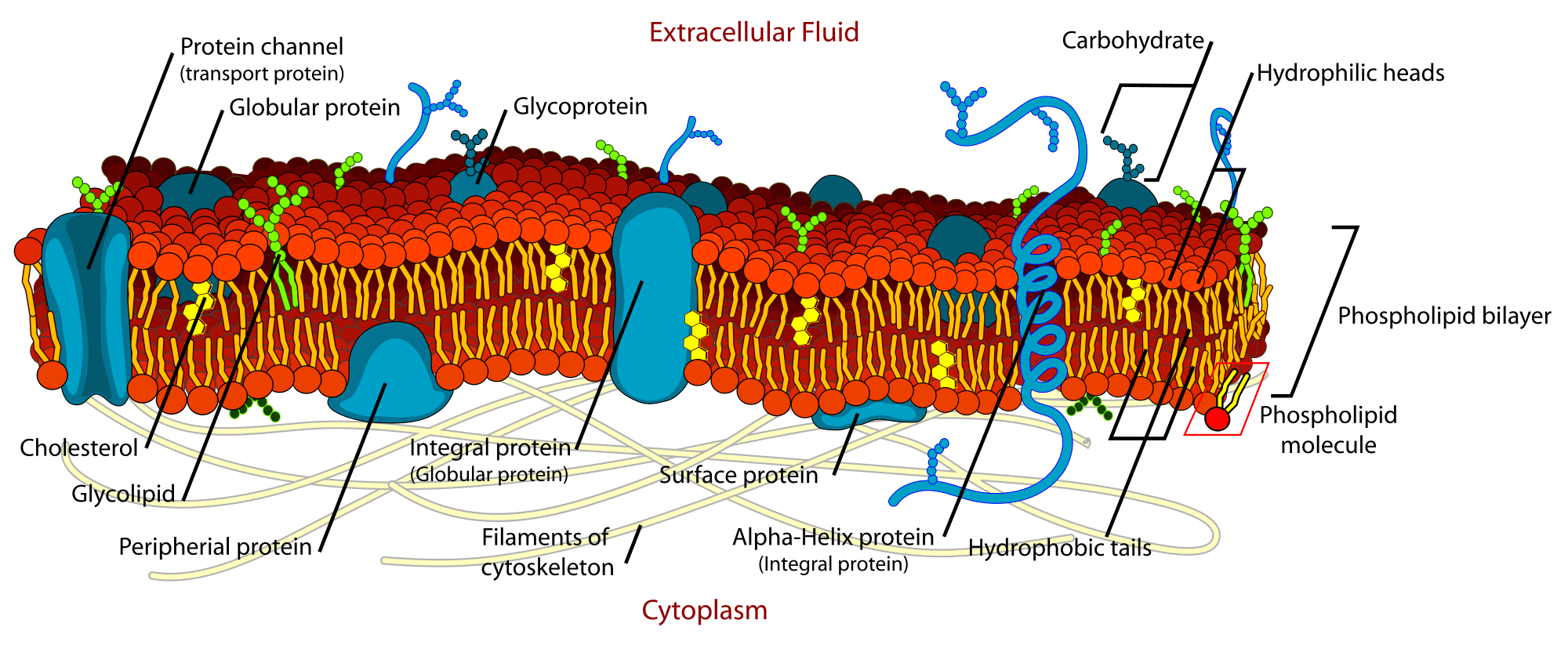
What is this image?
a)
cell membrane
b)
proteins
c)
carbohydrates
d)
lipids
66.
The function of the plasma membrane is....
a)
to regulate what enters and leaves the cell.
b)
fight bacteria and viruses that enter the cell.
c)
provide rigid support and protection to the cell.
d)
make sure each cell can move
67.
What is NOT TRUE about the cell membrane
a)
It controls what enters and leaves the cell
b)
Semipermeable
c)
Phospholipid bilayer
d)
Contains digestive enzymes
68.
This cell organelle helps organisms maintain homeostasis by controlling what substances may enter or leave cells.
a)
vacuole
b)
nucleus
c)
cell membrane
d)
cell wall
69.
Which statement best describes the cell membrane?
a)
The protective outer layer that controls what enters and leaves the cell.
b)
Stores information on DNA molecules / Directs and controls the activities of the cell.
c)
A folded membrane that moves materials around inside cells / Also acts as the site of manufacturing materials needed by the cell.
d)
The smallest organelle with a huge job / Makes proteins, which are the building blocks of the body.
70.
My main goal is to produce a lot of ATP energy. 
a)
Chloroplast
b)
Mitochondria
71.
Muscle cells would contain a lot of me. 
a)
C
b)
M
c)
CM
72.
I am the site of aerobic cellular respiration. 
a)
C
b)
M
c)
CM
73.
To convert the energy of glucose into  the  usable form of ATP is a function of _________.
a)
Cell Wall
b)
Cytoplasm
c)
Nucleus
d)
Mitochondria
74.

What is this cell structure?

a)

Mitochondria

b)

Ribosome

c)

Chloroplast

d)

Nucleus

e)

Vacuole

75.

Process in which energy is excreted from food is called

a)

photosynthesis

b)

cellular respiration

c)

excretion

d)

diffusion

76.

What is the function of ribosomes?

a)

Transcription

b)

Translation

c)

Cell division

d)

Transport proteins

77.

What part of the cell bonds amino acids together into proteins?

a)

Ribosome

b)

Mitochondria

c)

Nucleus

d)

Chloroplast

78.
Cell energy dam, stores and releases cell's energy, ''power
a)
Vacuole 
b)
Mitochondria
c)
Nucleolus
d)
Cell Membr
79.

Carbohydrate is transported through the human bloodstream in the form of .............. in solution in the blood plasma.

a)

glycogen

b)

glucose

c)

starch

d)

carbohydrate

80.
The fluid portion of blood that carries blood cells, glucose, proteins, fats, and wastes throughout the body.
a)
red blood cells
b)
white blood cells
c)
plasma
d)
platelets
81.
Plants grow from _____________.
a)
rocks
b)
seeds
c)
eggs
d)
leaves
82.
Plants need light from the _________.
a)
moon
b)
stars
c)
sun
d)
ground
83.
Plants need sunlight to survive because _________ .
a)
they need to stay very warm.
b)
they need to be able to see danger.
c)
they get minerals from sunlight.
d)
they make food from sunlight.
84.
In the experiment from Mystery Science, why did the plant growing in the dark grow taller than the plant growing in the light?
a)
The plant in the dark was healthier.
b)
The plant in the dark was just a bigger plant.
c)
The plant in the light was getting too much sunlight.
d)
The plant in the dark was looking for sunlight.
85.
What part of a plant transports water and nutrients?
a)
flower
b)
leaf
c)
seed
d)
stem
86.

An inorganic, manufactured material that may contain one or more of the essential elements required for crop growth is a __________

a)

Fertiliser

b)

Manure

87.

10-10-20 fertiliser contains the elements

a)

N-P-K

b)

N-C-K

c)

N-P-S

d)

S-P-K

88.

Nitrogenous fertiliser is required

a)

during the early stage of growth to promote development of stem and leaves.

b)

for accelerating fruit formation in later stage of growth.

c)

to lessen the effect of excessive potash application.

d)

none of these.

89.
Which of the following is an advantage of a natural fertiliser?
a)
Improves the structure of the soil
b)
Quicker than artifical fertiliser to effect plant growth
c)
mineral concentration is higher than artificial fertiliser
90.
Which is not an example of  an element essential for plant growth
a)
Nitrogen
b)
Phosphorus
c)
Potassium
d)
Silver
91.

What are the three essential elements that plants require?

a)

nitrogen phosphate potassium

b)

nitrogen sulphur potassium

c)

nitrogen potassium phosphorous

d)

nitrogen potassium polonium

92.

An inorganic, manufactured material that may contain one or more of the essential elements required for crop growth is a __________

a)

Fertiliser

b)

Manure

93.

An organic material that consists of the wastes of plants and animals is called a ___________.

a)

Fertiliser

b)

Manure

94.

Which type of specialized cell sticks out into the soil, allowing water into the plant?

a)

xylem

b)

guard cells

c)

epidermis cells

d)

phloem

e)

root hair cells

95.

Root hair cells have thin walls and stick out.

a)

This statement describes a STRUCTURE.

b)

This statement describes a FUNCTION.

96.

Root hair cells easily take in water from soil.

a)

This statement describes a STRUCTURE.

b)

This statement describes a FUNCTION.

97.

Root hair cells easily take in water from soil.

a)

This statement describes a STRUCTURE.

b)

This statement describes a FUNCTION.

98.

The diagram represents

a)

Osmosis of water through the root hair cells

b)

Intake of Ions and Oxygen through the root hair cells

c)

Diffusion of water through the root hair cells

d)

Uptake of minerals and food from the root hair cells

99.

which cell is this

a)

root hair cell

b)

epidermis

c)

palisade mesophyll

d)

guard cell

100.

The function of this cell is

a)

to hold the plant firmly in soil

b)

to absorb water and minerals

c)

to allow photosynthesis to happen

101.

root hair cells absorb efficiency due to their

a)

large surface area

b)

small surface area

102.

Directs all cell activities through the DNA located there.

a)

Endomembrane System

b)

Nucleus

c)

Ribosomes

d)

Mitochondria

103.

What is the term for tissues grouped together to perform a specific function?

a)

cell

b)

tissue

c)

organ

d)

organ system

104.

What is the term for cells grouped together to perform a specific function?

a)

cell

b)

tissue

c)

organ

d)

organ system

105.

What is the term for organs grouped together to perform a specific function?

a)

cell

b)

tissue

c)

organ

d)

organ system

106.

What is the term for the smallest unit of life?

a)

cell

b)

tissue

c)

organ

d)

organ system